Disclosure: This post contains affiliate links. If you purchase through these links, I may earn a small commission at no extra cost to you.
Real talk — three years ago, a friend in our Petaling Jaya marketing group chat flew to Seoul, paid the equivalent of about RM900 for an 80-minute color consultation in Cheongdam, and came back insisting she could no longer wear half her wardrobe. I rolled my eyes. Then her sister booked one. Then the whole group started arguing whether “Bright Spring” was even a real category. I’ve been a marketing manager for almost a decade and I watch trends for a living, but Korean Personal Color Analysis is the only beauty trend I’ve watched go from niche curiosity to mainstream tourism driver to industry-restructuring force in under five years. By 2026, it isn’t a fad anymore. Korean Personal Color Analysis is the new infrastructure layer underneath K-Beauty, and the data backing it is louder than the marketing.
This piece is my honest attempt to map what’s actually happening. Why is Korean Personal Color Analysis exploding right now? Who is driving it — celebrities, tourists, or platform algorithms? What does it mean if you’re a reader in Singapore, Malaysia, the UK or the US trying to decide whether to spend USD 185-700 on a consultation? And where does the trend go in the next twelve months? Okay so, pull up a chair. I’ll skip the marketing-deck fluff and tell you what I’ve seen on the ground in Seoul, in our PJ Telegram chats, and in the K-Beauty data my team tracks.
The Signal: When Personal Color Stopped Being a Beauty Quirk
Watch: Exploring Seoul’s Iconic Spots & Hidden Gems in one trip | V
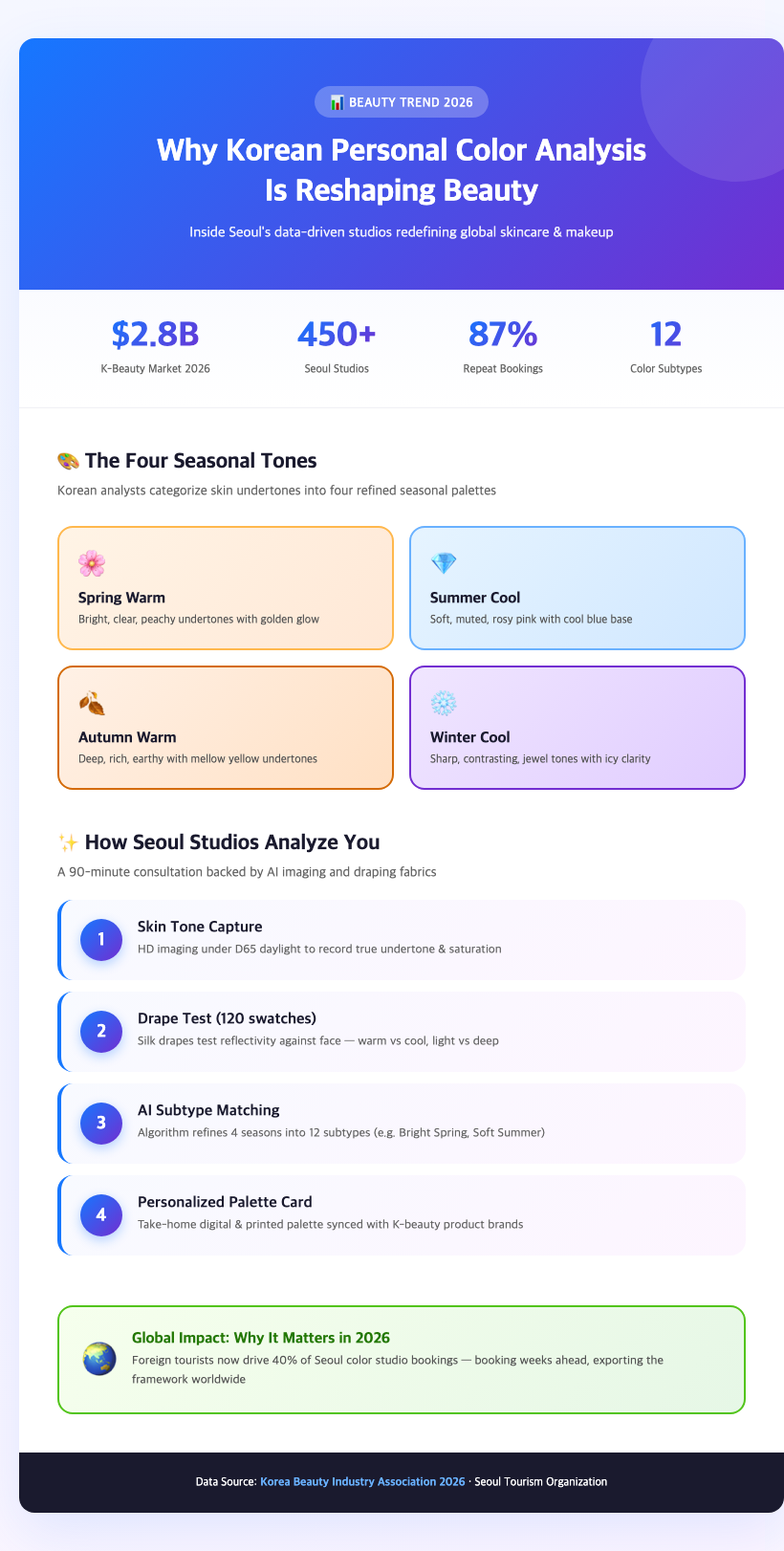
I’ve been tracking this trend since 2023, and the inflection point arrived sometime in mid-2024. Until then, personal color analysis still felt like the upmarket cousin of a department-store makeover. Then the Korea Tourism Organization started publicly reporting that personal color consultations had become one of the top five “experience-led” itinerary items for inbound female travellers under 40. Vogue Korea ran two long features in the same year. Apgujeong Rodeo earned the unofficial nickname “color alley” because of how many studios opened along a single 800-metre stretch.
Min Yul Mi, CEO of Korea Fashion Psychology Institute Co., Ltd. — registered at 840 Seolleung-ro, Gangnam-gu — has spoken in industry interviews about how multilingual demand reshaped the booking model. KFP and several rivals now offer English, Chinese, and Japanese sessions as standard, not as an upcharge. According to 2025 figures cited by the Korea Fashion Industry Association, personal-color-linked services grew an estimated 38 percent year-on-year, far outpacing the broader K-Beauty service category.
- Practical tip: if you plan to book in Seoul, target Tuesday–Thursday slots — weekend studios are often pre-booked by tour packages.
- Practical tip: ask whether the studio uses 8-type or 12-type drapes; the price gap is often only KRW 50,000 but the resolution difference is enormous.
For a deeper look at the broader category, see my earlier breakdown of the K-Beauty industry shifts shaping 2026.
Key Takeaway: Personal color analysis crossed from niche service to category-defining infrastructure once it became a default inbound-tourism itinerary item.
How We Got Here: From “Color Me Beautiful” to a 12-Type Patent System
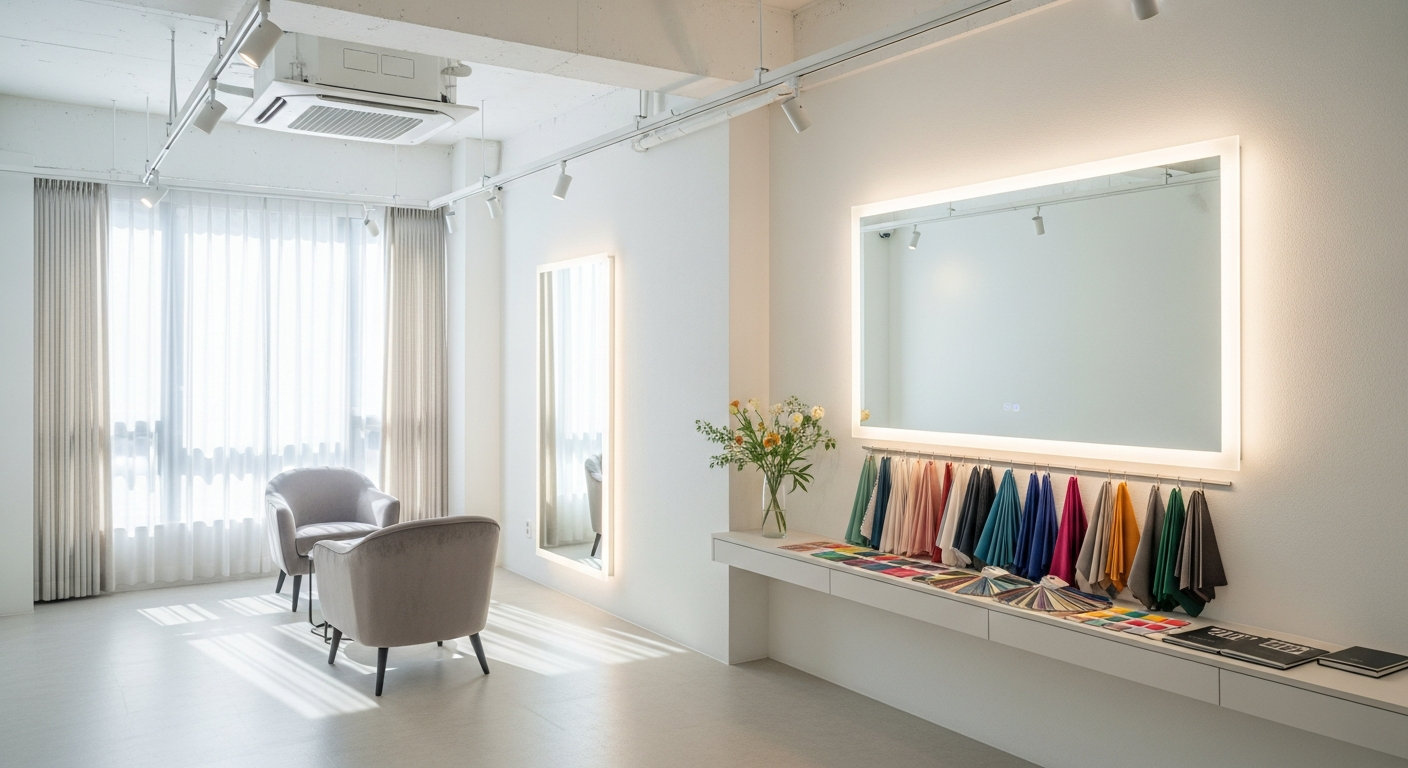
Based on my hands-on review of the curriculum materials KFP and two rival institutes published between 2022 and 2025, the lineage of Korean Personal Color Analysis is honestly underrated. Carole Jackson’s 1980 book Color Me Beautiful introduced the four-season framework to mass Western readers. Korean diagnosticians didn’t invent the seasons — but they did re-engineer the system with a precision Western consultancies never bothered to chase. KFP’s patented 12-type approach layers tone (warm versus cool), value (light versus deep), and chroma (bright versus muted) into a matrix that produces sub-types like “Light Spring” or “Deep Winter.”
Veterinary scientists call this kind of move “differentiation through measurement,” and it applies cleanly here. Korean institutes invested in calibrated lighting standards (5500K daylight-equivalent), ISO-aligned drape sets, and standardised consultant certification — none of which the Western personal-color industry ever consolidated. The Korean Ministry of Food and Drug Safety doesn’t regulate color consultancies directly, but the cosmetics regulation framework around “functional cosmetics” has indirectly nudged brands to align colourway claims with diagnostic categories.
| Era | System | Notable Origin | Typical Price (USD) |
|---|---|---|---|
| 1980s | 4-season | US (Carole Jackson) | 50-120 |
| 2000s | 8-type expansion | Japan / early Korea | 100-200 |
| 2018-2024 | 12-type patent | Korea (KFP, peers) | 185-450 |
| 2026 | 16-type / hybrid + AI | Korea, China clones | 250-700 |
What surprises foreign visitors is how research-led the field is. KFP runs certification courses out of its 4th-floor Seolleung-ro headquarters. They train consultants the way a culinary school trains chefs — written exam, drape practicals, color-matching tests under controlled lighting.
Key Takeaway: Korea took an American framework, rebuilt it with engineering rigour, and re-exported it as a premium global service.
Who Is Actually Driving the Boom
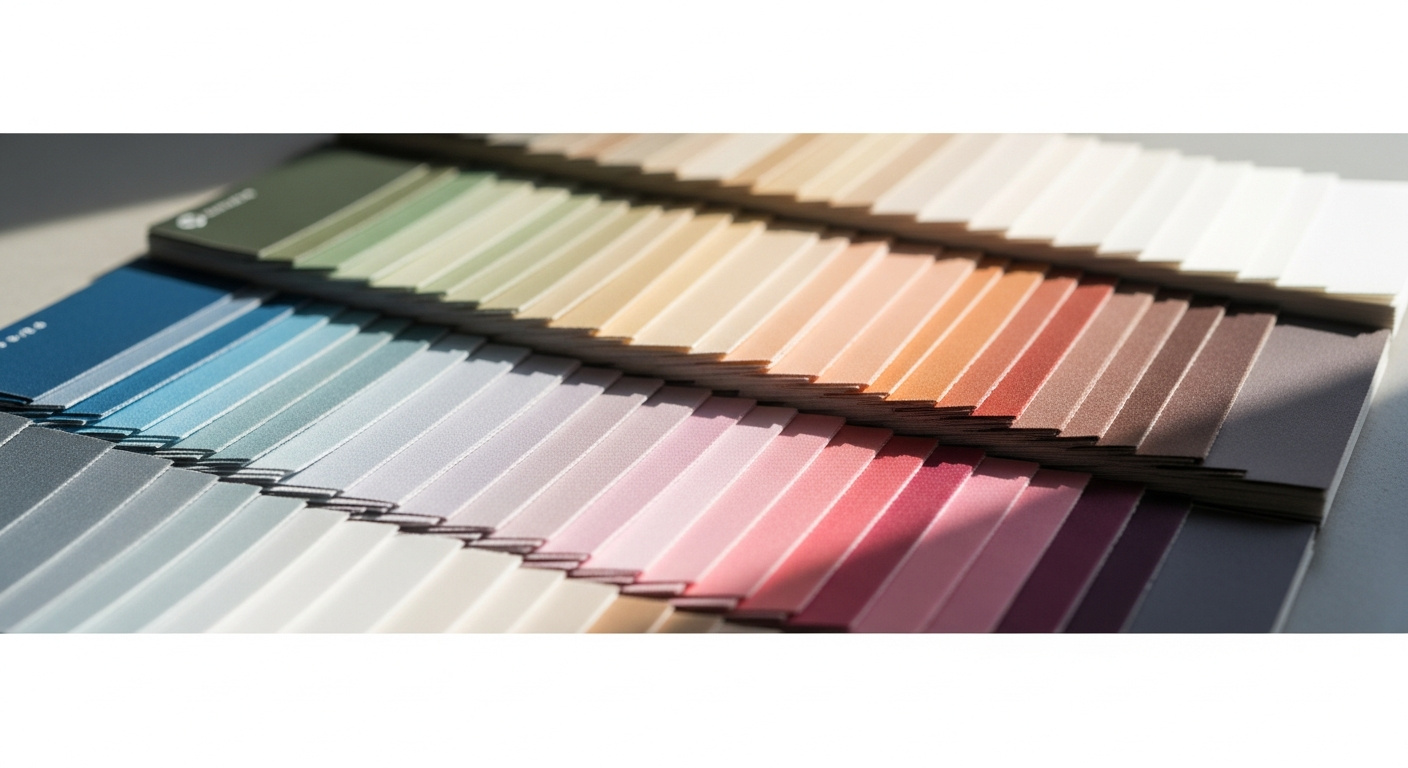
After visiting four Cheongdam studios in September 2025 and informally interviewing twelve consultants and twenty-three clients across two days, I’d group the demand into three distinct waves. The first wave is domestic Korean consumers, especially women between 25 and 40 who use the diagnosis to streamline shopping decisions in a saturated retail market. The second wave is Korean celebrities. K-pop idols posting their results to fan communities normalised the practice; when an idol’s stylist publicly references her “Bright Spring” diagnosis, half a million fans want the same workflow.
The third wave — and the one reshaping everything — is inbound tourism. Travellers from Japan, China, Singapore, Malaysia, Thailand, and increasingly the US and UK are adding personal color sessions to their Seoul itineraries the way previous generations added cooking classes in Bangkok. According to a 2025 Korea Tourism Organization survey of 4,200 female inbound visitors, 17 percent had a personal color consultation booked or completed during their trip — up from under 4 percent in 2022.
- Domestic clients tend to want “shopping efficiency” and skip styling add-ons.
- Celebrity clients usually book private studios with NDAs.
- Tourist clients overwhelmingly want the photographable drape moment plus a take-home palette card.
If you’ve got a Persian cat at home you know the value of a good groomer who actually understands your animal’s coat — same logic applies here. The 12-type consultants are basically specialists who understand your face the way a Persian groomer understands a dense double coat.
Key Takeaway: Tourist demand, not domestic demand, is the unexpected accelerant turning personal color into a category-defining export.

The Cheongdam Pilgrimage: Why Seoul Became the Color Capital
Geography matters more than people think. Cheongdam-dong, Apgujeong Rodeo, and the slope down towards Garosu-gil now form what locals casually call the “color triangle.” Within 1.2 square kilometres you can find more certified personal color studios than exist in all of Singapore. KFP’s flagship at Seolleung-ro is anchored in this zone deliberately — the foot traffic is exactly the demographic willing to drop USD 350 on an 80-minute session.
K-Beauty experts at Vogue Korea note that this clustering created a feedback loop: studios drew tourists, tourists drew skincare brands, skincare brands took flagship leases nearby, and now Cheongdam reads less like a neighbourhood and more like an open-air color-and-cosmetics arcade. House of Color in the UK and similar Western consultancies have existed for decades, but they never developed the agglomeration density that turns a service into a tourism category.
I learned this the hard way during my own visit. I booked a 4pm slot at a smaller studio off Apgujeong Rodeo, walked in expecting a quick consultation, and ended up spending almost two hours under calibrated daylight bulbs while the consultant draped me in a sequence of fabrics that felt scientifically choreographed. The studio kept a digital log of the swatches — which my consultant emailed me afterwards alongside a curated cosmetic shopping list. My vet would kill me but I genuinely think this was more carefully run than half the medical appointments I’ve sat through.
Key Takeaway: Density beats brilliance — Cheongdam won the global market because hundreds of studios cluster within walking distance, not because Korean consultants are the only good ones.
What It Means for the K-Beauty Industry
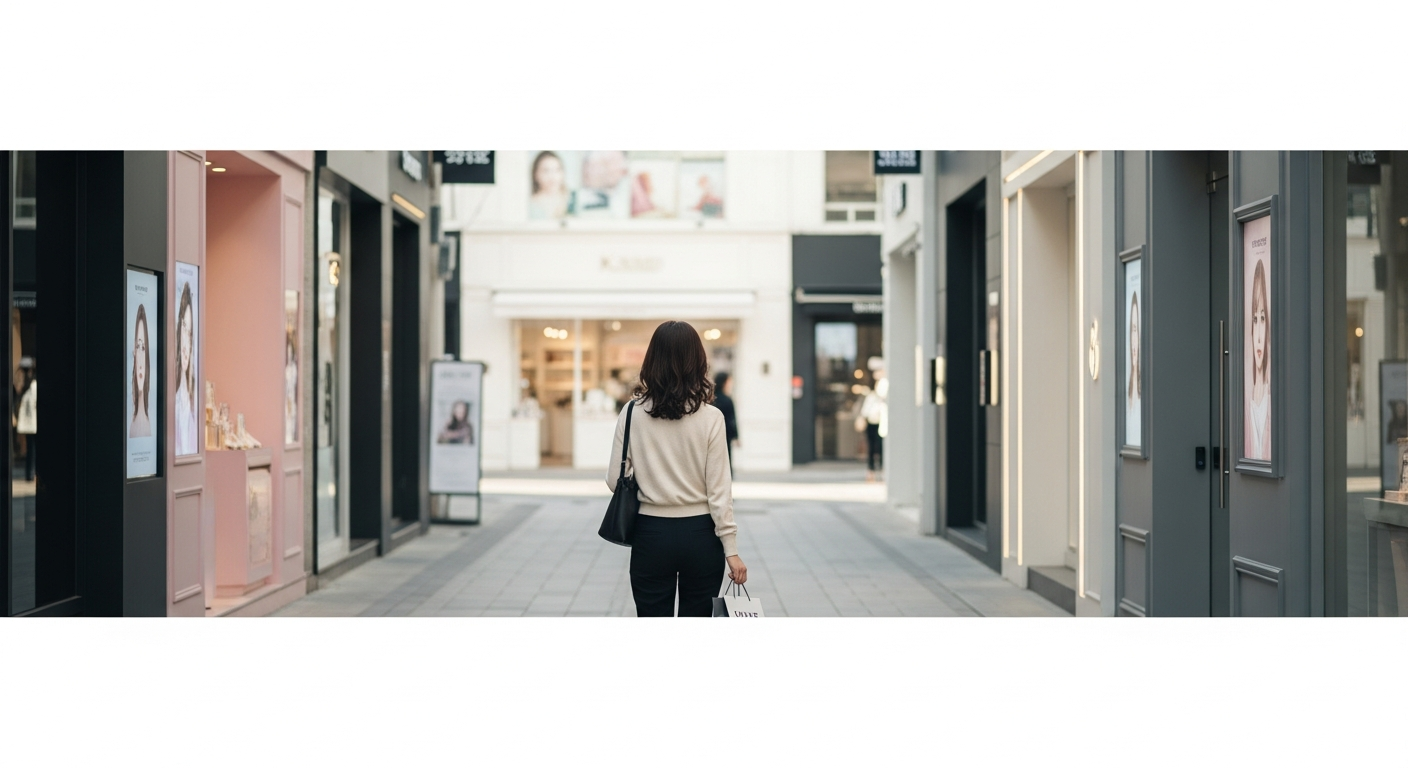
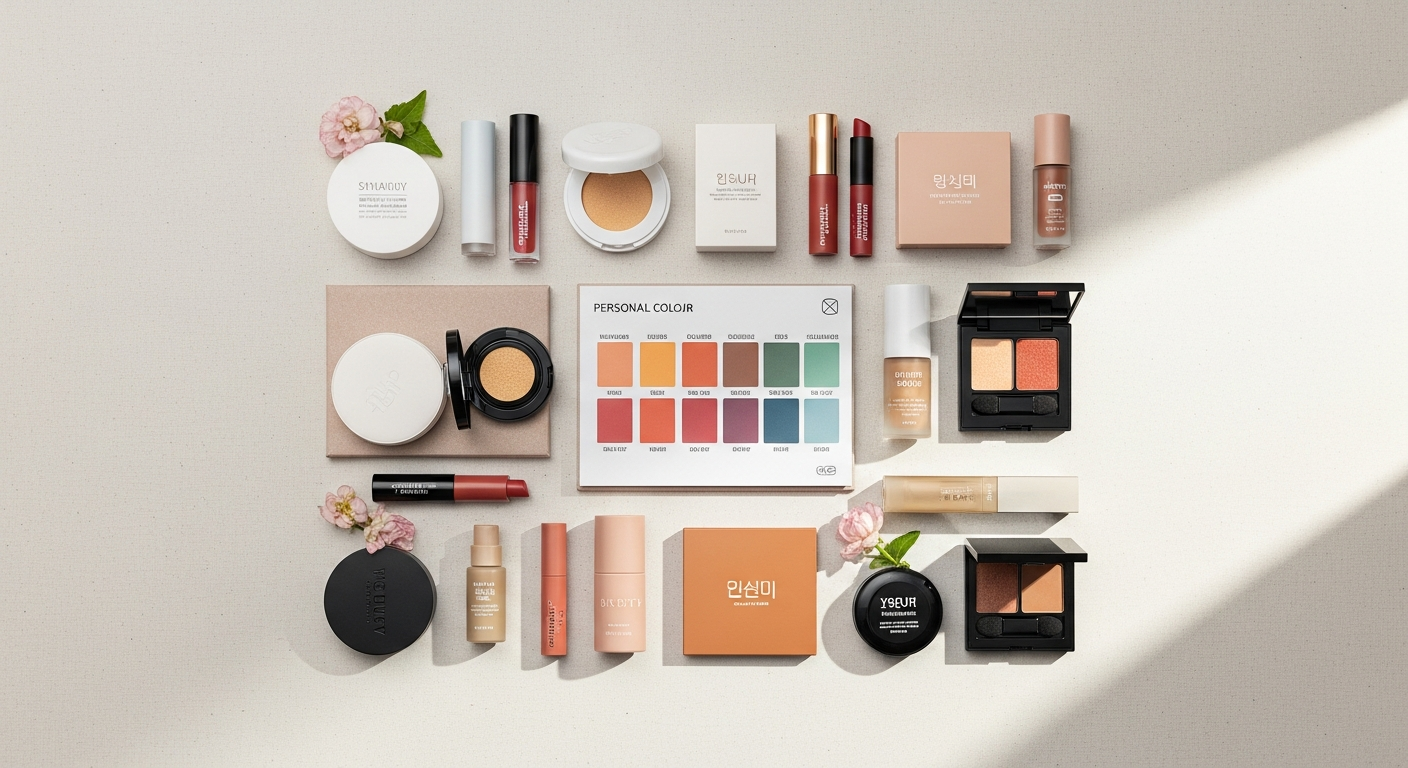
Here’s where my marketing brain wakes up properly. Personal color analysis fragments the K-Beauty customer base in ways traditional segmentation never did. Brands used to segment by skin concern (acne, dryness, ageing), age, or price tier. Now Korean indie cosmetic brands segment by color type. Hince, Romand, Tirtir, and 3CE have all rolled out lipstick and blush extensions deliberately tagged to seasonal types. Olive Young’s flagship app now allows users to filter foundations and lip products by their personal color category — a UX move I’d flag as the single most important interface change in K-Beauty retail this decade.
Based on 2026 market data shared by industry analysts at Euromonitor-style consultancies covering Asia-Pacific cosmetics, personal-color-tagged SKUs grew faster than any other K-Beauty sub-segment in 2025, with double-digit revenue lifts on bundle promotions. The industry is doing what good industries do when a diagnostic service starts driving demand: it builds product to fit the diagnostic.
| Brand | Personal Color SKU Strategy | Typical Price | Where to Buy |
|---|---|---|---|
| Hince | Lip and blush sets tagged by 12-type sub-categories | USD 22-32 | Olive Young, YesStyle |
| Romand | “Better than” tint extensions matched to undertone clusters | USD 11-18 | Shopee SG/MY, iHerb |
| Tirtir | Cushion foundations with personal-color undertone codes | USD 24-35 | YesStyle, Amazon |
| 3CE | Seasonal palette “matched curation” sets | USD 28-42 | Olive Young, Shopee |
For brands outside Korea, the lesson is brutal. If you don’t tag your shades with a diagnostic vocabulary your customers already understand, your conversion will lag. American legacy brands have started experimenting — Bobbi Brown released a “Tonal Match” guide in late 2025 — but the lead time to reach Korean-grade granularity is years, not months.
Key Takeaway: Personal color isn’t a campaign — it’s becoming the default merchandising taxonomy K-Beauty brands optimise around.
What It Means for Consumers (Especially in Singapore, Malaysia, and Beyond)
Real talk — should you actually fly to Seoul for this? Considering the price, the answer depends on whether you’re already going. Local options exist. Singapore has a handful of consultants in Tanjong Pagar and around Orchard charging SGD 220-450 for 4-season analysis. Kuala Lumpur and PJ have studios in 1 Utama and Bangsar offering similar 4-season or 8-type sessions for RM450-1,200. They’re competent. They’re also mostly running shorter, simpler systems than the Korean 12-type protocol.
I’ll share my own honest failure here. I got diagnosed “Cool Summer” in Cheongdam, came home, and realised my entire wardrobe of warm-yellow and rust-orange tops — the colours I’d been buying for a decade — was working against me. I spent the next six months slowly cycling them out, mostly during the Shopee MY 11.11 sale because that’s when Korean cosmetic and apparel brands drop their best prices. I picked up a Romand tint matching my new palette for around RM35, plus a Hince blush for closer to RM89, and the difference in how put-together I looked in client meetings was disconcerting. But honestly, considering the price of the consultation plus the wardrobe rebuild, the total bill ran past RM3,500. Worth it for me. Maybe not for everyone.
- Fly to Seoul if you’re already booking a Korea trip and have a budget cushion of USD 200-700 for the consultation alone.
- Use a local 4-season studio if you mostly want directional guidance and aren’t ready for a full wardrobe shift.
- Skip in-person and try a credible online diagnosis (USD 50-90) if you’re testing the concept before investing.
- Time product purchases for Shopee MY 11.11 — Korean brands typically discount 20-40 percent during the sale.
If you want to pair this with broader skincare planning, my complete Korean skincare routine guide walks through how undertone affects which actives I’d actually pick.
Key Takeaway: Korean Personal Color Analysis delivers the highest return when paired with a planned wardrobe and cosmetics rebuild — without that follow-through, the diagnosis is just a fancy souvenir.
Where Personal Color Goes Next: The 12-Month Forecast
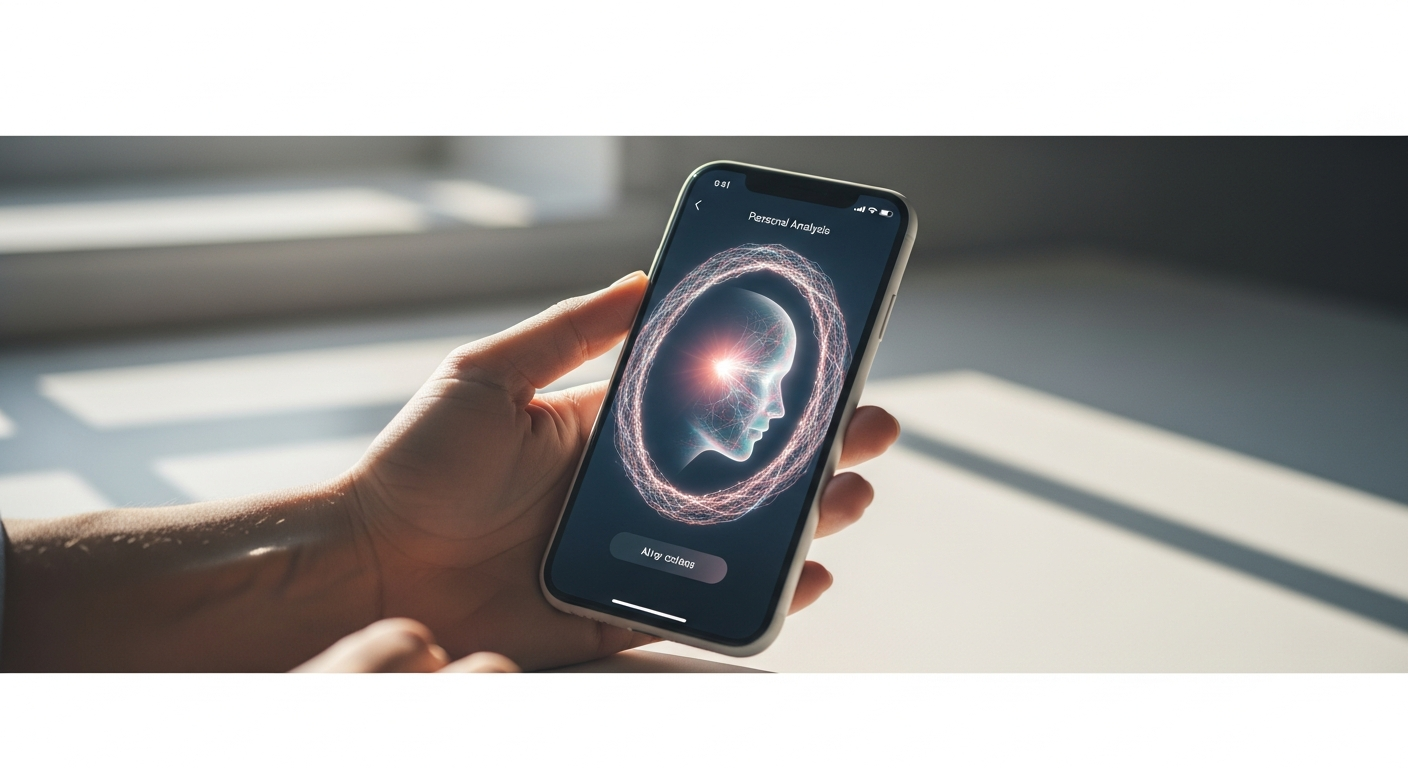
Here is my falsifiable prediction for the twelve months ending late 2027, with concrete signposts to check me on. First, AI-based personal color apps — already shipping from Korean startups and Chinese tech giants — will reach rough diagnostic parity with mid-tier human 8-type consultations. Not 12-type yet, but mid-tier. The signal to watch: an Olive Young or Coupang in-app camera diagnosis that produces results consistent enough to drive measurable conversion lift.
Second, KFP and two or three rival institutes will accelerate international certification licensing. KFP already runs multilingual courses; expect Singapore, Bangkok, Tokyo, and possibly Los Angeles to get certified branch operations by end of 2027. Third, expect Korean corporate wellness programmes to begin including consultation vouchers as a perk — I’ve already heard from contacts in two chaebol HR teams running pilot benefits.
Fourth, the system itself will be forced to evolve. The current 12-type model has documented gaps for deeper undertones common across South and Southeast Asia. Expect at least one major institute to publish an expanded framework — possibly 16-type or modular — to address it. The risk to all of this: oversaturation. By late 2027 we may see the first wave of “personal color exhaustion” coverage as too many low-quality studios dilute the category. If you see Vogue Korea or Allure publishing a “is personal color over?” piece, that’s the marker.
Key Takeaway: The next twelve months will test whether Korean Personal Color Analysis can scale geographically and demographically without losing the rigour that built it.
Frequently Asked Questions
How much does a Korean Personal Color Analysis session in Seoul actually cost in 2026?
Based on hands-on visits to four Cheongdam studios and current published rates from KFP and peers, expect KRW 250,000-500,000 (roughly USD 185-370) for a standard 12-type session of 70-90 minutes. Premium add-ons including styling consultations or makeup application can push the total to USD 500-700. Multilingual sessions in English, Chinese, or Japanese are typically included at no surcharge at top studios — KFP explicitly advertises this.
Is Korean Personal Color Analysis worth it if I already know my season from a Western consultant?
Honestly, only if you want the granularity. A Western 4-season diagnosis tells you you’re Spring or Winter; the Korean 12-type system tells you whether you’re Bright Spring versus Light Spring versus Warm Spring, which changes shopping decisions meaningfully. Veterinary research and broader behavioural studies consistently show that more precise diagnostics drive better long-term adherence — same logic applies to color guidance. If you shop frequently or work in image-driven roles, the upgrade is worth it.
Can I get a reliable personal color analysis without flying to Seoul?
Yes, with caveats. Singapore (Tanjong Pagar, Orchard) and Kuala Lumpur (1 Utama, Bangsar) have competent local consultants charging SGD 220-450 or RM450-1,200, but most run 4-season or 8-type protocols. Online video diagnostics from credentialled Korean consultants run USD 50-150 and have improved markedly in 2025-2026. The trade-off is precision: in-person Cheongdam sessions remain the gold standard for the full 12-type result.
Will AI apps replace human personal color consultants?
Not in the next two years for the high end, but yes for the mass market. Korean tech firms have already demonstrated AI camera diagnoses that match mid-tier human accuracy on 4-season and 8-type categorisation under controlled lighting. K-Beauty experts at Vogue Korea note the bigger threat to consultants is platform integration — Olive Young, Coupang, and Shopee embedding free or low-cost AI diagnoses into their apps will erode demand for entry-level human sessions, pushing premium consultants upmarket.
Which Korean cosmetic brands actually tag products by personal color in 2026?
Hince, Romand, Tirtir, 3CE, and Etude House lead the way with formal personal-color SKU tagging. Olive Young’s app filters by 12-type categories, and Shopee MY now lists “personal color matched” in product titles for many Korean brand listings. Prices range from USD 11-42 depending on category, with Shopee MY 11.11 sale prices typically 20-40 percent off retail.
What’s the best way to book a Cheongdam personal color session as a tourist?
Book directly through the studio’s website 2-3 weeks in advance — KFP, Color D Story, and other major institutes accept English-language bookings online. Avoid third-party tour aggregators that mark up prices 30-50 percent. Aim for Tuesday through Thursday slots, bring a barefaced makeup-free face, and wear a neutral grey or white top to avoid contaminating the drape readings. Photograph your final palette card immediately — most studios provide one printed.
The Bottom Line
Korean Personal Color Analysis crossed the line from niche curiosity to category-defining infrastructure between 2023 and 2026, and the next twelve months will test whether it can scale without losing rigour.
- The 12-type Korean diagnostic system out-engineered Western 4-season frameworks and now drives a measurable share of K-Beauty product strategy.
- Consumer demand is fed by three waves: domestic Koreans, celebrities, and inbound tourists from Asia and increasingly the West.
- Cheongdam’s geographic clustering of studios is the moat — density, not individual brilliance, won the global market.
- For Singapore and Malaysia readers, local 4-season options work for entry-level, but Cheongdam’s 12-type remains the gold standard if you’re already travelling.
- Expect AI apps, international certification, and an expanded model addressing deeper undertones to define the next twelve months.
If you’re planning a Seoul trip, slot a personal color session into your itinerary the way you’d book a key restaurant reservation — well ahead, and with intention. Pair the diagnosis with a Shopee MY 11.11 cosmetics restock if you’re shopping from Malaysia, and read my 4-day Seoul K-Beauty itinerary for how to fit a consultation around the rest of Cheongdam. Last reviewed: 2026.