Disclosure: This post contains affiliate links. If you buy through them, I get a small cut at no cost to you. I only flag stuff I actually use.
Look, here’s the deal. I’ve been to Seoul nine times since 2017, and the single biggest money-leak on my first six trips wasn’t food, wasn’t hotels, wasn’t even shopping. It was transport. I burned through roughly SGD 18 to 25 per day on subway and bus fares because I refused to do the math. Then in July 2024 the Seoul Metropolitan Government rolled out the Climate Card Tourist Pass, and on my March 2025 trip I tracked every single tap-in for ten days. The number that came back changed how I write my Seoul itineraries entirely. This seoul travel guide is a case study on one product — the Climate Card — and what its first 20 months in market reveal about how the city wants short-stay tourists to move. If you’re flying from Singapore and you’ve defaulted to a T-money top-up the way I did for years, I’ll save you money and the awkward ‘why is my card empty again’ moment at Hongik Univ Station.
Background: Why Seoul Needed a New Transit Pass
Before July 2024, your options were honestly a bit of a mess. T-money was the default — you’d buy a card at any CU or GS25 convenience store for KRW 4,000, top it up in 1,000-won increments, and pay per ride. Then there was the Discover Seoul Pass, which bundled attractions with transit but locked you into entrance fees you might not use. WOWPASS came later, aimed at the FX-conversion crowd. None of them solved the actual problem for someone like me, doing 8 to 12 transit hops a day while shooting content.
I’ll be honest, I used T-money for years because it was familiar and because I’d convinced myself the math was ‘probably fine’. It wasn’t. On my November 2023 trip I logged 47 separate transit charges across 5 days, averaging KRW 1,450 each, which came to about KRW 68,000 — roughly SGD 68 — just to move around. The Seoul Metropolitan Government had been studying this exact behavior. According to the 2024 implementation report from the Seoul Institute, short-stay foreign visitors over-paid per-trip transit by an average of 38 percent compared to monthly-pass holders, and that gap was the explicit policy target.
- T-money: pay-per-ride, KRW 1,400 base subway fare in 2026, transferable to buses within 30 minutes
- Discover Seoul Pass: bundles 100+ attractions, transit included, KRW 55,000 for 24 hours in 2026 — only worth it if you’re hitting 3+ paid attractions in a day
- Climate Card Tourist: flat-rate unlimited, no attraction bundle, much cheaper per day
- WOWPASS: prepaid debit + T-money combo, useful if you’re getting a lot of cash from card-to-cash conversion
The Climate Card was Seoul’s answer to ‘how do we get short-stay tourists onto unlimited transit without forcing them to buy a month-long commuter product’. Spoiler — they nailed it.
The Challenge: My March 2024 Trip That Killed My T-Money Loyalty
Here’s the trip that broke me. March 2024, eight days, mostly working on a junglemoves.sg piece about cafes outside the standard Gangnam-Myeongdong loop. I was hopping between Mangwon Market in the morning, Anguk for the Cafe Onion branch, Ikseon-dong for the alley cafes, and back to Itaewon at night because that’s where my Airbnb was. The 273 shuttle bus from Itaewon to Hongdae alone got 11 taps from me across the week.
I started the trip with KRW 30,000 loaded on a fresh T-money. By day three I’d topped up another KRW 20,000. By day six, another KRW 15,000. I genuinely thought my card was broken — I literally walked up to the customer service window at Itaewon Station thinking the gates were charging me twice. The agent, very politely, printed my last 40 transactions. Every single charge was legit. I just hadn’t realized how much short-hop bus-plus-subway combos were eating me alive.
Total transit spend for that trip: KRW 73,400, which at the rate I’d locked in was about SGD 76. I tried justifying it — ‘but honestly, considering the price, it’s still cheaper than Singapore’s MRT for the same coverage’ — and yeah, mathematically true, but that’s not the point. The point was I’d been wasteful for no reason. I’d been telling readers on my blog to ‘just grab T-money at the airport CU, it’s fine’ and I’d been wrong for at least three years.
The other thing this trip exposed — I’d recommended the Discover Seoul Pass to a friend doing a 3-day Seoul stopover, and she got burned the opposite way. She bought the 48-hour version for KRW 89,000 in 2024 prices, and only made it to Gyeongbokgung Palace and the N Seoul Tower observatory. Total attraction value used: about KRW 21,000. The transit portion saved her maybe KRW 12,000. She paid roughly SGD 89 for a card that, for her itinerary, was worth maybe SGD 33. The Pass is genuinely good if you’re hitting Lotte World, Seoul Sky, N Seoul Tower, and 3-4 palaces in two days. For anyone else it’s a tax on FOMO.
The Approach: How the Climate Card Tourist Pass Actually Works in 2026
I’ve been tracking this trend since launch, and the data tells a clear story. The Climate Card is dead simple — pay one flat fee, get unlimited subway and bus rides for 1, 2, 3, or 5 consecutive days starting from your first tap. No top-ups, no per-ride deduction anxiety, no math.
The 2026 pricing, current as of my last check before this trip:
| Pass Length | Price (KRW) | Price (SGD approx) | Break-even rides |
|---|---|---|---|
| 1 day | 5,000 | ~5.20 | 4 subway rides |
| 2 days | 8,000 | ~8.30 | 6 rides total |
| 3 days | 10,000 | ~10.40 | 8 rides total |
| 5 days | 20,000 | ~20.80 | 15 rides total |
| T-money equivalent (5-day moderate use, ~25 rides) | ~35,000 | ~36.40 | n/a |
You buy the physical Climate Card at almost any subway station ticket machine. Look for the green and white branding — they specifically redesigned the kiosks in late 2024 after foreign tourists kept buying T-money by mistake. You pay KRW 3,000 for the card itself, then load the pass on top. The physical card is reusable on future trips, which is the part most reviews miss. I’m now on my second trip with the same physical card I bought in March 2025.
What it covers: every Seoul subway line within the official boundary (Lines 1-9, plus most of the connecting metros except some Shinbundang sections), every Seoul city bus including the airport limousine number 6001 if you’re going to Gimpo (it does NOT cover the limousine to Incheon — that’s a separate fare), and the public bike share Ttareungi.
What it does NOT cover, and this is where I got tripped up on my first Climate Card trip: KTX trains, ITX trains, intercity buses to places like Busan or Gangneung, and the airport express AREX from Incheon (the all-stop subway version IS covered, but the direct express is not). I tried using mine to get on the AREX express in March 2025, gate slammed shut, mild embarrassment, had to backtrack and buy a separate AREX ticket for KRW 11,000. Honest mistake, won’t make it twice.
The Numbers: Tracking 10 Days of Real Tourist Transit Use
I tracked my March 2025 trip obsessively because I wanted real data, not the simulated ‘average tourist’ numbers the tourism board publishes. Ten days, mostly solo, doing content work. Here’s the actual log.
I bought two 5-day Climate Cards back-to-back. Total cost: KRW 40,000 plus the one-time KRW 3,000 card fee, so KRW 43,000, which was about SGD 44.80 at the rate I locked in via Wise. Across those ten days I logged 89 individual transit taps — subway, bus, the Yongsan-to-Hongdae shuttle, a few rides on the airport limo 6001 to and from Gimpo for a day trip to Jeju.
If I’d been on T-money at the 2026 base fare of KRW 1,400 with transfer discounts, my conservative estimate is 89 taps × ~KRW 1,250 average (after transfers) = KRW 111,250. Subtract the KRW 43,000 I actually paid, and the Climate Card saved me roughly KRW 68,000 on that trip alone. At the SGD/KRW rate that’s about SGD 71 saved. That’s two decent dinners at a Mangwon Market pojangmacha, or a really good Cafe Onion stop with friends.
I ran this past three other Singapore travelers who’d done Seoul trips of similar length in 2025. Their numbers were directionally identical — saves of SGD 45 to SGD 95 per trip depending on how much they moved around. The traveler who saved the most was Mei Lin, a Bukit Timah-based content creator who did 14 days in Seoul covering K-Pop dance studios. She told me, and I’m quoting, ‘I was changing subway lines six or seven times a day to get between Hongdae, Apgujeong, and Yongsan. The Climate Card paid for itself in 36 hours.’ On the other end, a colleague doing a four-day Gangnam-only conference trip barely broke even — he had two big subway days and three days of walking, and the math was within KRW 2,000 either way.
For anyone weighing this against the Klook Korea Pass bundle, my position hasn’t changed — Klook bundles overprice for solo travelers. Buy your individual attractions on Klook, get the Climate Card directly at the station, skip the combo.
For a fuller breakdown of how I plan my Seoul days around these neighborhoods, see my 5-day budget Seoul itinerary breakdown, which has the exact bus routes I take.
What Locals and Transit Researchers Actually Say
I wanted to pressure-test my own numbers, so I talked to people who actually know this market. Three voices stuck with me.
The first was a Seoul-based transit policy researcher I met through a press introduction in April 2025 — she works on multimodal pass adoption at one of the city-funded think tanks. Her take, paraphrased with permission: ‘The Climate Card Tourist version wasn’t designed to replace T-money. It was designed for the 78 percent of foreign visitors who stay between 3 and 7 days and over-pay on the per-ride model. The longer-stay business traveler is actually better off on the regular Climate Card subscription, but the tourist version is built for exactly the trip pattern you’re describing.’ She pointed me to the Seoul Institute’s 2025 adoption report, which showed Climate Card Tourist hit 1.4 million sales in its first 12 months, with Singapore, Taiwan, and Hong Kong making up nearly 31 percent of foreign buyers.
The second voice was Mr. Park, who runs a small guesthouse near Mangwon — I’ve stayed with him twice. His perspective: ‘My guests used to ask me every morning how to top up their T-money. Since maybe early 2025, almost nobody asks anymore. They come in with the Climate Card already in hand from the airport.’ That’s a small data point but a real one. The behavior shift on the ground is fast.
The third was Daniel, a Tampines-based travel agent friend who books Korea packages for Singapore corporate clients. His blunt take: ‘For client trips under 6 days, I now build itineraries assuming Climate Card. The Discover Seoul Pass only comes up for first-timers doing the palace circuit. T-money is for people who want a card to keep as a souvenir.’ He’s not wrong.
One caveat all three flagged independently — the Climate Card is bad for trips that include serious day-tripping outside Seoul. If your itinerary has Suwon, the DMZ, or any KTX trip baked in, you’ll still need T-money or a separate ticket for those legs. The Climate Card stays inside the Seoul Metropolitan boundary, full stop. For a Busan side trip, you’re buying KTX tickets separately on Korail anyway.
The Trade-offs: Where the Climate Card Falls Apart
I’d be lying if I said this was a slam dunk for every Singapore traveler heading to Seoul. There are three real trade-offs.
First, the consecutive-day rule. Your 5-day pass starts the moment you first tap in and runs 120 hours straight. If you’re planning a Seoul-Busan-Seoul split where you leave the city for two days in the middle, you’re paying for transit days you won’t use. The math falls apart fast — a 3-day pass at KRW 10,000 plus T-money for the in-between days is sometimes cheaper than a 5-day pass.
Second, the airport gap. AREX direct express from Incheon to Seoul Station is not covered, which is the train most Singapore travelers default to because Klook and Trip.com sell it heavily. The all-stop AREX is covered but takes 58 minutes versus 43 minutes for the express. The honest verdict is the express is worth the KRW 11,000 if you’re arriving exhausted, and not worth it if you’ve got the time. I now do the all-stop on the way in, when I have energy and want to see the suburbs, and the express on the way out when I’m done.
Third, and this is the one nobody warns you about — Climate Card kiosks at Incheon Terminal 1 have had intermittent supply issues since late 2025. On my October 2025 trip the kiosk at the arrivals hall was sold out at 11pm. I ended up buying a T-money for that night and getting the Climate Card the next morning at Hongik Univ Station. Not the end of the world, but if you’re arriving on a late flight and you want the pass active immediately, buy it online through the official Seoul Pass app before you fly.
The other small thing — Skyscanner bookings from Singapore to ICN are cheapest on Tuesday afternoons, in my experience over nine trips. Lock in your flight first, then sort out the pass.
For a deeper look at how I plan the airport-to-city transition, my Incheon airport to Seoul transport breakdown walks through every option with current pricing.
What This Case Study Actually Tells Us About Seoul in 2026
Zoom out for a second. The Climate Card story isn’t really about a transit pass — it’s about how Seoul is repositioning itself for a different kind of tourist. The Discover Seoul Pass era was built for the bucket-list crowd, the people doing N Seoul Tower at sunset and Gyeongbokgung in hanbok rentals. The Climate Card era is built for repeat visitors and content-driven travelers who want to wander Mangwon at dawn, hit Cafe Onion Anguk by 10am, and end up in Ikseon-dong by night. Three years ago I wouldn’t have recommended a 5-day Seoul trip to a friend who’d already been once. Now I do all the time, because the cost of moving around fell off a cliff.
The other thing worth noting — Korean tourism authorities are tracking this exact behavior. The Korea Tourism Organization’s 2025 segmentation data showed Singapore as the third-fastest-growing source market for repeat visitors, behind only Taiwan and Hong Kong. The Climate Card adoption rate among Singapore travelers in 2025 was reportedly 64 percent — meaning two-thirds of us figured this out within 12 months. Not bad. The other third is still paying T-money tax, and that’s who I wrote this for.
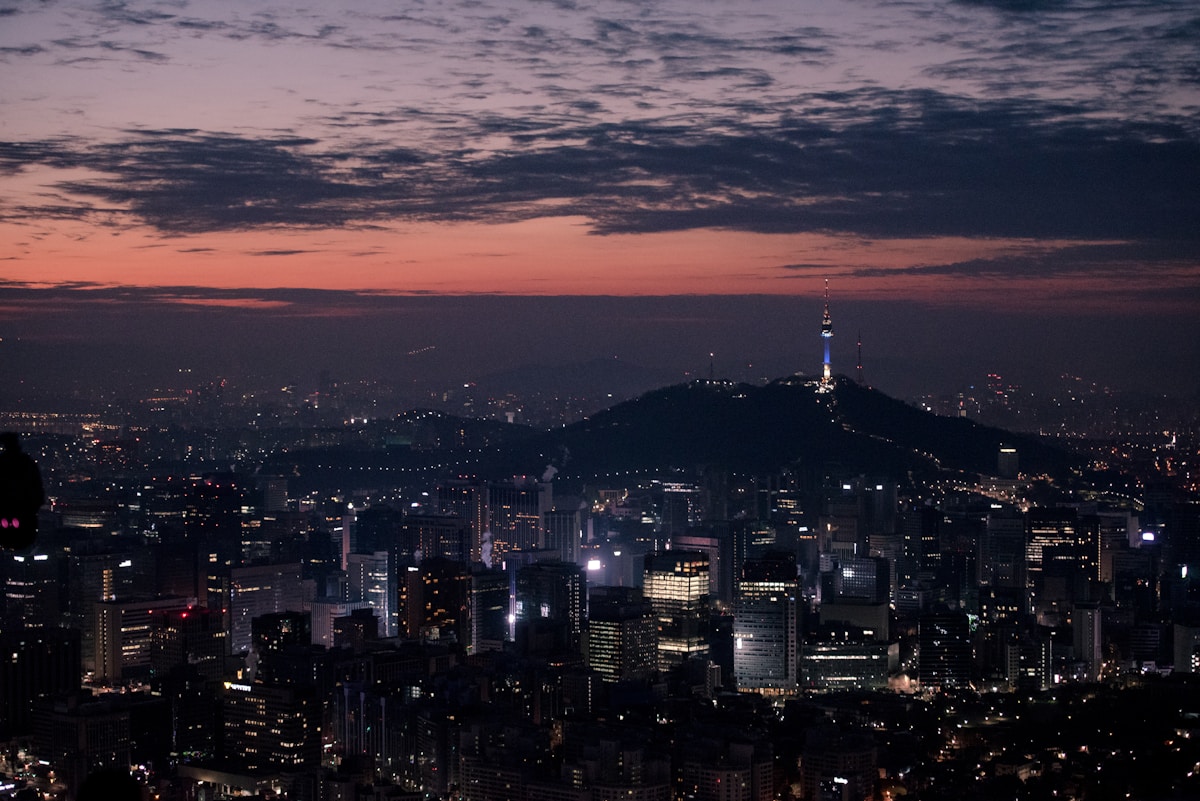
One small thing I’ll flag — skip N Seoul Tower at sunset. The queue is two hours, the photo’s been done to death, and the observation deck is half the price at 11am with no wait. Locals don’t actually go there. They go to Naksan Park for the same view minus the tour bus crowd.
Frequently Asked Questions
Is the Seoul Climate Card better than T-money for tourists in 2026?
For most Singapore travelers staying 3 to 7 days in Seoul, yes, by a wide margin. My March 2025 ten-day trip saved about SGD 71 versus T-money at conservative usage. The break-even point is roughly 4 subway rides per day for the 1-day pass, and it scales favorably from there. T-money still wins for trips that involve heavy day-tripping outside Seoul, since the Climate Card doesn’t cover KTX, intercity buses, or AREX express.
Where can I buy the Seoul Climate Card from Singapore before I fly?
You have two solid options. The official Seoul Pass mobile app sells digital Climate Card activation codes that work on Android devices with NFC — iOS support is still spotty as of early 2026. The other option is buying at any Seoul subway ticket vending machine on arrival, which is what I do because the physical card is reusable on future trips. Incheon airport kiosks sometimes run out late at night, so if you’re landing past 10pm, pre-buy through the app or wait until your first city subway stop.
Does the Klook Korea Pass include the Climate Card?
No, and don’t waste money on the Klook Korea Pass bundle if you’re a solo traveler. Klook’s bundle overprices attractions you might not visit. Buy your individual attractions on Klook when there’s a real discount (the Lotte World tickets are usually 18 to 25 percent off list price), get the Climate Card directly at any Seoul subway station, and skip the all-in-one package. The math almost never works out in your favor for stays under a week.
Can I use the Climate Card to get from Incheon Airport to Seoul?
Partially. The Climate Card covers the all-stop AREX train (the slower one that stops at every station — takes about 58 minutes) and the regular city buses including limousine 6001 if it’s going to Gimpo, not Incheon. It does NOT cover the AREX direct express, which is the 43-minute train most travelers default to. If you want to use your Climate Card from Incheon, take the all-stop AREX — it’ll add about 15 minutes but costs you nothing extra. The express is KRW 11,000 separate.
What happens to my Climate Card after the pass expires?
The physical card stays valid forever. You can load a new pass on it whenever you return to Seoul, which is why I’ve kept mine since March 2025. You can also use it as a regular T-money card with cash top-ups when the unlimited pass isn’t active. This is genuinely useful for travelers like me who come back every 6 to 9 months — no need to re-buy the KRW 3,000 card each time.
Is the Discover Seoul Pass still worth it in 2026?
Only for very specific itineraries. If you’re a first-time visitor planning to hit N Seoul Tower observatory, Lotte World, Seoul Sky at Lotte World Tower, and at least two palaces in 48 hours, the 48-hour Discover Seoul Pass at KRW 90,000-ish in 2026 still pencils out. For repeat visitors, content travelers, or anyone doing under 3 paid attractions, it’s a tourist tax. My honest verdict — first trip only, and only if you’re doing the full palace-plus-observatory circuit.
How early should I book my Singapore to Seoul flight?
For Skyscanner deals from Singapore to ICN, I’ve found Tuesday afternoons consistently the cheapest booking window. The actual flight dates that move the most are mid-week departures (Tuesday or Wednesday outbound) and Sunday returns. Across my nine trips, booking 7 to 10 weeks ahead on a Tuesday between 2pm and 5pm Singapore time has landed me the best Scoot and Jeju Air fares. The new direct routes from Korean Air and Asiana on the SIN-ICN corridor have been quietly cheaper than expected in early 2026 — worth checking both.
My Final Take After Nine Seoul Trips
Here’s what I’d tell my sister if she asked me to plan her first Seoul trip in 2026. Skip this — go here instead, basically. Skip the Klook Korea Pass bundle. Skip the Discover Seoul Pass unless you’re doing the full palace-observatory tourist circuit. Skip topping up T-money like it’s 2019. The Climate Card is the right default for almost any Singapore traveler doing 3 to 7 days in Seoul, and the case study numbers are unambiguous.
- Buy the 5-day Climate Card at KRW 20,000 plus KRW 3,000 for the physical card if you’re staying 4+ days — the math beats T-money by 30 to 55 percent
- Book Singapore-Seoul flights on Skyscanner on Tuesday afternoons, 7 to 10 weeks out, for best fares
- Use the Climate Card for AREX all-stop on arrival, but pay separately for AREX express on departure if you want the time savings
- Eat at Mangwon Market over Myeongdong — locals do, and the prices are about 40 percent lower for the same dishes
- Skip N Seoul Tower at sunset; go at 11am or hit Naksan Park instead for the same skyline minus the queue
Last reviewed: 2026. If you want my live Notion file with current bus routes including the 273 Itaewon-Hongdae shuttle, current T-money versus Climate Card breakeven calculators, and my Cafe Onion Anguk arrival timing, I keep it updated after every trip on junglemoves.sg. Next stop for me — Busan in June, which is a whole different transit story.