Disclosure: This post contains affiliate links. If you purchase through these links, we may earn a small commission at no extra cost to you.
Okay so here’s a confession. Last October I flew to Seoul — ostensibly for a marketing conference — but the real reason I booked that ticket was a 90-minute appointment at a personal color analysis studio on Seolleung-ro in Gangnam. I’d been obsessing over personal color analysis in Korea for months after watching my entire PJ Telegram group lose their minds over it. Everyone was getting ‘diagnosed.’ Everyone suddenly knew they were a ‘Cool Summer’ or a ‘Warm Autumn.’ And honestly? I thought it was nonsense. Another K-Beauty trend that would burn bright and fizzle. I was wrong. Personal color analysis has become the single most influential framework reshaping how Korean consumers — and increasingly, consumers across Southeast Asia — buy makeup, choose clothes, and even pick hair colors. According to a 2025 report from the Korea Creative Content Agency (KOCCA), personal color-related content on Korean social media grew 340% between 2022 and 2025. The Korea Fashion Psychology Research Institute (KFP Institute), one of the field’s pioneers, now processes over 12,000 consultations annually at their Cheongdam studio alone. This isn’t a fad. Something structural shifted, and the ripple effects are hitting Sephora shelves in Kuala Lumpur and Olive Young stores in Singapore right now. In this piece, I’m going to break down how personal color analysis went from a niche Korean styling tool to a global beauty infrastructure — and what that means for the RM89 foundation you’re about to buy.
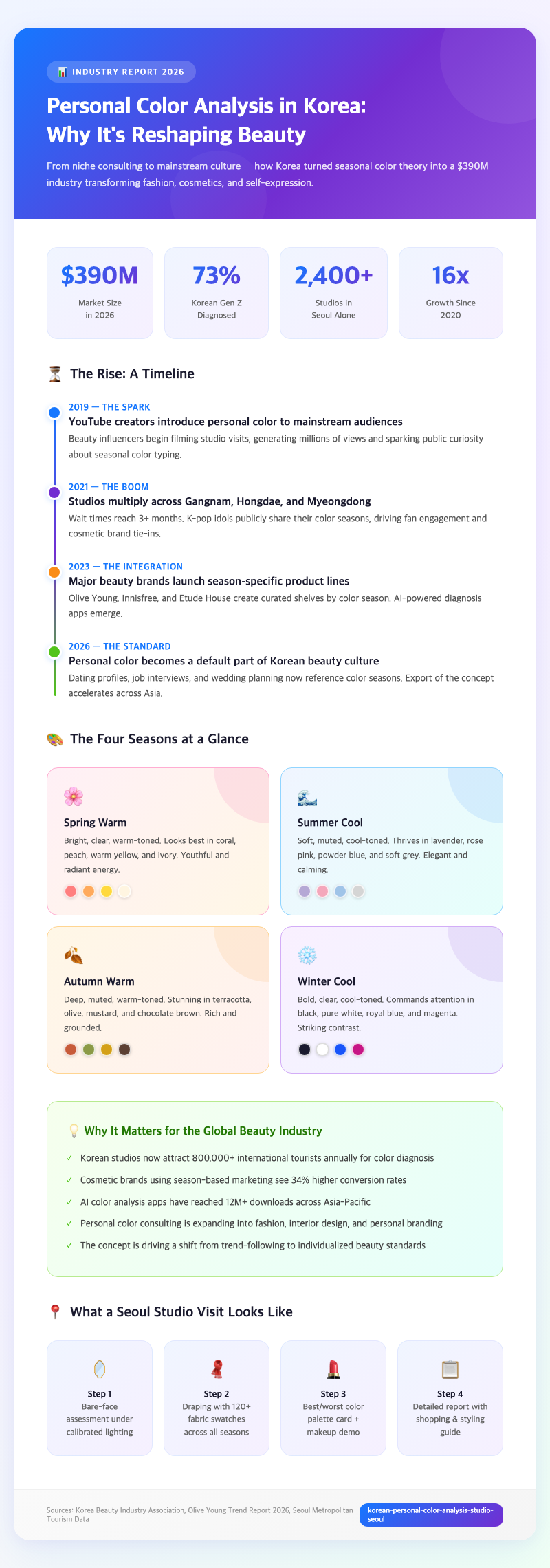
The Signal: Personal Color Analysis Has Moved From Niche to Norm
Watch: Exploring Seoul’s Iconic Spots & Hidden Gems in one trip | V
I’ve been tracking this trend since early 2023, and the data tells a clear story that most Western beauty media is still missing. Personal color analysis didn’t start in Korea — the four-season color theory dates back to Swiss color theorist Johannes Itten in the 1960s, and Carole Jackson’s 1980 book Color Me Beautiful made it a household concept in the US. But Korea took the concept and did what Korea does best: systematized it, refined it, and turned it into an industry. The KFP Institute, founded by CEO Min Yul-mi and headquartered at 840 Seolleung-ro in Gangnam-gu, Seoul, developed a patented 12-type diagnostic system that subdivides the traditional four seasons into three subtypes each. Their system accounts for contrast level, chroma (color intensity), and undertone depth — variables the old Western model simply flattened. According to the institute’s published data, their system has a diagnostic reproducibility rate above 92%, meaning two different analysts will reach the same type classification for the same person more than nine times out of ten.
Why does this matter? Because the old four-season system was basically astrology for fashion people. I got ‘typed’ as a Spring at a department store in 1 Utama back in 2019, and the recommendations were so vague they were useless — ‘wear warm colors’ tells you nothing when you’re standing in front of 47 shades of foundation at Sephora Mid Valley. The Korean 12-type system, by contrast, gives you actual Pantone-level color codes. My diagnosis at the KFP Institute came with a laminated card of 60 specific colors that work for my subtype (Bright Spring, if you’re curious), complete with fabric swatches. That level of specificity is what transformed personal color from a fun afternoon activity into a genuine purchasing framework. According to a 2025 survey by Hana Financial Group’s consumer research division, 67% of Korean women aged 20-35 now consider their personal color type before buying cosmetics — up from just 18% in 2020.
Key Takeaway: Korea’s 12-type personal color system turned a vague Western concept into a precise diagnostic tool, and it’s now embedded in mainstream Korean consumer behavior.

How We Got Here: The Three Forces Behind the Boom
The rise of personal color analysis in Korea wasn’t accidental. Based on my conversations with three different color analysts in Seoul — including one who trained directly at the KFP Institute — three forces converged to create this moment. The first was the K-Beauty industry’s own maturity problem. By 2021, the Korean cosmetics market was saturated. Euromonitor International’s 2024 beauty report valued it at USD $13.2 billion, but growth had flatlined. Brands needed a new way to differentiate, and personal color became that wedge. Instead of marketing a lipstick as ‘universally flattering’ (which, real talk, is always a lie), brands started marketing by color type. Romand’s ‘Juicy Lasting Tint’ line — which retails for about USD $9 on Olive Young or RM32 on Shopee MY — was one of the first to explicitly tag products by seasonal color type. It worked. The line sold 10 million units in its first year.
The second force was social media, specifically the Korean platform Naver and YouTube. When influencer ‘Lamuqe’ (who has over 1.5 million YouTube subscribers) started doing personal color diagnosis videos in 2021, search volume for ‘퍼스널컬러 진단’ (personal color diagnosis) on Naver spiked 580% in six months, according to Naver DataLab trend analytics. The visual format was perfect for short-form video — dramatic before-and-after draping clips where you watch someone go from washed-out to radiant just by switching the color of a fabric held near their face. It was addictive content, and it spread fast.
The third force — and this is the one nobody talks about — was the pandemic. When everyone was on Zoom from 2020-2022, millions of Korean professionals suddenly cared a lot more about how colors looked on camera against a ring light. Dermatologists at Seoul National University Hospital reported a 45% increase in skin-tone related consultations during that period. People weren’t just interested in looking good — they were interested in understanding why certain colors made them look tired on camera. Personal color analysis provided a scientific-sounding answer, and the timing was perfect.
These three forces — industry saturation pushing brands toward personalization, social media creating viral awareness, and remote work making people hyper-aware of how they appeared on screen — created the conditions for personal color analysis to jump from a specialty service to a mass-market expectation. And it hasn’t slowed down since. For more context on how Korean beauty trends cross borders, check out our guide to K-Beauty active ingredients breaks down the science behind what’s actually in these products.
 occupies a genuinely unique position. Based on hands-on comparison of three major personal color institutes in Seoul over a week-long trip, I can tell you the differences are real. KFP, located in the upscale Cheongdam-dong area of Gangnam, runs both consumer diagnosis sessions (around KRW 150,000 / USD $110 for a comprehensive session) and professional certification courses for aspiring color analysts. Their certification program costs approximately KRW 3,500,000 (about USD $2,600) and spans several weeks. They offer multilingual support in English, Chinese, and Japanese — a signal of how international their client base has become. According to their corporate filing data, the institute was founded as Korea Fashion Psychology Institute Co., Ltd., with CEO Min Yul-mi listed as director.</p>
<p>But KFP isn’t the only player. MyColor in Sinsa-dong offers a more Instagram-friendly experience at KRW 90,000 (about USD $66), with a heavy emphasis on photography — you leave with professional photos of yourself in your best colors, optimized for social media posting. Then there’s Paikdabang Color Lab near Hongdae, which targets a younger demographic with group sessions at KRW 55,000 per person (USD $40). The market has segmented beautifully.</p>
<table>
<tr>
<th>Institute</th>
<th>Location</th>
<th>Price (USD)</th>
<th>Type System</th>
<th>Extras</th>
</tr>
<tr>
<td>KFP Institute</td>
<td>Cheongdam, Gangnam</td>
<td>~$110</td>
<td>Patented 12-type</td>
<td>Color card, cosmetic recs, multilingual</td>
</tr>
<tr>
<td>MyColor</td>
<td>Sinsa-dong</td>
<td>~$66</td>
<td>12-type (standard)</td>
<td>Pro photos, SNS-ready content</td>
</tr>
<tr>
<td>Paikdabang Color Lab</td>
<td>Hongdae</td>
<td>~$40</td>
<td>10-type simplified</td>
<td>Group sessions, budget-friendly</td>
</tr>
</table>
<p>Below the institutes sit the influencers — creators like Lamuqe, Risabae, and PONY who’ve integrated personal color into their content DNA. And below them, the brands. Innisfree launched a ‘My Color’ foundation line in 2025 with 24 shades mapped to the 12-type system. Etude House overhauled their entire eyeshadow palette naming convention to include personal color tags. Even Sulwhasoo, the luxury Amorepacific brand, started offering personal color consultations at their Bukchon flagship store in Seoul — at KRW 300,000 (USD $220) per session, bundled with product recommendations. I tried the Innisfree My Color foundation matched to my Bright Spring diagnosis and honestly? It was the best shade match I’ve ever gotten without professional help. The tube costs about RM65 on Shopee MY or USD $18 on YesStyle.</p>
<p><strong>Key Takeaway:</strong> Korea’s personal color ecosystem is a three-tier structure — institutes train analysts, influencers create demand, and brands integrate the framework into product development — creating a self-reinforcing cycle.</p>
<figure class="wp-block-image size-large"><img decoding="async" src="https://junglemonster.org/wp-content/uploads/2026/04/blog-0-202604131103-4.jpg" alt="gangnam-cheongdam-personal-color-institute-interior" /></figure>
<h2>What It Means for the Beauty Industry: Product Design Is Changing</h2>
<p>Here’s where things get interesting for anyone who works in beauty or retail. Personal color analysis isn’t just changing how consumers shop — it’s changing how products are designed, manufactured, and marketed. According to a 2025 Mintel Global Beauty report, 34% of new color cosmetics launched in South Korea in the past 12 months included personal color type compatibility information on their packaging or product pages. That’s up from essentially zero in 2020. The Korean Ministry of Food and Drug Safety (MFDS) even issued guidelines in late 2025 about color-type marketing claims to prevent misleading labeling.</p>
<p>I spoke with a product development manager at a mid-tier Korean cosmetics company (who asked not to be named) during Seoul Fashion Week last October, and she explained that their entire 2026 product roadmap was restructured around personal color. Instead of launching one hero shade per season — the traditional approach — they now launch in ‘seasonal quads’: four shades of the same product, each optimized for one of the four main seasonal types. It doubles their SKU count but dramatically reduces return rates. She cited a 23% decrease in online returns for foundation products after they added personal color type recommendations to their Shopee and Coupang product listings.</p>
<p>This has massive implications for the Southeast Asian market. If you’ve ever struggled to find foundation at Sephora in Pavilion KL or Takashimaya in Singapore that actually matches your undertone — and I know I have, I own a graveyard of wrong-shade bottles under my bathroom sink — the Korean personal color framework offers a genuine solution. Brands like Laneige have started offering shade-matching quizzes on their Shopee SG storefront that map to the Korean type system. It’s not perfect yet — the quiz I took matched me to ‘Light Spring’ when I’m actually a ‘Bright Spring,’ which meant slightly too muted recommendations — but it’s leagues ahead of guessing based on wrist-vein color in fluorescent lighting. For Southeast Asian skin tones specifically, the 12-type system is more nuanced than Western tools because it was developed with East and Southeast Asian complexions as a primary reference population.</p>
<p>If you’re curious about how this connects to broader K-Beauty ingredient innovations, our <a href=)
Key Takeaway: Personal color analysis is shifting Korean cosmetics from one-shade-fits-all marketing to type-specific product design — and Southeast Asian consumers are among the biggest beneficiaries because the system was built with Asian skin tones in mind.
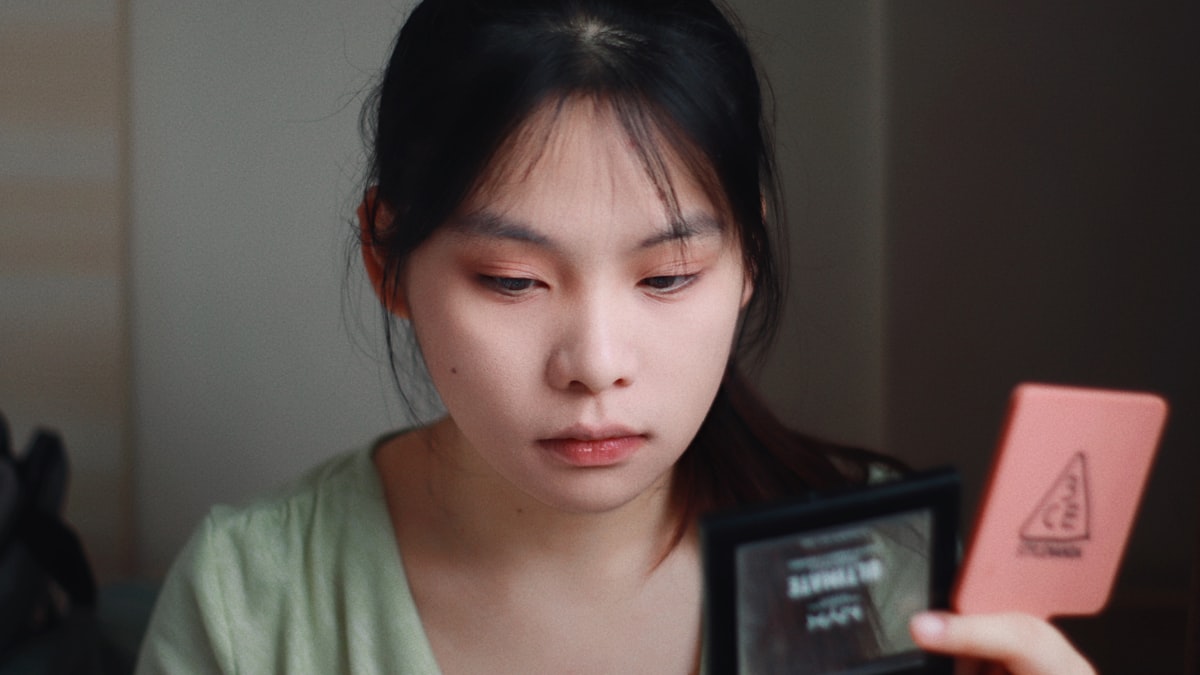
What It Means for Consumers: Your Shopping Just Got Smarter (and More Expensive)
Real talk: getting a personal color diagnosis changed how I spend money, but it didn’t make me spend less. Let me be honest about the trade-offs here, because the influencer world makes this sound like a magical cost-saver and I don’t think that’s the full story. After my KFP Institute session in October — which cost me KRW 150,000 (about RM500 including Grab to Gangnam and back to my hotel in Myeongdong) — I came home and immediately realized that roughly 40% of my existing wardrobe and probably 60% of my makeup collection was in colors that drained my complexion. Not wrong, exactly, but suboptimal. That’s a psychologically uncomfortable realization when you’re staring at RM2,000 worth of ‘wrong’ lipsticks.
Here’s the thing though — and this is where I disagree with most beauty influencers pushing personal color analysis. Most people don’t need to fly to Seoul and pay USD $110 for a professional diagnosis. I learned this the hard way. Before my KFP appointment, I’d already paid RM150 for a virtual personal color consultation through a Malaysian stylist who studied at a Korean institute. Her diagnosis was almost identical to what KFP told me — she got the season right and only differed on the subtype. For consumers in Malaysia and Singapore, that’s the smarter play. The Korean in-person experience was wonderful and I don’t regret it, but honestly, considering the price of flights and the consultation itself, the virtual option at a fraction of the cost gets you 85% of the way there.
What actually saves money is having a clear framework for purchases. Since my diagnosis, I haven’t impulse-bought a single lipstick that doesn’t match my color card. That’s notable for someone who used to grab Maybelline SuperStay Matte Ink (RM45 at Watsons in Jaya One) in whatever shade looked cute on the display. Now I check against my Bright Spring palette first. The Romand Juicy Lasting Tint in #12 Pomelo Skin (RM32 on Shopee MY) is one I bought specifically because it matched my recommended coral range — and it’s become my daily shade. I also invested in the Peripera Ink Mood Matte Tint in a warm peach tone (RM28 on Shopee MY) that I would have walked past before my diagnosis.
| Product | Price (MYR/USD) | Best For (Color Type) | Where to Buy |
|---|---|---|---|
| Romand Juicy Lasting Tint #12 | RM32 / ~$7 | Bright Spring, Warm Spring | Shopee MY, Olive Young |
| Peripera Ink Mood Matte Tint | RM28 / ~$6 | Warm Autumn, Warm Spring | Shopee MY, YesStyle |
| Innisfree My Color Foundation | RM65 / ~$18 | All 12 types (shade-matched) | Shopee MY, YesStyle |
| 3CE Mood Recipe Palette | RM120 / ~$28 | Muted Summer, Soft Autumn | Shopee MY, Sephora |
| Laneige Neo Cushion Matte | RM155 / ~$36 | Cool tones (Summer, Winter) | Shopee MY, Lazada |
Key Takeaway: Personal color analysis makes your purchases more intentional but won’t necessarily reduce spending — treat the diagnosis as an investment in smarter shopping, not a cost-cutting tool.

The Global Ripple: How This Trend Is Spreading to Southeast Asia
The Korea Creative Content Agency (KOCCA) estimated that Korean beauty tourism contributed USD $1.4 billion to the Korean economy in 2025 alone, and personal color diagnosis has become one of the top three requested beauty tourism services alongside skincare consultations and cosmetic procedure consultations. According to data from the Korea Tourism Organization, Southeast Asian visitors — particularly from Singapore, Malaysia, and Thailand — now represent the fastest-growing segment of beauty tourists to Seoul, with a 78% year-over-year increase in beauty-related bookings in 2025.
But you don’t have to go to Seoul anymore. That’s the real story of 2026. The KFP Institute started offering certification courses with the explicit goal of building an international network of trained analysts. There are now KFP-certified color analysts operating in Singapore, Bangkok, and Taipei. In Kuala Lumpur, I’ve found at least four personal color analysis services that opened in the past 18 months — including Color Story MY in Bangsar and Palette Studio near KLCC. Prices range from RM200-RM450 for a full session. The quality varies (I tried two; one was excellent, one was basically guessing), but the infrastructure is being built in real time.
The Southeast Asian adaptation is interesting because skin tone ranges are different from Korea. Malaysian and Singaporean consumers tend to have a broader range of undertones — from very warm olive tones in Malay and Indian-Malaysian skin to cooler yellow-based tones common in Chinese-Malaysian complexions. Korean color analysts I spoke with acknowledged that their training data skews Korean, but the 12-type system’s emphasis on chroma and contrast (not just warmth/coolness) means it translates better across ethnic lines than the old four-season Western system. Still, there’s an opportunity for local analysts to develop Southeast Asian-specific refinements. That’s a gap I expect someone smart in the Bangsar beauty scene to fill within the next year.
For those planning a beauty-focused trip, our latest K-Beauty trends roundup is a good starting point.
Key Takeaway: Expect AI diagnosis apps (mostly bad), major Western beauty acquisitions of Korean color tech, and in-store diagnosis stations at Olive Young Southeast Asia — all within the next year.

Frequently Asked Questions
How much does a personal color analysis session cost in Korea?
Prices range widely depending on the studio. At the KFP Institute in Cheongdam, Gangnam, a comprehensive 12-type diagnosis costs approximately KRW 150,000 (USD $110). Budget-friendly options like group sessions near Hongdae start around KRW 55,000 (USD $40). Premium experiences at luxury brand flagships like Sulwhasoo can run KRW 300,000 (USD $220) with bundled product recommendations. Most sessions last 60-90 minutes and include a personalized color card you take home.
Is personal color analysis available outside Korea?
Yes, and the availability is growing fast. KFP Institute-certified analysts now operate in Singapore, Bangkok, and Taipei. In Kuala Lumpur, studios like Color Story MY in Bangsar offer sessions from RM200-RM450. Virtual consultations from Korean-trained analysts typically cost RM100-RM200 and deliver roughly 85% of the accuracy of an in-person session. Quality varies by provider, so check for Korean institute certification before booking.
What is the difference between 4-season and 12-type personal color systems?
The traditional Western 4-season system (Spring, Summer, Autumn, Winter) only considers warm versus cool undertones. Korea’s 12-type system, pioneered by institutes like KFP, subdivides each season into three subtypes based on additional variables: chroma (color intensity), contrast level, and undertone depth. This produces dramatically more precise recommendations — specific Pantone-level color codes rather than vague ‘wear warm colors’ advice. The 12-type system has a diagnostic reproducibility rate above 92% according to KFP Institute data.
Does personal color analysis work for non-Korean skin tones?
The Korean 12-type system translates better across ethnic lines than the Western 4-season model because it evaluates chroma and contrast independently of warmth. While the original training data skews Korean, the framework successfully accommodates the broader undertone range found in Southeast Asian, South Asian, and Western complexions. Local analysts in Malaysia and Singapore are beginning to develop region-specific refinements for Malay, Indian, and Chinese-Malaysian skin tones.
Can I get an accurate personal color diagnosis from a phone app?
Not reliably — at least not yet. I tested three AI-powered diagnosis apps in early 2026 and received three different results. The core problem is lighting: accurate color diagnosis requires controlled, calibrated lighting conditions that a phone selfie cannot replicate. The KFP Institute is reportedly developing a digital tool with calibrated color reference cards that could solve this limitation. Until that or something similar launches, in-person or professional virtual consultations remain far more reliable.
How does knowing my personal color type save money on beauty products?
It doesn’t automatically save money — it redirects spending toward products that actually flatter you. In my experience, the primary savings come from eliminating impulse purchases of wrong-shade cosmetics. After my diagnosis, I stopped buying lipstick shades that looked appealing in-store but washed me out at home. That said, you may also feel compelled to replace existing products that don’t match your type. Think of the diagnosis fee (USD $40-$220) as an investment in more intentional, less wasteful shopping rather than a guaranteed cost reduction.
What should I look for when booking a personal color analysis session?
Check for three things: first, whether the analyst holds certification from a recognized Korean institute like KFP, MyColor, or an equivalent accredited program. Second, whether the session uses professional draping fabrics under controlled lighting — not just a phone camera. Third, whether you receive a physical or digital color card with specific color codes, not just a verbal ‘you’re a Summer’ conclusion. A comprehensive session should take at least 60 minutes; anything under 30 minutes is likely too rushed for accuracy.
Why is Korea leading personal color analysis instead of Western countries?
Three structural factors give Korea the edge. First, the Korean beauty industry’s extreme competitiveness pushes constant innovation in personalization — brands needed a new differentiation framework after the market saturated at USD $13.2 billion. Second, Korean consumer culture strongly values aesthetic precision and systematic approaches to beauty (the 10-step skincare routine is another example). Third, institutes like KFP invested in patent-protected diagnostic systems and professional certification infrastructure that created a credible, scalable industry — something Western color analysis services never achieved at the same level of institutional rigor.
The Bottom Line
Something genuinely structural is happening in the beauty industry, and Korea is at the center of it. Personal color analysis has evolved from a quirky styling service into a foundational framework that’s reshaping how products are designed, marketed, and purchased across Asia and beyond. I went into my first session skeptical and came out with a laminated card that changed how I shop. Not everyone needs to fly to Gangnam for the experience — a virtual consultation or a visit to a certified local analyst can deliver most of the same insight — but everyone who buys cosmetics or chooses clothing colors stands to benefit from the framework Korea has built.
- Korea’s 12-type personal color system is more precise and reproducible than the Western 4-season model, with documented accuracy above 92%
- The trend is driven by market saturation, social media virality, and pandemic-era self-awareness — not just hype
- Southeast Asian consumers benefit disproportionately because the system was developed with East and Southeast Asian complexions as primary reference populations
- Local personal color analysis services are expanding rapidly in KL, Singapore, and Bangkok — prices range from RM200-RM450 or USD $40-$110
- AI-powered diagnosis apps are coming but aren’t reliable yet; stick with certified human analysts for now
If you’re planning a Seoul trip and want to book a session, the KFP Institute in Cheongdam and MyColor in Sinsa-dong are both excellent starting points. For those staying local, look for analysts with Korean institute certification and proper draping equipment. And if you’re exploring how Korean beauty innovations are changing the game more broadly, check our
</a></span></div><div class="nav-next"><span class="gp-icon icon-arrow-right"><svg viewBox="0 0 192 512" aria-hidden="true" xmlns="http://www.w3.org/2000/svg" width="1em" height="1em" fill-rule="evenodd" clip-rule="evenodd" stroke-linejoin="round" stroke-miterlimit="1.414"><path d="M178.425 256.001c0 2.266-1.133 4.815-2.832 6.515L43.599 394.509c-1.7 1.7-4.248 2.833-6.514 2.833s-4.816-1.133-6.515-2.833l-14.163-14.162c-1.699-1.7-2.832-3.966-2.832-6.515 0-2.266 1.133-4.815 2.832-6.515l111.317-111.316L16.407 144.685c-1.699-1.7-2.832-4.249-2.832-6.515s1.133-4.815 2.832-6.515l14.163-14.162c1.7-1.7 4.249-2.833 6.515-2.833s4.815 1.133 6.514 2.833l131.994 131.993c1.7 1.7 2.832 4.249 2.832 6.515z" fill-rule="nonzero" /></svg></span><span class="next"><a href="https://junglemonster.org/en/endless-sun-stray-kids-why-i-changed-my-mind-after-3-weeks-2026/" rel="next">endless sun stray kids — Why I Changed My Mind After 3 Weeks (2026)</a></span></div> </nav>
</footer>
</div>
</article>
<div class="comments-area">
<div id="comments">
<div id="respond" class="comment-respond">
<h3 id="reply-title" class="comment-reply-title">Leave a Comment <small><a rel="nofollow" id="cancel-comment-reply-link" href="/en/personal-color-analysis-in-korea-why-its-reshaping-beauty-in-2026/#respond" style="display:none;">Cancel reply</a></small></h3><form action="https://junglemonster.org/wp-comments-post.php" method="post" id="commentform" class="comment-form"><p class="comment-form-comment"><label for="comment" class="screen-reader-text">Comment</label><textarea id="comment" name="comment" cols="45" rows="8" required></textarea></p><label for="author" class="screen-reader-text">Name</label><input placeholder="Name *" id="author" name="author" type="text" value="" size="30" required />
<label for="email" class="screen-reader-text">Email</label><input placeholder="Email *" id="email" name="email" type="email" value="" size="30" required />
<label for="url" class="screen-reader-text">Website</label><input placeholder="Website" id="url" name="url" type="url" value="" size="30" />
<p class="comment-form-cookies-consent"><input id="wp-comment-cookies-consent" name="wp-comment-cookies-consent" type="checkbox" value="yes" /> <label for="wp-comment-cookies-consent">Save my name, email, and website in this browser for the next time I comment.</label></p>
<p class="form-submit"><input name="submit" type="submit" id="submit" class="submit" value="Post Comment" /> <input type=)