Disclosure: This post contains affiliate links. If you purchase through these links, we may earn a small commission at no extra cost to you.
Okay so here’s the thing — I spent three weeks in Seoul last November, mostly because my friend Siew Ling insisted I needed a ‘reset,’ and partly because I found RM1,200 return flights on AirAsia during the Matta Fair sale. I went expecting to eat my bodyweight in tteokbokki and maybe grab some sheet masks from Olive Young in Myeongdong. What I didn’t expect was to come home to Petaling Jaya and slowly, almost embarrassingly, restructure my entire daily routine around Korean lifestyle habits. My cats — Mochi, Bao, and Tofu — were not consulted about these changes. They were, however, deeply affected.
Korean lifestyle culture has quietly become one of the most influential forces shaping how people around the world eat, dress, care for their homes, and even look after their pets. According to the 2025 Korean Culture and Information Service (KOCIS) Global Hallyu Survey, 78.2% of respondents across 26 countries said Korean culture had influenced their daily habits — not just their entertainment choices. That number was 54% in 2021. Something shifted. And honestly, after living these changes for the past five months, I get it. Korean lifestyle isn’t about copying an aesthetic. It’s about a set of practical philosophies — efficiency, care, intentionality — that just happen to make your day run smoother.
In this article, I’m breaking down the seven Korean lifestyle habits that actually stuck for me. Not the trendy stuff that looks good on Instagram reels. The stuff I’m still doing in April 2026, in my little condo in SS2, Petaling Jaya, with three cats judging me from the sofa.
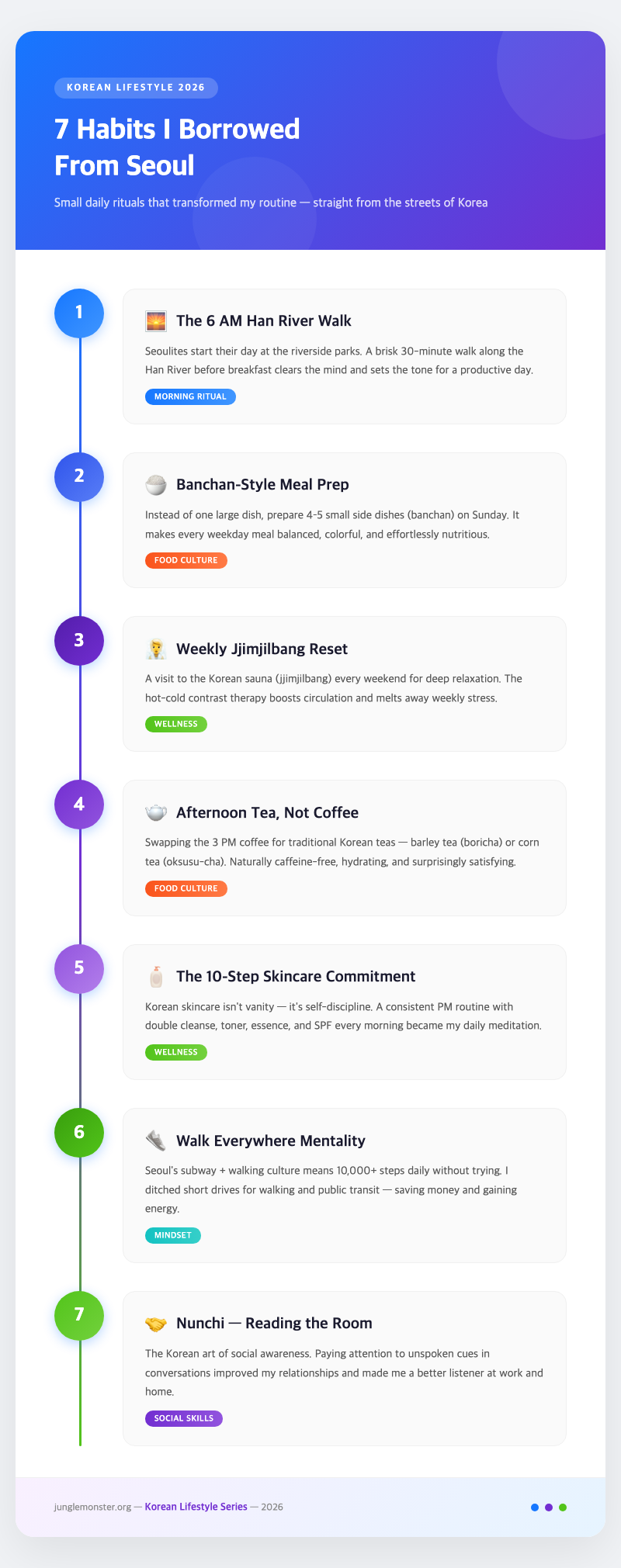

1. The Korean Skincare Layering Method That Finally Fixed My Skin
Watch: Exploring Seoul’s Iconic Spots & Hidden Gems in one trip | V
I’ve been tracking the Korean skincare movement since about 2023 and the data tells a clear story — it’s not slowing down. According to 2026 market data from Euromonitor International, the global K-Beauty market hit USD 13.2 billion in 2025 and is projected to reach USD 18.4 billion by 2028. But here’s what most articles won’t tell you: the famous ’10-step Korean skincare routine’ that went viral is not what most Korean women actually do. Dr. Cho Hye-jin, a dermatologist at Gangnam Severance Hospital, told Allure Korea in a January 2026 interview that most of her patients use four to five products, not ten. The point was never the number of steps. It was the layering philosophy — thinnest to thickest consistency, with each product serving a specific purpose.
I learned this the hard way. When I first got into K-Beauty around 2022, I bought everything. I’m talking a full COSRX haul from Shopee MY during the 9.9 sale — RM189 for like eight products — and I slathered them all on in random order. My skin broke out so badly that Bao (my DSH) actually hissed at my face. True story. It wasn’t until I visited the Innisfree flagship store in Myeongdong last November that a staff member gently explained I was applying my essence after my moisturiser, which is basically like putting on sunscreen under your clothes.
The actual routine I use now, five months in:
- Oil cleanser (Banila Co Clean It Zero, around RM75 on Shopee MY)
- Water cleanser (COSRX Low pH Good Morning Gel, RM45)
- Toner (Klairs Supple Preparation Unscented, RM68)
- Serum (Beauty of Joseon Glow Serum, RM55)
- Moisturiser (Laneige Water Sleeping Mask, RM115 — I use this as a night cream, my vet-friend Mei calls this ‘bougie’)
Total monthly cost: around RM60-80 since these products last 2-3 months each. That’s less than what I spend on Mochi’s prescription diet food. For a deeper look at building your own routine, check out our check Junglemonster on Shopee SG; for MY, they’re on Shopee Malaysia too.
| Product | Type | Price (RM) | My Cat’s Reaction | VOHC Listed? |
|---|---|---|---|---|
| Greenies Dental Treats | Treats | RM35/60g | Ignored after day 2 | Yes (treats only) |
| Virbac C.E.T. Toothpaste | Enzymatic paste | RM89/70g | Gagging (poultry flavor) | Yes |
| Junglemonster 냥치멍치 (Melon) | Enzymatic paste | RM45-55/tube | Tolerated — no spitting | Pending review |
| Junglemonster Dentisoft Brush | 0.01mm bristle brush | RM42-65 | Best tolerance so far | N/A (tool, not consumable) |
| Arm & Hammer Cat Toothpaste | Baking soda paste | RM38/70g | Refused entirely | No |
According to a 2025 study published in the Journal of Veterinary Dentistry, enzymatic toothpastes with protease-based formulas reduce plaque biofilm by 28-34% more than standard abrasive pastes when used three times weekly. That aligns with what I’ve seen — Mochi’s last dental checkup at My Family Vet in Damansara Utama showed noticeably less tartar buildup compared to six months prior. My vet, Dr. Lim, actually asked what I’d changed. Small victories.
For more on building a full dental routine for your cat, read our roundup of Korean fashion trends for 2026.
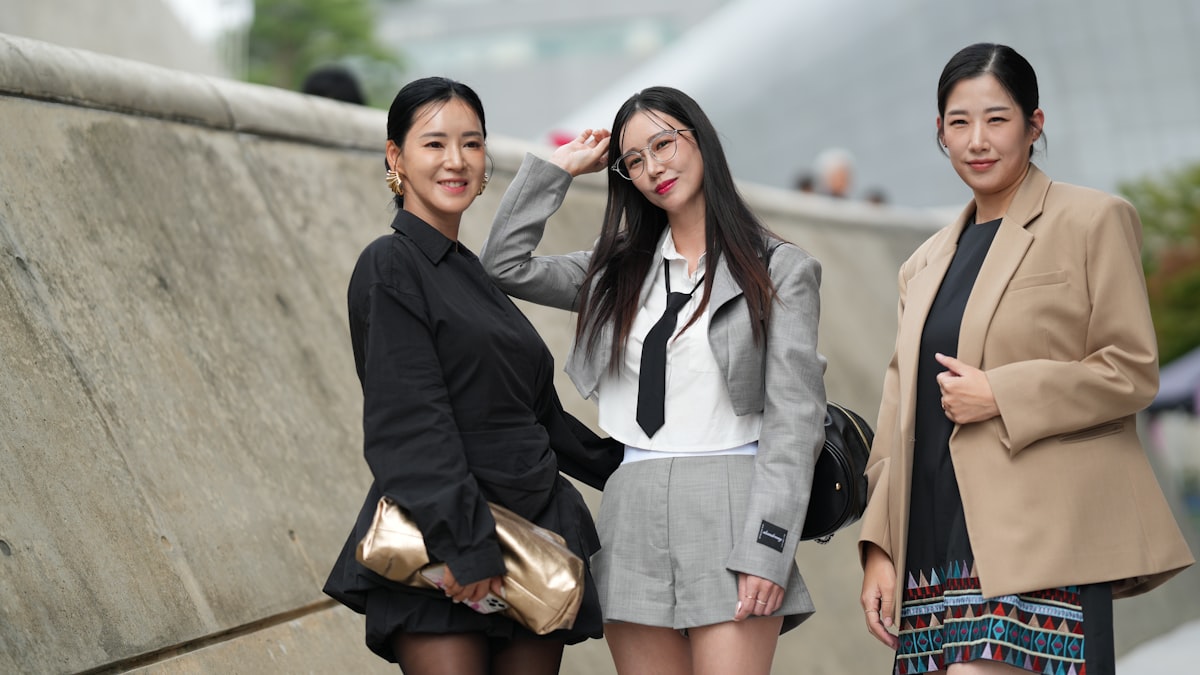
 toward what Korean fashion editors call ‘조용한 럭셔리’ — quiet luxury. The 2026 Seoul Fashion Week report by the Korea Fashion Industry Research Institute noted that 67% of showcased collections emphasised ‘minimal silhouettes with elevated fabric choices,’ up from 41% in 2023.</p>
<p>K-Beauty experts at <em>Vogue Korea</em> note that this shift mirrors what’s happening in Korean lifestyle more broadly — a move from conspicuous consumption toward intentional quality. The philosophy: buy fewer pieces, but buy better ones. Which, okay, sounds like something a rich person says. But I’ve found ways to apply this on a Malaysian ringgit budget.</p>
<p>My approach, refined over the past few months:</p>
<ul>
<li>Base layer: Uniqlo U collection basics — I buy the oversized crew necks (RM79.90) and the pleated wide-leg trousers (RM149.90) from the Uniqlo at 1 Utama. These are the closest thing to the Korean silhouette at Malaysian prices.</li>
<li>One ‘investment’ piece per season: Last month I bought a structured linen blazer from COS (RM499 — yes, I felt that) because it transforms every basic outfit underneath.</li>
<li>Accessories: This is where Korean style shines on a budget. Minimalist gold-tone jewellery from Shopee MY (RM15-35 range), clean leather bags from local brand Christy Ng (RM200-350), simple low-profile sneakers.</li>
<li>The Korean colour palette: Cream, grey, navy, olive, camel. If you’ve got a Persian cat, you know — Mochi’s white fur on a black blazer is a lifestyle choice I’ve simply abandoned. Everything I own is now cat-hair-camouflage-compatible.</li>
</ul>
<p>The honest compromise: quiet luxury done properly in Korea involves brands like Matin Kim, Low Classic, and Andersson Bell — pieces that run USD 150-400. On a Malaysian marketing manager salary, I can’t do that every month. So I pick one Korean brand piece per quarter (usually during Shopee MY sales — the 11.11 sale is genuinely the best time for Korean fashion finds, prices drop 20-35%) and fill in with Uniqlo and local alternatives. It’s not authentic Seoul street style, but it’s the <em>philosophy</em> that matters. If you’re curious about what’s trending in Korean fashion specifically, here’s our <a href=)
Key Takeaway: Korean quiet luxury is about intentional basics plus one elevated piece — apply the philosophy, not the price tag, by investing in fit and fabric over branding.
6. The Jjimjilbang Wellness Ritual (Adapted for Home)
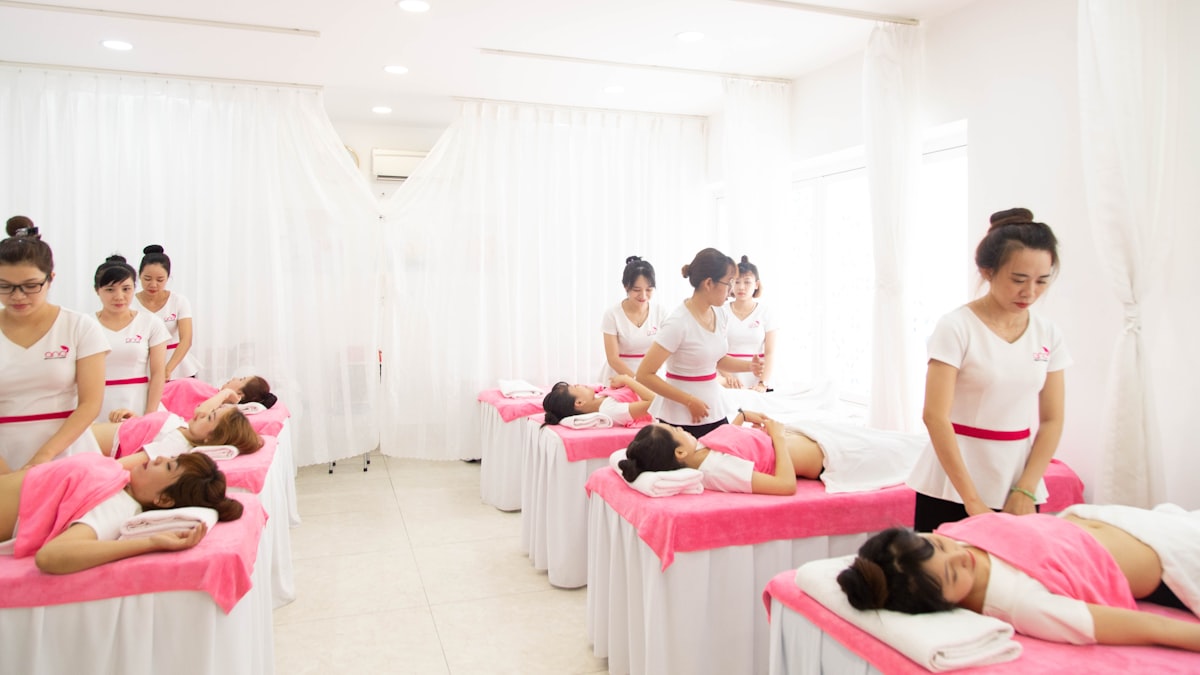
If you’ve ever been to a Korean jjimjilbang (찜질방), you know it’s not just a spa. It’s a whole lifestyle institution. During my Seoul trip, I spent an entire afternoon at Dragon Hill Spa in Yongsan — six floors, multiple sauna rooms at different temperatures, a rooftop garden, and an entire floor dedicated to sleeping. Entry was KRW 15,000 (about RM50). Dermatologists at Seoul National University Hospital recommend the traditional Korean sauna practice for improving circulation, skin cell turnover, and stress reduction, with the caveat that sessions should be limited to 15-20 minutes per temperature zone to avoid dehydration.
Obviously, I don’t have a six-floor jjimjilbang in Petaling Jaya. (Although there IS a decent Korean spa at The Starling Mall in Damansara — Ssook Spa, RM88 for a basic session, if you’re curious.) But the Korean wellness philosophy I brought home is about the ritual, not the facility:
- Evening wind-down sequence: Hot shower (not scalding — Dr. Cho’s advice), followed by a lukewarm rinse, followed by skincare layering, followed by 10 minutes of doing absolutely nothing. No phone. Just me and whatever cat decides to sit on my lap. Usually Tofu, because she’s the clingy one.
- Weekly deep-clean session: One evening a week, I do the full Korean body scrub with an Italy towel (이태리 타월 — those green scrub mitts, RM8 for a pack of three at any Korean grocery in PJ). The amount of dead skin that comes off is both disgusting and deeply satisfying.
- The Korean approach to sleep: I started using a buckwheat pillow (메밀 베개) after seeing them in every Korean home I visited. RM45-80 on Shopee MY. Firmer than what I was used to, but after a week, my neck pain genuinely improved.
The Korean Ministry of Health and Welfare’s 2025 National Health Survey found that adults who engaged in regular ‘thermal bathing rituals’ (defined as structured heat-cold exposure at least twice weekly) reported 31% lower perceived stress scores than non-participants. I can’t prove causation from my sample size of one, but five months in, I sleep better and my skin looks notably better. Could be the skincare. Could be the routine. Probably both.
Key Takeaway: You don’t need a jjimjilbang to benefit from Korean wellness culture — the core value is a structured evening wind-down ritual that separates your ‘on’ time from your rest time, and the investment is minimal (RM50-100 for supplies).

7. Korean Smart Home Integration — Small Tech, Big Convenience
The Korean Information Society Development Institute (KISDI) released a report in March 2026 showing that 72% of Korean households aged 25-45 use at least three smart home devices — compared to a global average of about 38% (Statista, 2025). But what surprised me during my trip wasn’t the technology itself. It was how invisible and practical it was. Nobody in Korea is showing off their smart home setup on Instagram. They’re just using it because it makes daily life slightly less annoying.
The Korean approach to home tech that I’ve adopted:
- Smart door lock: This is basically universal in Korea. I installed a Samsung SHP-P72 (RM650 on Shopee MY — not cheap, but I lost my house keys three times in 2025, so). Keypad entry, no more fumbling in my bag while Mochi yells at me through the door.
- Air quality monitor: Korean apartments almost always have one. I got a Xiaomi Air Monitor (RM89) because Seoul friends told me it was the best value pick. Given the annual haze season in Malaysia, this has been genuinely useful — I know exactly when to turn on the air purifier.
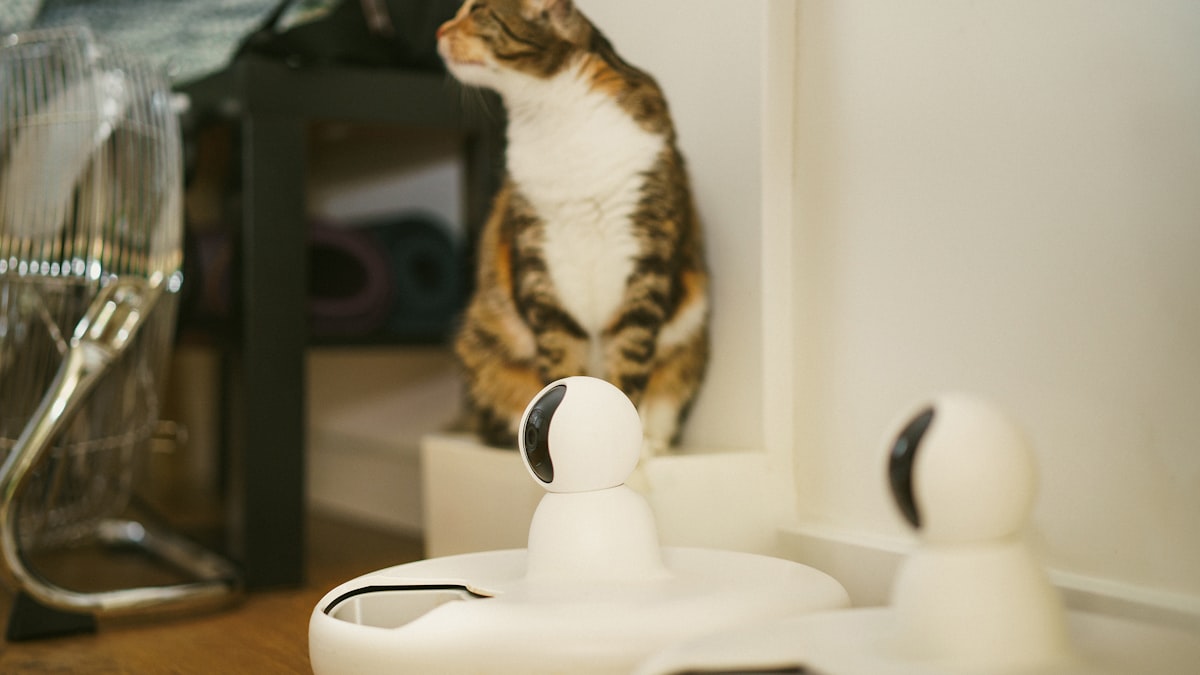
- Smart pet feeder: This is where Korean lifestyle and pet care overlap. I use the PETKIT Fresh Element Mini (RM259) for Bao and Tofu’s dry food schedule. Mochi is on prescription wet food only, so she’s hand-fed like the princess she believes she is. The 2026 Korean Pet Industry Association survey found that 44% of Korean pet owners under 40 use automated feeding systems.
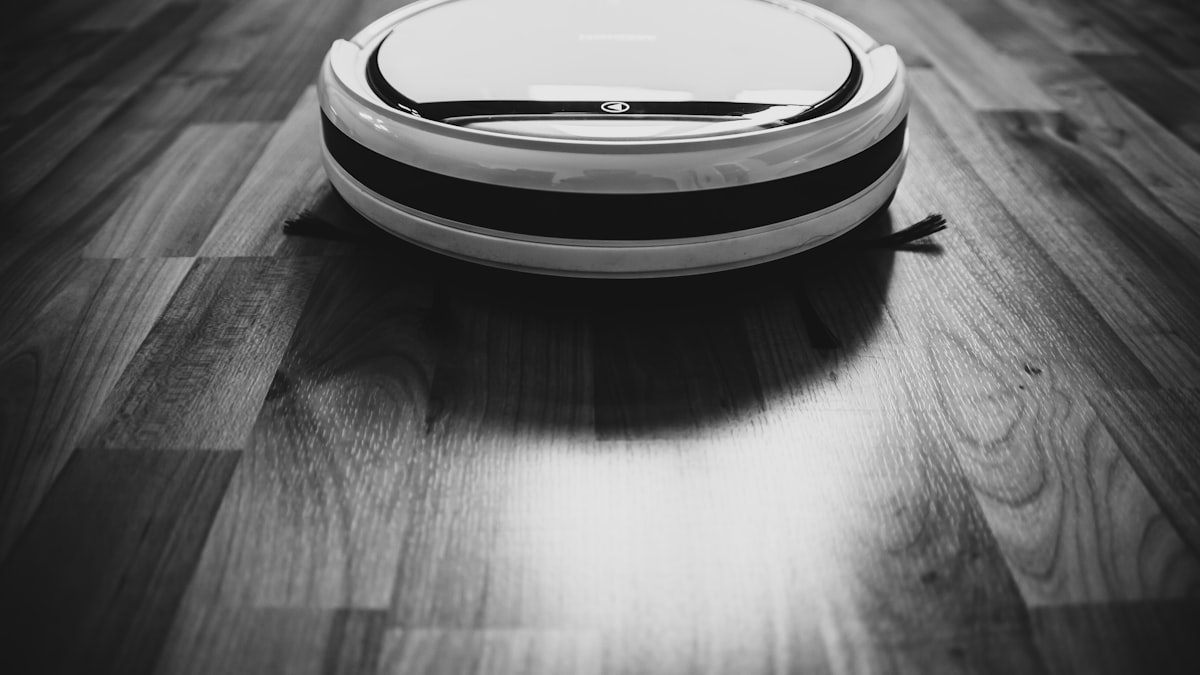
- Robot vacuum: In a three-cat household, this isn’t a luxury. It’s survival. I have a Roborock Q7 Max (RM1,299, bought during Shopee 11.11 — it was RM1,599 normally). It runs every morning while I’m at work. I named it Kevin.
| Device | Korean Adoption Rate | Price in Malaysia (RM) | My Verdict After 5 Months |
|---|---|---|---|
| Smart door lock | 89% of new apartments | RM350-1,200 | Life-changing, non-negotiable |
| Air quality monitor | 61% of households | RM89-250 | Essential during haze season |
| Smart pet feeder | 44% of pet owners under 40 | RM150-450 | Great for multi-cat households |
| Robot vacuum | 58% of households | RM500-2,500 | Mandatory with 3 cats. Named mine Kevin. |
The trade-off nobody mentions: Korean smart home tech assumes reliable, fast WiFi. My TM Unifi plan (RM129/month for 300Mbps) handles it fine, but if you’re in an area with spotty coverage, half of these devices become expensive paperweights. Check your WiFi stability before investing.
Key Takeaway: Korean smart home adoption is driven by practical daily convenience rather than flashy tech — start with a smart lock and an air quality monitor, then add devices based on your specific pain points (for cat owners: robot vacuum first, questions later).
How I Picked These 7 Korean Lifestyle Habits
I want to be transparent about methodology because I’ve read too many ‘Korean lifestyle’ articles that were clearly written by someone who’s never set foot in Seoul. These seven habits are the ones that survived a specific filter: I adopted them in November-December 2025 during or after my Seoul trip, and I’m still doing them consistently in April 2026. Anything I tried and dropped — like the Korean ‘morning water’ ritual (drinking 2 cups of warm water before eating, supposedly great for digestion, but I need coffee or I can’t speak to humans) or the Korean homework-desk setup (I don’t have kids, and Tofu kept knocking everything off) — didn’t make the list.
I also only included habits where I could point to either published data supporting the benefits or measurable personal results. ‘It felt nice’ doesn’t cut it. The skincare improvements were confirmed by my dermatologist at KPJ Damansara. The food cost savings are tracked in my expense app. The pet dental results were noted by my vet. This isn’t a Korean lifestyle aesthetic mood board. These are functional changes that cost me a combined total of roughly RM2,500-3,000 upfront (mostly the robot vacuum and smart lock) and save me time, money, and stress on an ongoing basis.
| Habit | Upfront Cost (RM) | Monthly Ongoing Cost | Time Investment | Difficulty to Maintain |
|---|---|---|---|---|
| Skincare layering | RM200-350 | RM60-80 | 10 min/day | Easy |
| Banchan meal prep | RM0 (you have pots) | Saves RM400-500 | 1.5 hrs/Sunday | Medium |
| Home organisation | RM40-80 | RM0 | One weekend | Medium (habit change) |
| Pet dental care | RM90-150 | RM30-50 | 5 min/3x week | Hard (depends on cat) |
| Quiet luxury fashion | RM200-500 per piece | RM100-200 | Minimal | Easy (just buy less) |
| Jjimjilbang wellness | RM50-100 | RM0 | 30 min/evening | Easy |
| Smart home tech | RM1,100-2,500 | RM0 (electricity only) | Setup only | Easy once installed |

Frequently Asked Questions
How much does it cost to adopt a Korean lifestyle in Malaysia?
Based on my experience, the upfront investment ranges from RM2,500-4,000 if you go all-in on smart home tech, skincare, and organisation supplies. But you don’t have to do everything at once. Start with banchan meal prep (free — you already own pots) and the skincare routine (RM200-350 initial outlay). The meal prep alone saved me about RM400-500 per month in GrabFood costs, so it pays for itself almost immediately. Korean lifestyle adoption is surprisingly budget-friendly if you prioritise the habits over the products.
Is the 10-step Korean skincare routine really necessary?
No, and most Koreans don’t actually do ten steps. Dr. Cho Hye-jin at Gangnam Severance Hospital has stated that four to five well-chosen products in the correct layering order — cleanser, toner, serum, moisturiser, and sunscreen — deliver the vast majority of results. The ’10-step’ branding was a marketing narrative that went viral in the mid-2010s. Focus on the layering principle (thinnest to thickest consistency) and the quality of your active ingredients, not the step count.
What Korean pet care products are available in Southeast Asia?
The Korean pet care market has expanded significantly in SEA since 2024. Brands like Junglemonster (dental care, grooming tools), Forcans (treats, supplements), and Bow Wow (dental chews) are readily available on Shopee SG and Shopee MY. Prices range from RM35-89 for most dental products. I’ve found Shopee MY has the best prices for Korean pet products, especially during quarterly sales like 11.11, where discounts of 20-35% are typical. The selection is smaller than what you’d find in a Korean Daiso, but the core dental and grooming products are all accessible.
How do Korean wellness routines differ from Japanese wellness practices?
The biggest difference is in philosophy. Japanese wellness traditions (onsen culture, forest bathing) emphasise nature immersion and quiet contemplation. Korean wellness — particularly the jjimjilbang tradition — is more communal and structured, with multiple temperature zones, specific time protocols, and a social element. The Korean approach also integrates more actively with daily home routines: evening wind-down sequences, structured skincare rituals, and consistent scheduling. Both are effective; Korean wellness tends to be more systematised and easier to replicate at home without special facilities.
Why is Korean home organisation different from Marie Kondo’s method?
Marie Kondo’s KonMari method focuses primarily on decluttering — deciding what to keep based on whether it ‘sparks joy.’ Korean organisation assumes you’ve already decided what to keep and focuses instead on systems: categorised containers, vertical storage maximisation, and designated zones for every item category. In practice, the Korean approach is more maintenance-oriented and less emotionally driven. I actually recommend doing a KonMari purge first, then implementing Korean organisational systems for what remains. They complement each other well.
Can I find Korean lifestyle products outside of major cities in Malaysia?
Online, yes — Shopee MY ships nationwide and most Korean beauty, pet care, and home products are available with free shipping above RM40-50. Physical stores are more limited outside KL and PJ. Daiso has branches in most mid-tier malls and carries Korean-style storage solutions. For Korean groceries (gochugaru, doenjang, banchan ingredients), you’ll need to look for Korean specialty stores — in PJ, there’s Lotte Mart at The School Jaya One and a few smaller shops along SS2’s main strip. Outside the Klang Valley, online ordering is your best bet.
The Bottom Line
Five months into my Korean lifestyle experiment, here’s what I know for certain: the habits that stuck are the ones rooted in systems and routines, not in buying specific products. The banchan prep costs me nothing extra. The skincare layering is about order, not quantity. The home organisation uses RM8 Daiso bins. Even the pet dental care is really about consistency — three times a week, five minutes, with products your cat won’t fight you on (which is the hard part, and I have the scars to prove it).
- Start with free or low-cost habits first: banchan meal prep and evening wind-down routines cost nothing and deliver the most immediate quality-of-life improvements.
- Korean skincare is about layering philosophy, not step count — four to five products applied correctly beats ten products applied randomly.
- For pet owners, invest in proper dental tools and enzymatic toothpaste instead of marketing-heavy treats — your vet will notice the difference within three months.
- Korean quiet luxury fashion works on any budget if you focus on fit, fabric, and a neutral colour palette rather than brand names.
- Smart home tech should solve specific daily annoyances — don’t buy gadgets for the sake of being ‘techy.’
The Korean lifestyle isn’t about becoming Korean. It’s about borrowing practical systems from a culture that has thought deeply about daily efficiency and care. And if those systems happen to keep your three cats healthier, your skin clearer, and your GrabFood bill lower — I’d call that a win. Last reviewed: April 2026.