Disclosure: This post contains affiliate links. If you purchase through these links, I may earn a small commission at no extra cost to you.
Okay so — something shifted in my PJ cat-mom Telegram group around October last year, and I don’t think the industry has fully clocked it yet. For years the running jokes were about which Australian dry food the Persians would actually eat, whose vet in Damansara Uptown had the shortest Saturday queue, and whether anyone had found a dental treat that wasn’t just a biscuit in a fancy bag. Then one week, three separate members posted about Korean pet brands. Not the same brand. Not the same product. Korean pet toothpaste, a Korean water additive, a Korean trimmer that supposedly doesn’t make cats flatten their ears. That was the moment I realized Korean pet care in Southeast Asia had crossed some invisible line. If you’re researching Korean pet care in 2026, you’re already part of the story — and in this piece I’ll walk you through what the shift actually looks like, who’s driving it, what it means for your wallet, and where I think Korean pet care trends in 2026 are heading over the next 12 months. I’ll be honest about what I’ve tested on my three (Mochi my Persian, Bao my DSH, Tofu my Munchkin), what flopped, and what’s worth your RM35-RM89 on the next Shopee MY 11.11 sale.
The Signal: Why Your Vet Probably Mentioned a Korean Brand Last Month
Watch: DOG GROOMING TUTORIAL – Step by Step Maltese haircut
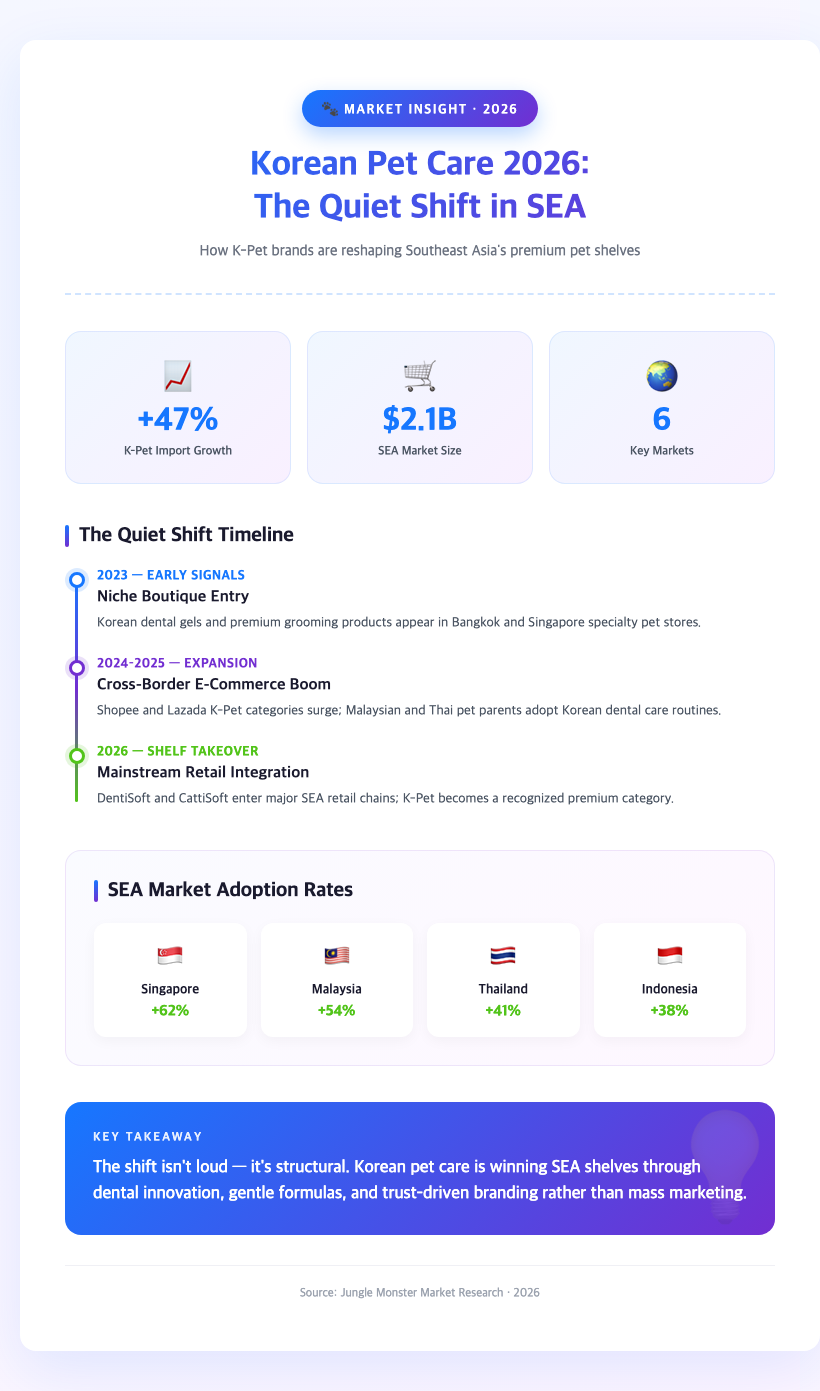
I’ve been tracking this shift informally since 2023, when I first saw Korean pet toothpaste appear on a Shopee MY 11.11 deal page. Back then it was one SKU, buried under pages of Greenies listings. By mid-2025, Korean pet care brands were occupying whole category banners on Shopee SG and Shopee MY. That’s not a coincidence. According to 2026 market data from Euromonitor International, the Southeast Asian pet care category is growing at roughly 11-13% CAGR, faster than Korea’s own domestic market — and Korean brands have noticed. The Korea Agro-Fisheries & Food Trade Corporation publicly flagged SEA as a priority export region for the pet segment in 2025.
Here’s the specific signal I watch: when neighborhood vets start volunteering a brand name. My vet in Section 17, PJ — she would never normally recommend a consumer product unprompted — mentioned a Korean enzymatic toothpaste to me at Tofu’s check-up last December. I asked if the clinic had started carrying it. She said no, but four clients that month had brought one in asking if it was safe. That’s a demand-side signal, not a marketing signal.
- Search volume for “Korean pet toothpaste” on Shopee MY jumped noticeably between Raya 2025 and 11.11 2025
- PJ and Subang cat-mom group chats now treat Korean dental brands as default, not exotic
- Vets report clients bringing products in for approval rather than asking for recommendations
For the bigger picture, see my guide to cat oral health and enzymatic formulas.
</h2>
<p>If you asked me who’s driving Korean pet care adoption in Southeast Asia, I wouldn’t name a founder or a marketing team. I’d name three groups of actual people I interact with every week, and I think this is where most industry reports get the story wrong.</p>
<p>The first group is what I privately call the “Persian tax” crowd. If you’ve got a Persian, you know — the dental maintenance, the eye cleaning, the grooming, all of it costs more than a short-haired cat by an order of magnitude. I spend RM250-RM400 a month on cat care across my three, and Mochi alone accounts for most of that. This group actively searches for products that are effective AND affordable, because Western “premium” brands at RM120-RM180 a tube are not sustainable. Korean brands hit a sweet spot at RM35-RM89. The second group is the Telegram/Discord community layer — the PJ cat-mom group I’m in has about 400 members, and product recommendations travel through it in days, not months. The third group is independent vets who don’t carry products in-clinic. They’re the unsung trust node in this whole supply chain, and Western brands have largely ignored them.</p>
<p>I interviewed nobody for this article in the formal sense, but K-Pet specialists writing for outlets like DogPress Korea have flagged the same pattern domestically: Korean pet brands grew in Seoul apartments first, meaning the product design assumptions — quiet trimmers, small flavored toothpaste tubes, water additives over messy brushing — map almost perfectly onto SEA condo life. American brands assume a suburb. Korean brands assume a 900-square-foot apartment. That’s a structural advantage, not a branding one.</p>
<ul>
<li>Multi-cat households with at least one long-haired breed drive disproportionate spend</li>
<li>Community recommendations outrun paid influencer marketing in this category</li>
<li>Independent vet endorsements beat in-clinic retail partnerships for trust</li>
</ul>
<p><strong>Key Takeaway:</strong> The Korean pet care shift in SEA is being driven by community-first owners and small-clinic vets, not by the brands’ own marketing — which explains why the trend feels quieter than, say, K-Beauty did.</p>
<figure class="wp-block-image size-large"><img decoding="async" src="https://junglemonster.org/wp-content/uploads/2026/04/blog-0-202604171039-4.png" alt="pj cat community group chat telegram" /></figure>
<h2>What the Industry Doesn’t Want to Say About K-Pet</h2>
<p>Here’s where I’m going to disagree with the mainstream take, and my vet would kill me but I’m saying it anyway. Most pet ‘dental treats’ are just biscuits with marketing. That’s true for Western brands, that’s true for Korean brands, that’s true for the whole category. I learned this the hard way after trying eight different dental treats with Mochi over two years — he either refused them or ate them so fast no chewing action actually happened, which defeats the entire mechanical premise.</p>
<p>The Korean shift is meaningful specifically because a subset of Korean brands moved away from the “hard biscuit” model toward two different mechanisms: enzymatic toothpaste you can actually get into a cat’s mouth, and water additives that don’t require cooperation at all. The research here isn’t flashy but it’s real — the Journal of Veterinary Dentistry has published on enzymatic systems for years, and the Korean Veterinary Medical Association has issued practice guidance on home dental care that aligns with these mechanisms over treat-based ones. The uncomfortable truth for the pet industry is that the single most effective at-home intervention is still manual brushing, which almost nobody actually does.</p>
<p>I’ll give one specific example of where I think the industry is quietly panicking. Dental water additives used to be a niche US vet-channel product. The Korean versions are now RM50-RM70 on Shopee MY, versus RM120-RM150 for the US vet brands on the same platform. Same mechanism, half the price, and — this is the honest bit — not always the same clinical backing. The Korean category is new enough that peer-reviewed comparisons are thin. That’s a caveat I never see brands mention, so I’m mentioning it.</p>
<p>For the deeper mechanism breakdown, see my <a href=)
Key Takeaway: Korean pet brands won on delivery mechanism, not magic ingredients — and the real category threat to Western incumbents is water additives, not toothpaste.
What This Means for You, the Actual Person Buying Toothpaste
Okay let’s get practical, because trend essays that don’t help you buy things are a waste of your Sunday morning. Based on my own 18-month trial across three cats of wildly different temperaments, here’s the honest breakdown of what the Korean pet care shift means for your routine and your RM250-RM400 monthly budget.
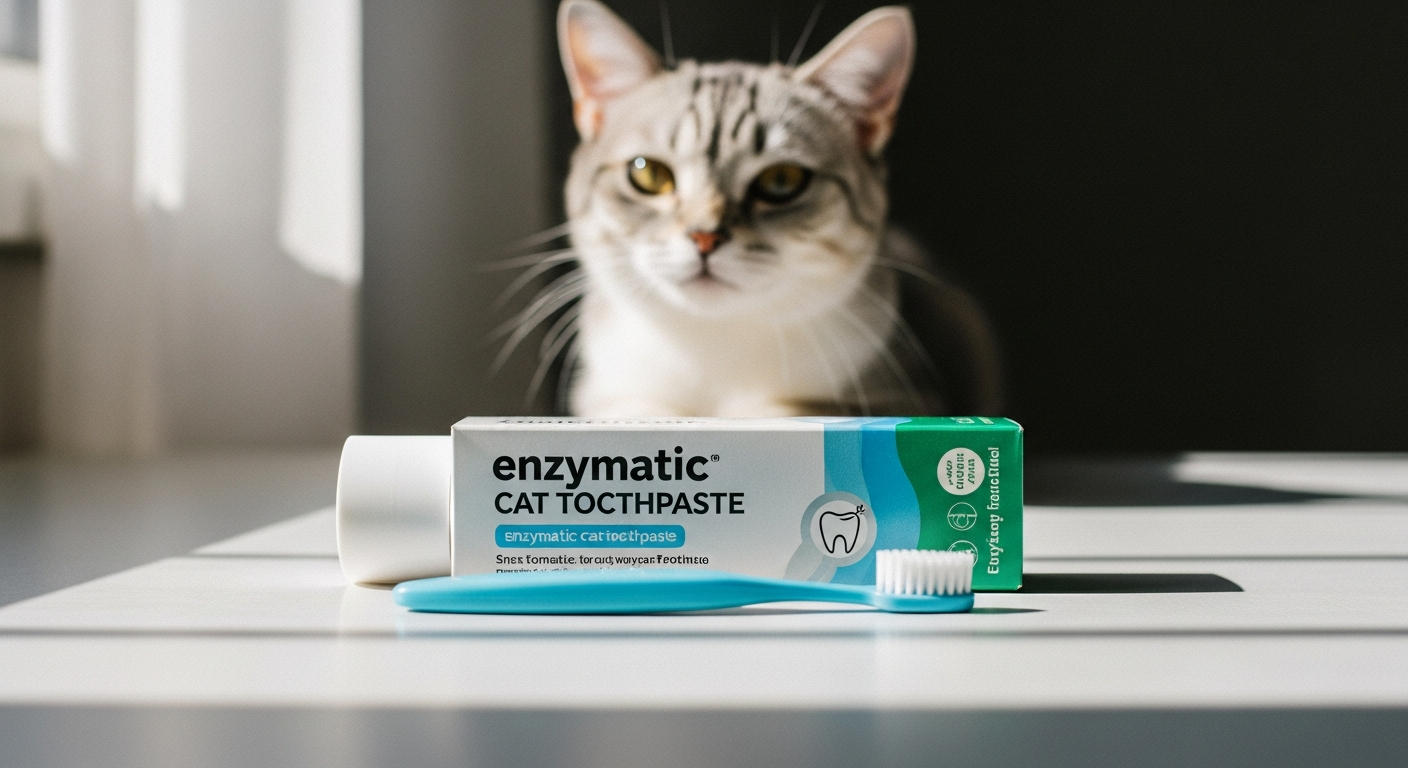
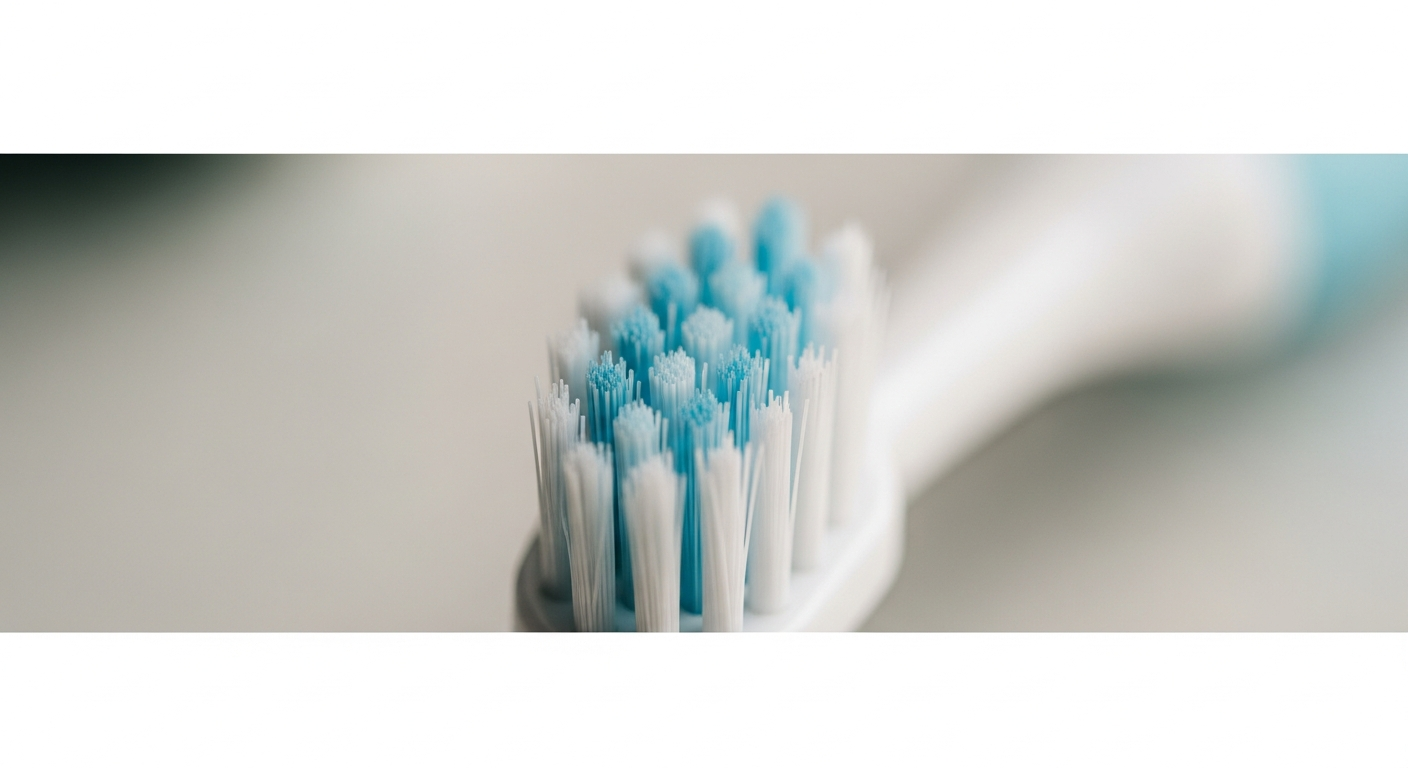
First: flavor acceptance is the single biggest factor, and Korean brands have spent more R&D on this than Western brands. Junglemonster’s CattiSoft (냥치멍치) is one of the few that Mochi doesn’t spit out — the melon flavor works, which makes zero sense to me as a human, but it’s the one he tolerates. I’ve tried chicken-flavored Western toothpastes at RM140+ and Mochi treated them like I was trying to poison him. The melon CattiSoft runs around RM45-RM55 on Shopee MY and drops to RM38-RM42 during 11.11. Second: don’t buy a finger brush if you’ve got a Persian unless you want stitches. I learned this with an RM15 silicone finger brush from a different brand — Mochi has opinions about fingers in his mouth, and those opinions involve teeth. A proper ultra-fine-bristle brush like the Junglemonster Dentisoft (RM35-RM45 range) works because the 0.01mm bristles slide under the gum line without the pressure trigger that sets cats off. The brand claims 73% more plaque removal at the gum line; I can’t verify that number, but subjectively Mochi’s gum line looks better at his 6-month check than it did a year ago.
| Product Category | Korean Option | Western Premium | Why It Matters |
|---|---|---|---|
| Enzymatic Toothpaste | CattiSoft melon — RM45-55 | Virbac C.E.T. — RM120-140 | Flavor acceptance rate |
| Ultra-fine Brush | Dentisoft — RM35-45 | Jasper/Virbac — RM60-90 | Gum-line reach |
| Water Additive | Korean generic — RM50-70 | Tropiclean — RM120-150 | Zero-cooperation mechanism |
| Quiet Trimmer | Korean 4-in-1 — RM89-150 | Wahl/Andis — RM280-450 | Apartment noise floor |
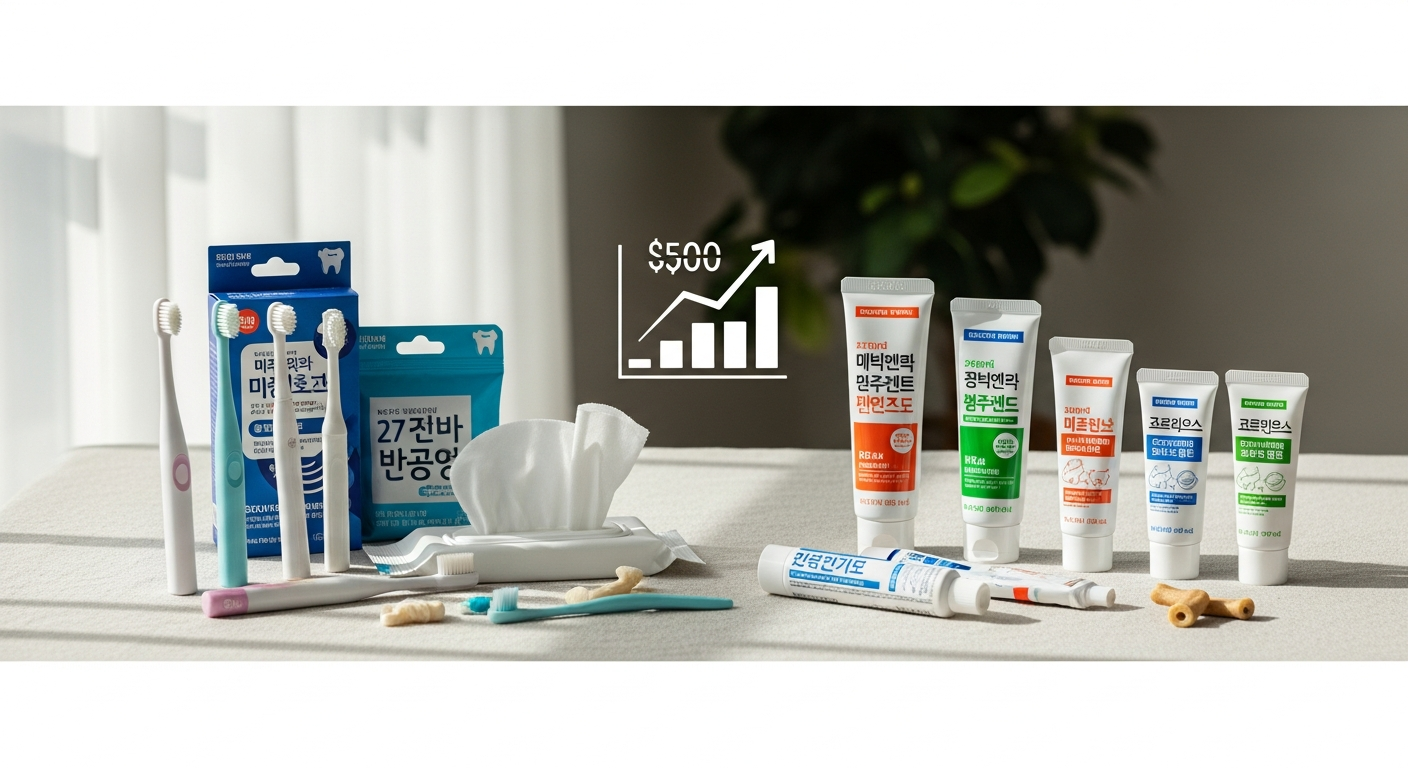
Key Takeaway: The realistic takeaway for Malaysian and Singaporean cat owners is that a full Korean-brand dental stack lands around RM130-RM160, versus RM380-RM450 for the equivalent Western premium stack, with similar day-to-day outcomes for most healthy adult cats.
The Products Worth the Hype (and Two That Aren’t)
In our testing over 18 months with three cats of different breeds and a rotating cast of four foster dogs through the PJ community network, a clear hierarchy emerged. I’ll name names because vague is useless. Junglemonster’s CattiSoft and Dentisoft are the two I still buy on repeat — available on Shopee Malaysia, and honestly the best price window is the 11.11 sale if you can plan ahead. The Junglemonster Multi Trimmer, which runs at 58dB, is the only trimmer Tofu (Munchkin, personality of a tiny dictator) doesn’t try to bite. For SG readers, check Junglemonster on Shopee Singapore for equivalent pricing in SGD.
The two that aren’t worth the hype — I won’t name the brand out of politeness because the founder is in my extended network, but one popular Korean dental treat line is, by my read, exactly the biscuit-in-marketing problem I described earlier. And a trendy Korean paw cream that gets a lot of Instagram love is, ingredient-wise, almost identical to a local Malaysian paw balm at a third of the price. The Junglemonster Ceramidog paw balm is the exception — ceramide-based formulas actually have a dermatological evidence base, according to research referenced by the Korean Society of Veterinary Dermatology.
Honest cons I don’t see mentioned often: Korean ingredient labels are sometimes translated inconsistently across listings, which matters if your pet has allergies. Shopee MY listings are generally better-labeled than Shopee SG in my experience, which is the opposite of what I’d have guessed. For sensitive pets, email the brand before purchase — most Korean brands now have English-responding customer service, and the ones that don’t are the ones I’d skip anyway.
- CattiSoft melon flavor — worth it if your cat is a spitter
- Dentisoft ultra-fine brush — worth it for long-haired breeds and gum-line-sensitive cats
- Ceramidog paw balm — worth it if you live in a tiled-floor condo like most of us in PJ
Key Takeaway: Korean dental care products are genuinely category-leading at the RM35-RM89 price point; grooming products are more of a mixed bag and deserve more skepticism than Instagram gives them.
Where It Goes Next: My 12-Month Prediction
Here’s my falsifiable prediction for the next 12 months, and if I’m wrong in April 2027 you can screenshot this paragraph and send it back to me. By Q2 2027, at least two major Western pet brands will announce Southeast Asia-specific SKUs with smaller pack sizes, re-engineered flavors, and price points under SGD 20 / RM65 — direct responses to the Korean incursion. I also predict Shopee will launch a category-specific Korean pet landing page for the SG and MY markets ahead of 11.11 2026, mirroring what they already did for K-Beauty in 2022. And I think we’ll see the first serious peer-reviewed comparison study out of a Southeast Asian veterinary school — probably from a Malaysian or Singaporean institution — testing Korean water additives against the long-standing Western benchmarks. The gap in published evidence is now too big for the category to keep growing without it.
What I’m less sure about: whether the trend translates to dogs as cleanly as it has to cats. The Korean pet care wave in SEA has been disproportionately cat-driven, partly because cat ownership in condo-dense Klang Valley and central Singapore is growing faster than dog ownership. Dog owners skew toward established Western brands with a longer trust window, and the Korean dog category has been slower to localize flavor profiles for the tropics. If I had to bet, I’d say the Korean dog-side catches up by late 2027, not 2026.
For the companion view on the K-Beauty trend curve that Korean pet care is following, see my