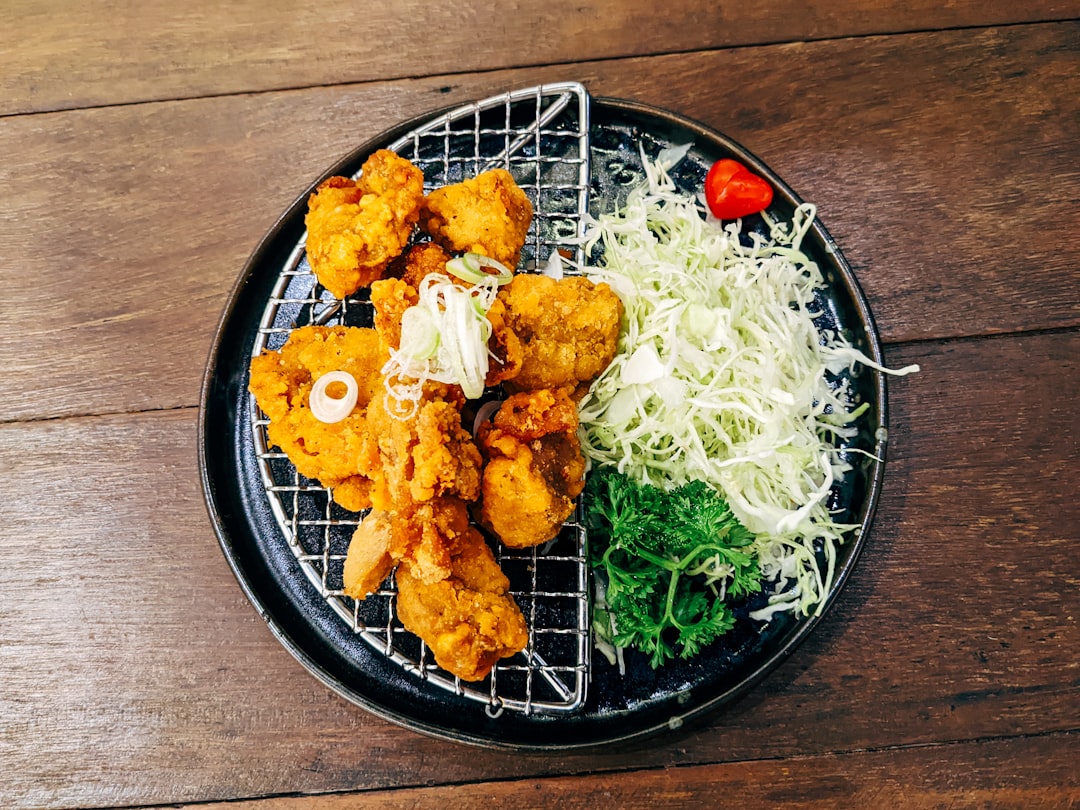
Why Korean Fried Chicken Is the Crispiest Fried Chicken You’ll Ever Taste
Picture this: you’re sitting in a bustling Seoul chicken shop at midnight, a cold beer in one hand, and in the other, a piece of fried chicken so impossibly crispy that it shatters when you bite into it — yet the meat inside is juicy, tender, and bursting with flavor. That’s not an exaggeration. That’s Korean fried chicken.
Unlike its Southern American cousin, which relies on a thick, heavily seasoned flour coating, Korean fried chicken — known as chikin (치킨) — owes its legendary crunch to a completely different technique. The korean fried chicken recipe crispy secret lies in a paper-thin coating, a specific starch blend, and the game-changing method of double frying.
South Korea’s fried chicken industry is worth over $7.5 billion annually, with more than 87,000 chicken restaurants across the country — that’s more chicken shops than McDonald’s locations worldwide. Every neighborhood has at least three or four competing joints, and Koreans consume approximately 13 kg of chicken per person per year. This isn’t just food. It’s a cultural institution, a late-night ritual, and arguably the most perfect fried chicken on the planet.
In this ultimate guide, I’ll walk you through everything you need to master the korean fried chicken recipe crispy secret at home — from the science behind the double-fry method to the sticky, spicy sauces that make it addictive. Whether you’re a first-timer or a seasoned home cook looking to level up, you’re in the right place.
The History and Culture Behind Korean Fried Chicken

From Post-War America to Seoul’s Chicken Alley
Korean fried chicken has a surprisingly recent origin story. It traces back to the 1960s and 1970s, when American-style fried chicken was introduced to South Korea through U.S. military bases. The first Korean fried chicken restaurant, Lim’s Chicken, opened in 1977 in Seoul’s Myeongdong district.
But Koreans didn’t just adopt the recipe — they reinvented it. By the 1990s and early 2000s, a fried chicken revolution was underway. Chains like Kyochon, BBQ Chicken, and BHC began experimenting with thinner coatings, double-frying techniques, and bold sauce glazes that had no equivalent in Western cooking.
The cultural phenomenon of “chimaek” (치맥) — chicken and beer (maekju) — became a national pastime. Friends gather at hof (호프) bars and chicken joints after work, ordering whole birds with pickled radish cubes, draft beer, and mountains of napkins. It’s communal, loud, joyful, and absolutely essential to Korean social life.
The 2014 “Chi-maek” Boom That Went Global
Korean fried chicken went truly global during the 2014 K-drama My Love from the Star, when the lead character famously declared her love for “chimaek” during a snowfall scene. Chinese viewers went wild — Korean fried chicken imports to China reportedly surged by over 300% that year.
Today, Korean fried chicken franchises like bb.q Chicken, Bonchon, and Pelicana operate in over 50 countries. In the U.S. alone, there are more than 200 Bonchon locations. The global appetite for that signature crunch shows no signs of slowing.
If you’re planning a trip to experience it firsthand, make sure to check out Must Try Korean Street Food Guide 2026: 15 Hidden Gems for more delicious finds beyond fried chicken.
The Korean Fried Chicken Recipe Crispy Secret: Why It’s Different
The Science of the Double-Fry Method
Here’s the single most important thing to understand: the korean fried chicken recipe crispy secret is the double-fry technique. This isn’t optional — it’s what separates good fried chicken from transcendent fried chicken.
How it works:
- First fry (325°F / 160°C for 10-12 minutes): This cooks the chicken through gently, rendering out moisture from the skin and partially gelatinizing the starch coating. The chicken comes out pale and only slightly crispy.
- Rest (5-10 minutes): The chicken rests at room temperature. Residual moisture migrates to the surface of the coating.
- Second fry (375°F / 190°C for 3-5 minutes): This blast of high heat drives off that surface moisture instantly, creating a glass-like shell that stays crispy for up to an hour — even under sauce.
The science is straightforward: starch + double frying = dehydrated crystalline matrix. That matrix doesn’t absorb moisture the way a flour-only coating does, which is why Korean fried chicken stays crunchy long after American-style fried chicken has gone soggy.
Starch vs. Flour: The Coating Breakdown
Another critical element of the korean fried chicken recipe crispy secret is the coating composition. Most Korean recipes use a blend of potato starch (or cornstarch) and all-purpose flour, typically in a ratio of about 2:1 starch to flour.
| Coating Type | Crunch Level | Texture | Best For |
|---|---|---|---|
| 100% All-Purpose Flour | Medium | Thick, bready | Southern-style fried chicken |
| 100% Potato Starch | Very High | Ultra-thin, glass-like | Korean naked (huraideu) style |
| 100% Cornstarch | High | Thin, slightly powdery | Budget alternative |
| 2:1 Starch to Flour Blend | Very High | Thin, shattery, structured | Korean fried chicken (recommended) |
| Rice Flour + Starch | High | Extra light, delicate | Gluten-free adaptation |
Potato starch (감자전분) is the traditional Korean choice and produces the crispiest results. You can find it at any H-Mart or Asian grocery store for around $3-5. Cornstarch works as a substitute, though potato starch creates a slightly more shatterproof crust.
The Thin Coating Philosophy
Western fried chicken celebrates a thick, craggy, heavily seasoned crust. Korean fried chicken goes the opposite direction. The coating is so thin it’s almost translucent — just enough to create that crackling shell without masking the chicken’s natural flavor.
This is why you won’t find buttermilk soaks or egg-wash-to-flour-dredge cycles in Korean recipes. The batter is typically just starch, flour, water, and sometimes a splash of vodka (the alcohol evaporates quickly, creating extra-light texture). Some recipes add a beaten egg to the batter for slightly more structure, but the goal is always thin, even, and light.
Complete Korean Fried Chicken Recipe (양념치킨 & 후라이드치킨)

Ingredients You’ll Need
For the Chicken (serves 4):
- 3 lbs (1.4 kg) chicken wings or drumettes — about 24 pieces
- ½ cup potato starch (or cornstarch)
- ¼ cup all-purpose flour
- ½ cup ice-cold water (or soda water for extra lightness)
- 1 tablespoon vodka (optional — for crispier coating)
- 1 teaspoon salt
- ½ teaspoon white pepper
- 1 teaspoon garlic powder
- Neutral oil for frying (canola, vegetable, or peanut — about 6-8 cups)
For the Marinade (optional, 30 minutes minimum):
- 1 tablespoon soy sauce
- 1 tablespoon rice wine (mirin)
- 1 teaspoon grated fresh ginger
- 3 cloves garlic, minced
- ½ teaspoon black pepper
Where to buy: Potato starch, gochugaru, and gochujang are available at H-Mart, Whole Foods (in the international aisle), and on Amazon. A bag of Ottogi potato starch runs about $3.99 at H-Mart. For gochujang, look for CJ Haechandle or Sempio brands ($5-8).
Step-by-Step Instructions
Step 1: Prep the Chicken (10 minutes + 30 min marinating)
Pat the chicken pieces completely dry with paper towels — this is critical. Excess moisture is the enemy of crispiness. If time allows, toss the chicken in the marinade and refrigerate for 30 minutes to 2 hours. The soy sauce and rice wine tenderize the meat while adding a subtle savory depth.
Step 2: Make the Batter (5 minutes)
In a large bowl, whisk together the potato starch, flour, salt, white pepper, and garlic powder. Add ice-cold water (and vodka, if using) and stir until you have a thin, slightly runny batter — think heavy cream consistency. Don’t overmix; a few lumps are fine.
Pro tip: Keep the batter cold. Some Korean chefs even add a few ice cubes directly into the batter to keep the temperature down, which creates a lighter fry.
Step 3: First Fry — Low and Slow (12 minutes)
Heat oil in a heavy-bottomed pot or Dutch oven to 325°F (160°C). Use a deep-fry thermometer — guessing the temperature is the #1 mistake home cooks make. Dip each piece of chicken in the batter, let excess drip off, and carefully lower into the oil.
Fry in batches of 6-8 pieces for 10-12 minutes, turning occasionally. The chicken should be fully cooked but only lightly golden. Remove to a wire rack set over a baking sheet. Do not use paper towels — they trap steam and kill crispiness.
Step 4: Rest (5-10 minutes)
Let the chicken rest at room temperature. Bring the oil temperature back up to 375°F (190°C). This rest period is essential — it allows internal steam to escape and surface moisture to redistribute.
Step 5: Second Fry — Hot and Fast (3-5 minutes)
Return the chicken to the hot oil in batches. Fry for 3-5 minutes until deeply golden and the coating is visibly crispy and rigid. The sound should change from bubbling to a sharp, crackling sizzle — that’s your audio cue that moisture has been driven off.
Remove to a clean wire rack. The coating should feel like thin glass when you tap it.
Temperature Control Cheat Sheet
| Stage | Oil Temperature | Time | Visual Cue |
|---|---|---|---|
| First Fry | 325°F / 160°C | 10-12 min | Pale golden, cooked through |
| Rest | — | 5-10 min | Surface feels slightly tacky |
| Second Fry | 375°F / 190°C | 3-5 min | Deep golden, rigid shell, crackling sound |
Internal temperature should reach 165°F (74°C) in the thickest part. Use an instant-read thermometer to be safe.
The Sauces: From Yangnyeom to Soy Garlic and Beyond
Korean fried chicken is served in two main styles: huraideu (후라이드) — naked/plain — and yangnyeom (양념) — glazed with sauce. Many Koreans order “ban-ban” (반반), which means half-and-half of each style. Here are the essential sauces.
Yangnyeom Sauce (Sweet-Spicy Glaze)
This is the iconic red, sticky, sweet-spicy glaze that most people associate with Korean fried chicken. It’s the most popular style in Korea and abroad.
- 3 tablespoons gochujang (Korean red pepper paste)
- 2 tablespoons gochugaru (Korean red pepper flakes) — adjust for heat
- 3 tablespoons ketchup
- 2 tablespoons rice syrup or corn syrup
- 1 tablespoon honey
- 1 tablespoon soy sauce
- 1 tablespoon rice vinegar
- 4 cloves garlic, minced
- 1 teaspoon grated ginger
- 1 teaspoon sesame oil
Cook all ingredients in a small saucepan over medium heat for 3-4 minutes until thickened and glossy. Toss the freshly fried chicken in the sauce immediately before serving. The key is to toss, not drown — you want a thin, even coating that enhances the crunch rather than making it soggy.
Soy Garlic Sauce (간장치킨)
For those who prefer savory over spicy, soy garlic chicken is pure umami bliss.
- 3 tablespoons soy sauce
- 2 tablespoons brown sugar
- 1 tablespoon honey
- 1 tablespoon rice wine (mirin)
- 6 cloves garlic, minced
- 1 tablespoon butter
- 1 teaspoon sesame seeds
Sauté garlic in butter until fragrant (30 seconds), add remaining ingredients, and simmer for 2-3 minutes. Toss with the fried chicken and garnish with sesame seeds and sliced scallions.
Honey Butter Sauce (허니버터치킨)
The honey butter craze swept Korea in 2014-2015 and hasn’t slowed down. This sweet, buttery glaze is dangerously addictive.
- 3 tablespoons unsalted butter, melted
- 2 tablespoons honey
- 1 tablespoon condensed milk
- ½ teaspoon salt
- 1 teaspoon lemon juice
Whisk together and toss with hot chicken. Sprinkle with honey butter powder (available at H-Mart for about $4.99) if you can find it.
For more Korean flavor inspiration, see our guide to Must Try Korean Street Food Guide 2026: 15 Hidden Gems which covers tteokbokki, hotteok, and other perfect pairings.
Essential Side Dishes and Pairings

Chicken Mu (치킨무) — Pickled Radish Cubes
No Korean fried chicken order is complete without chicken mu — those little cubes of sweet-tangy pickled radish that come in every delivery box. They serve a crucial purpose: the acidity and crunch cleanse your palate between bites of rich, oily chicken.
Quick recipe: Cube 1 lb Korean radish (mu) into 1-inch pieces. Dissolve ¼ cup sugar and ¼ cup rice vinegar in 1 cup water with 1 teaspoon salt. Pour over radish and refrigerate for at least 2 hours. Lasts up to 2 weeks in the fridge.
Beer Pairings for Chimaek
The chimaek experience demands the right beer. Here are the classic Korean options and their American equivalents:
- Cass Fresh — Korea’s best-selling lager. Clean, light, and crisp. American equivalent: Bud Light or Coors Light.
- Hite Extra Cold — Slightly more body than Cass. Try: Miller Lite.
- Terra — Newer brand with a hoppy edge. Try: Sapporo or Asahi.
- Kloud — All-malt, fuller flavor. Try: Stella Artois.
For a more adventurous pairing, try a Korean soju-beer combo (somaek/소맥) — pour a shot of soju into a glass of beer. It’s the ultimate chimaek upgrade.
Complete Chimaek Spread Ideas
If you’re hosting a Korean fried chicken night at home, round out the table with:
- Tteokbokki (spicy rice cakes) — the sweet-spicy contrast is perfect
- Kimchi fried rice — use day-old rice for best results
- Japchae (glass noodles) — light and refreshing counterpoint
- Korean coleslaw — shredded cabbage with sesame dressing
- French fries — yes, Korean chicken shops serve fries too, often seasoned with cheese powder
Pro Tips from Korean Chicken Shop Owners
7 Secrets the Pros Know
- Dry the chicken obsessively. Pat each piece dry, then let it air-dry uncovered in the fridge for 1-2 hours. The drier the surface, the crispier the result.
- Use a Dutch oven, not a skillet. The high walls maintain oil temperature better and reduce splatter. A 5.5-quart Lodge Dutch oven ($50 at Target) is perfect.
- Don’t crowd the pot. Fry no more than 6-8 pieces at a time. Overcrowding drops the oil temperature and creates steam instead of frying.
- Invest in a deep-fry thermometer. The ThermoWorks ChefAlarm ($55) or a simple candy thermometer ($8 at Walmart) will transform your frying game.
- Sauce at the last second. Toss chicken in sauce no more than 30 seconds before serving. The longer sauce sits on the chicken, the more it compromises the crunch.
- Wire rack, never paper towels. Paper towels trap steam underneath the chicken, turning your crispy coating soggy. Always drain on an elevated wire rack.
- Room temperature chicken. Take chicken out of the fridge 20 minutes before frying. Cold chicken drops oil temperature dramatically and results in uneven cooking.
Common Mistakes to Avoid
Even experienced home cooks make these errors when attempting the korean fried chicken recipe crispy secret at home:
- Using too much flour in the batter — keep it starch-dominant for that glass-like crunch
- Skipping the second fry — this is the entire secret; one fry will never achieve the same texture
- Frying at the wrong temperature — too low = greasy, too high = burnt outside, raw inside
- Using olive oil — the low smoke point makes it unsuitable; stick to canola, vegetable, or peanut oil
- Putting fried chicken in a closed container — steam is trapped and the coating goes limp within minutes
Where to Eat Korean Fried Chicken: Best Chains and Local Finds

Top Korean Fried Chicken Chains in the U.S.
| Chain | U.S. Locations | Signature Item | Price Range (per order) |
|---|---|---|---|
| Bonchon | 200+ | Soy Garlic Wings | $13-18 |
| bb.q Chicken | 150+ | Golden Original | $14-20 |
| Pelicana | 30+ | Yangnyeom Chicken | $15-22 |
| Kyochon | 15+ | Honey Series | $16-24 |
| Choong Man Chicken | 50+ | Snow Onion | $14-19 |
If you’re in a major metro area like Los Angeles, New York, Dallas, or Atlanta, you’ll have dozens of options beyond the chains. Look for small Korean-owned shops in Koreatown neighborhoods — they often outperform the franchises.
Eating Fried Chicken in Seoul
If you’re lucky enough to visit Seoul, the fried chicken scene is overwhelming in the best way. A few must-visit spots:
- Hanchu (한츄) in Mapo — famous for enormous garlic soy wings
- Two Two Chicken (투투치킨) — old-school chain with cult following
- Puradak (푸라닭) — upscale chicken with truffle and cheese options
- Baengnyangtong Chicken (백년통닭) in Dongdaemun — whole roasted/fried birds in a night-market setting
Pro tip: Order delivery through Baedal Minjok (배달의민족) or Coupang Eats — Korea’s delivery infrastructure is world-class, and hot fried chicken arrives at your door in 20-30 minutes. Planning a Seoul trip? Don’t miss Best Day Trips From Seoul by Train 2026: Top 10 Spots and First Time Jjimjilbang Etiquette Guide 2026: Step-by-Step for the ultimate Korean experience.
Explore Korean food culture and travel guides
Variations and Dietary Adaptations
Air Fryer Korean Fried Chicken
Yes, you can make excellent Korean fried chicken in an air fryer — with some adjustments. Coat the chicken in dry starch only (no wet batter), spray generously with cooking oil, and air fry at 375°F for 20 minutes, flipping halfway. Then increase to 400°F for 5 minutes to simulate the second fry.
The result won’t be identical to deep-fried, but it’s 85-90% as crispy with significantly less oil. This method uses roughly 1-2 tablespoons of oil versus 6-8 cups for deep frying.
Gluten-Free Adaptation
The korean fried chicken recipe crispy secret is naturally gluten-free friendly. Simply replace the all-purpose flour with rice flour and use tamari instead of regular soy sauce in marinades and sauces. The starch (potato or corn) is already gluten-free. The result is virtually indistinguishable from the original.
Boneless and Cauliflower Options
Boneless: Use chicken thighs cut into 2-inch chunks. Thighs stay juicier than breast meat. Reduce first fry time to 7-8 minutes and second fry to 2-3 minutes.
Cauliflower (vegan): Cut into large florets, dip in the same starch batter, and follow the same double-fry method. First fry at 325°F for 6 minutes, rest, then second fry at 375°F for 3 minutes. Toss in yangnyeom sauce for a plant-based version that genuinely satisfies.
Frequently Asked Questions
What makes Korean fried chicken so crispy compared to regular fried chicken?
The korean fried chicken recipe crispy secret comes down to three factors: a starch-based coating (potato starch or cornstarch instead of heavy flour), the double-frying method (first at 325°F, rest, then again at 375°F), and an extremely thin batter. This combination creates a dehydrated crystalline shell that resists moisture far better than traditional flour-based coatings. The result is chicken that stays crunchy for up to an hour — even after being glazed with sauce.
Can I make Korean fried chicken without double frying?
Technically yes, but the results won’t be the same. Single-fried chicken will be crispy for about 10-15 minutes before the coating starts absorbing moisture and softening. If you’re short on time, you can do a single fry at 350°F for 15-18 minutes, but expect about 60% of the crunch factor. For the authentic texture, double frying is non-negotiable.
What oil is best for Korean fried chicken?
Canola oil or vegetable oil are the most popular choices — they have high smoke points (400°F+), neutral flavor, and are affordable for the volume needed. Peanut oil is the premium option, adding a subtle nutty flavor and excellent heat stability. Avoid olive oil (too low smoke point), coconut oil (adds unwanted flavor), and sesame oil (save that for sauces only).
How do I keep Korean fried chicken crispy after frying?
Three rules: (1) Always rest on a wire rack, never paper towels or plates — air needs to circulate underneath. (2) Never cover or close the chicken in a container — trapped steam is the enemy. (3) If reheating, use an oven at 400°F for 8-10 minutes or an air fryer at 375°F for 5 minutes. Never microwave — it turns the coating into rubber.
Where can I buy Korean fried chicken ingredients in the U.S.?
H-Mart is the best one-stop shop — they carry potato starch, gochujang, gochugaru, rice syrup, and Korean radish. Whole Foods now stocks gochujang and cornstarch in most locations. Amazon has everything with Prime delivery, including harder-to-find items like Korean rice syrup and honey butter powder. For a budget option, Walmart carries cornstarch and basic Asian sauces in the international aisle.
How many calories are in Korean fried chicken?
A serving of 6 Korean fried chicken wings (plain/huraideu) contains approximately 450-550 calories. With yangnyeom sauce, add about 80-120 calories per serving due to the sugar content. For comparison, the same serving of American-style fried chicken (thick coating) runs 550-700 calories. The thinner Korean coating means slightly less oil absorption overall.
Related Posts You’ll Love
If you enjoyed this deep dive into Korean fried chicken, explore more of our Korean culture and food guides:
- Must Try Korean Street Food Guide 2026: 15 Hidden Gems
- Best Day Trips From Seoul by Train 2026: Top 10 Spots
- First Time Jjimjilbang Etiquette Guide 2026: Step-by-Step
Suggested new articles we should write:
- Best Korean BBQ Restaurants in America 2026: City-by-City Guide
- Korean Convenience Store Food Guide: 20 Must-Try Snacks
- How to Make Tteokbokki at Home: Authentic Recipe and Variations
Explore hundreds of authentic Korean recipes including fried chicken variations
Your Turn: Let’s Talk Chicken!
Now you know the korean fried chicken recipe crispy secret — the double-fry technique, the starch-dominant coating, and the art of the perfect sauce glaze. The only thing left is to fire up that oil and make it yourself.
I want to hear from you:
- Have you tried making Korean fried chicken at home? What worked (or didn’t)?
- Are you Team Yangnyeom (sweet-spicy) or Team Soy Garlic?
- What’s your favorite Korean chicken chain or local spot?
Drop a comment below and share your experience — I read and reply to every single one. And if this guide helped you, share it with a friend who needs to level up their fried chicken game. Tag us on Instagram with your creations using #KFCAtHome — we’ll feature the best ones!
Want more Korean food guides, travel tips, and K-culture content? Bookmark this page, share it with fellow foodies, and check back regularly — we publish new guides every week covering everything from Korea SIM Card for Tourists 2026: Complete Buying Guide to 7 Best Apps to Learn Korean for Beginners in 2026.
Happy frying! 🍗