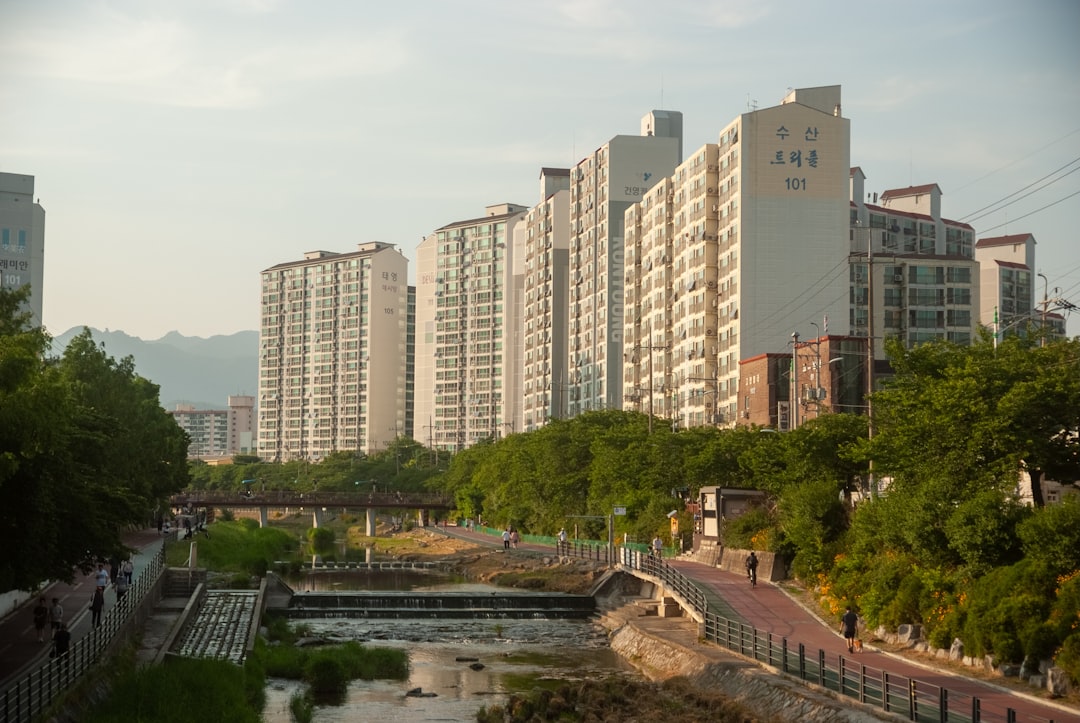
Imagine handing your landlord $200,000 or more — not as a purchase price, but as a refundable deposit just to rent an apartment. No monthly rent. No mortgage payments. Just one massive lump sum that you get back when you move out. Sound crazy? Welcome to the Korean apartment jeonse system, one of the most unique and fascinating housing arrangements in the world. For decades, this system has shaped how millions of Koreans live, save, and build wealth. It has no true equivalent in the United States or Europe, and understanding it is essential if you’re planning to live in South Korea, invest in Korean real estate, or simply want to understand why Korean dramas always feature characters stressing about their “jeonse deposit.” In this comprehensive guide, we’ll break down everything you need to know about jeonse — how it works, why it exists, who benefits, and whether it’s the right choice for you.
What Is the Korean Apartment Jeonse System?
Watch: Living Alone in Korea | 7AM to 9PM typical office day VLOG |
The Basic Concept: A Deposit-Based Lease
The Korean apartment jeonse system (전세, pronounced “juhn-seh”) is a lease arrangement where a tenant provides a large lump-sum deposit to the landlord — typically ranging from 50% to 80% of the property’s market value — instead of paying monthly rent. The landlord holds this deposit for the duration of the lease, which is usually two years, and returns it in full when the tenant moves out.
During the lease period, the tenant pays zero monthly rent. The only recurring costs are utilities, maintenance fees (관리비, gwanlibi), and sometimes a small insurance premium. The landlord profits by investing the deposit — historically in high-interest bank accounts or other real estate — and keeping the returns.
To put this into perspective for American readers: imagine renting a two-bedroom apartment in a major city. Instead of paying $2,500 per month, you hand the owner $300,000 upfront. You live rent-free for two years, and when you leave, you get every dollar back. That’s jeonse in a nutshell.
Jeonse vs. Wolse: Understanding Korean Rental Options
Korea has two primary rental systems. Jeonse is the lump-sum deposit model described above. Wolse (월세, “wol-seh”) is closer to the Western rental model — a smaller deposit combined with monthly rent payments. Here’s how they compare:
| Feature | Jeonse (전세) | Wolse (월세) | US-Style Rent |
|---|---|---|---|
| Upfront Deposit | 50–80% of property value | 5–20% of property value | 1–2 months’ rent |
| Monthly Rent | None | Yes (reduced) | Yes (full market rate) |
| Typical Lease Term | 2 years | 1–2 years | 12 months |
| Deposit Return | Full amount at lease end | Full deposit at lease end | Deposit minus damages |
| Best For | Those with large savings | Those with less capital | Standard renting |
Many tenants also negotiate a semi-jeonse arrangement — a hybrid where you pay a medium-sized deposit and a reduced monthly rent. This flexibility is one reason the Korean rental market feels so different from what Westerners are used to.
The History and Cultural Origins of Jeonse
Post-War Roots and Rapid Urbanization
The Korean apartment jeonse system emerged during the rapid industrialization and urbanization of South Korea in the 1960s through 1980s. After the Korean War devastated the country’s infrastructure, the government focused on economic development. Millions of people migrated from rural areas to cities like Seoul, Busan, and Daegu, creating an enormous demand for housing.
Banks were largely focused on funding industrial growth, not consumer mortgages. Ordinary Koreans had limited access to home loans. Landlords, meanwhile, needed capital to buy additional properties or invest in businesses. Jeonse became the elegant solution: tenants effectively became lenders, providing landlords with interest-free capital, while tenants avoided monthly rent payments.
During the 1970s and 1980s, when Korean bank interest rates soared above 15–20% annually, the system was extraordinarily profitable for landlords. A landlord collecting a ₩100 million jeonse deposit could earn ₩15–20 million per year simply by parking the money in a savings account. It was, in effect, a win-win arrangement in a high-interest-rate economy.
Why Jeonse Persists in Modern Korea
Even as interest rates have fallen to historic lows — Korea’s base rate hovered around 3.0–3.5% in recent years — jeonse remains deeply embedded in Korean housing culture. Approximately 40–45% of Korean renters still use jeonse arrangements, though this percentage has been gradually declining.
Several factors keep the system alive. First, cultural momentum — families pass down the practice across generations. Parents often help adult children assemble their first jeonse deposit as a rite of passage. Second, tax advantages — jeonse deposits are not considered taxable income for landlords in most cases. Third, the psychological appeal of “free rent” remains powerful, even when the opportunity cost of tying up that much capital is significant.
Korean apartment culture itself is unique. The country’s iconic apartment complexes — called 아파트 단지 (apateu danji) — house roughly 60% of the urban population. These aren’t like American apartment buildings. They’re massive, planned communities with built-in convenience stores, playgrounds, parking garages, and sometimes even schools. Understanding jeonse means understanding how deeply apartment living is woven into Korean identity. Learn more about Korean living culture
How the Korean Apartment Jeonse System Works Step by Step
Step 1: Finding a Property and a Real Estate Agent
The jeonse process begins with finding a property, almost always through a licensed real estate agent (부동산 중개사, budongsan junggaesa). In Korea, these agents operate from small storefront offices found on virtually every city block. You can also search online through platforms like Naver Real Estate (네이버 부동산), Zigbang (직방), or Dabang (다방).
When browsing listings, you’ll see properties advertised with their jeonse price. For example, a 25-pyeong apartment (about 850 square feet) in Seoul’s Gangnam district might list a jeonse price of ₩500–800 million ($375,000–$600,000 USD). In less expensive areas like Incheon or Daejeon, that same-sized apartment might have a jeonse price of ₩150–250 million ($112,000–$187,000 USD).
Step 2: Negotiation and Contract Signing
Once you find a suitable property, you negotiate the jeonse deposit amount with the landlord through the agent. Key negotiation points include:
- Deposit amount — Can sometimes be negotiated down 5–10%
- Move-in date and lease duration — Standard is 2 years, renewable
- Maintenance fees — Typically ₩100,000–300,000/month ($75–$225)
- Condition of the apartment — Renovations, appliances included
- Special terms — Pet policies, parking spots, wallpaper replacement
The contract is a standardized legal document. Both parties sign, and the tenant typically pays a 10% down payment (계약금, gyeyakgeum) at signing, with the remaining 90% due on move-in day. Agent fees are regulated by law and usually range from 0.3% to 0.8% of the deposit, split between landlord and tenant.
Step 3: Registration and Legal Protection
This is the most critical step and where many foreigners make costly mistakes. After signing and moving in, you must:
- Register your move-in (전입신고, jeonip singo) at the local district office within 14 days
- Get a confirmed date stamp (확정일자, hwakjeong ilja) on your lease contract at the same office
- Consider jeonse insurance (전세보증보험) through the Housing and Urban Guarantee Corporation (HUG) or the Seoul Guarantee Insurance Company (SGI)
The confirmed date and move-in registration give you legal priority over the landlord’s other creditors. If the landlord goes bankrupt or sells the property, your deposit is protected. Without this registration, you could lose your entire deposit. This is not hypothetical — jeonse fraud and default cases have made national headlines in Korea, with thousands of tenants losing billions of won collectively in recent years.
Financial Analysis: Is Jeonse Actually a Good Deal?
The Math Behind Jeonse vs. Monthly Rent
Let’s run the numbers on a real-world example. Consider a Seoul apartment with a jeonse deposit of ₩400 million (~$300,000 USD) versus the same apartment on a wolse arrangement with a ₩50 million deposit plus ₩1.5 million/month rent:
Jeonse scenario over 2 years:
- Total deposit: ₩400,000,000
- Monthly rent paid: ₩0
- Opportunity cost (if invested at 4% annually): ~₩32,000,000 ($24,000)
- Net cost of housing: ₩32,000,000 in lost investment returns
Wolse scenario over 2 years:
- Total deposit: ₩50,000,000
- Monthly rent: ₩1,500,000 × 24 months = ₩36,000,000
- Remaining capital (₩350M) invested at 4%: ~₩28,000,000 earned
- Net cost of housing: ₩36,000,000 − ₩28,000,000 = ₩8,000,000
In this scenario, wolse actually comes out cheaper when you factor in investment returns on the capital you don’t tie up. This is why younger Koreans and financial advisors increasingly question whether jeonse makes pure mathematical sense in today’s low-interest-rate environment.
When Jeonse Still Makes Sense
Despite the math, jeonse can still be advantageous in several scenarios:
- You’re saving for a home purchase — Jeonse forces you to keep a large sum intact rather than spending it incrementally on rent
- You expect property values to rise — If the apartment’s value increases, you can negotiate a larger jeonse deposit at renewal, effectively “riding” the real estate market without owning
- You have access to a jeonse loan — Korean banks offer special low-interest jeonse loans (전세자금대출) at rates as low as 2.5–3.5%, making the effective cost very competitive
- Tax benefits — Jeonse loan interest payments are tax-deductible for qualifying tenants
- Cash flow preference — Some people simply prefer not having a monthly rent obligation hanging over them
This financial calculus is a constant topic of discussion in Korean society. Just as Americans debate renting versus buying, Koreans passionately debate jeonse versus wolse versus buying. It’s common dinner-table conversation material, and entire TV shows and YouTube channels are dedicated to analyzing the best strategy. Korean Study Culture: Why Cafes Are the New Study Rooms
Jeonse Loans: How Koreans Finance Their Deposits
Government-Backed Jeonse Loan Programs
Very few tenants pay the full Korean apartment jeonse system deposit out of pocket. Most rely on a combination of personal savings, family support, and jeonse loans (전세자금대출). The Korean government actively supports jeonse lending through several programs:
Korea Housing Finance Corporation (HF, 한국주택금융공사) offers the Bogeumjari Jeonse Loan for qualifying tenants with annual income under ₩60 million (~$45,000). Interest rates start at 2.1–2.9%, significantly below market rates. Maximum loan amounts range from ₩200–300 million depending on the region.
For young adults (ages 19–34), the government offers the Youth Jeonse Loan (청년 전세자금대출) with even more favorable terms — rates as low as 1.5–2.1% and repayment periods up to 10 years. This program was expanded significantly in 2023 and 2024 in response to skyrocketing housing costs in Seoul.
Commercial Bank Jeonse Loans
Major Korean banks — KB Kookmin, Shinhan, Woori, Hana, and NH NongHyup — all offer jeonse loan products. Commercial rates typically range from 3.5–5.0%, depending on your credit score, income, and the property location. Most banks will lend up to 70–80% of the jeonse deposit amount.
The application process requires:
- Proof of income (pay stubs, tax returns)
- The signed jeonse contract
- Property registration documents (등기부등본)
- Alien registration card (for foreigners)
- Credit check approval
For foreign residents, obtaining a jeonse loan is possible but more difficult. You typically need at least one year of Korean income history, an active alien registration card (ARC), and a Korean credit score. Some banks have dedicated foreign-resident banking teams that can guide you through the process in English.
Risks and Dangers of the Jeonse System
The Jeonse Fraud Crisis (전세 사기)
The dark side of the Korean apartment jeonse system became painfully visible in 2022–2024, when a wave of jeonse fraud (전세사기) devastated thousands of tenants. The most notorious cases involved landlords who:
- Collected jeonse deposits on dozens or even hundreds of properties simultaneously
- Set jeonse deposits higher than the actual property value (known as 깡통전세, “empty can jeonse”)
- Declared bankruptcy or disappeared, leaving tenants unable to recover their deposits
- Used one tenant’s deposit to pay back another tenant’s deposit — essentially running a Ponzi-like scheme
In one infamous 2023 case in Incheon, a single landlord defrauded over 1,000 tenants out of a combined ₩100+ billion (approximately $75 million). Several victims took their own lives, prompting national outrage and emergency government legislation. The tragedy highlighted how the jeonse system, while culturally significant, carries systemic risks that do not exist in Western-style monthly rental systems.
How to Protect Yourself
If you’re entering a jeonse arrangement, follow this critical checklist:
- Check the property registry (등기부등본) — Verify the landlord actually owns the property and check for existing liens, mortgages, or seizures. You can obtain this for ₩1,000 from the Supreme Court’s Internet Registry Office (인터넷등기소)
- Compare jeonse deposit to market value — If the jeonse deposit is more than 70% of the property’s market value, proceed with extreme caution. Above 80% is a major red flag
- Get jeonse insurance — HUG (주택도시보증공사) offers deposit return guarantee insurance. The premium is approximately 0.1–0.2% of your deposit annually — a tiny price for protecting hundreds of thousands of dollars
- Register immediately — Complete your move-in registration and confirmed date stamp within days, not weeks
- Research the landlord — Check if they own multiple properties with high jeonse ratios. Your real estate agent should help with this due diligence
- Use a licensed agent — Agents carry mandatory insurance and are legally liable for negligence in the transaction
The Korean government has since passed the Jeonse Fraud Prevention Special Act (전세사기 피해자 지원 특별법), which provides enhanced protections and a relief fund for victims. But prevention remains far better than cure.
Jeonse for Foreigners: A Practical Guide
Can Foreigners Use the Jeonse System?
Absolutely. There are no legal restrictions preventing foreign residents from entering jeonse contracts in South Korea. Whether you’re an English teacher on an E-2 visa, a tech worker on an E-7, or a student on a D-2, you can sign a jeonse lease. However, the practical challenges are significant:
- Language barrier — Contracts are in Korean. Always get a certified translation or bring a bilingual friend
- Capital requirements — Few foreigners arrive in Korea with $100,000–$300,000 in liquid savings
- Loan access — Jeonse loans for foreigners require established Korean income and credit history
- Cultural navigation — Some landlords are hesitant to rent to foreigners due to communication concerns or visa uncertainty
That said, many long-term foreign residents successfully use jeonse, particularly those married to Korean citizens or those with stable, well-paying jobs at Korean companies or international organizations.
Tips for Foreigners Navigating Jeonse
If you’re a foreigner considering jeonse, here’s your action plan:
- Start with a wolse or semi-jeonse to build your Korean credit history and rental track record
- Open a Korean bank account early and begin building your financial footprint
- Connect with expat communities — Facebook groups like “Seoul Housing” and “Expats in Korea” are invaluable resources
- Hire a bilingual real estate agent — Companies like Seoul Mates Realty and Seoul Housing specialize in helping foreigners
- Budget for the agent fee — Expect to pay 0.4–0.8% of the jeonse deposit
Living in a Korean apartment is a deeply immersive cultural experience. The ondol heated floors, the communal recycling stations, the building-wide intercom systems, the shared exercise rooms — it’s all part of a lifestyle that’s uniquely Korean. Even the way you take off your shoes at the door and slip into indoor slippers connects to centuries of Korean domestic tradition. Korean Minimalist Style Guide: 2025 Fashion Trends
The Future of the Korean Apartment Jeonse System
The Shift Toward Wolse and Monthly Rent
The Korean apartment jeonse system is undeniably evolving. Data from the Korea Real Estate Board shows that jeonse transactions have been declining as a proportion of total rentals for over a decade. In 2010, approximately 62% of Korean rental contracts were jeonse. By 2024, that figure had dropped to around 42%.
Several forces are driving this shift:
- Low interest rates make jeonse less profitable for landlords, who increasingly prefer the steady cash flow of monthly rent
- Rising property values mean jeonse deposits have grown so large that even middle-class families can’t afford them without heavy borrowing
- Fraud scandals have eroded public trust in the system
- Younger generations prefer flexibility over the forced savings aspect of jeonse
- Government policy increasingly favors transparent, regulated monthly rental markets
Will Jeonse Disappear?
Despite its decline, most housing experts believe jeonse will persist for decades, though in a reduced form. Professor Kim Soo-hyun of Sejong University, a leading housing policy researcher, has noted that “jeonse is too deeply embedded in Korean financial behavior to vanish overnight.” Families still view jeonse deposits as a form of savings, and the tax advantages for both landlords and tenants create institutional inertia.
What’s more likely is a continued evolution toward hybrid arrangements and stronger government regulation. The Jeonse Deposit Guarantee Insurance system is expanding, and new legislation requires landlords to prove financial solvency before collecting large deposits. Some analysts predict that within 20–30 years, jeonse may shrink to just 15–20% of the rental market, concentrated primarily among higher-value properties where both parties have sophisticated financial advisors.
For anyone interested in Korean culture and society, the evolution of jeonse offers a window into broader themes: how a society balances tradition with modernization, how financial systems reflect cultural values, and how governments respond when trusted systems produce unexpected harm. It’s not unlike watching how Americans are rethinking the 30-year fixed mortgage or how Europeans debate rent control — housing systems reflect who we are as societies. Korea Winter Travel: Best Ski Resorts Guide 2025
Comparing Jeonse to Western Housing Systems
Jeonse vs. American Renting
The American rental system operates on fundamentally different assumptions. In the US, a security deposit is typically one to two months’ rent — a fraction of the property’s value. Monthly payments are the core of the landlord-tenant financial relationship. Landlords make money from rent, not from investing your deposit.
This difference has profound downstream effects on everything from wealth-building strategies to geographic mobility. American renters can move relatively easily — pack up, pay your last month’s rent, and go. Korean jeonse tenants are financially locked into their apartments because moving means recovering one massive deposit and immediately deploying another. The transaction costs — both financial and emotional — of moving under jeonse are enormous.
Jeonse vs. European Models
European rental systems, particularly in Germany and the Netherlands, share some philosophical DNA with jeonse in that they tend to favor strong tenant protections and long-term stability. Germany’s Mietspiegel (rent mirror) system and indefinite lease terms create a culture where renting is a respectable long-term housing choice, not a stepping stone to ownership.
However, no European system requires the kind of upfront capital that jeonse demands. The closest parallel might be key money (pas-de-porte) in France, where commercial tenants sometimes pay a large lump sum for the right to a lease — but this is not refundable and is limited to commercial properties.
Understanding these differences is valuable not just for expats but for anyone interested in how different cultures solve the universal challenge of housing. Whether you’re living in Seoul or watching your favorite K-drama, the Korean apartment jeonse system is a window into a society that approaches money, trust, and home in a way that’s distinctly its own. Korean Banchan Guide: 12 Traditional Side Dishes to Try
Frequently Asked Questions About the Korean Jeonse System
What happens if the landlord can’t return my jeonse deposit?
If a landlord cannot return your deposit at the end of the lease, you have several legal options. First, you can refuse to vacate until the deposit is returned — Korean law protects your right to remain in the property. Second, you can file for a court-ordered auction (경매) of the property, and your registered deposit gets priority in the proceeds. Third, if you purchased jeonse guarantee insurance through HUG or SGI, the insurer will pay your deposit directly and pursue the landlord independently. The process can take 3–12 months without insurance, which is why insurance is strongly recommended.
Can I use jeonse if I’m only staying in Korea for one year?
Technically yes, but it’s generally not advisable for short stays. Jeonse contracts are standardized at two years under the Housing Lease Protection Act, and breaking a lease early can be complicated. You’d need the landlord’s agreement to terminate early, and finding a replacement tenant may be required. For stays under two years, wolse (monthly rent) or furnished short-term housing like officetel rentals are far more practical. Many foreigners on one-year teaching contracts opt for wolse with a moderate deposit.
How much jeonse deposit do I need for a decent apartment in Seoul?
As of 2025, jeonse deposits for a standard two-bedroom apartment (20–25 pyeong / 700–850 sq ft) vary dramatically by neighborhood. In Gangnam, Seocho, or Songpa, expect ₩500–900 million ($375,000–$675,000). In more affordable areas like Nowon, Dobong, or Gwanak, deposits range from ₩200–350 million ($150,000–$260,000). Outside Seoul in satellite cities like Goyang, Suwon, or Incheon, you can find jeonse apartments for ₩150–250 million ($112,000–$187,000). Studio apartments (원룸) near universities can be found for as low as ₩50–100 million ($37,000–$75,000).
Is jeonse safer than buying property in Korea?
Jeonse and buying serve different purposes and carry different risks. Jeonse avoids the risk of property value decline — if the market drops 20%, your deposit is still returned at face value (assuming the landlord is solvent). However, jeonse carries counterparty risk — your money depends on the landlord’s financial health. Buying eliminates counterparty risk but exposes you to market risk, property taxes, and maintenance costs. Many Korean financial advisors recommend jeonse as a “stepping stone” strategy: live on jeonse while saving for a down payment, then buy when you’re ready to commit to a location long-term.
Do Korean Americans or overseas Koreans use jeonse when visiting Korea?
Yes, many Korean diaspora members use jeonse when returning to Korea for extended periods, whether for family care, business, or cultural reconnection. Gyopo (교포, overseas Koreans) with F-4 visas have nearly the same housing rights as Korean citizens. Some Korean Americans maintain jeonse apartments in Korea even while living in the US, treating it as a low-cost way to have a “home base” in Korea. Since the deposit is returned, the only cost is the opportunity cost of the capital — which many view as worthwhile for having a permanent Korean address and connection to their heritage.
Related Posts
If you enjoyed learning about the Korean apartment jeonse system, you might also find these articles helpful:
- Korean Study Culture: Why Cafes Are the New Study Rooms
- Korean Minimalist Style Guide: 2025 Fashion Trends
- Korea Winter Travel: Best Ski Resorts Guide 2025
Topics we should cover next:
- Korean Officetel Living: The Ultimate Guide for Expats
- How to Open a Korean Bank Account as a Foreigner
- Understanding Korean Apartment Maintenance Fees (Gwanlibi)
Share Your Experience With Korean Housing
Have you lived in a Korean apartment? Have you navigated the jeonse system yourself — or are you considering it? We’d love to hear your story. Whether you’re a long-term expat who’s done jeonse three times or someone just starting to research Korean housing options, your experience can help others in the community.
Drop a comment below and tell us: What’s been your biggest surprise or challenge with Korean housing? Did jeonse work out well for you, or did you prefer wolse? What advice would you give someone moving to Korea for the first time?
If this guide helped you understand the Korean apartment jeonse system, please share it with friends, family, or colleagues who might be planning a move to Korea. And don’t forget to subscribe to our newsletter for more deep dives into Korean culture, lifestyle, and practical living tips. We publish new guides every week, covering everything from K-beauty routines to Korean cooking to navigating daily life in one of the world’s most dynamic countries.
Last updated: February 2025. Housing prices and loan terms are subject to change. Always verify current rates and regulations with a licensed Korean real estate professional before entering any housing contract.