Why Korea’s Autumn Foliage Deserves a Spot on Your 2026 Bucket List
I still remember the exact moment I fell in love with Korean autumn. I was standing on a wooden bridge in Naejangsan National Park, surrounded by maple trees so intensely red they looked like they were on fire, and I literally gasped out loud. A Korean grandmother next to me smiled knowingly and said, “단풍이 예쁘죠?” — “The foliage is pretty, right?” Pretty was an understatement. It was one of the most breathtaking natural spectacles I’ve ever witnessed, and I’ve seen New England fall foliage dozens of times.
Here’s what most Americans don’t realize: Korea autumn foliage best time 2026 falls within a surprisingly tight window — roughly late September through mid-November — and the country transforms into a kaleidoscope of crimson, amber, and gold that rivals anything you’ll find in Vermont or the Blue Ridge Mountains. But Korea adds something uniquely magical: ancient Buddhist temples nestled among the blazing trees, street vendors selling roasted chestnuts and sweet potatoes, and mountains so accessible you can summit them on a half-day trip from Seoul.
South Korea packs an astonishing amount of geographic diversity into a country roughly the size of Indiana. That means you can chase peak foliage from the northern mountains down to the southern coast over the course of several weeks, hitting a different peak every few days. This guide covers everything you need to plan your korea autumn foliage trip in 2026 — the best destinations, exact timing forecasts, transport logistics, costs, and insider tricks that will make your experience unforgettable.
Plan your trip at Visit Korea OfficialWhen Is the Best Time for Korea Autumn Foliage in 2026?

Timing is everything when it comes to korea autumn foliage best time 2026. The colors don’t hit all at once — they roll south like a slow wave, starting in the northern mountains of Seoraksan and finishing along the southern coast near Busan and Jeju Island.
The 2026 Foliage Forecast: Region by Region
Korea’s national weather service (KMA) releases an official foliage forecast each September, but based on historical patterns and climate data, here’s what to expect for 2026:
| Region | First Color Change | Peak Foliage | Best Destinations |
|---|---|---|---|
| Seoraksan (Northeast) | Late September | Oct 10–20 | Seoraksan National Park |
| Seoul & Central | Early October | Oct 20–Nov 5 | Bukhansan, Namsan, Changdeokgung |
| Gyeongju & Southeast | Mid-October | Oct 25–Nov 10 | Bulguksa Temple, Bomun Lake |
| Naejangsan (Southwest) | Mid-October | Nov 1–15 | Naejangsan National Park |
| Busan & South Coast | Late October | Nov 5–20 | Beomeosa Temple, Taejongdae |
| Jeju Island | Late October | Nov 5–20 | Hallasan, Bijarim Forest |
How Climate Affects the 2026 Foliage Season
Recent years have seen peak foliage arriving 5–7 days later than historical averages due to warmer autumn temperatures. In 2025, Seoraksan’s peak shifted from October 15 to October 22. For 2026, meteorologists anticipate a similar pattern, with a La Niña-influenced cooler snap in mid-October potentially producing more vivid reds and oranges than recent seasons.
The sweet spot for most travelers? Late October to early November gives you the best chance of hitting peak color across multiple regions. If you can only pick one week, aim for October 25 – November 1, 2026. During this window, Seoul’s palace gardens will be blazing, Naejangsan will be approaching its fiery peak, and you can still catch late color at Seoraksan.
Weather Expectations During Foliage Season
Korean autumn is genuinely one of the best weather windows on the planet. Expect daytime temperatures of 55–68°F (13–20°C), low humidity, and abundant sunshine. Nights drop to 40–50°F (5–10°C), so layering is key. Rain is rare — October averages just 4–5 rainy days. Pack a light waterproof shell, a fleece layer, and comfortable hiking shoes, and you’re set.
Top 7 Destinations for Korea Autumn Foliage in 2026
1. Naejangsan National Park — The Undisputed King of Korean Foliage
If you see only one autumn destination in Korea, make it Naejangsan. Located in North Jeolla Province, this park is so famous for fall colors that its name literally means “hidden inside the mountain” — and what’s hidden inside will blow your mind. The signature experience is walking along the Naejangsan Tanpung (maple) Tunnel, a canopy road lined with around 100 maple trees that form a blazing red-and-orange corridor.
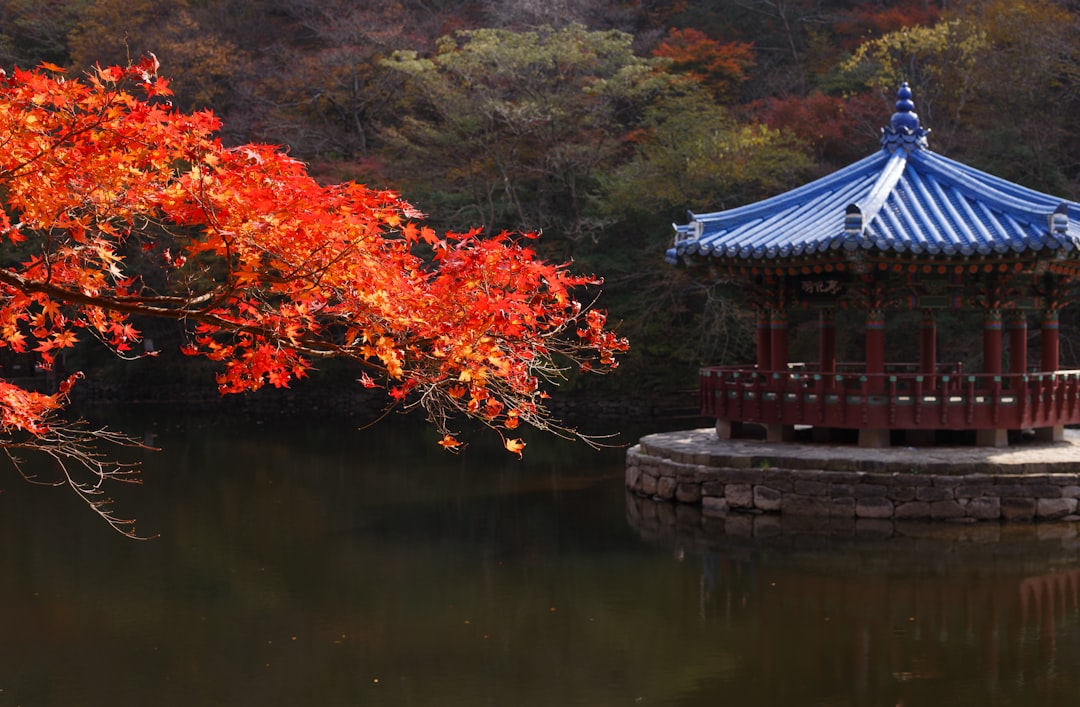
The cable car ride (₩9,000 / ~$6.50 round trip) takes you to a viewpoint where you can see the entire valley painted in autumn hues. The Uhwajeong Pavilion, reflected in a still pond surrounded by maples, is one of the most photographed spots in all of Korea — arrive before 8 AM to beat the crowds and catch the morning light.
- Peak foliage: November 1–15 (one of the latest peaks in Korea)
- Entry fee: Free (cable car: ~$6.50 round trip)
- Getting there: KTX from Seoul’s Yongsan Station to Jeongeup Station (1 hr 40 min, ~$30), then local bus #171 (30 min)
- Time needed: Full day (5–7 hours of hiking)
2. Seoraksan National Park — First Colors, Dramatic Peaks
Seoraksan is where autumn begins in Korea. As the third-highest mountain in the country at 1,708 meters (5,604 ft), it catches the first cold air, and the colors start here before anywhere else. Think of it as Korea’s equivalent to Mount Washington in New Hampshire — rugged granite peaks bursting with red, orange, and yellow against a piercing blue sky.
The Gwongeumseong Cable Car (₩13,000 / ~$9.50 round trip) offers jaw-dropping panoramic views without a strenuous hike. For serious trekkers, the Daecheongbong Peak trail (10 hours round trip) rewards you with views stretching all the way to the East Sea. The easier Biryong Falls trail (1.5 hours) is spectacular during peak color and family-friendly.
- Peak foliage: October 10–20
- Entry fee: Free (cable car: ~$9.50 round trip)
- Getting there: Express bus from Seoul’s Dong Seoul Terminal to Sokcho (2.5 hrs, ~$18), then local bus #7 or 7-1 to the park entrance
- Pro tip: Book accommodation in Sokcho and hit the park at sunrise. The Osaek Hot Springs nearby are perfect for soaking tired muscles after a hike.
3. Gyeongju — Ancient Capital Meets Autumn Gold
Gyeongju is what you get when you combine autumn foliage with a thousand years of history. Often called the “museum without walls,” this former Silla Dynasty capital (57 BC – 935 AD) is scattered with royal tombs, pagodas, and temples — all framed by spectacular fall colors.
Bulguksa Temple, a UNESCO World Heritage Site, surrounded by maples and ginkgos in full autumn dress, is simply magical. The nearby Bomun Lake features a lakeside walking path with meticulously maintained foliage, and Tumuli Park — where ancient burial mounds rise like green hills — turns golden with ginkgo trees lining the pathways.
- Peak foliage: October 25 – November 10
- Entry fee: Bulguksa Temple ₩6,000 (~$4.50), Tumuli Park free
- Getting there: KTX from Seoul to Singyeongju Station (2 hrs, ~$38), then bus #700 to downtown
Gyeongju Day Trip From Seoul: 2026 Itinerary Guide
4. Seoul — Urban Foliage Without Leaving the City
You don’t need to leave Seoul to experience world-class autumn foliage. The capital offers an incredible mix of palace gardens, mountain parks, and tree-lined streets that explode with color from mid-October through early November.
Changdeokgung Secret Garden (₩8,000 / ~$6, guided tour required) is the crown jewel — 78 acres of meticulously maintained gardens where maples reflect in ancient lotus ponds. Bukhansan National Park, accessible by subway, offers mountain hiking with foliage views just 40 minutes from downtown. And the Namsan Seoul Tower cable car ride during peak color feels like floating through a painting.
Don’t overlook Olympic Park (free) with its ginkgo tree boulevards, or the Deoksugung Stone Wall Road, one of Seoul’s most romantic autumn strolls.
Explore Seoul’s autumn attractions5. Jirisan National Park — Korea’s Largest Mountain Wilderness
Jirisan is Korea’s first designated national park and its largest, stretching across three provinces. At 1,915 meters (6,283 ft), it’s the highest peak on the Korean mainland, and the autumn display here is vast and untamed — think Great Smoky Mountains energy. The multi-day ridge trail is legendary among Korean hikers, but day-trip options like the Piagol Valley trail (famous for red foliage reflected in a crystal stream) are accessible for all fitness levels.
- Peak foliage: October 15–30
- Getting there: KTX to Gurye Station, then bus to park entrance (total ~3 hrs from Seoul)
- Budget tip: Mountain shelter stays cost ₩10,000–25,000 (~$7–18) per night — book via the Korea National Park Service website at least 30 days in advance.
6. Hallasan, Jeju Island — Subtropical Island Meets Alpine Foliage
Jeju Island’s Hallasan (1,950 m / 6,398 ft) is South Korea’s tallest mountain and a UNESCO natural heritage site. What makes autumn here unique is the vertical gradient of color: subtropical evergreens at the base, temperate broadleaf forest in the middle, and subalpine scrub at the summit, all changing color at different rates. It’s like seeing three seasons stacked on top of each other.
The Eorimok Trail (4.7 km, 3 hours round trip) and Yeongsil Trail (5.8 km, 4 hours round trip) are the most scenic for foliage. Don’t miss Bijarim Forest, a 500-year-old nutmeg grove that feels like a scene from a Miyazaki film in autumn light.
7. Daedunsan Provincial Park — The Hidden Gem
Most international visitors have never heard of Daedunsan, and that’s exactly why you should go. This park in South Chungcheong Province features a dramatic suspension bridge connecting two rocky peaks, a steel staircase bolted into a cliff face, and all of it surrounded by blazing autumn foliage. The views from the bridge, with the valley exploding in color below, are absolutely terrifying and absolutely worth it.
- Peak foliage: October 25 – November 5
- Entry fee: Free (cable car: ~$7 round trip)
- Getting there: Bus from Daejeon (1 hr), Daejeon reachable by KTX from Seoul (50 min, ~$22)
The Perfect 7-Day Korea Autumn Foliage Itinerary for 2026

This itinerary is optimized for late October to early November 2026 — the sweet spot when you can catch peak or near-peak foliage at multiple destinations. It uses KTX trains and express buses, making it fully doable without a car.
- Day 1 – Arrival in Seoul: Land at Incheon Airport (ICN), pick up your T-money card at the convenience store in arrivals (₩4,000 / ~$3), take the AREX express train to Seoul Station (43 min, ₩9,500 / ~$7). Settle into your hotel, stroll the Deoksugung Stone Wall Road at golden hour.
- Day 2 – Seoul Foliage Day: Morning at Changdeokgung Secret Garden (book the 10:30 AM English tour online). Afternoon hike up Bukhansan’s Bukhansanseong Trail (2–3 hours). Evening street food at Gwangjang Market. 7 Best Korean Street Food Markets by City (2026 Guide)
- Day 3 – Seoraksan Day Trip: Take the 6:30 AM express bus from Dong Seoul Terminal to Sokcho (2.5 hrs). Cable car + Biryong Falls trail. Fresh seafood lunch at Sokcho waterfront. Return evening bus to Seoul.
- Day 4 – KTX to Gyeongju: Morning KTX to Singyeongju (2 hrs). Bulguksa Temple, Seokguram Grotto, bike ride around Bomun Lake. Overnight in Gyeongju. Gyeongju Day Trip From Seoul: 2026 Itinerary Guide
- Day 5 – Gyeongju to Busan: Morning at Tumuli Park and Gyeongju National Museum. Afternoon train to Busan (30 min). Explore Beomeosa Temple autumn colors, then sunset at Haedong Yonggungsa Temple.
- Day 6 – Naejangsan Day Trip from Busan: KTX to Jeongeup (1 hr 30 min), bus to Naejangsan. Full day in the park — cable car, Uhwajeong Pavilion, maple tunnel. Return to Busan. 7 Low Calorie Korean Meals for Diet Success in 2026
- Day 7 – Busan & Departure: Morning at Taejongdae coastal park (autumn foliage meets ocean cliffs), Gamcheon Culture Village. Afternoon KTX back to Seoul (2.5 hrs) or fly from Gimhae Airport.
Getting There: Flights, Transport, and Logistics
Flights to Korea in Autumn 2026
Autumn is shoulder season for flights to Korea — cheaper than cherry blossom season (April) but busier than winter. Expect round-trip fares of $700–$1,100 from LAX, JFK, or SFO. Budget airlines like Zipair and T’way Air offer flights from LAX starting around $500 round trip if you book 3+ months early. Korean Air and Asiana provide nonstop service from all three cities (11–14 hours).
Booking tip: Set Google Flights alerts in July 2026. Historically, the cheapest fares for October/November travel drop 12–14 weeks before departure.
Visa and Entry Requirements
US citizens enjoy visa-free entry for up to 90 days. You will need a K-ETA (Korea Electronic Travel Authorization), which costs ₩10,000 (~$7) and should be applied for at least 72 hours before departure at k-eta.go.kr. Approval is usually instant but can take up to 72 hours.
Getting Around Korea
Korea’s transport network is world-class and incredibly foreigner-friendly:
- KTX (Korea Train Express): Book via the KORAIL app (English available). Seoul to Busan in 2.5 hours for ~$50. Reserve window seats on the left side heading south for the best mountain views during foliage season.
- T-money Card: Works on all subways, buses, and even taxis and convenience stores. Load it at any subway station or 7-Eleven. Essential for seamless city transport.
- Express Buses: Often faster than KTX for mountain destinations. Book at txbus.t-money.co.kr (English available).
- Navigation: Download Naver Map (Google Maps is unreliable for Korean transit). Use Papago for translation and KakaoTalk for messaging (it’s Korea’s WhatsApp).
Budget Breakdown: What Korea Autumn Foliage Costs in 2026

Korea offers outstanding value for autumn travelers compared to Japan or Western Europe. Here’s a realistic daily budget breakdown in USD:
| Category | Budget ($) | Mid-Range ($) | Comfort ($) |
|---|---|---|---|
| Accommodation | $25–40 (hostels, guesthouses) | $60–100 (3-star hotels) | $120–200 (4-star hotels) |
| Meals (3/day) | $15–25 | $30–45 | $50–80 |
| Transport | $10–15 | $20–35 | $35–50 |
| Activities & Entry | $5–10 | $10–20 | $20–40 |
| Daily Total | $55–90 | $120–200 | $225–370 |
For the 7-day itinerary above, budget travelers can expect to spend $500–700 total (excluding flights), while mid-range travelers will spend around $900–1,400. That includes all KTX trains, accommodation, food, and activities. Compared to a similar autumn trip in Japan, Korea typically runs 25–35% cheaper.
The Korea Tour Card (available at Incheon Airport) bundles discounts on attractions, transit, and shopping — it pays for itself in 2–3 days during a foliage trip.
Cultural Etiquette Tips for Autumn Temple and Mountain Visits
Temple Etiquette
Many of Korea’s best foliage spots are at or near Buddhist temples, and showing respect is important. Remove your shoes before entering any building with a raised wooden floor. Dress modestly — cover shoulders and knees (most temples have loaner wraps if needed). Don’t point at Buddha statues, and keep your voice low. Photography of the exterior grounds and foliage is almost always welcome, but ask before photographing inside prayer halls.
If you encounter monks, a slight bow with hands together is appropriate. Many temples offer templestay programs (from ~$50/night) where you can sleep in the temple, join morning chanting at 4 AM, and wake up to autumn foliage — an unforgettable experience.
Mountain Hiking Etiquette
Koreans take hiking seriously — it’s practically the national pastime. On trails, yield to those going uphill and greet fellow hikers with a friendly “annyeonghaseyo.” Don’t play loud music on speakers (use earbuds). Pack out all trash — Korea’s national parks are impeccably maintained, and littering is heavily fined.
One cultural tip Americans often miss: Koreans love to share food on the trail. If a group next to you at a rest point offers makgeolli (rice wine) or kimbap, it’s a genuine gesture of friendliness. Accepting with both hands and saying “gamsahamnida” (thank you) will earn you big smiles.
Photography Etiquette
During peak foliage season, popular spots get extremely crowded. Don’t hog a scenic viewpoint for extended photo sessions — take your shots and move along. Using a tripod on narrow trails or bridges can block other visitors. Drone regulations in Korea are strict: flying over national parks, palaces, and military areas (which are everywhere) is prohibited without a permit.
Korean Makeup vs Western Makeup: 7 Key Differences in 2026Insider Tips for the Best Korea Autumn Foliage Experience

After five autumn trips to Korea, here are the tips I wish someone had told me before my first one:
- Go weekday, not weekend. Korean families flood national parks on weekends in October. A Tuesday visit to Naejangsan means 1/5 the crowd of a Saturday. If you must go on a weekend, arrive before 7 AM.
- Check the real-time foliage map. The Korea Meteorological Administration and Visit Korea websites publish weekly foliage updates starting late September. Cross-reference with Korean hiking forums on Naver Cafe for ground-truth reports. Korea Tourism Organization foliage updates
- Layer like a Korean. Korean hikers are legendary for their gear game. The temperature difference between a shady valley floor and a sunny summit can be 20°F. Wear a moisture-wicking base layer, fleece mid-layer, and a packable windbreaker. Korean outdoor brands like Black Yak and Kolon Sport sell excellent gear at Myeongdong shops for less than Patagonia or North Face.
- Eat autumn seasonal foods. Korean autumn cuisine is peak comfort food: roasted chestnuts (군밤) from street vendors (~$2 a bag), hotteok (sweet pancakes filled with brown sugar and nuts), sweet potato lattes at every cafe, and persimmon punch (수정과). Many restaurants offer mushroom hot pot (버섯전골) made with wild mushrooms foraged from the same mountains you’re hiking. 7 Easy Banchan Recipes for Beginners (2026 Guide)
- Book KTX trains early. During the foliage weekends of October, KTX trains to Jeongeup (Naejangsan) and Sokcho (Seoraksan) sell out days in advance. Book via the KORAIL app 30 days ahead.
- Don’t skip the “lesser” Seoul spots. While everyone crowds Bukhansan, locals know that Achasan (easy 1-hour hike, gorgeous foliage, minimal crowds) and the Seoul Forest ginkgo groves in Seongsu-dong are equally stunning and far more peaceful.
- Use Naver Map’s transit directions. Seriously — Google Maps will get you lost in Korea. Naver Map shows real-time bus arrivals, subway transfers, and even walking paths through national parks.
- Consider a temple stay. Waking up at 4 AM for dawn prayers in a Buddhist temple surrounded by peak autumn foliage is a once-in-a-lifetime experience. Book at templestay.com at least 2 weeks in advance. Prices start at ₩50,000 (~$36) for an overnight stay with meals.
Autumn Foliage Festivals and Events in Korea (2026)
Korea doesn’t just admire autumn foliage — it celebrates it with festivals across the country. Here are the biggest ones to plan around:
Major Foliage Festivals
- Naejangsan Maple Festival (내장산 단풍축제): Late October – mid-November. Cultural performances, local food stalls, night illumination of the maple tunnel. The evening light-up event turns the trees into a neon wonderland.
- Seoraksan Foliage Festival: Mid-October. Folk music, traditional food tasting, mountain running races. The Sipgugok Valley trail is open for guided autumn walks.
- Seoul Autumn Festival at Deoksugung: Late October. Night openings of the palace (usually closed after 6 PM), traditional music performances among the foliage-lit gardens. Tickets sell out quickly — book at ticket.11st.co.kr.
- Gyeongju Cherry Blossom + Foliage Festival: While spring gets the headlines, Gyeongju’s autumn festival around Bomun Lake features hanbok-clad boat rides, traditional lantern displays, and foliage-themed art installations.
- Gwangyang Maehwa Village Autumn Market: Mid-November. While famous for plum blossoms in spring, the autumn market features local persimmon, chestnut, and wild mushroom vendors.
K-Pop and Cultural Events During Foliage Season
October and November are packed with K-Pop concerts and cultural events. The Busan International Film Festival (BIFF) overlaps with early foliage season (early October). Major K-Pop acts typically hold Seoul concerts in October and November. Check Interpark and Yes24 ticket sites starting in August for fall concert schedules.
K-Pop Rookie Groups Debuting 2026: 7 Must-Watch Acts
How to Become a K-Pop Trainee From Abroad in 2026
Frequently Asked Questions About Korea Autumn Foliage
What is the best time to see autumn foliage in Korea in 2026?
The korea autumn foliage best time 2026 depends on your destination. Foliage peaks earliest in the northern mountains (Seoraksan, mid-October) and latest in the south (Naejangsan, early November) and Jeju (mid-November). For the widest coverage across multiple regions, October 25 – November 5 is the optimal window. Seoul peaks around October 25–November 5, making late October the best time for a city-focused trip.
Is Korea cheaper than Japan for autumn foliage trips?
Yes, significantly. Korea runs 25–35% cheaper than Japan for comparable autumn experiences. A mid-range daily budget in Korea is $120–200 versus $160–280 in Japan. Korean domestic transport (KTX vs Shinkansen) is roughly 40% cheaper, and meals average $8–15 versus $12–25 in Japan. Korea also offers more free admission national parks — most Japanese foliage spots charge entry fees.
Do I need to rent a car to see autumn foliage in Korea?
No. Korea’s public transit system — KTX trains, express buses, and local buses — connects all major foliage destinations efficiently. In fact, driving is often slower during peak foliage weekends because national park roads get severely congested. The 7-day itinerary in this guide is fully doable without a car. The only exception is Daedunsan, which is easier by car, though a bus connection from Daejeon exists.
How crowded are Korea’s foliage destinations in autumn?
Very crowded on weekends, manageable on weekdays. Naejangsan during a peak weekend can see 50,000+ visitors per day. Weekday visits typically see 1/3 to 1/5 of that traffic. Seoraksan is similarly busy on weekends. Seoul’s Bukhansan requires early morning starts (before 8 AM) to avoid trail congestion. The lesser-known destinations — Daedunsan, Jirisan’s Piagol Valley, Hallasan on Jeju — are significantly less crowded even on weekends.
What should I pack for a Korea autumn foliage trip?
Pack layers: temperatures range from 40°F (5°C) at night to 68°F (20°C) during sunny afternoons. Essentials include a moisture-wicking base layer, fleece jacket, waterproof windbreaker, comfortable hiking shoes with ankle support, a small daypack, sunscreen (the autumn sun is surprisingly strong at altitude), a refillable water bottle, and a portable phone charger. Most Korean trails have no water refill stations, so carry at least 1 liter. A packable down vest is the ultimate Korean autumn hiking hack — warm when you need it, tiny when you don’t.
Can I combine autumn foliage with other Korean experiences?
Absolutely — and you should. Autumn is peak season for Korean street food festivals, K-Pop concerts, templestays, hanbok rental experiences at palaces (the foliage backdrop makes incredible photos), and Korean cooking classes. Many visitors combine a foliage-focused trip with K-beauty shopping in Myeongdong, a DMZ tour, and the Busan International Film Festival. The moderate weather also makes it the best season for island-hopping around Jeju or exploring Busan’s beaches without summer humidity.
How to Make Authentic Kimchi at Home: Step-by-Step 2026
7 Best Korean Dog Fashion Brands to Shop Online in 2026
Related Posts You’ll Love
- Gyeongju Day Trip From Seoul: 2026 Itinerary Guide
- 7 Best Korean Street Food Markets by City (2026 Guide)
- 7 Easy Banchan Recipes for Beginners (2026 Guide)
Suggested new articles:
- Best Templestay Experiences in Korea 2026: A Complete Guide
- Seoul to Busan by KTX: The Ultimate 2026 Train Travel Guide
- Korea Ski Resort Guide 2026: Where to Ski Near Seoul
Start Planning Your Korea Autumn Foliage Trip Today
Korean autumn foliage is one of Asia’s best-kept secrets among American travelers, but that’s changing fast. Every year, more visitors discover that Korea offers the same jaw-dropping fall colors as New England — but with ancient temples, incredible food, world-class transit, and prices that won’t break the bank.
The korea autumn foliage best time 2026 window is tight — roughly six weeks from late September to mid-November — so start planning now. Book your flights in July, reserve KTX tickets 30 days out, and download Naver Map before you land. Trust me: standing in Naejangsan’s maple tunnel as leaves spiral down around you is a moment you’ll replay in your head for years.
Have you experienced Korean autumn foliage? Planning a trip for 2026? Drop your questions in the comments below — I personally respond to every one. If this guide helped you, share it with a friend who needs their next fall adventure, and subscribe to our newsletter for weekly Korea travel tips and deals.
Happy leaf-peeping — see you on the trails! 🍁
Start planning at Visit Korea