Why Korea’s Autumn Foliage Rivals New England — And How to Time It Perfectly in 2026
I still remember the exact moment I fell in love with Korean autumn. I was standing on a wooden bridge in Naejangsan National Park, surrounded by a tunnel of fiery red maple trees reflected in mirror-still water below. A grandmother next to me handed me a roasted chestnut, smiled, and said something in Korean I didn’t understand — but the meaning was clear: “Isn’t this incredible?” That was five autumns ago, and I’ve returned every single year since.
If you’ve experienced fall foliage in Vermont, the Smoky Mountains, or along the Blue Ridge Parkway, you already know the magic of peak color. But korea autumn foliage best time 2026 offers something those destinations can’t: ancient Buddhist temples nestled in crimson valleys, $2 street food stalls serving hotteok under golden ginkgo canopies, and a rail system so efficient you can hit three national parks in a single weekend.
South Korea’s autumn season is short, intense, and absolutely spectacular. The country’s mountainous terrain — roughly 70% of the landmass — means foliage unfolds like a slow wave from the northern peaks of Seoraksan down to the southern shores of Jejudo over approximately six weeks. Timing your visit right is everything, and in this guide, I’ll break down exactly when and where to go, how to get there, what it costs, and the insider tricks that turn a good trip into an unforgettable one.
When Does Autumn Foliage Peak in Korea? 2026 Timing Guide

The single most important factor for planning your korea autumn foliage best time 2026 trip is understanding the peak color window. Unlike the gradual, sprawling season in the eastern United States, Korea’s foliage is compressed and moves predictably from north to south.
The Foliage Wave: North to South Timeline
Each year, the Korea Meteorological Administration (KMA) releases an official foliage forecast in September. Based on historical data and recent climate patterns, here’s what to expect for 2026:
| Region | First Color | Peak Color | Key Destination |
|---|---|---|---|
| Northern Mountains | Late September | Oct 10–20 | Seoraksan, Odaesan |
| Central Korea | Early October | Oct 20–Nov 5 | Bukhansan, Nami Island |
| Southern Interior | Mid October | Oct 25–Nov 10 | Naejangsan, Jirisan |
| Southeast Coast | Mid October | Nov 1–15 | Gyeongju, Busan |
| Jeju Island | Late October | Nov 5–20 | Hallasan, Bijarim |
Pro tip: The “first color” date is when about 20% of leaves have turned. “Peak color” means 70–80% saturation — that’s the money shot window you want. Plan to arrive 2–3 days before predicted peak for the best odds.
How Climate Affects 2026 Predictions
Recent years have seen slightly delayed foliage due to warmer autumn temperatures. In 2024, peak color at Seoraksan arrived nearly a week late. Climate scientists at KMA note that average October temperatures in Seoul have risen about 1.2°C over the past two decades, pushing peak dates later by 3–5 days compared to the early 2000s.
For 2026, the safest bet for first-time visitors is the last week of October through the first week of November. This window catches peak or near-peak color at the widest range of destinations, from central Seoul parks all the way down to Naejangsan in the south.
Bookmark the KMA website and follow @visitkorea on Instagram starting in mid-September — they post real-time foliage updates from spotters across the country. The Naver Map app also has a foliage overlay feature during autumn that shows color status at major parks.
Korea Tourism Organization Official Foliage InformationTop 8 Korea Autumn Foliage Destinations Ranked
Korea has hundreds of mountains and parks that turn gorgeous in fall, but these eight are the absolute best for international visitors seeking the most dramatic korea autumn foliage best time 2026 experience. I’ve ranked them by overall “wow factor” combined with accessibility.
1. Naejangsan National Park — The Crown Jewel
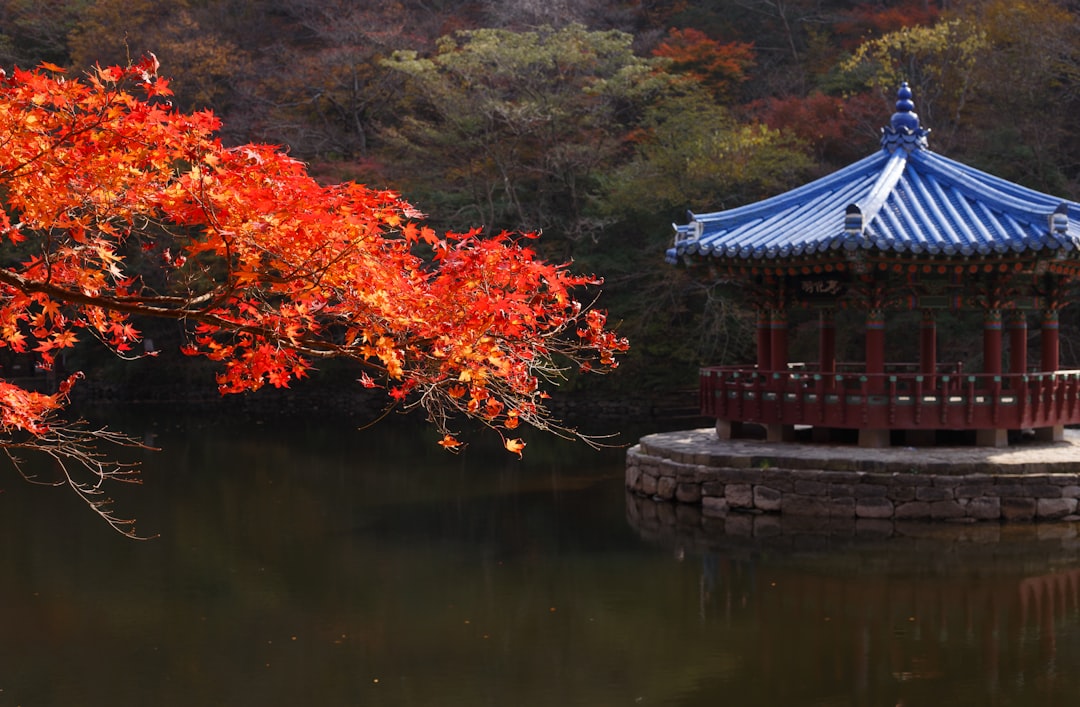
If you only visit one foliage destination in Korea, make it Naejangsan. Located in Jeongeup, North Jeolla Province, this park is consistently voted Korea’s #1 autumn spot by Korean travelers themselves. The signature view is the Uhwajeong Pavilion reflected in a pond surrounded by blazing red Danpung (Korean maple) trees — it’s the image you see on every Korean autumn poster.
The main trail from the park entrance to Uhwajeong takes about 30 minutes on a paved, wheelchair-accessible path. For more adventurous hikers, the ridge trail to Yeonjabong Peak (763m) is a 3–4 hour round trip offering panoramic views of the entire valley ablaze in color. The cable car ($8 round trip) offers a shortcut to elevated viewpoints.
Getting there: Take the KTX from Seoul’s Yongsan Station to Jeongeup Station (about 1 hour 50 minutes, ~$30 one way). From Jeongeup Station, local bus #171 runs directly to the park entrance (30 minutes, ~$1.50). During peak foliage weekends, shuttle buses run more frequently.
Peak timing: October 28 – November 10 (historically). Weekday mornings before 9 AM offer the best photography conditions with fewer crowds.
Cost: Park entrance is free. Cable car is ₩9,000 (~$7) round trip. Budget about $15–20 for a day trip including food from the stalls at the entrance village, where you should try jeonbuk-style bibimbap for around $7.
2. Seoraksan National Park — The First to Turn
Seoraksan in Gangwon Province is Korea’s most famous mountain and a UNESCO Biosphere Reserve. It’s the first major park to hit peak color each year, making it perfect for early-October travelers. The dramatic granite peaks jutting above crimson and orange forests create a landscape that honestly looks like a traditional Korean ink painting come to life.
The most popular route is the Biseondae Trail — a relatively easy 3.4 km walk along a crystal-clear stream to the iconic rock formation. For the cable car crowd, the Gwongeumseong Fortress cable car ($10 round trip) whisks you up to medieval fortress ruins with jaw-dropping valley views.
Getting there: Express bus from Seoul’s Dong Seoul Terminal to Sokcho (2.5 hours, ~$18). From Sokcho, local bus #7 or #7-1 to the park entrance (30 minutes). Alternatively, the new KTX-Eum train from Cheongnyangni Station reaches the area faster.
Peak timing: October 10–22. This park gets extremely crowded on weekends — I’m talking 30-minute traffic jams on the access road. Visit Tuesday through Thursday if at all possible.
Cost: Park entrance ₩3,500 (~$2.70). Accommodation in Sokcho runs $40–80/night for guesthouses. Eat fresh dakgalbi (spicy stir-fried chicken) in Sokcho for around $10 per person.
3. Nami Island & The Garden of Morning Calm
You’ve probably seen Nami Island on Instagram — the famous tree-lined avenue of metasequoia trees that turns golden-orange in autumn. It’s the filming location of the legendary K-drama Winter Sonata, and it remains one of Korea’s most photogenic spots year-round.
Pair it with the nearby Garden of Morning Calm, a beautifully landscaped botanical garden in Gapyeong that’s especially stunning when the maples turn. Together, they make an excellent day trip from Seoul.
Getting there: Take the ITX-Cheongchun train from Yongsan or Cheongnyangni Station to Gapyeong Station (about 1 hour 15 minutes, ~$7). From Gapyeong Station, the Gapyeong City Tour Bus ($8 all-day pass) loops between Nami Island wharf, Garden of Morning Calm, and other attractions.
Cost: Nami Island entrance + ferry ₩16,000 (~$12). Garden of Morning Calm ₩11,000 (~$8.50). Total day trip from Seoul: approximately $40–50 including transport and lunch.
7 K-Pop Idols With the Best K-Drama Roles in 20264. Gyeongju — Autumn Meets Ancient History
Called the “museum without walls,” Gyeongju was the capital of the ancient Silla Kingdom for nearly a thousand years. In autumn, the royal tombs of Tumuli Park are surrounded by golden ginkgo trees, and the grounds of Bulguksa Temple (a UNESCO World Heritage Site) glow with red and orange maples.
Don’t miss Bomun Lake at sunset — the reflection of foliage-covered hills in the still water is extraordinary. Rent a bicycle ($5/day) and cruise the lakeside path, stopping at traditional tea houses along the way.
Getting there: KTX from Seoul to Singyeongju Station (2 hours, ~$40). Local bus #700 connects to the city center (20 minutes).
Peak timing: November 1–12. Gyeongju’s slightly warmer climate means it peaks later than mountain parks.
5. Bukhansan National Park — Seoul’s Backyard Foliage
You don’t need to leave Seoul for world-class foliage. Bukhansan National Park sits right on the city’s northern edge and draws over 5 million hikers annually — making it one of the most visited national parks per square foot on the planet.
The Bukhansanseong Trail passes ancient fortress walls draped in red vines and maple trees. For an easier stroll, the Dulle-gil (circumference trail) offers gentle paths through colorful forests without any serious climbing.
Getting there: Seoul Metro Line 3 to Gupabal Station, then bus #704 to the Bukhansanseong entrance (15 minutes). Zero planning needed — you can decide to go on a whim.
Peak timing: October 22 – November 5.
Cost: Completely free. Grab a $3 hotteok (sweet pancake) from vendors at the trailhead. Budget $0 for one of the best autumn hikes on earth.
VisitSeoul Bukhansan Hiking Guide6. Jirisan National Park — The Serious Hiker’s Paradise
Korea’s first designated national park and home to the mainland’s highest peak (Cheonwangbong, 1,915m), Jirisan offers multi-day ridge hikes through vast, uncrowded forests. The Piagol Valley is legendary for its scarlet foliage — the name literally means “blood-red valley.”
This is the destination for experienced hikers who want to escape the Instagram crowds. Overnight stays in mountain shelters ($10–15/night, reservable on the Korea National Park Service website) are the way to experience Jirisan’s full majesty.
Getting there: KTX to Namwon Station, then local bus to Piagol entrance. Plan for a full day of travel from Seoul each way.
7. Deoksugung & Changdeokgung — Royal Palace Foliage in Central Seoul
For travelers with limited time, Seoul’s royal palaces offer concentrated autumn beauty. The Deoksugung Stone Wall Road (Jeongdong-gil) is lined with towering ginkgo trees that turn brilliant gold — it’s considered one of Seoul’s most romantic walks.
Changdeokgung’s Secret Garden (Huwon) requires a guided tour reservation but rewards you with 300-year-old maple trees surrounding a serene lotus pond. The contrast of Joseon Dynasty architecture against fiery foliage is uniquely Korean.
Cost: Palace entrance ₩3,000 (~$2.30). Secret Garden tour ₩5,000 (~$3.80). Book the English-language tour at least 3 days ahead on the Cultural Heritage Administration website.
Hongdae Best Cafes and Bars at Night: 2026 Guide8. Hallasan, Jeju Island — The Last Stop of Autumn
If you’re visiting Korea in mid-November and worry you’ve missed the foliage, Jeju’s Hallasan (1,947m) is your salvation. As Korea’s highest mountain and southernmost point, it holds color well into the third week of November. The Eorimok and Yeongsil trails offer moderate hikes through cloud forests that turn russet and amber.
Combine your Hallasan hike with a visit to Bijarim Forest, home to 2,800 ancient nutmeg trees, and the famous Hallim Park for subtropical autumn colors you won’t find on the mainland.
Getting there: Fly from Seoul Gimpo to Jeju (1 hour, from $50 one way on budget carriers like Jin Air or T’way). Rent a car on Jeju — public transit is limited and a rental runs just $30–40/day.
Busan Beach Hopping Itinerary 2026: Ultimate 5-Day GuideGetting There: Flights, Trains, and Transport for 2026

International Flights to Korea
Autumn is shoulder season for Korea travel — not as packed as cherry blossom season (April) but busier than winter. Round-trip flights from major US cities typically range:
- LAX → ICN: $650–950 round trip (Korean Air, Asiana, Delta direct ~12.5 hours)
- JFK → ICN: $700–1,000 round trip (Korean Air, Asiana direct ~14 hours)
- SFO → ICN: $600–900 round trip (United, Asiana direct ~12 hours)
Booking tip: Set Google Flights alerts in July for October departures. Prices often dip 6–8 weeks before departure. Tuesday and Wednesday departures are typically $50–100 cheaper than weekend flights.
US citizens enjoy visa-free entry for up to 90 days, but you must register for K-ETA (Korea Electronic Travel Authorization) at least 72 hours before departure. It costs ₩10,000 (~$7.50) and is valid for 2 years. Apply at k-eta.go.kr.
Getting Around Korea by KTX and Bus
Korea’s KTX high-speed rail network is your best friend for foliage trips. Think of it as Korea’s version of Japan’s Shinkansen — fast, clean, punctual, and well-connected. Key routes from Seoul:
- Seoul → Sokcho (Seoraksan): ~2 hours by KTX-Eum, ~$20
- Seoul → Jeongeup (Naejangsan): ~1 hour 50 min, ~$30
- Seoul → Singyeongju (Gyeongju): ~2 hours, ~$40
- Seoul → Busan: ~2.5 hours, ~$45
Book tickets on the KORAIL app (available in English) or the Let’s Korail website. During peak foliage weekends, popular routes sell out — book at least 5 days ahead for weekend trains.
For local transport, grab a T-money card at any convenience store in Incheon Airport for ₩4,000 (~$3). It works on all subways, buses, and even taxis across Korea. Load it with ₩50,000 (~$38) for a week of heavy transit use.
Essential apps to download before you land:
- Naver Map — far more accurate than Google Maps in Korea (Google Maps has intentionally degraded detail due to Korean law)
- Papago — Naver’s translation app, better than Google Translate for Korean
- KakaoTalk — Korea’s universal messaging app (every Korean uses it; useful for restaurant reservations)
- KORAIL — book KTX tickets directly
- Kakao T — ride-hailing app (Korea’s Uber equivalent)
Incheon Airport to Seoul
From Incheon International Airport (ICN), the Airport Railroad Express (AREX) reaches Seoul Station in 43 minutes for ₩9,500 (~$7.30). The all-stop version takes about 58 minutes but costs only ₩4,750 (~$3.60) with your T-money card. Both beat sitting in traffic on the airport bus, though the 6001 and 6015 limousine buses ($15) drop you directly at major hotels in Myeongdong, Hongdae, and Gangnam.
Budget Breakdown: What a Korea Autumn Trip Actually Costs
One of the best things about Korea compared to Japan or Western Europe is that it’s genuinely affordable. Here’s a realistic daily budget breakdown for a foliage-focused trip in autumn 2026:
| Category | Budget ($) | Mid-Range ($) | Comfort ($) |
|---|---|---|---|
| Accommodation/night | $20–35 (hostel/guesthouse) | $60–100 (hotel/hanok stay) | $150–250 (4-star hotel) |
| Meals/day | $15–20 | $30–45 | $60–80 |
| Transport/day | $5–10 (subway + bus) | $15–30 (KTX day trip) | $40–60 (KTX + taxi) |
| Activities/day | $0–5 (parks are mostly free) | $10–20 | $30–50 |
| Daily Total | $40–70 | $115–195 | $280–440 |
A 10-day autumn foliage trip on a mid-range budget (including round-trip airfare from LAX) realistically runs $2,000–$3,200 per person. That’s significantly less than a comparable trip to Japan’s autumn destinations or a two-week European tour.
Money-saving tips:
- Eat at gimbap restaurants (called “gimbap cheonguk” or “gimbap heaven”) — full meals for $4–6
- Korean convenience stores (GS25, CU, 7-Eleven) sell surprisingly good meals for $3–5, including microwave bibimbap, sandwiches, and fresh kimbap
- Most national parks charge zero entrance fees — they abolished fees in 2007
- Buy a KORAIL Pass if you’re taking 3+ KTX trips: the 3-day flexible pass costs about $105 for foreign tourists
Autumn-Only Experiences You Can’t Get Any Other Season

Foliage Festivals Worth Planning Around
Koreans take autumn seriously, and dozens of foliage-themed festivals pop up across the country. Here are the best ones for 2026:
- Naejangsan Maple Festival (late October – mid November): Food stalls, cultural performances, and nighttime foliage illumination that turns the park into a fairy tale
- Gwangyang Maehwa (Plum Blossom) Village Autumn Festival: Less touristy, focused on harvest foods and traditional crafts
- Gapyeong Autumn Festival (late October): Concerts, ziplines, and farm-to-table markets near Nami Island
- Gyeongju Silla Cultural Festival (early October): Ancient kingdom reenactments set against autumn foliage — truly unique
- Seoul Eulalia Festival at Haneul Park (mid October): Not foliage exactly, but the silver susuki grass fields above the World Cup Stadium are ethereally beautiful at golden hour
Autumn Foods You Must Try
Korean cuisine shifts dramatically with the seasons. Autumn brings some of the year’s most comforting dishes:
- Hotteok — sweet pancakes filled with brown sugar, cinnamon, and chopped nuts. Street vendors sell them for ₩1,500 (~$1.15). The best ones have a crispy exterior and molten interior
- Guntbam (roasted chestnuts) — sold everywhere on the street for about $3 a bag. The smell alone is autumn in Korea
- Kkotgetang (flower crab stew) — autumn blue crabs are at their fattest and sweetest
- Songpyeon — pine-scented rice cakes usually associated with Chuseok (Korean Thanksgiving) but available through October at traditional markets
- Makgeolli — Korea’s milky rice wine pairs perfectly with crispy pajeon (scallion pancakes) on a cool autumn evening. Find a traditional makgeolli bar in Jongno for the authentic experience
K-Beauty Autumn Shopping
Autumn is when Korean beauty brands release their limited-edition fall collections — think warm-toned lip tints, cinnamon and persimmon skincare, and cozy packaging. The Myeongdong and Garosu-gil shopping districts are packed with deals. Many brands like Innisfree, Sulwhasoo, and Laneige offer autumn gift sets exclusively available in Korean stores at 20–30% less than international retail prices.
How to Get Glass Skin at Home: 7-Step Routine (2026) 7 Best Korean Lip Tints for Beginners in 2026Cultural Etiquette Tips for Autumn Destinations
Korean national parks and temples have cultural norms that differ from what American visitors might expect. Following these shows respect and will genuinely improve your interactions with locals.
Temple Etiquette
Many of Korea’s best foliage spots include Buddhist temples. When visiting:
- Remove shoes before entering any building with a raised wooden floor
- Dress modestly — no tank tops or very short shorts. Many temples offer loaner wraps, but bringing a light jacket is easier
- Speak quietly in temple grounds. These are active places of worship, not just tourist sites
- Don’t point your feet at Buddha statues or monks when sitting
- Photography is usually fine outdoors but prohibited inside most worship halls — look for signs
Hiking Etiquette
Koreans are incredibly serious hikers — you’ll see grandmothers in full technical gear powering up mountains at dawn. On trails:
- Greet fellow hikers with “annyeonghaseyo” (hello) — it’s universal on Korean trails and people will beam at you
- Stay on marked trails. Korea strictly enforces trail boundaries to protect ecosystems. Off-trail hiking can result in fines
- Pack out all trash. Korean trails are remarkably clean — help keep them that way
- Yield to uphill hikers on narrow paths, same as in the US
- Don’t pick any plants or leaves. It’s both illegal in national parks and culturally frowned upon — even taking a single fallen maple leaf for your journal is a no-no in protected areas
General Tips Americans Should Know
Tipping does not exist in Korea — at restaurants, cafes, taxis, or hotels. It can actually cause confusion. The price is the price, and service is included.
Bowing slightly when greeting, thanking, or saying goodbye is appreciated, especially with older Koreans. It doesn’t need to be deep — a casual head nod of acknowledgment goes a long way.
When receiving something (change, a brochure, a gift), use both hands or support your receiving arm with the opposite hand. This small gesture of respect is noticed and appreciated.
Insider Tips: What the Tourist Guides Don’t Tell You

After five consecutive Korean autumns, here are the hard-won tips I wish someone had told me on my first trip:
- Go on weekdays — always. Korean foliage weekends are intense. Naejangsan on a Saturday can draw 50,000+ visitors. The same park on a Tuesday feels like a private garden. If you can only travel on weekends, arrive before 8 AM
- Check the Naver Blog foliage reports. Search “단풍 현황” (danpung hyeonhwang = foliage status) on Naver, and you’ll find daily photo reports from Korean hikers at every park. Use Papago to translate. These real-time reports are more accurate than any forecast
- Layer aggressively. Korean autumn days can hit 18°C (65°F) by noon but drop to 5°C (41°F) after sunset, especially in mountains. Bring a packable down jacket, a light fleece, and a moisture-wicking base layer. Mountain mornings are cold
- Pack a portable tripod. Golden hour at Korean foliage spots is photographer heaven, but you’ll want steady long-exposure shots for reflections. A compact travel tripod makes a massive difference
- Book your Chuseok-adjacent travel early. Chuseok (Korean Thanksgiving) typically falls in September or October. In 2026, it’s expected around early October. The entire country travels during the 3-day holiday — trains sell out weeks ahead, and accommodation prices spike
- Try a temple stay. Many temples in foliage regions offer Templestay programs where you sleep overnight, wake at 4 AM with monks, eat temple food, and meditate surrounded by autumn colors. It costs $30–50/night and is one of the most memorable experiences Korea offers. Book at templestay.com
- Don’t skip the ginkgo streets in Seoul. Forget the big parks for a day and just walk through neighborhoods like Samcheong-dong, Seochon, or the Olympic Park. The ginkgo-lined streets turn electric yellow and the smell of fallen ginkgo berries is… an experience (warning: they smell terrible, but the views are worth it)
- Use the KORAIL Pass Flexibly. The 3-day Flexi pass ($105) lets you ride unlimited KTX on any 3 days within a 10-day window. If you’re doing Seoraksan + Naejangsan + Gyeongju, it pays for itself immediately
Sample 7-Day Korea Autumn Foliage Itinerary
Here’s the exact itinerary I’d recommend for a first-timer optimizing for the korea autumn foliage best time 2026 window (late October – early November):
Day-by-Day Breakdown
Day 1 — Arrival in Seoul. Arrive at Incheon, take AREX to Seoul Station. Check into your hotel in Jongno or Hongdae. Evening walk along Cheonggyecheon Stream — it’s illuminated and gorgeous in autumn. Recover from jet lag with a bowl of warm seolleongtang (ox bone soup).
Day 2 — Seoul Palaces & Parks. Morning at Changdeokgung Secret Garden (book ahead). Afternoon stroll through Samcheong-dong’s ginkgo streets. Evening street food tour in Gwangjang Market or Myeongdong.
Day 3 — Nami Island & Garden of Morning Calm. ITX-Cheongchun to Gapyeong. Full day at both spots. Return to Seoul by evening.
Day 4 — Bukhansan Hike. Early morning hike (6 AM start). Afternoon K-beauty shopping in Myeongdong or Garosu-gil. Evening in Hongdae for live music and cafe hopping.
Day 5 — KTX to Jeongeup → Naejangsan. Full day at Naejangsan National Park. Stay overnight in Jeongeup or take the evening KTX back to Seoul.
Day 6 — KTX to Gyeongju. Explore Bulguksa Temple, Tumuli Park, and Bomun Lake. Stay overnight in a traditional hanok guesthouse ($40–70).
Day 7 — Gyeongju morning → KTX to Seoul → Departure. Morning visit to Anapji Pond (stunning in autumn). KTX to Seoul. Last-minute shopping at Lotte Duty Free. Head to Incheon for your flight.
Estimated 7-day cost (mid-range): $1,400–$2,100 per person excluding international airfare.
Korea Tourism Organization Trip PlannerFrequently Asked Questions About Korea Autumn Foliage
When is the best time to see autumn foliage in Korea in 2026?
The korea autumn foliage best time 2026 depends on where you’re going. Northern mountains like Seoraksan peak around October 10–20, central Korea (Seoul, Nami Island) peaks October 22 – November 5, and southern destinations like Naejangsan and Gyeongju peak late October through mid-November. For the widest coverage, plan your trip for the last week of October through the first week of November.
Do I need a visa to visit Korea from the United States?
No. US citizens can enter South Korea visa-free for up to 90 days. However, you must obtain a K-ETA (Korea Electronic Travel Authorization) before departure. Apply at k-eta.go.kr at least 72 hours in advance. It costs approximately $7.50 and is valid for 2 years.
Is Korea expensive for American tourists?
Korea is significantly cheaper than Japan, Western Europe, or Australia. A comfortable mid-range daily budget is $115–$195 per day including accommodation, meals, and transport. Budget travelers can manage on $40–70/day by staying in hostels and eating at local restaurants. Most national parks are free to enter.
Can I see autumn foliage without hiking?
Absolutely. Many of Korea’s best foliage spots have paved, flat paths accessible to all fitness levels. Naejangsan’s main viewpoint is a 30-minute flat walk. Nami Island is completely flat. Seoul’s palace gardens and Deoksugung Stone Wall Road require zero hiking. Several parks also have cable cars for those who want elevated views without the climb.
What should I wear for Korean autumn travel?
Layer up. Daytime temperatures range from 10–20°C (50–68°F), but mornings and evenings can dip to 3–5°C (37–41°F), especially in mountains. Pack a waterproof shell, a light down jacket, fleece mid-layer, comfortable walking shoes (waterproof preferred), and bring gloves and a beanie for mountain hikes.
Is Google Maps reliable in Korea?
No — Google Maps is unreliable in Korea due to government restrictions on map data exports. Download Naver Map instead. It has English language support, accurate transit directions, and real-time bus arrival information. It’s the app Koreans actually use, and the difference in quality is enormous.
How crowded are foliage spots on weekends?
Very crowded. Popular destinations like Naejangsan can see 50,000+ visitors on a peak Saturday. Traffic jams on access roads are common. If possible, visit on Tuesday through Thursday. If weekends are unavoidable, arrive before 8 AM or go to lesser-known spots like Jirisan’s Piagol Valley or Odaesan.
Related Posts
Planning more of your Korea trip? Check out these guides:
- Busan Beach Hopping Itinerary 2026: Ultimate 5-Day Guide
- Myeongdong Street Food Must Try 2026: 15 Best Eats
- Hongdae Best Cafes and Bars at Night: 2026 Guide
suggested topic — Best Korean Autumn Fashion: What to Pack for October in Seoul
Start Planning Your Korean Autumn Adventure
Korea’s autumn foliage season is short, intense, and absolutely magical. Whether you’re a hiker chasing mountain ridgelines, a photographer hunting golden-hour reflections, or a foodie craving roasted chestnuts under crimson canopies — this is one of Asia’s greatest travel experiences, and it’s more accessible and affordable than most Americans realize.
The korea autumn foliage best time 2026 window won’t wait — start checking flights now, get your K-ETA sorted, and download Naver Map. Your Korean autumn is waiting.
Have you visited Korea in autumn? Planning your first trip? Drop your questions in the comments below — I personally reply to every one and love helping travelers plan their perfect foliage itinerary. If this guide was helpful, share it with a friend who needs to see Korean autumn, and subscribe to our newsletter for weekly travel tips and destination guides.
Last updated: March 2026. Prices and schedules are estimates based on 2025 data and may vary. Always check official sources before booking.