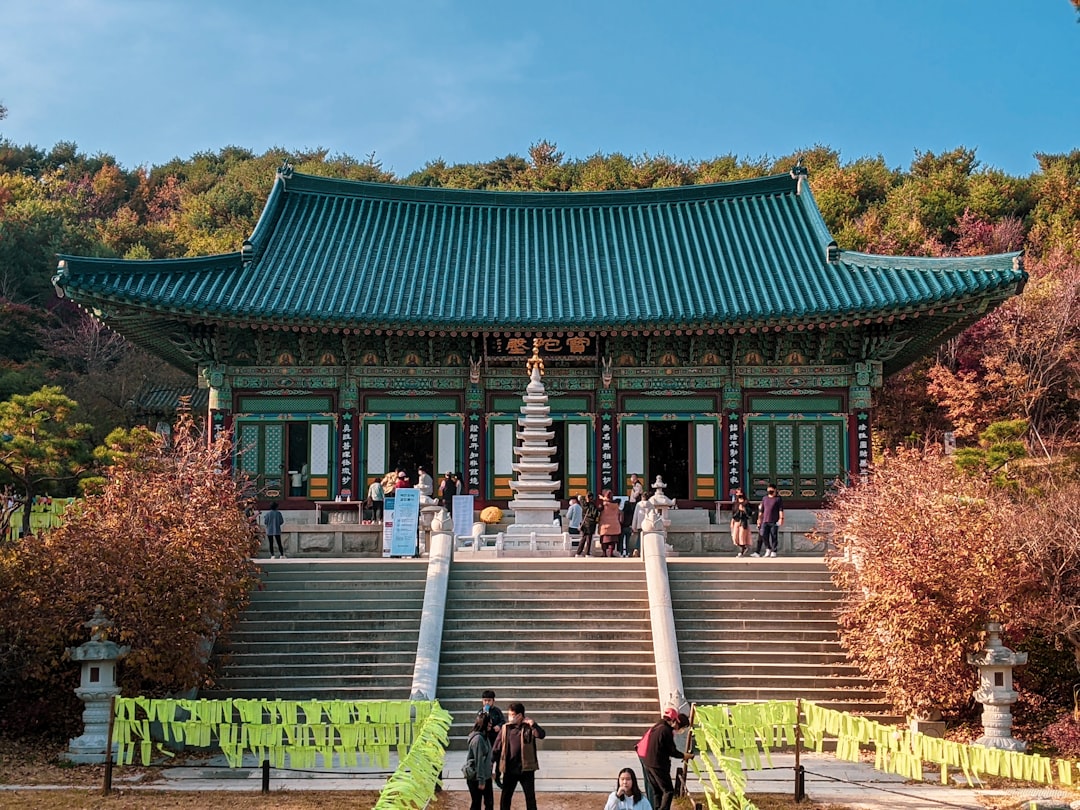
Why a Korean Temple Stay Changed How I Travel Forever
I’ll never forget the sound of the moktak — a hollow wooden percussion instrument — echoing through the misty mountains of Gangwon Province at 3:30 AM. I was freezing, half-asleep, and questioning every life decision that led me to voluntarily wake up before dawn. But as I shuffled into the dimly lit dharma hall of Woljeongsa Temple, something shifted. The rhythmic chanting of the monks, the warm glow of candlelight reflecting off centuries-old wooden beams, and the absolute stillness of the forest outside — it hit me like nothing I’d ever experienced at a yoga retreat in Sedona or a silent meditation center in upstate New York. This was different. This was real. And six years later, I’ve done seven temple stays across South Korea, each one teaching me something new about patience, simplicity, and the art of just being still.
If you’ve been wondering about a Korean temple stay how to book one, what to expect, or whether it’s worth the hype — you’re in the right place. This guide covers absolutely everything: from choosing the right temple and navigating the booking process to packing the right gear and understanding the etiquette that’ll keep you from accidentally offending a 700-year-old tradition. Let’s get into it.
What Exactly Is a Korean Temple Stay?

The History Behind the Program
Korea’s Templestay program was officially launched in 2002 during the FIFA World Cup, when the Korean government and the Jogye Order of Korean Buddhism realized they had a massive influx of international visitors and not enough cultural experiences to offer them. What started as a temporary initiative became one of Korea’s most beloved cultural tourism programs, now operating at over 130 temples across the country.
These aren’t museums or tourist traps. These are active Buddhist monasteries where monks have lived, meditated, and practiced for centuries — some for over a thousand years. The program invites visitors to step into that world for one to three nights, participating in the daily rhythms of temple life.
What You’ll Actually Do
A typical temple stay schedule looks something like this:
- 3:00–4:00 AM — Wake-up bell (yebul), morning chanting ceremony
- 6:00 AM — Breakfast (barugongyang — formal monastic meal)
- 8:00–11:00 AM — Guided meditation, tea ceremony with a monk, temple tour
- 12:00 PM — Lunch (all meals are vegan Buddhist cuisine)
- 2:00–5:00 PM — Activities: 108 prostrations, lantern-making, calligraphy, forest walking meditation
- 6:00 PM — Dinner (light evening meal)
- 7:00 PM — Evening chanting, free meditation time
- 9:00 PM — Lights out
Think of it as a digital detox bootcamp meets cultural immersion — except the “instructor” is a monk who’s been meditating for 40 years and the “gym” is a mountain temple surrounded by ancient pine forests. There’s no Wi-Fi pressure (though some temples do offer it), no social media notifications, and no agenda beyond being present.
Types of Temple Stay Programs
Not all temple stays are created equal. Here’s a quick breakdown:
| Program Type | Duration | Best For | Cost (USD) |
|---|---|---|---|
| Experience (체험형) | 3–5 hours | Day-trippers, families, first-timers | $15–$30 |
| Relaxation (휴식형) | 1–2 nights | Solo travelers seeking peace | $40–$70 |
| Traditional (전통형) | 1–2 nights | Full immersion, strict schedule | $50–$80 |
| Special/Seasonal | Varies | Lotus lantern festival, tea harvesting | $30–$100 |
The Relaxation type is what I recommend for most first-time international visitors. You still get the full experience — chanting, meditation, temple food — but with more flexibility and free time to explore the temple grounds at your own pace. The Traditional type follows the monks’ exact daily schedule, which means that 3:00 AM wake-up is non-negotiable.
Korean Temple Stay How to Book: Step-by-Step Guide
The Official Booking Platform
The easiest way to figure out a Korean temple stay how to book process is through the official website: templestay.com. This is run by the Cultural Corps of Korean Buddhism and is available in English, Chinese, and Japanese. Here’s your step-by-step:
- Visit templestay.com and click “English” in the top-right corner
- Browse temples by region, program type, or available dates
- Select your temple — read reviews, check the photo gallery, and note the program schedule
- Click “Reserve” and create an account (you’ll need a valid email)
- Choose your dates and program type (experience, relaxation, or traditional)
- Fill in personal details — passport name, nationality, dietary restrictions, emergency contact
- Pay online — most temples accept international credit cards through the platform. Some smaller temples require on-site payment in Korean won
- Receive confirmation via email with directions, packing list, and arrival instructions
Pro tip: Book at least 2–3 weeks in advance for popular temples like Haeinsa or Beomeosa. During peak seasons — cherry blossom season (late March to mid-April) and autumn foliage (mid-October to mid-November) — book a full month ahead. Korea Autumn Foliage 2026: Best Time & Top 7 Spots
Booking Directly with Temples
Some smaller, more remote temples aren’t listed on the main platform. For these hidden gems, you can:
- Call the temple directly — use Papago (Korea’s best translation app) for phone conversations, or ask your hotel concierge to call for you
- Email the temple — many temples have an English-speaking coordinator. Response times vary from same-day to a week
- Visit the regional tourism office — offices in cities like Gyeongju, Andong, and Sokcho can arrange temple stays at lesser-known monasteries
- Use KakaoTalk — some temples have official KakaoTalk channels where you can inquire and book in real-time
Official Templestay Program Information
What to Know Before Booking
Before you hit that reserve button, keep these details in mind:
- Minimum age: Most temples require guests to be at least 7 years old (some require 12+)
- Group size: Some programs cap at 20 participants; solo travelers are always welcome
- Language: Major temples (Jogyesa, Beomeosa, Haeinsa, Golgulsa) offer English-guided programs. Smaller temples may be Korean-only — which can actually be a more authentic experience
- Cancellation: Most temples offer free cancellation up to 3 days before. No-shows may be charged the full amount
- Accessibility: Mountain temples involve steep stairs and uneven terrain. If mobility is a concern, opt for city temples like Jogyesa in Seoul or Beomeosa in Busan, which have more accessible pathways
Top 7 Temples for Your First Temple Stay

1. Haeinsa Temple (합천, South Gyeongsang)
Home to the Tripitaka Koreana — over 80,000 woodblocks of Buddhist scripture and a UNESCO World Heritage Site. Haeinsa sits deep in the Gayasan National Park and offers one of the most immersive traditional programs in the country. The 2-night program costs approximately $60–$75 USD and includes a special guided tour of the woodblock depository that regular tourists can’t access.
2. Beomeosa Temple (부산)
Just 40 minutes from downtown Busan by subway (Line 1 to Beomeosa Station, then bus 90), this 1,300-year-old temple is tucked into the slopes of Geumjeongsan Mountain. Their English program is excellent, and you’re close enough to Busan to combine your temple stay with a few days of beach street food exploration. Cost: around $50–$65 USD for one night. Busan Beach Street Food Itinerary: 5-Day Guide 2026
3. Golgulsa Temple (경주, North Gyeongsang)
This is the one for active travelers. Golgulsa is famous for Sunmudo — a Korean Buddhist martial art that combines meditation with physical training. Think tai chi meets kickboxing, taught by actual monks. It’s also carved into a cliff face, which makes it visually stunning. Cost: $55–$70 USD per night, with Sunmudo training included.
4. Jogyesa Temple (서울)
If you’re short on time and staying in Seoul, Jogyesa is the headquarters of Korean Zen Buddhism and offers half-day experience programs for just $15–$25 USD. It’s in the heart of Jongno-gu, walking distance from Insadong and Gyeongbokgung Palace. Perfect for a first taste before committing to a full overnight stay. Explore Seoul’s Cultural Experiences
5. Woljeongsa Temple (평창, Gangwon)
My personal favorite. Located near the 2018 PyeongChang Winter Olympics site, Woljeongsa is famous for its 1-kilometer fir tree forest path (the Jeonnamu Sup-gil) that leads to the temple. In autumn, this walk is absolutely breathtaking. In winter, the snow-covered temple grounds are silent and magical. Cost: $45–$60 USD per night.
6. Magoksa Temple (공주, South Chungcheong)
Another UNESCO World Heritage temple (part of the “Sansa — Buddhist Mountain Monasteries” designation). Magoksa is especially gorgeous during cherry blossom season when the entire valley turns pink and white. Their program is intimate — rarely more than 10 guests — which means more one-on-one interaction with the monks. Cost: $40–$55 USD.
7. Mihwangsa Temple (해남, South Jeolla)
At the very southern tip of the Korean peninsula, Mihwangsa offers sunrise meditation overlooking the ocean — a completely different vibe from mountain temples. It’s remote, hard to get to, and absolutely worth the effort. If you’re exploring the south, combine it with a trip to nearby Jeju Island. Cost: $50–$65 USD. Jeju Island Hidden Gems Off the Beaten Path 2026
Getting There: Transport from Major Cities
Flying into South Korea
Most American travelers will fly into Incheon International Airport (ICN), with direct flights available from LAX (11–12 hours), JFK (14 hours), and SFO (11–12 hours). Airlines like Korean Air, Asiana, Delta, and United operate daily nonstops. Round-trip fares typically range from $800–$1,400 USD depending on season.
US citizens enjoy visa-free entry for up to 90 days, but you must register for a K-ETA (Korea Electronic Travel Authorization) at least 72 hours before departure. It costs about $10 and is valid for 2 years. Apply at k-eta.go.kr.
Getting to Temples from Seoul
Once you’re in Korea, the KTX (Korea Train Express) is your best friend. Book tickets through the KORAIL app or at any major station. Here’s how to reach the top temples:
| Temple | From Seoul | Transport | Time | Cost (USD) |
|---|---|---|---|---|
| Haeinsa | Seoul → Daegu (KTX) → Bus to Haeinsa | KTX + Bus | ~3 hours | $35–$45 |
| Beomeosa | Seoul → Busan (KTX) → Subway Line 1 | KTX + Subway | ~3 hours | $40–$55 |
| Golgulsa | Seoul → Gyeongju (KTX) → Taxi | KTX + Taxi | ~2.5 hours | $35–$50 |
| Jogyesa | Anguk Station, Line 3 | Subway | ~30 min | $1.50 |
| Woljeongsa | Seoul → Jinbu (KTX) → Taxi | KTX + Taxi | ~2 hours | $25–$35 |
| Magoksa | Seoul → Gongju (Express Bus) | Bus + Taxi | ~2.5 hours | $15–$25 |
| Mihwangsa | Seoul → Mokpo (KTX) → Bus | KTX + Bus | ~4 hours | $40–$55 |
Essential transport tip: Get a T-money card at any convenience store (CU, GS25, 7-Eleven) in the airport or city. Load it with 30,000–50,000 won ($22–$37 USD) and use it on all buses, subways, and even taxis nationwide. Use Naver Map (not Google Maps — it’s unreliable in Korea) for real-time transit directions with English support.
Budget Breakdown: What a Temple Stay Actually Costs

The Full Trip Budget
Here’s a realistic budget for a 5-day Korea trip with a 2-night temple stay, based on a mid-range traveler from the US:
| Expense | Estimated Cost (USD) |
|---|---|
| Round-trip flight (LAX/JFK/SFO to ICN) | $800–$1,400 |
| K-ETA | $10 |
| T-money card + transit | $30–$50 |
| Temple stay (2 nights, all meals included) | $80–$150 |
| Hotel in Seoul (2 nights, mid-range) | $120–$200 |
| Food & snacks outside temple | $50–$80 |
| SIM card / eSIM (5-day data) | $15–$25 |
| Miscellaneous (souvenirs, coffee, taxi) | $50–$80 |
| Total | $1,155–$1,995 |
Here’s what blows people’s minds: the temple stay itself is the cheapest part of the trip. For $50–$75 per night, you get a private or semi-private room, three full meals, guided activities, and access to temple grounds that span acres of pristine mountain forest. Try getting that deal at a wellness retreat in Bali or Tulum.
What’s Included vs. What’s Extra
Included in your temple stay fee:
- Accommodation (ondol-heated rooms with floor bedding — traditional and surprisingly comfortable)
- All meals (Buddhist vegan cuisine — genuinely delicious)
- Temple uniform (loose-fitting pants and vest)
- All scheduled activities (meditation, chanting, tea ceremony, crafts)
- Guided temple tour
Not included / optional extras:
- Transportation to and from the temple
- Personal toiletries (some temples provide basics, but bring your own to be safe)
- Donations to the temple (optional but appreciated — 10,000–20,000 won / $7–$15 is standard)
- Souvenir items from the temple shop (prayer beads, tea, incense)
Cultural Etiquette: What Every Visitor Must Know
Before You Arrive
Korean Buddhist temples are active places of worship, not tourist attractions with monk-themed photo ops. Understanding the etiquette will make your experience infinitely richer and show respect to the monks and community hosting you.
- No alcohol or cigarettes — do not bring them onto temple grounds. Period. If you’re a smoker, this is your cue for a 48-hour cleanse
- No revealing clothing — you’ll be given temple clothes, but pack modest layers for arrival and departure. No shorts above the knee, no tank tops, no graphic tees with offensive imagery
- Leave your loud voice at the gate — temples maintain silence or very quiet conversation at all times. This is the hardest part for many Americans (I say this with love as a loud American myself)
- Remove shoes before entering any building — socks are fine, barefoot is better
During Your Stay
Meals (Barugongyang) are the most culturally significant part of the temple stay. The formal monastic meal involves:
- Sitting cross-legged on the floor (a cushion is provided)
- Unwrapping your personal set of four bowls in a specific order
- Serving yourself only what you will eat — wasting food is considered a serious breach of etiquette
- Eating in complete silence
- Cleaning your bowls with water and a pickled radish, then drinking the rinse water
- Re-wrapping your bowls in the correct order
Yes, you drink the rinse water. It sounds strange, but the philosophy is beautiful: nothing is wasted, every grain of rice has value, and you take responsibility for your own consumption. It changed how I think about food waste at home permanently.
During meditation and chanting:
- Follow the monk’s lead — if they bow, you bow; if they sit, you sit
- Don’t point your feet toward the Buddha statue or the monks
- Photography is usually allowed outside, but ask before photographing inside dharma halls
- If you can’t sit cross-legged, sit on a chair at the back — it’s completely acceptable
- Don’t leave ceremonies early unless you have a medical issue
Photography & Phone Etiquette
Most temples allow photography of the buildings, gardens, and landscapes. However, never photograph monks without permission, and turn your phone completely off (not silent — off) during chanting and meditation sessions. Some temples will ask you to put your phone in a designated basket during the entire stay. Embrace it. The world will survive without your Instagram stories for 48 hours.
Insider Tips From a Repeat Temple Stay Visitor

After seven temple stays across South Korea, here are the tips I wish I’d had on day one:
- Go in shoulder season. Mid-October (autumn foliage) and early April (cherry blossoms) offer the most stunning scenery, but book early. November and late March are slightly less crowded with nearly the same beauty
- Bring warm layers. Mountain temples get cold — even in May. The dharma hall at 3:30 AM in Gangwon Province can drop to 5°C (41°F) in spring. Pack a fleece, warm socks, and a small blanket
- Bring your own toiletries. Temples provide minimal toiletries, sometimes just a bar of soap. Pack travel-size shampoo, toothpaste, and a towel. 7 Best Korean Sheet Masks for Dry Skin (2026 Ranking)
- Learn three Korean phrases: “감사합니다” (gamsahamnida — thank you), “죄송합니다” (joesonghamnida — I’m sorry), and “합장” (hapjang — palms together, the Buddhist greeting). Download the Papago app for anything beyond that
- Request a monk’s tea talk. Many temples offer an optional one-on-one tea session with a senior monk. These conversations — about life, purpose, happiness — are often the most memorable part of the entire stay. Don’t skip it
- Wear slip-on shoes. You’ll be removing and putting on shoes dozens of times. Lace-up hiking boots are a nightmare. Bring easy slip-ons for the temple and save the hiking boots for the trails
- The food is incredible. Buddhist temple cuisine (사찰음식, sachal eumsik) is one of Korea’s greatest culinary treasures. It’s entirely vegan, uses zero garlic or onion (the “five pungent vegetables” are forbidden), yet explodes with flavor from wild herbs, fermented pastes, and seasonal mountain vegetables. Don’t go in expecting bland tofu and rice — it’s a genuine gastronomic experience
- Weekday stays are quieter. Weekend programs fill up with Korean families and student groups. If you want a more contemplative experience, arrive Tuesday through Thursday
- Combine with nearby activities. Gyeongju (near Golgulsa) is an entire open-air museum. Busan (near Beomeosa) has incredible street food and beaches. PyeongChang (near Woljeongsa) has ski resorts in winter. Plan your temple stay as part of a larger itinerary, not a standalone trip
Best Seasons for a Korean Temple Stay
Spring (March–May): Cherry Blossoms & Renewal
Spring is magical at Korean temples. Cherry blossoms frame ancient wooden buildings in soft pink, and the mountains come alive with wildflowers. Magoksa and Beomeosa are particularly stunning in early to mid-April. Temperatures are mild (10–20°C / 50–68°F) and the light is perfect for photography. The Buddha’s Birthday celebration (usually in May) transforms every temple in the country with thousands of colorful paper lanterns — attending a temple stay during this week is an unforgettable experience.
Summer (June–August): Monsoon Season Meditation
Summer is the least popular season due to Korea’s intense monsoon rains (장마, jangma) in late June and July. However, if you don’t mind getting wet, there’s something deeply meditative about listening to rain pound the temple roof while sitting in meditation. Mountain temples are also significantly cooler than sweltering Seoul. Expect temperatures of 22–28°C (72–82°F) at higher elevations versus 33°C+ (91°F+) in the city. Plus, you’ll practically have the temple to yourself.
Autumn (September–November): Peak Season, Peak Beauty
This is the season for temple stays. Korean autumn foliage is world-class — fiery reds, electric oranges, deep golds — and mountain temples are positioned right in the heart of it. Woljeongsa’s fir tree path, Haeinsa’s Gayasan slopes, and Mihwangsa’s southern coast all hit peak color between mid-October and early November. Book at least a month ahead for this season. Korea Autumn Foliage 2026: Best Time & Top 7 Spots
Winter (December–February): Snow & Silence
A snow-covered temple is hauntingly beautiful. The silence deepens, the air is impossibly crisp, and the contrast of dark wood buildings against white snow is breathtaking. Woljeongsa and Haeinsa are particularly spectacular in winter. Rooms are heated with ondol (traditional underfloor heating), so you’ll be warm indoors. Combine a winter temple stay with a trip to nearby PyeongChang ski resorts for the ultimate Korean winter experience. Temperatures can drop to -15°C (5°F) at mountain temples, so pack serious cold-weather gear.
Frequently Asked Questions About Korean Temple Stays
Do I need to be Buddhist to do a temple stay?
Absolutely not. Temple stays welcome people of all faiths and none. The program is designed as a cultural experience, not a religious conversion. About 70% of international guests are non-Buddhist. You’ll be invited to participate in Buddhist rituals, but there’s no pressure to adopt any beliefs. Think of it as an anthropological experience — you’re a respectful guest observing and participating in a living tradition.
Is there an English-speaking program available?
Yes, several major temples run fully English-guided programs, including Jogyesa (Seoul), Beomeosa (Busan), Golgulsa (Gyeongju), and Haeinsa (Hapcheon). On the templestay.com booking platform, filter for “English available” to find all participating temples. Even at Korean-only temples, you’ll receive printed English instructions, and the monks often speak enough English for basic communication. The Papago translation app handles the rest beautifully.
Can I do a temple stay with kids?
Yes, but with caveats. Most temples accept children aged 7 and up for the full program, and some offer family-specific programs during school holidays. The biggest challenge is the early wake-up and silence requirements — kids under 10 may struggle with the 3:30 AM start and multi-hour meditation sessions. For families, I recommend the half-day experience programs at Jogyesa, which include kid-friendly activities like lantern-making and shorter meditation sessions.
What should I pack for a temple stay?
Here’s my tested packing list:
- Warm layers (fleece, thermal base layer, warm socks)
- Slip-on shoes (for constant on/off inside buildings)
- Basic toiletries (shampoo, soap, toothbrush, towel)
- A small flashlight (temple grounds are very dark at night)
- A journal and pen (no phones during meditation)
- Moisturizer and lip balm (mountain air is extremely dry, especially in winter) Korean Skincare Routine for Acne-Prone Skin: 2026 Guide
- An open mind and a willingness to wake up really, really early
Is the food really all vegan? What if I have allergies?
All temple food is 100% vegan — no meat, fish, eggs, or dairy. It also excludes garlic, onions, green onions, chives, and leeks (the Buddhist “five pungent herbs”). If you have specific allergies (nuts, gluten, soy), inform the temple when booking. Most temples can accommodate common allergies with advance notice. The meals are simple but extraordinarily flavorful — seasoned with wild herbs, doenjang (fermented soybean paste), gochujang, sesame, and seasonal mountain vegetables.
Can I leave the temple grounds during my stay?
Generally, yes, during free time periods — most temples have unstructured hours in the afternoon when you’re free to hike nearby trails or explore the surrounding area. However, you must return for scheduled activities (meals, chanting, meditation). Some strict traditional programs ask that you remain on temple grounds for the entire duration. Check your specific program’s rules when booking.
Related Posts You’ll Love
If you’re planning a Korea trip around your temple stay, these guides will help you fill in the rest of your itinerary:
- Busan Beach Street Food Itinerary: 5-Day Guide 2026 — Perfect for combining with a Beomeosa temple stay
- Korea Autumn Foliage 2026: Best Time & Top 7 Spots — Time your temple visit for peak colors
- Jeju Island Hidden Gems Off the Beaten Path 2026 — Extend your trip with Korea’s island paradise
Suggested new articles:
- Best Buddhist Temple Food Restaurants in Seoul 2026
- Complete Guide to Korean Traditional Hanbok Experience 2026
- Korea KTX Train Guide: Routes, Booking, and Money-Saving Tips
Ready to Book Your Korean Temple Stay?
A Korean temple stay isn’t just another item to check off your travel bucket list — it’s the kind of experience that genuinely changes your perspective. In a world where we’re constantly connected, constantly stimulated, and constantly rushing, spending even 24 hours in a centuries-old mountain monastery forces you to slow down in a way that no spa weekend or meditation app ever could.
Now that you know everything about a Korean temple stay how to book, what to expect, and which temples to choose, there’s only one thing left to do: pick your dates and reserve your spot. Head to templestay.com, browse the temples, and take the leap. Your 3:30 AM wake-up call is waiting — and I promise, it’ll be worth it.
Have you done a temple stay in Korea? Planning one? Drop a comment below with your questions — I respond to every single one. If this guide helped you, share it with a friend who’s been talking about visiting Korea. And if you want more Korea travel guides, local tips, and itinerary ideas delivered straight to your inbox, subscribe to our newsletter so you never miss a post.
Last updated: March 2026. All prices and schedules verified as of publication. Confirm directly with temples before booking, as programs and availability change seasonally.