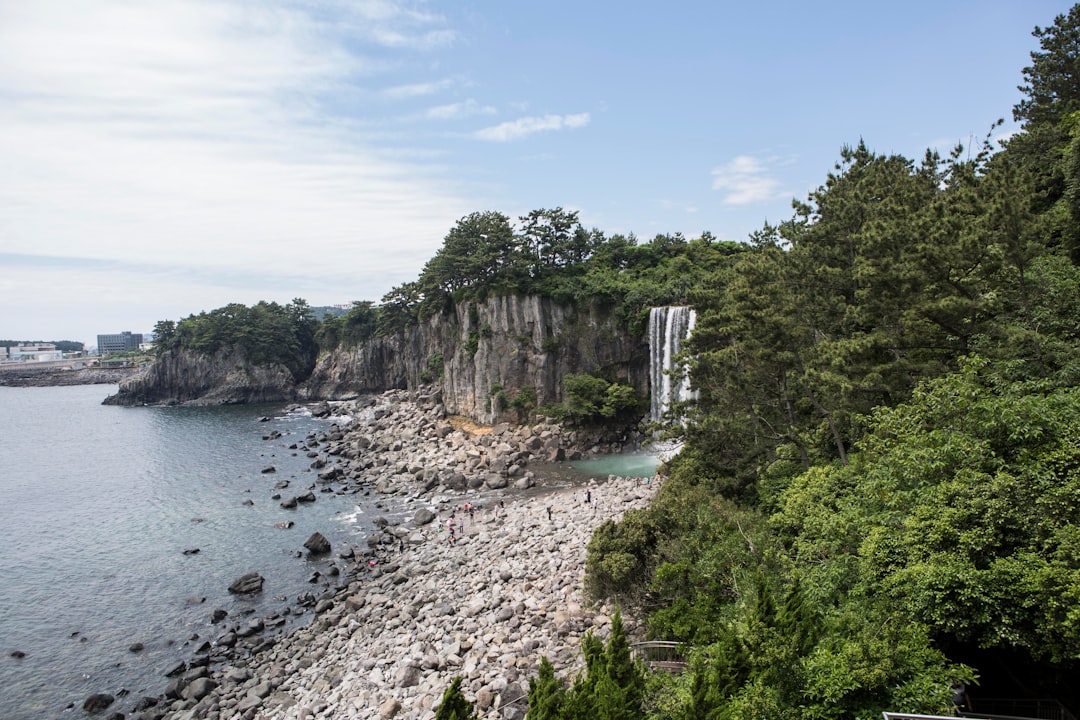
Why Jeju Island Should Be Your Next Bucket-List Destination
I still remember the exact moment Jeju Island stole my heart. I was standing at the edge of Yongmeori Coast, watching waves crash against ancient sandstone cliffs that looked like they belonged on another planet, and I realized — I’d been in South Korea for three years and had barely scratched the surface of this volcanic island. Most tourists spend 48 hours hitting Hallasan and a couple of waterfalls before flying back to Seoul. But Jeju Island’s hidden gems off the beaten path are what transform a good trip into an unforgettable one.
Jeju (제주도) is South Korea’s largest island, a UNESCO Global Geopark sitting about 50 miles off the southern coast. Think of it as Korea’s Hawaii — volcanic landscapes, tangerine orchards, black-sand beaches, and a laid-back culture that feels worlds apart from Seoul’s intensity. But unlike Hawaii, you can explore it on a fraction of the budget.
This guide is the one I wish I’d had on my first visit. I’ve returned to Jeju over a dozen times across every season, and I’m sharing the secret spots, practical logistics, and real costs that most English-language guides skip entirely. Whether you’re planning a 3-day sprint or a full week of slow travel, this itinerary will help you experience the Jeju that locals actually love.
Getting to Jeju Island: Flights, Ferries, and Logistics

International Flights From the US
There are no direct flights from the US to Jeju. You’ll fly into Incheon International Airport (ICN) near Seoul, then take a short domestic hop to Jeju International Airport (CJU). From LAX, JFK, or SFO, expect 12–14 hours nonstop to Incheon on carriers like Korean Air, Asiana, Delta, or United. Round-trip fares typically range from $700–$1,200 USD depending on season.
US citizens enjoy visa-free entry to South Korea for up to 90 days, but you must apply for a K-ETA (Korea Electronic Travel Authorization) before departure. It costs about $10, takes 24–72 hours to process, and is valid for two years. Apply at k-eta.go.kr — don’t use third-party sites that charge inflated fees.
Seoul to Jeju: The Domestic Flight
The Seoul–Jeju route is one of the busiest air corridors in the world, with flights departing every 10–15 minutes from both Gimpo (GMP) and Incheon airports. Budget carriers like Jeju Air, Jin Air, T’way, and Air Busan offer one-way fares from $30–$80 USD. The flight takes just 70 minutes.
Pro tip: Fly from Gimpo Airport, not Incheon, if you’re already in Seoul. Gimpo is inside the city (connected by subway Lines 5 and 9, plus the AREX), while Incheon is an hour away. You’ll save 2+ hours of transit time. Book through the Naver app or directly on carrier websites for the best prices — third-party aggregators often miss the cheapest Korean domestic fares.
The Ferry Option
If you have time and want an adventure, overnight ferries run from Mokpo (about 3.5 hours from Seoul by KTX train). The ferry takes roughly 4.5 hours and costs around $30–$60 USD for a basic berth. It’s a gorgeous ride, especially at sunrise, but flights are so cheap that most travelers skip this unless they’re bringing a car.
Korea Budget Travel Tips 2026: See Seoul for Under $50/Day
Getting Around Jeju: Transport That Actually Works
Renting a Car (Highly Recommended)
Jeju is one of the few places in Korea where renting a car is almost essential. The island is roughly 45 miles across, public buses are infrequent to remote areas, and the best Jeju Island hidden gems off the beaten path require wheels. International visitors need an International Driving Permit (IDP) alongside their US license.
Rental rates start at about $25–$40 USD per day for a compact car from companies like Lotte Rent-a-Car or Jeju Rent-a-Car. Gas runs approximately $5–$6 per gallon. Many rental offices are a free shuttle ride from Jeju Airport. Book in advance during peak seasons (July–August, cherry blossom weeks in late March/early April).
Navigation: Download Naver Map before you arrive — Google Maps is notoriously unreliable in Korea for driving directions. Naver Map works flawlessly for turn-by-turn navigation, even in English mode. Pair it with Papago (Naver’s translation app) for reading Korean signs and menus.
Public Buses and Taxis
If you don’t drive, Jeju’s numbered bus routes (급행 and 간선) connect major attractions. Grab a T-money card at any convenience store (CU, GS25, 7-Eleven) for about $3 and load it with cash. Bus fares run $1–$2 per ride. The express routes (급행 buses 111, 112, 121, 122) circle the island’s coast and are reasonably reliable.
Taxis are affordable by American standards — a 20-minute ride costs roughly $8–$15 USD. Use the KakaoTalk taxi feature (Kakao T) to hail rides without language barriers. Just set your destination on the map, and the driver follows the GPS.
Jeju’s Iconic Must-See Attractions (The Greatest Hits)

Before we dive into the hidden spots, let’s cover the landmarks that earned their fame for a reason. Even repeat visitors come back to these.
Hallasan National Park
Hallasan (한라산) is South Korea’s tallest mountain at 6,388 feet — and yes, you can hike to the summit and back in a single day. The Seongpanak Trail (5.5 miles one way) is the most popular route, taking 4–5 hours up. The Gwaneumsa Trail is steeper but more scenic. Both are free, but you must start early — summit access closes at noon (Seongpanak) or 12:30 PM (Gwaneumsa) to ensure hikers descend before dark.
In spring (April–May), the azaleas explode in pink along the upper slopes. In autumn (October–November), the foliage rivals New England. Winter brings snow that turns the crater lake, Baengnokdam, into a frozen wonderland. Pack layers regardless of season — the summit is always 10–15°F colder than the coast.
Cost: Free entry. Parking at trailheads is about $2. Budget $5–$8 for a hot bowl of black pork noodles at the base afterward.
Seongsan Ilchulbong (Sunrise Peak)
This UNESCO World Heritage tuff cone rises dramatically from the ocean on Jeju’s eastern tip. The hike to the crater rim takes about 25 minutes and rewards you with a panoramic view of the island and ocean. As the name suggests, sunrise here is legendary — arrive by 5:30 AM in summer for the full experience.
Admission: ~$1.50 adults. Hours: Varies by season (generally 5:00 AM–8:00 PM in summer, 7:00 AM–7:00 PM in winter). The adjacent Haenyeo (female diver) performance happens daily at 1:30 PM and 3:00 PM — watch these incredible women, many in their 70s and 80s, free-dive for shellfish using techniques passed down for centuries.
Manjanggul Lava Tube
One of the longest lava tubes in the world at over 8 miles, though only about 0.6 miles is open to the public. Walking through this 300,000-year-old tunnel is surreal — the temperature stays a cool 52–55°F year-round, making it a perfect summer escape. The lava column at the end stands 25 feet tall and is the world’s largest.
Admission: ~$3. Hours: 9:00 AM–6:00 PM (last entry 5:10 PM). Wear non-slip shoes — the rock floor is uneven and sometimes wet.
Jeju UNESCO World Heritage SitesJeju Island Hidden Gems Off the Beaten Path: 10 Secret Spots Locals Love
This is the section I’m most excited about. After years of exploring Jeju’s back roads, coastal trails, and tiny villages, these are the Jeju Island hidden gems off the beaten path that rarely appear in mainstream guidebooks. Save these to your Naver Map — you’ll thank me later.
1. Songaksan Mountain and the Coastal Cliffs
While everyone flocks to Seongsan on the east coast, Songaksan (송악산) on the southwestern tip offers equally stunning cliff views with a fraction of the crowds. The circular hiking trail takes about an hour and passes WWII-era Japanese military bunkers carved into the rock. On clear days, you can see Marado, Korea’s southernmost island, just offshore.
How to get there: Drive 50 minutes from Jeju City toward Daejeong. Free parking. No admission fee. Best visited in the golden hour before sunset when the cliffs glow amber.
2. Gimnyeong Maze Park and the Secret Beach Next Door
Most tourists visit the maze (a fun 15-minute challenge for about $3) and leave. But walk 5 minutes east along the coastal path and you’ll find Gimnyeong Seongsegi Beach — a tiny cove with impossibly clear turquoise water, black volcanic rock, and almost no people. Locals come here to snorkel and picnic on weekends.
3. Sanbangsan Temple and Yongmeori Coast
Sanbangsan (산방산) is a dramatic volcanic dome on the south coast with a Buddhist temple cave halfway up. The real magic is below at Yongmeori Coast (Dragon Head Shore), where you walk along a narrow path between towering sandstone cliffs and crashing waves. It feels like walking through a natural cathedral. Note: this trail closes during high waves or storms — check conditions on the morning of your visit.
Combined admission: ~$2.50. Hours: 8:30 AM–6:00 PM. Allow 90 minutes for both attractions.
4. Geommeolle Beach (Jeju’s Hidden Black-Sand Beach)
Tucked behind Sanbangsan, Geommeolle Beach (검멀레 해변) is a stunning stretch of black volcanic sand backed by pine trees. It’s rarely crowded and feels completely wild. There are no cafes or facilities — just raw, beautiful coastline. Bring water, a towel, and your camera.
5. Bijarim Forest (2,800 Ancient Nutmeg Trees)
This forest contains the largest single colony of nutmeg trees on the planet, some over 800 years old. The 45-minute loop trail winds through towering trees with moss-covered trunks and feels like stepping into a Studio Ghibli film. It’s incredibly peaceful — most Korean tourists visit on weekdays, leaving weekends relatively quiet for international visitors who don’t follow the same schedule.
Admission: ~$2.50. Hours: 9:00 AM–6:00 PM. The forest is near Manjanggul, so combine them for a half-day eastern Jeju itinerary.
6. Soesokkak Estuary
Where a freshwater stream meets the ocean through volcanic rock channels, Soesokkak (쇠소깍) creates a natural lagoon of surreal emerald-green water. You can rent a transparent kayak or SUP board for about $15–$20 per hour and paddle through overhanging cliffs and tiny caves. This spot feels tropical and exotic — nothing like the typical Korean landscape.
Getting there: 25 minutes east of Seogwipo. Free parking. The kayak rentals are right at the shoreline.
7. Jeju Olle Trail Route 7 (The Most Beautiful Walk on the Island)
The Jeju Olle Trails are a network of 27 walking routes circling the entire island (totaling over 260 miles). If you only walk one, make it Route 7, from Jungmun to Seogwipo. This 10.5-mile trail passes Jusangjeolli Columnar Joints, hidden coves, tangerine orchards, and cliffside paths with jaw-dropping ocean views. Allow 4–5 hours at a moderate pace.
The trails are free, well-marked with blue and orange arrows, and you don’t need to register. Wear comfortable hiking shoes and carry water — convenience stores are sparse on some segments.
8. Hallim Coastal Trail to Hyeopjae Beach (via the Back Route)
Everyone drives to Hyeopjae Beach (one of Jeju’s most beautiful white-sand beaches). Instead, park at Hallim Park and walk the coastal Olle path south toward Hyeopjae. You’ll pass through tiny fishing villages, stone-wall alleyways, and hidden viewpoints that car-bound tourists never see. The walk takes about 40 minutes one way, and you arrive at the beach feeling like you earned it.
9. Gasiri Village and the Abandoned Airfield Trails
In Jeju’s quiet interior highlands, Gasiri (가시리) is a traditional horse-ranching village with sweeping grassland views. A converted Japanese colonial-era airfield has been turned into walking and cycling paths through open meadows. In spring, the surrounding canola flower fields turn the landscape brilliant yellow — it’s one of Jeju’s most iconic photo spots, yet far less visited than the coastal attractions.
10. Udo Island (Jeju’s Island-Off-the-Island)
Technically not “hidden,” but Udo (우도) is still overlooked by many international visitors. This tiny island off Jeju’s eastern shore is reachable by a 15-minute ferry from Seongsan Port (round-trip about $7). Rent an electric scooter ($15–$20 for 2 hours) and circle the island, stopping at Hagosudong Beach (made of coral fragments, not sand), the lighthouse viewpoint, and roadside stalls selling Udo’s famous peanut ice cream ($3).
Ferry schedule: Roughly every 30 minutes, 8:00 AM–5:00 PM. Last return ferry varies by season — confirm at the port. Bring your passport for the ticket window.
What to Eat on Jeju: A Food Lover’s Guide

Jeju has its own distinct food culture, separate from mainland Korea. The island’s volcanic soil, ocean access, and historical isolation created dishes you won’t find anywhere else.
Must-Try Jeju Specialties
- Heuk-dwaeji (Black Pork / 흑돼지): Jeju’s native black pig breed is fattier, more flavorful, and more tender than standard Korean pork. Head to Heuk-dwaeji Street in Jeju City for a full BBQ spread ($15–$25 per person). The pork is charcoal-grilled at your table and eaten wrapped in sesame leaves with garlic and ssamjang.
- Haemul-tang (Seafood Stew): Loaded with abalone, sea urchin, and whatever the haenyeo divers caught that morning. Expect $20–$35 for a pot that feeds two.
- Jeonbok-juk (Abalone Porridge / 전복죽): Creamy rice porridge studded with fresh abalone. A Jeju breakfast staple — comforting, rich, and about $10–$12 per bowl.
- Hallabong (한라봉): Jeju’s famous citrus fruit, a bumpy-topped mandarin hybrid that’s sweeter and juicier than any orange you’ve had. Buy bags of them at roadside stands for $3–$5. Hallabong juice, chocolate, and cakes are everywhere.
- Gogi-guksu (Pork Noodle Soup): Simple, satisfying, and cheap — thin noodles in a clear pork broth. About $6–$8 at local spots. Perfect post-hike fuel.
7 Best Street Food Markets in Seoul & Busan (2026 Guide)
Best Korean Instant Ramyeon Ranking 2026: Top 15 Picks
How to Make Tteokbokki at Home: Easy Recipe 2026
Where to Eat Like a Local
Skip the tourist restaurants near major attractions. Instead, use Naver Map to search for restaurants with high “블로그 리뷰” (blog review) counts — that’s the Korean equivalent of Yelp popularity. Look for places with Korean-only menus and plastic chairs — they’re almost always better and cheaper. Papago’s camera translation feature can decode any menu in seconds.
For a splurge, try a haenyeo restaurant in Seogwipo where the divers themselves serve the catch. Haenyeo’s House (해녀의집) near Seongsan serves platters of raw abalone, sea cucumber, and octopus for about $30–$50 for two people — absurdly fresh.
7 Traditional Korean Desserts to Try First Time in 2026
Budget Breakdown: How Much Does Jeju Actually Cost?
One of Jeju’s biggest draws is value for money. Compared to Hawaii or Okinawa, you get more for less. Here’s a realistic daily budget breakdown for a solo traveler in 2026:
| Category | Budget ($) | Mid-Range ($) | Splurge ($) |
|---|---|---|---|
| Accommodation | $20–$35 (guesthouse/hostel) | $60–$100 (boutique hotel/pension) | $150–$300 (resort) |
| Meals (3/day) | $15–$25 | $30–$50 | $60–$100+ |
| Car Rental + Gas | $30–$40 | $40–$55 | $55–$80 (SUV) |
| Attractions | $5–$10 | $10–$20 | $30–$50 |
| Daily Total | $70–$110 | $140–$225 | $295–$530 |
A comfortable 5-day Jeju trip for a couple, including domestic flights, mid-range hotels, car rental, all meals, and activities, typically runs $1,200–$1,800 total — roughly half what you’d spend for an equivalent trip in Maui.
Money tips: Carry some cash (Korean won) for small vendors and market stalls, but credit cards are accepted almost everywhere, including taxis. ATMs in every convenience store accept international cards. Avoid currency exchange at the airport — rates are better at banks in Jeju City or at Hana Bank ATMs.
Seasonal Guide: When to Visit Jeju

Spring (March – May): Cherry Blossoms and Canola Fields
Jeju’s cherry blossoms bloom 1–2 weeks earlier than Seoul, typically peaking in late March to early April. The Jeju Cherry Blossom Festival along Jeonnong-ro (a tunnel of cherry trees in Jeju City) is magical. Combine it with the bright yellow canola flower fields around Gasiri and Seogwipo for one of the most photogenic landscapes in Asia. Temperatures hover around 55–65°F — perfect hiking weather.
Summer (June – August): Beaches, Waterfalls, and Monsoon Season
Peak tourist season. Beaches like Hyeopjae and Jungmun are vibrant and swimmable (water temps reach 73–77°F by July). But June brings the monsoon season (장마) — expect 2–3 weeks of heavy rain. July and August are hot and humid (85–90°F). The upside? Waterfalls like Jeongbang and Cheonjiyeon are at their most powerful. Book accommodation weeks in advance — Korean domestic tourists flood the island during school vacation.
Autumn (September – November): The Sweet Spot
My personal favorite season. Crowds thin after Chuseok (Korean Thanksgiving), temperatures drop to a comfortable 55–70°F, and the autumn foliage on Hallasan is spectacular from mid-October through mid-November. The Hallasan Eorimok trail surrounded by red and gold maples is comparable to the best fall foliage in Vermont — but with ocean views. Tangerine season also starts in late October, so the orchards are heavy with fruit.
Winter (December – February): Quiet and Moody
Jeju winters are milder than mainland Korea (35–45°F), but the wind is fierce. This is the least crowded season and prices drop significantly. If you don’t mind brisk weather, winter offers dramatic stormy coastlines, steaming ramen in empty restaurants, and Hallasan covered in snow. The haenyeo divers still work through winter — watching them emerge from 50°F waters is both humbling and unforgettable.
Cultural Etiquette and Practical Tips for Jeju
Respect the Haenyeo Tradition
Jeju’s haenyeo (해녀) female divers are a UNESCO Intangible Cultural Heritage. When watching them work, keep a respectful distance. Don’t touch their catch or equipment. If they offer to sell you fresh sea urchin or abalone on the spot, buy some — it’s an authentic interaction, and prices are fair ($5–$10 for a small plate of freshly cut sashimi).
General Korean Etiquette That Applies on Jeju
- Remove shoes when entering guesthouses, traditional restaurants (with floor seating), and temples. Look for shoe racks at the entrance.
- Use two hands when giving or receiving money, cards, or gifts — it shows respect.
- Don’t tip. Tipping is not customary in Korea and can cause confusion. Service is included.
- Quiet on public transport. Koreans keep phone calls and loud conversations to a minimum on buses.
- Recycling is serious. Jeju has strict waste sorting. Your accommodation will have separate bins for general waste, recyclables, and food waste. Follow them — fines for improper disposal exist.
- Sunscreen etiquette at beaches: Korea takes sun protection seriously. You’ll see full UV suits and sun umbrellas — don’t be surprised, and feel free to join in.
Korean Makeup vs Western Makeup: 7 Key Differences (2026)
Essential Apps for Your Trip
- Naver Map: Navigation, restaurant reviews, bus routes — your #1 app on Jeju.
- Papago: Real-time camera translation for menus, signs, and conversations.
- KakaoTalk: Korea’s universal messaging app. Many guesthouses and tour operators communicate via KakaoTalk.
- Kakao T: Built into KakaoTalk — hail taxis with a set destination, no Korean needed.
- KORAIL: Book KTX trains if you’re exploring the mainland before/after Jeju.
Insider Tips From a Repeat Jeju Visitor
These are the tips that took me multiple trips to learn. Bookmark this section.
- Book accommodations in Seogwipo, not Jeju City. Seogwipo (on the south coast) is closer to the best hidden spots, quieter, and offers better ocean views from most hotels. Jeju City is more urban and commercial.
- Start your days early. Korean domestic tourists tend to arrive at popular spots by 10–11 AM. If you’re at Seongsan by 6 AM or at Hallasan trailhead by 7 AM, you’ll have an hour or two of near-solitude.
- Buy a “Jeju Olle Passport” at any Olle Trail information center ($5). Get stamps at each route — it’s a fun souvenir and motivates you to explore more trails.
- Don’t skip the cafes. Jeju has an extraordinary cafe culture. Many are housed in architectural masterpieces with ocean-cliff views. Cafe Monsant (owned by K-pop artist GD), Anthracite (inside a converted greenhouse), and Spring Day Brewing are worth visiting for the experience alone, even if you don’t drink coffee.
- Buy tangerines from roadside “honesty boxes.” Throughout Jeju’s countryside, farmers leave bags of tangerines on tables with a price sign and a jar for cash. Drop in ₩3,000–₩5,000 ($2–$4) and take a bag. It’s the honor system, and the fruit is impossibly fresh.
- Rent a bike on Udo Island instead of a scooter if you want exercise. The island is small enough that cycling is comfortable, and you’ll stop more often at hidden viewpoints.
- Carry a portable Wi-Fi device or get a Korean eSIM. Pocket Wi-Fi rentals at Jeju Airport cost about $3–$5/day. eSIMs from providers like Airalo start at $5 for 1GB. Connectivity is essential for Naver Map navigation and real-time translation.
- Visit the Dongmun Traditional Market in Jeju City on your last evening. It’s open until late, packed with street food stalls, and the perfect place to load up on hallabong chocolate, dried tangerines, and black pork jerky as souvenirs. Budget about $10–$20 for a full market dinner crawl.
Snail Mucin Before and After: Real Results in 2026
Suggested 5-Day Jeju Itinerary
Here’s how I’d structure a first-timer’s trip to maximize the Jeju Island hidden gems off the beaten path alongside the iconic spots:
Day 1 — Arrive and Explore Jeju City
- Pick up rental car at Jeju Airport
- Dongmun Traditional Market for lunch (gogi-guksu + black pork skewers)
- Yongduam (Dragon Head Rock) — quick coastal stop
- Drive to Seogwipo accommodation, stopping at sunset viewpoints
- Dinner: Jeonbok-juk (abalone porridge) in Seogwipo
Day 2 — Eastern Jeju + Udo Island
- Sunrise at Seongsan Ilchulbong (arrive 5:30 AM)
- Ferry to Udo Island — scooter or bike loop (3–4 hours)
- Afternoon: Manjanggul Lava Tube + Bijarim Forest
- Evening: Black pork BBQ at Heuk-dwaeji Street
Day 3 — Hallasan Full-Day Hike
- Start Seongpanak Trail by 7:00 AM
- Summit by 11:00 AM, descend by 3:00 PM
- Recovery meal: haemul-tang (seafood stew) near Seogwipo
- Relax at Jungmun Beach or spa
Day 4 — Southern and Western Hidden Gems
- Morning: Soesokkak Estuary kayaking
- Yongmeori Coast + Sanbangsan Temple
- Geommeolle Black Sand Beach
- Songaksan Cliffs at sunset
- Dinner: Haenyeo restaurant near Jungmun
Day 5 — Olle Trail + Departure
- Walk Olle Trail Route 7 (partial — Jungmun to Jusangjeolli)
- Hyeopjae Beach via Hallim coastal path
- Cafe stop at one of Jeju’s famous ocean-view cafes
- Return car, fly back to Seoul or Incheon
Frequently Asked Questions About Jeju Island
How many days do you need for Jeju Island?
A minimum of 3 full days covers the highlights, but 5–7 days is ideal if you want to explore Jeju Island hidden gems off the beaten path, hike Hallasan, visit Udo Island, and experience the food scene without rushing. If you’re hiking Hallasan, dedicate an entire day to it — it’s a full 8–10 hour commitment for the summit trails.
Is Jeju Island safe for solo travelers and women traveling alone?
Extremely safe. South Korea consistently ranks among the safest countries in the world for travelers. Jeju specifically has very low crime rates. Solo female travelers are common, and you’ll find guesthouses and hostels with welcoming communities. That said, use standard travel precautions — inform someone of your hiking plans, carry a charged phone, and be aware of weather conditions on coastal trails.
Do I need to speak Korean to get around Jeju?
You can manage without Korean, but it’s harder than in Seoul. Jeju is a domestic tourism destination, so English signage and English-speaking staff are less common outside major hotels. The Papago app is your lifeline — its camera translation feature can decode any menu or sign instantly. Learn a few basics: 감사합니다 (gamsahamnida = thank you), 얼마예요 (eolmayeyo = how much?), and pointing at menu photos goes a long way.
What’s the best time of year to find the fewest crowds on Jeju?
Late September through mid-November (after Chuseok) and mid-January through February are the quietest periods. Avoid Korean school holidays (late July–August), Lunar New Year (January/February — dates vary), and Chuseok (September/October) when the island is packed with domestic visitors and prices spike 30–50%.
Can I use Uber or Lyft on Jeju Island?
No. Neither Uber nor Lyft operates in South Korea. Use Kakao T (the taxi function inside KakaoTalk) instead — it works identically. Set your pickup and destination on the map, a nearby taxi accepts, and the fare is metered. You can also simply hail taxis on the street in Jeju City and Seogwipo. All taxis use meters, so you won’t be overcharged.
Is Jeju Island good for families with kids?
Absolutely. Jeju is one of Korea’s top family destinations. Kid-friendly attractions include Teddy Bear Museum, Jeju Aquarium, Gimnyeong Maze Park, Ecoland Theme Park (a mini train through the forest), and the many beaches with calm, shallow waters. Most restaurants are family-friendly, and strollers can navigate the flat coastal trails easily. Car rental makes family logistics simple.
Related Posts You’ll Love
- Korea Budget Travel Tips 2026: See Seoul for Under $50/Day
- 7 Best Street Food Markets in Seoul & Busan (2026 Guide)
- 7 Traditional Korean Desserts to Try First Time in 2026
Suggested new articles we should create:
- Best Day Trips From Seoul by KTX Train (2026)
- Complete Guide to Busan: Beaches, Temples & Hidden Spots
- How to Use T-Money Card in Korea: Everything Visitors Need to Know
Start Planning Your Jeju Adventure Today
Jeju Island is one of those rare destinations that delivers on every level — stunning natural beauty, incredible food, rich culture, and genuine value. Whether you’re watching sunrise from Seongsan’s crater rim, paddling through the emerald waters of Soesokkak, or biting into your first piece of charcoal-grilled black pork, this island has a way of creating moments that stay with you long after you’ve flown home.
The Jeju Island hidden gems off the beaten path I’ve shared here are just the beginning. Every time I visit, I discover something new — a tiny coastal shrine, a grandmother selling homemade hallabong juice, a viewpoint that isn’t on any map. That’s the real magic of Jeju: it rewards the curious traveler.
Have you been to Jeju? Planning your first trip? Drop your questions in the comments below — I personally respond to every one. If this guide helped you plan, share it with a friend who’s dreaming of Korea. And if you want more off-the-beaten-path Korea content delivered to your inbox, subscribe to our newsletter so you never miss a new guide.
Safe travels, and see you on the island! 🤙