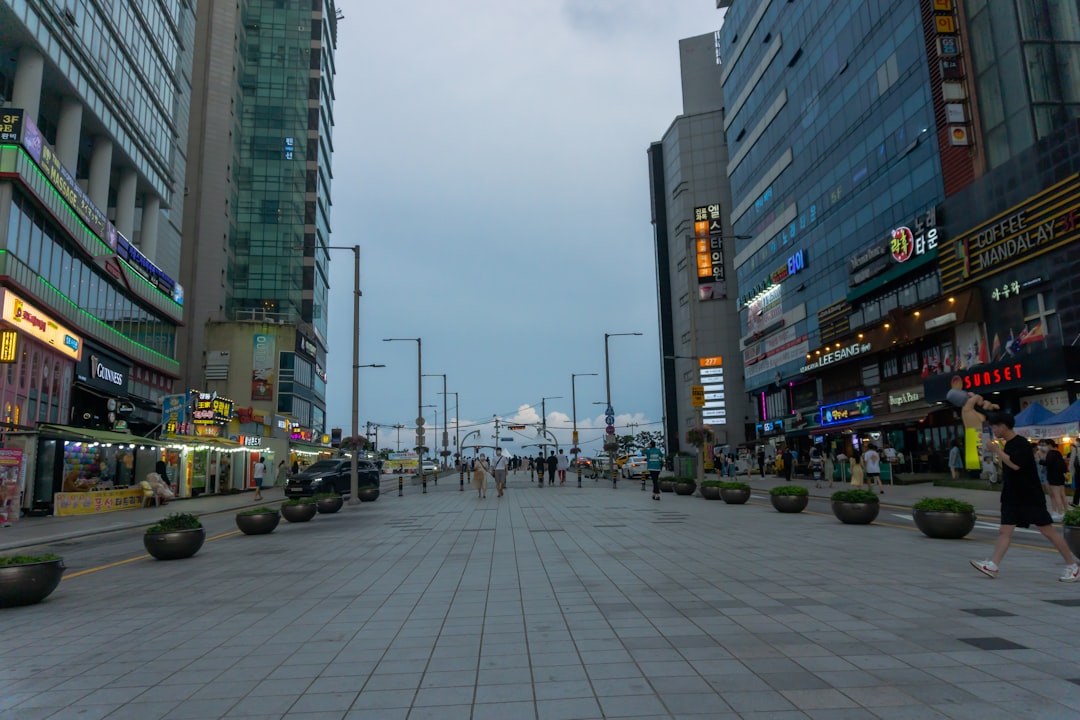
Why Busan Should Be Your Next Big Trip (And How to Plan the Perfect Busan Beach Street Food Itinerary)
I still remember stepping off the KTX bullet train at Busan Station, the salty Pacific breeze hitting my face before I’d even left the platform. Within thirty minutes, I was standing barefoot on Haeundae Beach, watching ajummas (Korean grandmothers) doing morning exercises on the sand while surfers paddled out beyond the breakwater. By noon, I’d demolished three servings of ssiat hotteok — crispy pancakes stuffed with seeds, brown sugar, and cinnamon — from a vendor in BIFF Square who’d been flipping them for over twenty years. That evening, perched on a cliff at Haedong Yonggungsa Temple, I watched the sun melt into the East Sea and thought: why doesn’t everyone come here?
Good news — they’re starting to. Busan, South Korea’s second-largest city (population 3.4 million), has exploded onto the international travel scene. Yet it still feels refreshingly uncrowded compared to Seoul. This busan beach street food itinerary is everything I wish I’d had on my first visit: a day-by-day blueprint covering the best beaches, the street food spots locals actually eat at, temple culture, nightlife, and the kind of practical logistics — costs, transit, hours — that turn a good trip into a legendary one.
Whether you’re extending a Seoul trip or flying direct, Busan delivers a completely different vibe: coastal, laid-back, fiercely proud of its seafood, and home to some of the most photogenic scenery in all of Asia. Let’s dive in.
Getting There: Flights, Trains, and Airport Logistics

Flying From the US to Busan
Most American travelers land at Incheon International Airport (ICN) near Seoul, then connect to Busan. Direct flights from LAX, JFK, and SFO to Incheon run 12–14 hours on carriers like Korean Air, Asiana, Delta, and United. Round-trip fares typically range from $800–$1,400 USD depending on season (spring cherry blossom and fall foliage seasons command premium pricing).
Busan also has its own international airport — Gimhae International Airport (PUS) — with limited direct connections from select Asian cities. If you’re routing through Tokyo or Osaka, a cheap connecting flight to PUS can save you the Seoul-to-Busan transit entirely.
Visa info: US citizens can enter South Korea visa-free for up to 90 days. You will need a K-ETA (Korea Electronic Travel Authorization), which costs about $10 USD and should be applied for at least 72 hours before departure at k-eta.go.kr. As of 2026, K-ETA requirements may be temporarily waived — check the latest status before your trip.
Seoul to Busan by KTX (The Best Way)
The KTX bullet train is the single best way to get from Seoul to Busan. It’s fast, comfortable, and scenic. Here’s what you need to know:
- Duration: 2 hours 30 minutes (Seoul Station → Busan Station)
- Cost: ~$45–$55 USD one-way for a standard seat
- Frequency: Trains depart every 15–30 minutes throughout the day
- Booking: Use the KORAIL app or website (letskorail.com) — book 1–2 weeks ahead for weekends and holidays
- Pro tip: Seats on the right side (heading south) offer better mountain and river views
If you’re on a tight budget, the SRT train from Suseo Station is slightly cheaper (~$40 USD) and takes about the same time. Express buses from Seoul’s Express Bus Terminal cost around $25–$30 USD but take 4–5 hours — worth it only if you’re on a shoestring budget.
Getting Around Busan
Busan’s public transit is excellent. Grab a T-money card at any convenience store (CU, GS25, 7-Eleven) for ₩2,500 (~$1.80 USD) and load it with credit. A single subway ride costs about ₩1,400 (~$1 USD), and buses are similarly priced. The subway system has 6 lines covering all major tourist areas.
Download Naver Map (Google Maps works in Korea but Naver is far more accurate for transit directions and walking routes). For translation, Papago is your best friend — it handles Korean far better than Google Translate. And install KakaoTalk, which is Korea’s universal messaging app; many restaurants and shops use it for reservations and communication.
Day 1: Busan’s Legendary Beaches — Sun, Surf, and Selfies
Haeundae Beach — The Icon
Haeundae Beach is to Busan what Waikiki is to Honolulu — the flagship beach that defines the city’s coastal identity. This 1.5-kilometer crescent of fine sand draws over 10 million visitors annually, and for good reason. The water is clean, the surrounding skyline is dramatic, and the beachside cafés and bars create an atmosphere that feels like Miami meets Tokyo.
Getting there: Take subway Line 2 to Haeundae Station (Exit 5), then walk 10 minutes toward the ocean. You’ll smell the salt air before you see the water.
What to do:
- Rent a beach umbrella and chair set for about ₩20,000–₩30,000 (~$15–$22 USD) during summer
- Walk the Haeundae Beach Train (actually a sky capsule/monorail) along the cliffside — ₩10,000 (~$7 USD) for stunning aerial views
- Visit the Busan Sea Life Aquarium at the east end of the beach — ₩29,000 (~$21 USD) for adults, open 10:00–19:00
- Surf lessons are available May–October from certified instructors for about ₩50,000–₩70,000 (~$36–$51 USD) including board rental
In the evening, Haeundae transforms. The Haeundae Traditional Market (a 5-minute walk inland) serves incredible eomuk (fish cake) on sticks for ₩1,000 (~$0.70 USD) each. Grab a few, dip them in the warm broth, and walk the beach boardwalk as the city lights reflect off the water.
Gwangalli Beach — The Locals’ Favorite
If Haeundae is the tourist beach, Gwangalli is where Busan locals go to unwind. The big draw here is the view of the Gwangan Bridge (Diamond Bridge), which lights up spectacularly after dark with LED displays that change colors and patterns. Think of it as Busan’s Golden Gate — except it puts on a light show every night.
Getting there: Subway Line 2 to Gwangan Station (Exit 3 or 5), then a 5-minute walk.
The beach itself is smaller and more intimate than Haeundae, lined with craft beer bars, seafood restaurants, and live music venues. This is the place for a romantic sunset dinner or a chill evening with friends. Order hoe (raw fish/sashimi) at one of the beachfront restaurants — a generous platter runs about ₩30,000–₩50,000 (~$22–$36 USD) for two people, which is a steal compared to sashimi prices in Japan or the US.
Seasonal highlight: The Gwangalli Eobang Festival (usually May) features fireworks launched from the bridge itself. It’s one of the most spectacular pyrotechnic displays in Asia.
Songjeong Beach — The Hidden Surf Spot
Just one subway stop past Haeundae, Songjeong Beach is Busan’s best-kept secret. This small, crescent-shaped beach is the city’s unofficial surf capital, with consistent waves and a bohemian village atmosphere. Cute cafés, surf shops, and guesthouses line the narrow streets behind the beach.
Getting there: Donghae Line to Songjeong Station, 5-minute walk.
Board rentals run about ₩20,000 (~$15 USD) for a half day. After surfing, warm up with a bowl of kalguksu (knife-cut noodle soup) at one of the family-run restaurants on the backstreet — roughly ₩8,000 (~$6 USD).
Jeju Island Hidden Gems Off the Beaten Path 2026Day 2: The Ultimate Busan Beach Street Food Itinerary — Eat Like a Local

This is the day your busan beach street food itinerary truly comes alive. Busan’s street food scene is arguably the best in South Korea — bolder flavors, bigger portions, and prices that’ll make you wonder why food costs so much back home. Here’s a route that maximizes your eating while hitting the city’s most atmospheric markets.
Morning: Jagalchi Fish Market (7:00 AM – 10:00 AM)
Jagalchi Market is the largest seafood market in all of South Korea. Imagine Pike Place Market in Seattle, but ten times the size, with tanks of live octopus, mountains of glistening mackerel, and ajummas who’ve been selling fish here since before you were born. It’s raw, authentic, and absolutely electrifying at dawn.
Getting there: Subway Line 1 to Jagalchi Station (Exit 10).
What to eat:
- Sannakji (live octopus) — sliced tentacles still wriggling on the plate, served with sesame oil. About ₩15,000 (~$11 USD). Chew thoroughly — this isn’t just etiquette advice, it’s a safety tip (the suction cups can stick to your throat)
- Hoe (raw fish platter) — pick your fish from the tank on the first floor, then carry it upstairs where the restaurant prepares it. A generous serving costs ₩20,000–₩40,000 (~$15–$29 USD)
- Grilled shellfish — scallops, abalone, and clams grilled tableside, ₩15,000–₩25,000 (~$11–$18 USD) per plate
Hours: The outdoor market opens around 5:00 AM; the indoor building opens at 8:00 AM. Closed the 1st and 3rd Tuesdays of each month.
Late Morning: BIFF Square (10:30 AM – 12:00 PM)
BIFF Square (Busan International Film Festival Square) in the Nampo-dong neighborhood is street food paradise. The area is named after the famous film festival, and handprints of Korean movie stars line the sidewalks, but locals come here for one reason: the food.
Must-eat items:
- Ssiat hotteok — THE signature Busan street food. Unlike Seoul’s version (filled with brown sugar only), Busan’s hotteok is stuffed with sunflower seeds, pumpkin seeds, peanuts, and brown sugar syrup. Crispy on the outside, molten inside. ₩2,000 (~$1.50 USD) each. Look for the stalls with the longest lines — particularly the ones near the main intersection
- Eomuk (fish cake) — Busan’s fish cakes are the best in Korea. Served on skewers in hot broth. ₩1,000–₩2,000 (~$0.70–$1.50 USD) per stick
- Tteokbokki (spicy rice cakes) — Busan-style is slightly sweeter than Seoul’s version. ₩3,000–₩4,000 (~$2–$3 USD) per serving
- Bindaetteok (mung bean pancake) — crispy, savory, and absolutely addictive. ₩3,000 (~$2 USD)
Budget reality check: You can eat your way through BIFF Square and spend less than $10 USD total. Try doing that at a street food market in New York or London.
7 Best Street Food Markets in Seoul & Busan (2026 Guide)Afternoon: Gukje International Market (12:30 PM – 2:00 PM)
A 5-minute walk from BIFF Square, Gukje Market is one of Korea’s oldest and largest traditional markets, dating back to the Korean War era when refugees set up stalls here. Today it’s a labyrinth of narrow alleys selling everything from hanbok (traditional clothing) to kitchenware to Korean cosmetics — but the food section is the real draw.
Don’t miss:
- Bibim dangmyeon (spicy glass noodles) — a Busan specialty rarely found in Seoul. ₩5,000 (~$3.50 USD)
- Dwaeji gukbap (pork and rice soup) — Busan’s unofficial comfort food. A steaming bowl of milky pork bone broth with tender meat and rice. ₩7,000–₩9,000 (~$5–$6.50 USD). This dish has sustained Busan’s working class for generations
- Fresh juice and fruit cups — vendors slice seasonal fruit to order. ₩3,000–₩5,000 (~$2–$3.50 USD)
Shopping tip: If you’re into K-Beauty products, the market has small shops selling Korean skincare at prices well below Myeongdong in Seoul.
Snail Mucin Before and After: Real Results in 2026 7 Best Korean Sheet Masks for Dry Skin (2026 Ranking)Evening: Haeundae Night Market (6:00 PM – 10:00 PM)
Circle back to Haeundae for the Beach Night Market, which operates during warmer months (typically May–October). Dozens of vendors set up along the beachfront promenade, selling everything from lobster tails and wagyu skewers to tornado potatoes and mango sticky rice.
Most items are priced between ₩3,000–₩10,000 (~$2–$7 USD). Grab a Korean craft beer from one of the beachside vendors (around ₩5,000/~$3.50 USD), find a spot on the sand, and enjoy dinner with the sound of waves. This is the quintessential Busan evening.
Day 3: Temples, Culture, and Colorful Villages
Haedong Yonggungsa Temple (8:00 AM – 10:00 AM)
Most Korean temples sit on mountaintops. Haedong Yonggungsa sits on an oceanside cliff, which makes it one of the most dramatically situated temples in all of Asia. Built in 1376 during the Goryeo Dynasty, this temple cascades down rocky cliffs to the water’s edge. On a clear morning, the combination of crashing waves, ancient stone architecture, and the scent of incense is genuinely transcendent.
Getting there: Subway Line 2 to Haeundae, then Bus 181 to the temple (about 30 minutes total). Alternatively, a taxi from Haeundae costs about ₩15,000 (~$11 USD).
Practical details:
- Admission: Free
- Hours: 4:00 AM – 7:00 PM (arrive early to beat tour groups — by 10 AM it gets crowded)
- There are 108 stone steps down to the main temple hall — manageable but wear comfortable shoes
- A small 12-zodiac animal statue area near the entrance lets you find your birth year animal and make a wish
Cultural etiquette: Remove your shoes before entering any temple building. Speak quietly. Don’t point at Buddha statues. Photography is generally okay outside but prohibited inside prayer halls. If monks are praying, observe silently from a respectful distance.
Gamcheon Culture Village (11:00 AM – 1:00 PM)
Often called the “Machu Picchu of Busan” or “Santorini of the East” (though honestly, it’s more colorful than either), Gamcheon Culture Village is a hillside neighborhood of pastel-painted houses, quirky street art, and narrow staircase alleys. Originally a settlement for Korean War refugees in the 1950s, it was transformed into an art village in 2009 when artists, architects, and residents collaborated to turn the aging neighborhood into a living gallery.
Getting there: Subway Line 1 to Toseong Station (Exit 6), then take minibus Maeul 1-1 or 2-2 (about 10 minutes, ₩1,200/~$0.85 USD).
What to do:
- Buy a stamp map at the village entrance for ₩2,000 (~$1.50 USD) — collect stamps at various art installations throughout the village to earn a postcard reward at the end
- Find the famous Little Prince and Fox statue (the most photographed spot in the village)
- Browse the tiny artist studios and galleries tucked into converted houses
- Stop at one of the rooftop cafés for a coffee with panoramic views of the entire harbor — drinks are about ₩5,000–₩7,000 (~$3.50–$5 USD)
Important: Remember that people live here. Keep noise down, don’t peer into private homes, and stay on marked paths. Signs in Korean and English remind visitors to be respectful.
Beomeosa Temple (2:30 PM – 4:30 PM)
If Haedong Yonggungsa is Busan’s most dramatic temple, Beomeosa is its most serene. Nestled on the slopes of Mt. Geumjeongsan, this 1,300-year-old temple (founded in 678 CE) is one of Korea’s most important Buddhist monasteries. The approach through ancient forests of wisteria and pine is worth the visit alone.
Getting there: Subway Line 1 to Beomeosa Station (Exit 5 or 7), then Bus 90 to the temple entrance (10 minutes).
Admission: Free. Hours: Open daily, roughly 5:30 AM to sunset.
Beomeosa offers temple stay programs where you can spend a night, eat Buddhist vegetarian meals, participate in meditation sessions, and attend the 3:00 AM prayer ceremony. Overnight stays cost approximately ₩50,000–₩70,000 (~$36–$51 USD) and must be booked in advance through the official Temple Stay website.
Seasonal bonus: Visit in late March to mid-April for cherry blossoms along the temple approach road. In November, the autumn foliage on Mt. Geumjeongsan is among the best in southern Korea.
Korea Temple Stay Official WebsiteDay 4: Coastal Walks, Cliffs, and K-Culture

Igidae Coastal Walk (8:00 AM – 11:00 AM)
The Igidae Coastal Walk is a 5-kilometer cliffside trail running along Busan’s southern coast. It’s one of those hikes where you stop every five minutes to take a photo because the views are that good — craggy cliffs, turquoise water, pine trees bent by the sea wind, and Haeundae’s skyline in the distance.
Getting there: Bus 24 or 131 to Igidae Entrance. The trail starts near Dongsaeng Mal (the easternmost point) and runs west to Oryukdo Skywalk.
Trail details:
- Distance: ~5 km (3.1 miles)
- Duration: 2–3 hours at a comfortable pace
- Difficulty: Easy to moderate (some uneven rocky sections)
- Cost: Free
- Bring water and sunscreen — there’s limited shade
Oryukdo Skywalk (11:00 AM – 12:00 PM)
At the end of the Igidae trail (or accessible directly by bus), the Oryukdo Skywalk is a horseshoe-shaped glass bridge extending over a 35-meter cliff above the ocean. Walking on transparent glass panels with waves crashing directly below you is a genuine thrill — think Grand Canyon Skywalk, but above the sea.
Admission: Free. Hours: 9:00 AM – 6:00 PM (closed in bad weather). You’ll be given disposable shoe covers to protect the glass. Wait times can reach 30+ minutes on weekends.
Busan Cinema Center and K-Culture (Afternoon)
Busan is the film capital of South Korea, home to the Busan International Film Festival (BIFF) every October — Asia’s largest film festival. The Busan Cinema Center in Centum City holds the Guinness World Record for the largest cantilever roof (163 meters). Even if you’re not a film buff, the architecture alone is worth seeing, especially at night when LED displays illuminate the massive overhang.
While in the Centum City area, check out Shinsegae Centum City — the world’s largest department store (Guinness-certified). The basement food hall is an experience unto itself, with free samples of everything from red ginseng candy to premium doenjang.
K-Pop fans should note that Busan is the hometown of BTS’s Jimin and Jungkook. Fan-run walking tours of their childhood neighborhoods are popular, and several cafés in the Haeundae area are decorated with BTS memorabilia.
7 Best K-Pop Albums to Start With in 2025 15 Most Iconic K-Pop Choreographies of All Time (2026) How to Become a K-Pop Trainee From Abroad in 2026Budget Breakdown: What Does a Busan Beach Street Food Itinerary Actually Cost?
One of the best things about a busan beach street food itinerary is how affordable it is. Here’s a realistic daily budget breakdown in USD:
| Category | Budget ($) | Mid-Range ($) | Splurge ($) |
|---|---|---|---|
| Accommodation | $15–$30 (hostel) | $60–$100 (hotel) | $150–$300 (beachfront) |
| Food | $10–$20 | $25–$45 | $60–$100+ |
| Transport | $3–$5 | $10–$15 | $20–$40 (taxis) |
| Activities | $0–$5 | $10–$25 | $30–$60 |
| Daily Total | $28–$60 | $105–$185 | $260–$500 |
The bottom line: A 4-day Busan trip (excluding international flights) can be done comfortably for $400–$700 USD at mid-range. Budget travelers who stick to hostels and street food can manage on $120–$240 total. Compare that to 4 days in Tokyo or even Bangkok — Busan punches way above its price class.
Money tips: ATMs at convenience stores (GS25, CU) accept international cards. Credit cards are widely accepted — Korea is largely cashless. However, traditional markets and small street vendors are often cash-only, so carry ₩50,000–₩100,000 (~$36–$72 USD) in cash for market days.
Seasonal Guide: When to Visit Busan

Spring (March – May): Cherry Blossoms and Mild Weather
Spring is arguably the most beautiful time to visit. Cherry blossoms typically bloom in Busan in late March to early April — about a week earlier than Seoul, since Busan is further south. The best spots for blossoms are Dalmaji Hill (near Haeundae), Samnak Ecological Park along the Nakdong River, and the approach road to Beomeosa Temple.
Temperatures range from 50–68°F (10–20°C), perfect for walking and hiking. Crowds are moderate. This is the sweet spot for a busan beach street food itinerary — warm enough to enjoy the beaches, cool enough to walk the markets comfortably.
Summer (June – August): Beach Season and Festivals
Summer is peak season. Temperatures hit 80–90°F (27–32°C) with high humidity. Beaches are packed, especially during the Busan Sea Festival (August). The monsoon season (late June–July) brings heavy rain, but showers are usually short and dramatic. Summer evenings along the beach are magical — long twilights, night markets, and warm water.
Fall (September – November): Foliage and Film Festival
Fall is the other prime season. Autumn foliage peaks in Busan around mid to late November (later than Seoul). The weather is crisp and dry — 55–72°F (13–22°C). The BIFF (Busan International Film Festival) in October draws international cinephiles. The Busan Fireworks Festival (also October, at Gwangalli Beach) is one of Korea’s biggest.
Winter (December – February): Quiet and Affordable
Busan winters are mild compared to Seoul — rarely below freezing. Temperatures hover around 35–48°F (2–9°C). Crowds thin out dramatically, meaning cheaper accommodation and zero wait times at attractions. The Jagalchi Fish Market is especially atmospheric on cold mornings when steam rises from the hot broth pots. If you want snow-covered temples and empty beaches, winter is your season.
Visit Korea Official Tourism GuideInsider Tips for an Unforgettable Busan Trip
After multiple visits and countless bowls of dwaeji gukbap, here are the tips I wish someone had told me before my first trip:
- Learn the market eating etiquette. At Jagalchi and other markets, you buy raw seafood on the first floor, then take it upstairs to a restaurant that prepares it. You pay a service/preparation fee (usually ₩5,000–₩10,000/~$3.50–$7 USD per person) called “chori-bi” (조리비). This is standard, not a scam. Side dishes (banchan) are included.
- Download Naver Map before you arrive. Set it to English mode. Google Maps will get you to the general area but Naver is essential for finding specific restaurants, navigating bus routes, and discovering walking paths that Google doesn’t know about.
- Visit Gamcheon Culture Village early or on a weekday. By 11:00 AM on weekends, it’s shoulder-to-shoulder with tour groups. Arriving at 8:30–9:00 AM gives you the village nearly to yourself.
- Stay in Seomyeon for nightlife, Haeundae for beaches. Seomyeon (subway Line 1/2 transfer station) is the city’s entertainment hub with bars, clubs, and late-night eateries. Haeundae is better for a relaxing, beach-focused trip. Both have excellent accommodation options.
- Try the jjimjilbang (Korean spa) experience. Spa Land in Shinsegae Centum City is one of Korea’s most luxurious — entry costs about ₩18,000–₩22,000 (~$13–$16 USD) on weekdays and includes access to over 20 themed saunas, pools, and relaxation rooms. It’s the Korean equivalent of a day at the spa, and many travelers use jjimjilbangs as budget accommodation (you can sleep overnight).
- Take the Blue Line Park sky capsule. This suspended rail car along the coast between Mipo and Cheongsapo offers jaw-dropping ocean views. Book online in advance for ₩10,000 (~$7 USD) — walk-up tickets sell out fast on weekends.
- The best eomuk (fish cake) is from Samjin Eomuk. This Busan institution has been making fish cakes since 1953. Their flagship store near Busan Station has a museum, tasting room, and a DIY fish cake making experience for about ₩12,000 (~$9 USD).
- Don’t skip the sunrise at Haedong Yonggungsa. Yes, it means waking up at 5:00 AM. Yes, it’s absolutely worth it. The temple opens at 4:00 AM, and watching the sun rise over the East Sea from the cliffside is a once-in-a-lifetime moment.
- Use “yogiyo” (여기요) to call for service at restaurants. Korean restaurants don’t do table-side hovering. When you’re ready to order, say “yogiyo” (literally “over here”) or press the call button on the table. It’s not rude — it’s expected.
- Carry a plastic bag for trash. Korean street food vendors don’t always have trash cans nearby. Having a small bag saves you from walking around holding sticky skewers and wrappers.
Frequently Asked Questions About Visiting Busan
How many days do you need in Busan?
A minimum of 3 days gives you a solid overview — beaches, markets, and the main cultural sites. However, 4–5 days is ideal if you want to include day trips (like Gyeongju, the ancient capital, which is just one hour away by KTX), explore more neighborhoods, or simply relax on the beach without rushing. If you’re combining Busan with a Seoul trip, allocate at least 3 full days to Busan specifically.
Is Busan safe for solo travelers?
Extremely safe. South Korea consistently ranks among the safest countries in the world for travelers. Busan’s streets are well-lit, public transit runs late, and violent crime against tourists is exceptionally rare. Solo female travelers regularly report feeling safer in Busan than in most major Western cities. The biggest “danger” is overeating at the street food markets. That said, use normal common sense — watch your belongings in crowded markets and be cautious in bar districts late at night.
What’s the best area to stay in Busan?
Haeundae is best for beach lovers and first-time visitors — the highest concentration of hotels, restaurants, and attractions. Seomyeon is ideal for nightlife, shopping, and central transit access. Nampo-dong/BIFF Square area is great for budget travelers and market lovers. Gwangalli offers a more local, chill vibe with great dining. For a quieter experience, consider Songjeong — it’s the surf village with guesthouses and a backpacker atmosphere.
Can I get by in Busan with only English?
In tourist areas (Haeundae, Gwangalli, major attractions), yes — many signs are bilingual and younger Koreans often speak conversational English. In traditional markets and local neighborhoods, English is limited. This is where Papago (the translation app) becomes essential. Download it before your trip and enable the camera translation feature, which can translate Korean menus and signs in real-time. Learning a few basic Korean phrases — “annyeonghaseyo” (hello), “gamsahamnida” (thank you), “eolmayeyo?” (how much?) — goes a very long way and locals genuinely appreciate the effort.
What’s the best street food in Busan that you can’t find in Seoul?
Ssiat hotteok (seed-filled sweet pancakes) is the #1 Busan-only specialty — Seoul’s version is a pale imitation. Dwaeji gukbap (pork rice soup) is Busan’s soul food, found everywhere in the city but rare in Seoul. Milmyeon (cold wheat noodles) is Busan’s answer to naengmyeon — thicker noodles in a tangy, spicy broth. And Busan’s eomuk (fish cake) is in a different league from anything you’ll find up north — thicker, chewier, and with more complex flavors thanks to the city’s proximity to fresh seafood.
Is Busan good for K-Beauty shopping?
Absolutely. While Seoul’s Myeongdong is the famous K-Beauty destination, Busan offers the same brands at lower prices with fewer crowds. The Seomyeon underground shopping center and Nampo-dong area both have clusters of Innisfree, Etude House, The Face Shop, and Olive Young stores. Shinsegae Centum City’s beauty floor is excellent for premium brands. Market stalls in Gukje Market sometimes carry discounted sheet masks and skincare bundles you won’t find in branded stores.
7 Best Korean Pet Products Online in 2026 Korea Tourism OrganizationRelated Posts You’ll Love
- 7 Best Street Food Markets in Seoul & Busan (2026 Guide)
- Jeju Island Hidden Gems Off the Beaten Path 2026
- Korean Skincare Routine for Acne-Prone Skin: 2026 Guide
Suggested future articles:
- Gyeongju Day Trip From Busan: Ancient Temples and Royal Tombs
- Best Jjimjilbangs in Korea: A Complete Spa Guide for Foreigners
- Korea Cherry Blossom Forecast 2026: When and Where to See Them
Start Planning Your Busan Beach Street Food Itinerary Today
Busan is one of those rare destinations that delivers on every front — stunning beaches, world-class street food, ancient temples, vibrant culture, and all at prices that won’t destroy your savings account. Whether you’re a beach bum, a foodie, a culture seeker, or all three, a well-planned busan beach street food itinerary will give you memories (and food comas) that last a lifetime.
The hardest part? Deciding which beach to visit first and how many servings of ssiat hotteok is socially acceptable in one sitting. (The answer is four. I tested this.)
Have you been to Busan? Planning your first trip? Drop your questions, tips, or favorite Busan street food finds in the comments below — I read and respond to every one. If this guide helped you plan your trip, share it with a friend who needs a Korea travel nudge. And don’t forget to subscribe for more in-depth Korea travel guides, K-Beauty reviews, and street food adventures delivered straight to your inbox.
See you on the beach. 🌊