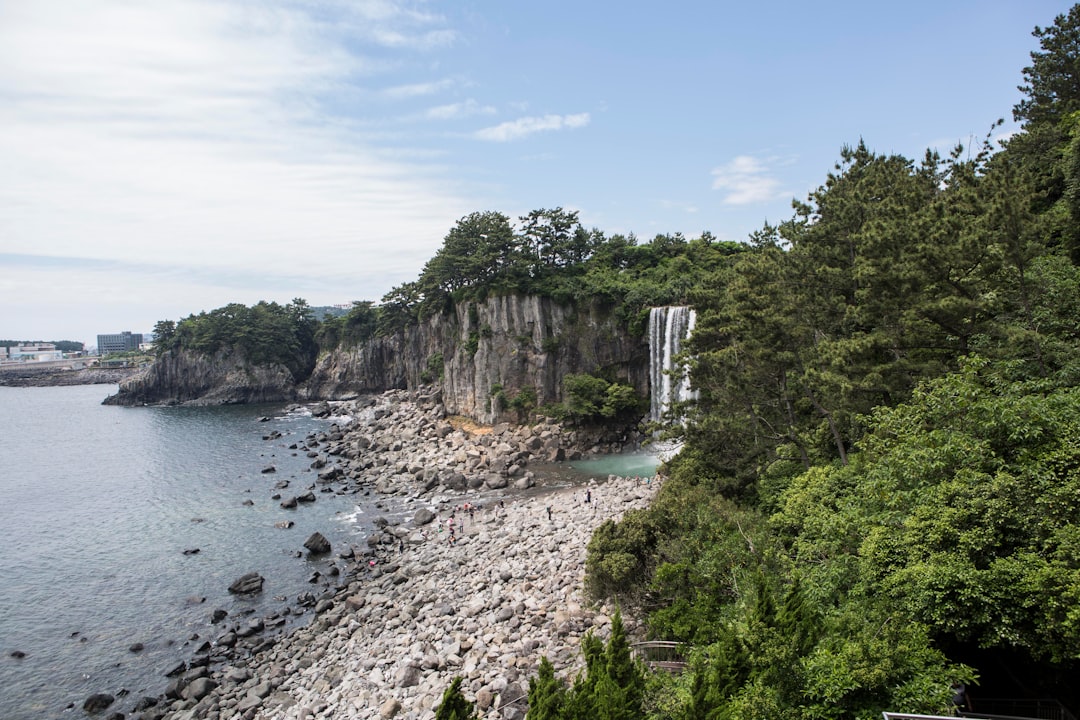
Why Jeju Island Should Be Your #1 Korea Bucket List Destination in 2026
I still remember the exact moment Jeju Island stole my heart. I was standing at the edge of Seongsanilchulbong (Sunrise Peak) at 5:47 AM, watching the sun crack open the horizon like a golden egg over the Pacific Ocean, and I thought: How does a place this stunning exist just a one-hour flight from Seoul?
Jeju Island — often called the “Hawaii of Korea” — is a UNESCO Triple Crown destination, holding designations as a World Natural Heritage site, Global Geopark, and Biosphere Reserve. It’s the only place on Earth with all three UNESCO natural science certifications. Yet most international visitors barely scratch the surface, sticking to the same five Instagram spots before flying home.
Not you. Not after reading this guide.
After spending a cumulative 47 days exploring Jeju across all four seasons, I’ve mapped out the Jeju Island hidden gems 2026 that even many Korean locals don’t know about. From secret lava tube caves to cliff-side cafes where your only company is the wind and the waves, this complete travel guide covers everything — transportation, costs, cultural tips, and those off-the-beaten-path spots that will make your trip truly unforgettable.
Whether you’re planning a 3-day weekend escape from Seoul or a full week-long deep dive, consider this your ultimate playbook. Let’s go.
Getting to Jeju Island: Flights, Ferries, and Logistics

Flying From the US to Jeju
There are no direct flights from the US to Jeju. You’ll fly into Incheon International Airport (ICN) first, then catch a short domestic hop to Jeju International Airport (CJU). The domestic flight takes just 65-75 minutes and costs between $45-$120 USD one way depending on the airline and season.
From major US cities, expect these approximate round-trip fares to Incheon:
| Departure City | Airline Options | Approx. RT Price | Flight Time |
|---|---|---|---|
| LAX | Korean Air, Asiana, Delta | $650–$950 | 12–13 hours |
| JFK | Korean Air, Asiana, United | $700–$1,100 | 14–15 hours |
| SFO | Korean Air, Asiana, United | $600–$900 | 11.5–12.5 hours |
Pro tip: Book domestic Jeju flights on Jeju Air, T’way Air, or Jin Air — Korea’s budget carriers. Download the Naver app or use skyscanner.com for the best comparison prices. Booking 3-4 weeks ahead typically locks in the lowest fares.
Visa and Entry Requirements for US Citizens
Great news: US citizens can enter South Korea visa-free for up to 90 days. However, as of 2026, you still need a K-ETA (Korea Electronic Travel Authorization). Apply online at k-eta.go.kr at least 72 hours before departure. The fee is approximately $8 USD, and approval is usually granted within 24 hours.
Jeju Island also has its own visa-free entry policy for citizens of many countries — even some nationalities that normally need a Korean visa can enter Jeju directly without one. This applies to direct international flights to Jeju (mainly from China and Japan).
Getting From Incheon to Jeju
Once you land at Incheon, you have two options:
- Fly directly from Incheon (ICN) or Gimpo (GMP): Transfer to Gimpo Airport via the Airport Railroad Express (AREX, ~45 min, $4.50) for more frequent and cheaper Jeju flights. Alternatively, fly from Incheon’s Terminal 1 domestic gates.
- Take the KTX to a southern city first: If you want to explore mainland Korea, ride the KTX high-speed train to Busan (~2.5 hours, $50) or Mokpo (~3 hours, $45), then catch a ferry. Download the KORAIL app to book KTX tickets in English.
Honestly? For most travelers, flying Gimpo → Jeju is the move. Flights depart every 15-20 minutes during peak hours — it’s the busiest domestic air route in the world, with over 200 flights daily.
Plan your Korea itinerary with official resourcesGetting Around Jeju Island: Transport Guide
Renting a Car (Highly Recommended)
Jeju is roughly the size of Maui, and having a car unlocks the true Jeju Island hidden gems 2026 that buses simply can’t reach. Rental rates start at $25-$40 USD/day for a compact car (Hyundai Avante or Kia K3).
You’ll need an International Driving Permit (IDP) along with your valid US driver’s license. Get your IDP from AAA before you leave — it costs about $20 and takes 15 minutes. Driving in Jeju is straightforward: roads are well-maintained, signage includes English, and traffic is much lighter than Seoul.
Book through Lotte Rent-a-Car or Jeju Rent-a-Car at the airport for the smoothest experience. Use Naver Map (not Google Maps — Google Maps is nearly useless in Korea) for navigation. It has real-time traffic and works perfectly offline once you download the Jeju map pack.
Public Buses and the T-Money Card
If you’re not driving, Jeju’s bus system is surprisingly solid. The color-coded routes make navigation intuitive:
- Red (급행, Express): Fast routes connecting major tourist areas. The Red 800 bus loops the entire coast — ideal for day-tripping.
- Blue (간선, Trunk): Main city routes connecting Jeju City and Seogwipo.
- Green (지선, Branch): Local routes to smaller villages and hidden spots.
- Yellow (관광, Tourist): Scenic tourist loop buses.
Pick up a T-Money card at any convenience store (CU, GS25, 7-Eleven) for $2.50 and load it with cash. Bus fares are just $1.00-$2.00 per ride, and you get a transfer discount within 30 minutes. The T-Money card also works in Seoul, Busan, and across all Korean public transit — buy one and use it everywhere.
Taxis and Kakao T
Jeju taxis are affordable and clean. Base fare is around $2.80, and a 30-minute ride across town rarely exceeds $15. Download KakaoTalk and use the built-in Kakao T feature to hail taxis — it works like Uber but is the dominant platform in Korea. No Korean phone number needed for the basic ride-hailing feature.
Hongdae Best Cafes and Bars at Night: 2026 Guide — if you’re spending time in Seoul before heading to Jeju, don’t miss the capital’s nightlife.
Jeju Island Hidden Gems 2026: 10 Secret Spots Most Tourists Miss

This is the section you came here for. After dozens of trips and countless conversations with Jeju locals — haenyeo (sea women divers), tangerine farmers, cafe owners — these are the spots that don’t show up in the top Google results. These are the real Jeju Island hidden gems 2026.
1. Gimnyeong Maze Park & the Secret Lava Tube Entrance
Everyone visits Manjanggul Cave, one of the world’s longest lava tubes. But almost nobody walks 10 minutes past the Gimnyeong Maze Park to find the unmarked trail leading to Gimnyeonggul Cave — a lesser-known lava tube that’s far less crowded and equally stunning. Entry is free, but you’ll need to register at the Gimnyeong village office (they limit visitors for conservation). Best visited on weekday mornings.
Cost: Free (Maze Park: $3.50) | Hours: 9 AM – 5 PM | How to get there: 40 min drive east from Jeju City, or Bus 201 from Jeju Intercity Terminal.
2. Songaksan Mountain’s Coastal Trail
While tourists flock to Hallasan, the Songaksan coastal trail on Jeju’s southwestern tip offers jaw-dropping cliff views with a fraction of the crowd. The 1.5-hour loop trail passes WWII-era Japanese military tunnels carved into the basalt cliffs, with views of Marado Island (Korea’s southernmost point) across crystal-clear water. On a clear day, you can see all the way to the horizon where the ocean meets the sky.
Cost: Free | Difficulty: Easy-moderate | Best time: Sunrise or late afternoon for golden-hour photography.
3. Hagosudong Beach (하고수동 해변)
On Udo Island (a tiny island off Jeju’s east coast), most visitors head to Sanho Beach on the south side. Instead, walk or cycle to Hagosudong Beach on the north shore. The water is impossibly turquoise — think Tulum or the Greek islands — and you’ll often have it completely to yourself on weekday mornings. The peanut ice cream from the grandma’s shop near the ferry dock is legendary.
Ferry to Udo: $8 round trip from Seongsan Port, departures every 30 min | Time on Udo: Plan 4-5 hours minimum.
4. Camellia Hill’s Secret Garden at Dusk
Camellia Hill is a botanical garden known for its 6,000+ camellia trees. Most visitors come midday and rush through. But if you arrive 90 minutes before closing, the crowds vanish. Walk to the garden’s far eastern section — there’s a hidden pond surrounded by ancient camellias where the late afternoon light filters through in golden beams. It’s pure magic in December through February when the flowers peak.
Cost: $7 adults | Hours: 8:30 AM – 6 PM (varies seasonally) | Location: Seogwipo area, 15 min drive from Jungmun.
5. Geomun Oreum (거문오름) Lava Tube System
This UNESCO World Heritage site requires advance online reservation, which keeps crowds minimal. The guided trail through this volcanic cone and its surrounding ancient forest feels like walking through Middle-earth. Limited to 450 visitors per day, split into time slots. Book at least 2 weeks ahead on the Jeju World Heritage website.
Cost: Free (reservation required) | Duration: 2-3 hours guided walk | Difficulty: Moderate (some steep sections).
6. Soesokkak Estuary Kayaking
Where a freshwater stream meets the ocean through volcanic rock formations, Soesokkak creates an otherworldly emerald canyon. Rent a transparent kayak ($15/hour) and paddle through narrow gorges where 50-foot basalt cliffs tower above you. It’s like paddling through a miniature fjord. Mornings are calmest for kayaking.
7. Woljeongri Beach’s Cafe Street After Dark
During the day, Woljeongri Beach is Jeju’s most photographed beach — and it can get packed. But after 7 PM, the beachfront cafe row transforms into a cozy, lantern-lit strip where you can sip locally roasted coffee or Jeju tangerine beer while listening to waves crash just steps away. Cafe Delmoondo is the local favorite — grab a window seat facing the ocean.
8. Dodu-dong Rainbow Coastal Road
Just 10 minutes west of Jeju City, this 2 km stretch of coastal walking path is painted in rainbow colors along the concrete seawall. Locals jog and cycle here at sunrise, but tourists rarely venture over. The views of Hallasan behind you and the open sea ahead make this one of the best free viewpoints on the entire island.
9. Jeoji Oreum Art Village
The village surrounding Jeoji Oreum (volcanic cone) in western Jeju has quietly become an artists’ colony. Small galleries, ceramics studios, and a stunning Tadao Ando-designed museum (Genius Loci) are tucked among traditional stone walls and mandarin orchards. Climb Jeoji Oreum itself for 360° views with almost no one else around.
10. Yongmeori Coast’s Hidden Sea Cave
The Yongmeori Coastal Walk near Sanbangsan is already somewhat popular, but few visitors notice the narrow path leading to a sea cave at the trail’s far end (accessible only at low tide). Check tide times before going — when the water recedes, you can walk inside a volcanic sea cave where the waves echo dramatically off 2,000-year-old sedimentary walls.
Cost: $1.80 | Hours: 9 AM – 5 PM (closed in severe weather) | Important: Check tide tables and weather forecasts before visiting.
Jeju tourism official informationBest Jeju Itinerary: 3-Day, 5-Day, and 7-Day Plans
3-Day Express Itinerary (Greatest Hits + Hidden Gems)
Day 1 — East Jeju: Sunrise at Seongsanilchulbong (arrive by 5:30 AM, entry $1.80) → Udo Island ferry + Hagosudong Beach → Manjanggul Cave → Woljeongri Beach sunset + cafe hopping.
Day 2 — South Jeju: Hallasan summit hike via Seongpanak Trail (6-8 hours round trip, free, start by 6 AM) → Jungmun Daepo Jusangjeolli Columns → Soesokkak kayaking → Seogwipo night market for black pork BBQ.
Day 3 — West Jeju: O’sulloc Tea Museum + Innisfree Jeju House → Songaksan Coastal Trail → Yongmeori Coast → Jeoji Art Village → Airport.
5-Day Relaxed Itinerary
Follow the 3-day plan, then add:
Day 4 — Central Jeju & Culture: Jeju Folk Village Museum ($4.50) → Mysterious Road (gravity hill illusion) → Spirited Garden bonsai park → Hallim Park → Hyeopjae Beach for sunset.
Day 5 — Hidden Gems Day: Geomun Oreum UNESCO hike (pre-booked) → Gimnyeong area exploration → Camellia Hill → Traditional haenyeo performance at Hado-ri → Final dinner at Dombe Pork restaurant in Jeju City.
7-Day Deep Dive
Add a Hallasan alternative trail day (Yeongsil Trail is shorter and more scenic than Seongpanak), a Jeju Olle Trail segment (Route 7 along the south coast is the fan favorite — 17.6 km of jaw-dropping coastal walking), and a full food tour day exploring Jeju’s traditional markets (Dongmun Market for street food, Maeil Olle Market in Seogwipo for seafood).
Korea Autumn Foliage Best Time 2026: Top 7 Spots — time your Jeju trip in October-November for stunning fall colors on Hallasan.
7 Best Cherry Blossom Spots in Korea 2026 Guide — Jeju has Korea’s earliest cherry blossoms, typically starting in late March.
Jeju Food Guide: What to Eat and Where

Jeju’s food scene is a revelation. The island’s volcanic soil, ocean proximity, and unique microclimate produce ingredients you literally cannot find anywhere else in Korea.
Must-Try Jeju Foods
- Heuk-dwaeji (Black Pork BBQ): Jeju’s famous free-range black pigs produce meat with a nuttier, richer flavor than mainland pork. Dombe Pork (돔베고기) is the traditional preparation — boiled and sliced. Head to Jeju Black Pork Street (흑돼지거리) near Jeju City Hall. Budget $15-$25 per person for a full BBQ meal.
- Haemul-tang (Seafood Stew): Loaded with abalone, sea urchin, and whatever the haenyeo divers caught that morning. Best at small restaurants near Seogwipo Port. About $12-$18 per serving.
- Jeonbok-juk (Abalone Porridge): Creamy, comforting, and quintessentially Jeju. The bright green color comes from fresh abalone innards — trust me, it’s delicious. Try it at Myeongji Ocean near Hamdeok Beach ($9-$12).
- Hallabong Tangerines: Jeju’s iconic citrus fruit, available fresh from November through February. Buy bags directly from roadside stands for $3-$5 — infinitely better than store-bought.
- Jeju Makgeolli: Local rice wine brewed with Jeju water. Several craft breweries offer tastings — Jeju Beer Brewing Company does excellent flights for $8-$12.
Korean Fried Chicken Recipe: Crispy Double-Fried Guide 2026 — master the art of Korean fried chicken at home after your trip.
Best Markets for Foodies
Dongmun Traditional Market in Jeju City is the island’s largest and oldest market. Navigate to the food hall section for fresh-caught sashimi (they’ll slice it while you watch — $10-$20 for a generous plate), grilled skewers, and the iconic Jeju tangerine juice. Open daily from 8 AM to 9 PM.
Maeil Olle Market in Seogwipo is smaller but more curated, with excellent street food stalls and a lively atmosphere on weekend evenings. Don’t miss the grilled black pork skewers ($3) and fresh hallabong juice ($2).
Budget Breakdown: How Much Does Jeju Cost?
Jeju is remarkably affordable compared to Western beach destinations. Here’s a realistic daily budget breakdown per person:
| Category | Budget ($) | Mid-Range ($) | Comfort ($) |
|---|---|---|---|
| Accommodation | $20–$35 (hostels, guesthouses) | $60–$100 (boutique hotels) | $150–$300 (resorts) |
| Meals (3/day) | $15–$25 | $30–$50 | $60–$100 |
| Transport | $5–$10 (bus) | $25–$40 (rental car + gas) | $25–$40 (rental car) |
| Activities | $5–$10 (mostly free!) | $15–$30 | $30–$60 |
| Daily Total | $45–$80 | $130–$220 | $265–$500 |
The biggest money-saver: Most of Jeju’s best attractions are completely free. Hiking Hallasan? Free. Olle Trails? Free. Beaches? Free. Oreums (volcanic cones)? Free. You can have an incredible Jeju experience on under $60/day if you stay in guesthouses and eat at local restaurants.
Flights from Seoul to Jeju (round trip): Budget $90–$200 depending on season and advance booking. Summer (July-August) and Korean holidays (Chuseok, Lunar New Year) see the highest prices.
Money-Saving Tips
- Book accommodations on Yanolja or Goodchoice — Korean hotel apps with prices 20-30% lower than Booking.com for domestic properties.
- Get the Jeju Tour Pass ($30-$50) for bundled discounts on major attractions like Hallim Park, Teddy Bear Museum, and Camellia Hill.
- Eat at 백반집 (baekban-jip) — traditional Korean set-meal restaurants where $5-$7 gets you rice, soup, and 6-8 side dishes. Look for places packed with locals.
- Fill up at CU or GS25 convenience stores — Korean convenience store food is genuinely good. Triangle kimbap ($1), cup ramyun ($1.50), and egg sandwiches ($2) make solid budget meals.
- Use Naver Pay or Kakao Pay linked to your card for occasional discounts and cashback at participating merchants.
Seasonal Guide: When to Visit Jeju Island

Spring (March – May): Cherry Blossoms and Canola Flowers
Jeju has the earliest cherry blossoms in all of Korea, typically blooming in late March to early April — about two weeks before Seoul. The combination of pink cherry blossoms and bright yellow canola flower fields is Jeju’s most iconic spring image. Head to Noksan-ro Road for the famous canola + cherry blossom corridor, or Jeonnong-ro Street in Jeju City for the longest cherry blossom road.
Spring temperatures hover between 50-65°F (10-18°C) — perfect for hiking. This is arguably the best time to visit for Jeju Island hidden gems 2026, as crowds are lighter than summer and the island is bursting with color.
7 Best Cherry Blossom Spots in Korea 2026 Guide
Summer (June – August): Beaches and Festivals
Peak season. Temperatures reach 80-88°F (27-31°C) with high humidity. Beaches are alive, the ocean is warm enough for swimming, and summer festivals light up the island. Be prepared for monsoon rains in late June to mid-July (called jangma). August is the hottest and most crowded — book accommodation and car rentals at least 4 weeks ahead.
Summer highlights: Night swimming at Hamdeok Beach, waterfall chasing after rain (Cheonjiyeon and Jeongbang Falls are most dramatic), and the Jeju Fire Festival (typically March, but summer has various smaller festivals).
Autumn (September – November): The Golden Season
My personal favorite. September brings silvergrass (억새) blanketing the volcanic cones in flowing silver waves — Saebyeol Oreum and Hallasan’s Yeongsil Trail are the prime spots. By mid-October to November, Hallasan’s summit erupts in crimson and gold foliage, while the weather sits at a perfect 55-70°F (13-21°C).
Autumn crowds are moderate, prices drop from summer peaks, and the light is golden. If you can only visit Korea once, October in Jeju is the answer.
Korea Autumn Foliage Best Time 2026: Top 7 Spots
Winter (December – February): Camellias and Solitude
Jeju’s winters are mild compared to mainland Korea — temperatures rarely drop below 35°F (2°C), and snow is infrequent at sea level (though Hallasan gets a gorgeous snow cap). This is the season for camellia blossoms, hallabong tangerines, and absolute solitude at most attractions.
Winter is the cheapest time to visit, with flights and hotels at their lowest prices. Pair a Jeju winter trip with a ski resort visit on the mainland for the full Korean winter experience.
Cultural Etiquette and Insider Tips for Jeju
Respect the Haenyeo Tradition
Jeju’s haenyeo (해녀) — women divers who free-dive for sea creatures without oxygen tanks — are a UNESCO Intangible Cultural Heritage. Many are in their 70s and 80s, making this a living tradition that may not exist for much longer. If you encounter haenyeo working, do not approach them in the water or touch their catch. You can respectfully watch from shore and purchase fresh seafood at the small stands they run near diving spots. Hado-ri Village offers organized haenyeo performance experiences where you can watch and then eat the freshly caught seafood.
General Korean Etiquette Reminders
- Remove shoes when entering traditional guesthouses, temples, and some restaurants (look for a raised platform or shoe rack at the entrance).
- Use both hands when giving or receiving money, business cards, or items — or support your right wrist with your left hand.
- Pour drinks for others first, never yourself. Turn slightly away from elders when drinking alcohol.
- Don’t tip. Tipping is not customary in Korea and can even cause confusion. Service charges are included in restaurant bills.
- Download Papago (Naver’s translation app) — it’s far better than Google Translate for Korean and has camera translation for menus and signs.
- Quiet on public transport. Koreans generally don’t talk loudly on buses. Keep phone calls short and voices low.
Korean Skincare Routine for Beginners: Step-by-Step 2026 Guide — pick up Jeju-exclusive skincare products from Innisfree’s Jeju flagship store while you’re on the island.
Essential Apps for Your Trip
- Naver Map — THE navigation app for Korea. Google Maps doesn’t work properly here due to Korean mapping laws. Naver Map handles driving, transit, and walking directions perfectly.
- Papago — Best Korean-English translator. Camera translation is a lifesaver for menus.
- KakaoTalk — Korea’s universal messaging app. Also used for taxi hailing (Kakao T), payments (Kakao Pay), and restaurant reservations.
- KORAIL — Book KTX and other train tickets for mainland Korea travel.
- Yogiyo or Baemin — Food delivery apps if you want Korean food brought to your hotel (these now have basic English interfaces).
Frequently Asked Questions About Jeju Island
How many days do I need in Jeju Island?
A minimum of 3 full days is needed to see the highlights. However, 5-7 days is ideal for uncovering Jeju Island hidden gems 2026 at a relaxed pace. With 5 days, you can hike Hallasan, explore Udo Island, visit the east, south, and west coasts, and still have time for food tours and hidden spots. If you’re combining Jeju with Seoul and other Korean cities, 4 days on Jeju is the sweet spot.
Is Jeju Island safe for solo travelers?
Extremely safe. South Korea consistently ranks among the world’s safest countries, and Jeju is even more laid-back than the mainland. Solo female travelers report feeling completely comfortable at all hours. That said, use normal precautions: let someone know your hiking plans, carry a charged phone, and be cautious on coastal trails in bad weather.
Do I need to speak Korean to travel in Jeju?
You’ll manage fine with English and translation apps, though significantly less English is spoken in Jeju than in Seoul. Major tourist sites have English signage, but smaller restaurants, guesthouses, and bus drivers may not speak any English. Download Papago and Naver Map before arrival — these two apps alone will solve 90% of your communication and navigation needs.
What’s the best time of year to find the most Jeju Island hidden gems?
Spring (April-May) and autumn (October-November) are the sweet spots. The weather is ideal for outdoor exploration, crowds are thinner than summer, and the landscapes are at their most dramatic. Spring offers cherry blossoms and canola fields; autumn brings silvergrass meadows and peak foliage on Hallasan. Winter (December-February) is the least crowded and cheapest, perfect for travelers who want true solitude.
Can I use credit cards everywhere in Jeju?
Almost everywhere. South Korea is one of the world’s most cashless societies. Visa and Mastercard are accepted at virtually all restaurants, stores, and attractions. The main exceptions are small market stalls, some rural food vendors, and bus fares (use T-Money card). Carry about $30-$50 in Korean Won as backup — you can withdraw from ATMs at any convenience store using international cards.
Is Jeju Island worth visiting in winter?
Absolutely — especially if you dislike crowds. Winter Jeju has a moody, atmospheric beauty with camellia forests in full bloom, snow-capped Hallasan, and the freshest tangerines of the year. Temperatures are mild (35-50°F / 2-10°C) compared to mainland Korea’s harsh winters. Hotels and flights are at their cheapest, and you’ll feel like you have the island to yourself. The trade-off: shorter days and ocean swimming is off the table.
How do I get to Udo Island from Jeju?
Take a ferry from Seongsan Port (성산포항). Ferries run every 30 minutes from approximately 8 AM to 5:30 PM (last return ferry ~6 PM, varies seasonally). The round-trip fare is about $8 for adults. Bring your ID (passport for foreigners). On Udo, rent an electric scooter ($15/day) or bicycle ($8/day) — the island is tiny and flat, making it perfect for two-wheeled exploration.
Related Posts You’ll Love
Planning more of your Korea adventure? These guides pair perfectly with your Jeju trip:
- How to Buy K-Pop Concert Tickets From Overseas in 2026 — catch a live K-Pop show in Seoul before or after Jeju
- Best Korean Sheet Masks for Dry Skin: 2026 Ultimate Ranking — stock up on Jeju-sourced skincare to bring home
- K-Pop Groups on Billboard Hot 100 in 2026: Complete List — discover the soundtrack for your trip
Suggested new articles:
- Hallasan Hiking Guide 2026: Trail Comparison and Preparation Tips
- Jeju Olle Trail Best Routes for Beginners: Complete Walking Guide
- Best Jeju Island Cafes With Ocean Views: 2026 Guide
Ready to Discover Jeju’s Best-Kept Secrets?
Jeju Island is one of those rare destinations where the hidden gems genuinely outshine the famous attractions. The secret lava tubes, empty beaches, cliff-side trails, and local food experiences covered in this guide represent a Jeju that most visitors never see — and that’s exactly what makes them special.
The best Jeju Island hidden gems 2026 aren’t going to stay hidden forever. As Korea tourism continues to surge post-pandemic, these quiet spots will inevitably get busier. 2026 is the year to go — before the secret fully gets out.
Have you been to Jeju? Drop your favorite hidden spot in the comments below — I’m always looking for new places to explore on my next trip. And if this guide helped you plan your journey, share it with a friend who’s dreaming of Korea.
Questions about planning your Jeju trip? Leave them in the comments and I’ll personally respond with advice. I’ve been there, done that, and I’m happy to help you create the perfect itinerary.
Pin this guide, bookmark it, and come back to it when you’re packing your bags. Jeju is waiting for you. 🌴