Why Jeju Island Should Be Your Next Bucket-List Destination in 2026
I still remember the moment I stepped off the plane at Jeju International Airport for the first time — the air smelled like tangerines and salt water, and within twenty minutes I was standing on a black volcanic beach watching haenyeo (female free-divers) emerge from turquoise waters carrying nets full of fresh abalone. That was five years and eleven Jeju trips ago, and I’m still discovering Jeju Island hidden gems 2026 that most travel blogs never mention.
Jeju Island (제주도) sits about 50 miles off the southern coast of the Korean peninsula, and it’s often called the “Hawaii of Korea.” But honestly? That comparison undersells it. Imagine if Hawaii had UNESCO World Heritage lava tubes, 1,000-year-old stone grandfather statues, a thriving cafe culture rivaling Portland, and meals that cost under $10 — that’s Jeju.
Whether you’re chasing cherry blossoms in March, diving into waterfall pools in summer, photographing fiery maple forests in November, or hiking the snow-dusted slopes of Hallasan in January, this volcanic island delivers year-round. In this guide, I’m sharing everything — the iconic spots, the Jeju Island hidden gems 2026 travelers are just starting to discover, exact costs, transport hacks, and cultural tips that’ll make your trip smoother than a bowl of Jeju black pork soup.
Jeju Island Official Tourism Guide
Getting There: Flights, Ferries, and First Steps on Jeju

International Flights from the US
There are no direct flights from the US to Jeju — you’ll fly into Incheon International Airport (ICN) first, then catch a short domestic hop. From major US cities, expect the following:
- LAX → ICN: ~12.5 hours nonstop (Korean Air, Asiana, Delta, United). Round-trip fares range $650–$1,100 in economy depending on season.
- JFK → ICN: ~14.5 hours nonstop. Budget $700–$1,200 round trip.
- SFO → ICN: ~12 hours nonstop. Similar pricing to LAX routes.
Once at Incheon, the domestic flight to Jeju International Airport (CJU) takes just 65 minutes and costs $40–$80 one way on budget carriers like Jeju Air, Jin Air, T’way Air, or Air Busan. Flights depart every 15–20 minutes during peak hours — it’s the busiest air route in the world by passenger volume, with over 30 million passengers annually.
Pro tip: Book the domestic leg separately on Naver or the airline’s Korean site. It’s often $15–$25 cheaper than booking through an international aggregator.
Alternative Route: KTX + Ferry
For a more scenic journey, take the KTX high-speed train from Seoul Station to Mokpo (약 2.5 hours, ~$45 one way via the KORAIL app), then catch a ferry to Jeju City. The ferry takes about 4.5 hours and costs $35–$60. It’s slower but incredibly scenic, and you’ll save on luggage fees if you’re hauling gear.
Visa and Entry Requirements for US Citizens
Great news: US citizens can enter South Korea visa-free for up to 90 days as of 2026. You will need a K-ETA (Korea Electronic Travel Authorization), which costs about $10 and takes 24–72 hours to process. Apply at least a week before your trip at the official K-ETA website. Your passport must be valid for at least six months beyond your travel dates.
Jeju has an additional perk: it offers visa-free entry for citizens of most countries for stays up to 30 days, even for nationalities that normally need a Korean visa. This makes Jeju one of the most accessible islands in East Asia.
Getting Around Jeju Island
Jeju doesn’t have a subway or KTX, so here are your options:
- Rental Car (Best Option): An economy car costs $30–$50/day. International Driving Permits (IDP) are accepted. Get yours at AAA before you leave for $20. Use Naver Map for navigation — Google Maps is unreliable in Korea.
- Bus System: Jeju’s bus network is solid and cheap. The Airport Limousine Bus (600번) circles the island. Regular city buses cost $1.20 per ride with a T-money card, which you can buy at any convenience store for $2.50 (plus reloadable credit).
- Taxi: Base fare is about $2.80. A cross-island ride (Jeju City to Seogwipo) runs about $25–$35. Use KakaoTalk’s taxi feature to hail rides.
- Electric Scooter Rental: $20–$30/day, popular with solo travelers exploring coastal roads.
Busan Beach Street Food Itinerary: 5-Day Guide 2026
Jeju Island Hidden Gems 2026: 10 Secret Spots Most Tourists Miss
This is why you’re here. Beyond the big-name attractions, these Jeju Island hidden gems 2026 are the spots where you’ll actually feel the magic of the island without fighting selfie-stick crowds.
1. Soesokkak Estuary (쇠소깍)
Tucked away on Jeju’s southern coast near Seogwipo, this hidden estuary is where a freshwater stream meets the ocean through volcanic rock formations. The water is an unreal shade of emerald green. You can rent a transparent kayak ($12 for 30 minutes) or a traditional wooden boat and paddle through a canyon of black basalt cliffs draped in subtropical greenery. It feels like paddling through a Southeast Asian jungle, except you’re in South Korea.
Hours: Boat rentals 9:00 AM – 5:00 PM (closed in heavy rain)
Cost: Free entry; kayak rental $10–$15
Getting there: Bus 510 from Seogwipo, 25 minutes. Or 10-minute drive from Jungmun Resort area.
2. Geomun Oreum (거문오름) Lava Tube System
This UNESCO World Heritage site is a volcanic cone with a trail that leads through ancient forests. Only 300 visitors per day are allowed, which means you’ll hike through pristine wilderness that feels completely untouched. The guided tour (required) takes about 2 hours and covers approximately 5 km of moderate terrain.
Reservation: Book at least 2 weeks ahead via the Jeju World Heritage website. Spots fill fast during autumn foliage season (October–November).
Cost: Free, but reservation mandatory
Hours: Guided tours depart at 9:00 AM and 1:00 PM
3. Woljeongri Beach at Sunrise
Most visitors hit Woljeongri in the afternoon for its famous Instagram cafes. But arrive at 5:30 AM during summer, and you’ll watch the sun rise over turquoise water with nobody around but a few local fishermen. The shallow, crystal-clear water stretches hundreds of meters — it genuinely looks like the Maldives, and I’m not exaggerating.
Bonus: After sunrise, walk 10 minutes east along the coastal trail to Gimnyeong Beach, which is even quieter and has a maze park nearby ($3 entry).
4. Dongat Village (동앗마을)
This tiny farming village in east Jeju has been converted into an open-air art installation. Stone walls, abandoned mandarin orchards, and traditional thatched-roof houses are painted with murals, and local artists have turned empty plots into sculpture gardens. There’s no admission fee, no ticket booth — just wander. You might meet the village grandmother who’ll offer you a tangerine from her tree.
5. Suweolbong Peak (수월봉)
While everyone climbs Hallasan or Seongsan Ilchulbong, Suweolbong on the western tip of the island is a geological wonder that gets a fraction of the visitors. The exposed cliff face reveals thousands of layers of volcanic ash deposits that look like a cross-section of Earth’s history. The 1.5 km coastal walk below the cliff is jaw-dropping, especially at sunset.
Cost: Free
Time needed: 1–1.5 hours for the full walk
6–10: More Hidden Gems Worth Your Time
- 6. Camellia Hill (카멜리아힐): Asia’s largest camellia garden with 6,000+ trees blooming December through March. Entry $7. Perfect for a quiet winter visit when other attractions close.
- 7. Saryeoni Forest Path (사려니숲길): A 15 km cypress and cedar forest trail that looks like something from a Studio Ghibli film. Free, opens at 9 AM. Go on a weekday morning to have it almost to yourself.
- 8. Songaksan Mountain Coastal Trail: A 40-minute walk with views of Marado (Korea’s southernmost island) and WWII-era Japanese military tunnels. Completely free.
- 9. Yongmeori Coast (용머리해안): “Dragon Head Coast” — 2,000-year-old sandstone cliff formations shaped by waves into dragon-like ridges. Entry $2. Closes during high tide, so check times.
- 10. Jeoji Art Village (저지예술인마을): A cluster of galleries, ceramic studios, and an arthouse cinema in the western highlands. Several galleries are free; ceramic workshops start at $15.
Iconic Must-See Attractions (Yes, They’re Worth the Hype)

Hallasan National Park — Korea’s Highest Peak
At 1,947 meters (6,388 feet), Hallasan is a shield volcano that dominates the center of Jeju. Think of it as Korea’s Mount Fuji — culturally sacred, visually stunning, and a serious hike. The most popular trail, Seongpanak (성판악), is 9.6 km one way and takes 4–5 hours to summit. The Gwaneumsa trail is steeper but more scenic.
Key rules: You must reach the summit checkpoint by 12:00 PM (Seongpanak) or 12:30 PM (Gwaneumsa), or rangers will turn you back. Start by 6:00–7:00 AM. Entry is free, but you need to register online the day before during peak season (April–May, October–November).
In winter (December–February), the upper trails may close due to ice. Bring proper hiking boots and layers — it can be 10°C colder at the summit than at sea level.
Seongsan Ilchulbong (Sunrise Peak)
This UNESCO-listed tuff cone is Jeju’s most photographed landmark. The 25-minute hike to the 182-meter summit rewards you with a crater that looks like a giant volcanic bowl with the ocean as its backdrop. Sunrise here is genuinely spectacular — arrive by 5:00 AM in summer to secure a good spot.
Entry: $2
Hours: Varies by season; typically opens at sunrise (around 5:10 AM in July, 7:10 AM in January)
At the base, watch the haenyeo diving show (1:30 PM daily, free) where Jeju’s legendary female divers demonstrate their incredible breath-hold diving techniques — an UNESCO Intangible Cultural Heritage tradition.
Manjanggul Lava Tube
One of the longest lava tubes in the world at over 7.4 km, with about 1 km open to visitors. Walking through this massive underground tunnel — formed by flowing lava 300,000 years ago — is like stepping into another planet. The temperature inside stays at a cool 11–21°C year-round, making it a perfect escape from Jeju’s humid summers.
Entry: $3.50
Hours: 9:00 AM – 5:30 PM (last entry 5:00 PM)
7 Best Cherry Blossom Spots in Korea 2026: Hidden Gems
What to Eat on Jeju: A Food Lover’s Guide
Jeju’s food scene is reason enough to visit. The island’s volcanic soil, surrounding seas, and unique climate create flavors you literally cannot find elsewhere in Korea.
Must-Try Jeju Dishes
| Dish | Description | Average Cost | Where to Try |
|---|---|---|---|
| Heuk-dwaeji (Black Pork BBQ) | Jeju’s famous free-range black pig, grilled at your table. Juicier and more flavorful than mainland pork. | $12–$18/person | Dombe-don (돔베돈) in Jeju City, or Black Pork Street near Jeju Airport |
| Haemul-ttukbaegi (Seafood Hot Pot) | Bubbling stone pot stew loaded with abalone, sea urchin, and octopus caught that morning. | $10–$15 | Any haenyeo restaurant along the coast |
| Jeonbok-juk (Abalone Porridge) | Creamy, green-tinted rice porridge made with fresh Jeju abalone. Perfect breakfast. | $8–$12 | Myeongjin Jeonbok (명진전복) in Seogwipo |
| Gogi-guksu (Pork Noodle Soup) | Simple wheat noodles in rich pork broth. Jeju comfort food at its finest. | $6–$8 | Olrae Guksu (올래국수) — expect a 30-minute wait |
| Hallabong Tangerines | Jeju’s signature citrus fruit — sweeter and juicier than any orange you’ve had. | $3–$5/bag | Any roadside stand or traditional market |
Budget tip: For a full Korean meal under $8, head to any local baekban (백반) restaurant. You’ll get rice, soup, grilled fish, and 5–7 side dishes (banchan). Look for places where construction workers and taxi drivers eat — that’s your quality indicator.
Authentic Korean Kimchi Recipe for Beginners (2026 Guide)
Best Korean Instant Noodles Ranked 2026: Top 15
Jeju’s Cafe Culture: Not Just Coffee
Jeju has over 4,000 cafes for a population of 680,000. That’s one cafe for every 170 people. Many are architecturally stunning, built into volcanic cliffs, overlooking canola flower fields, or housed in converted stone farmhouses. A few standouts:
- Cafe Monsant (카페몽상): Perched on a cliff above Jungmun Beach. Glass walls, ocean views, Americano $5.
- Anthracite Coffee (앤트러사이트): Housed in a converted warehouse, known for single-origin pour-overs ($6–$8).
- Jeju Seongan Oji (성안오지): Hidden garden cafe in a traditional stone-walled compound. Hallabong juice $4.
- Cafe Delmoondo (델문도): Beachfront cafe at Woljeongri with the most Instagrammed views on the island.
Seasonal Guide: When to Visit Jeju Island

Spring (March – May): Cherry Blossoms and Canola Fields
Jeju’s cherry blossoms bloom 1–2 weeks earlier than mainland Korea, typically peaking in late March to early April. The Jeju Cherry Blossom Festival along Jeongnang-ro in Jeju City is the most famous spot, with a 1.2 km tunnel of pink blossoms. Meanwhile, bright yellow canola flower (유채꽃) fields blanket the island from March through May, creating stunning photo opportunities — especially along the Noksan-ro road and at the Seopjikoji area.
Spring temperatures: 10–18°C (50–64°F). Pack layers and a light rain jacket — Jeju is notoriously rainy.
7 Best Cherry Blossom Spots in Korea 2026: Hidden Gems
Summer (June – August): Beaches and Waterfalls
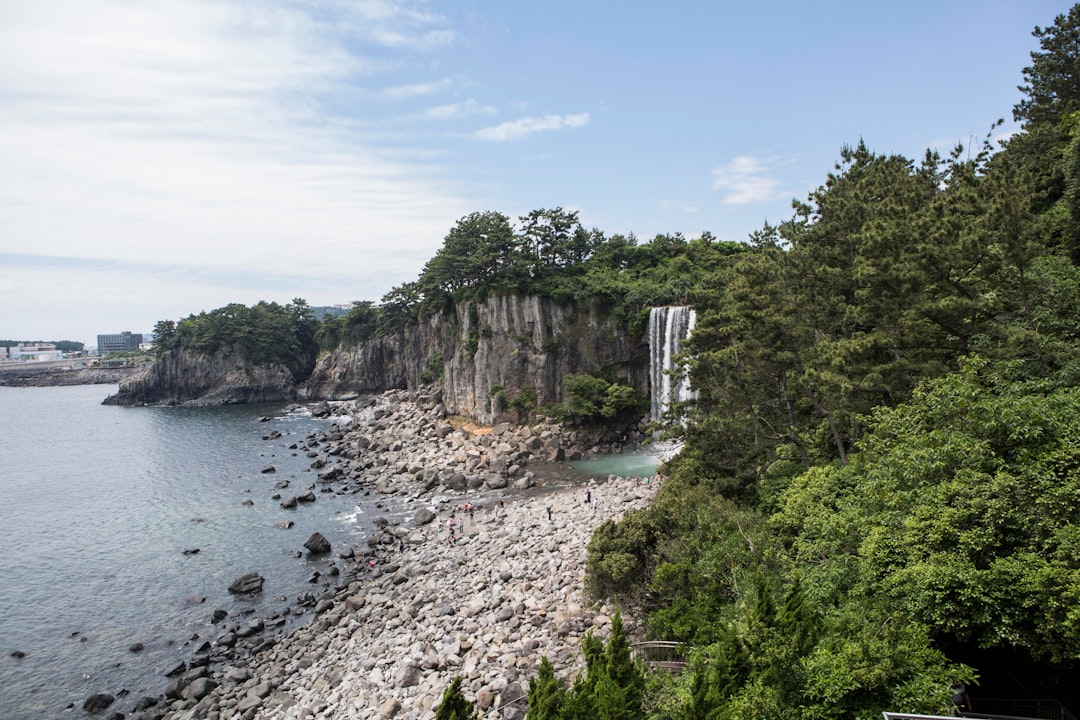
Peak tourist season. Temperatures reach 25–32°C (77–90°F), humidity is high, and the beaches are packed. Hyeopjae Beach and Hamdeok Beach are the most popular, with clear turquoise water and white (well, slightly grey-volcanic) sand. Summer is also the best time for Cheonjiyeon Waterfall and Jeongbang Waterfall — the latter is the only waterfall in Asia that drops directly into the ocean.
Budget tip: Accommodation prices spike 30–50% in July–August. Book at least 2 months ahead, or consider visiting in June (fewer crowds, lower prices, but beaches are already swimable).
Autumn (September – November): Foliage and Silver Grass
My personal favorite season. The Hallasan autumn foliage peaks in late October to early November, turning the mountain into a quilt of red, orange, and gold. The Saryeoni Forest is particularly magical during this time. In late October, the Saebyeol Oreum (새별오름) hillside erupts with silver grass (억새), creating a sea of feathery white plumes that glow golden at sunset.
Winter (December – February): Hallasan Snow and Camellia Blooms
Jeju winters are mild (3–8°C / 37–46°F) compared to mainland Korea, but Hallasan gets real snow. The summit trail in fresh powder is breathtaking. Camellia Hill blooms in January–February, and the Jeju Lighting Festival at Hallim Park runs December through February.
Winter is also prime tangerine-picking season. Farm experiences cost $8–$12 and you get to eat all the tangerines you can while picking.
Budget Breakdown: How Much Does Jeju Really Cost?
One of the best things about Jeju is that it’s remarkably affordable for an international destination. Here’s a realistic daily budget for an American traveler in 2026:
Budget Traveler: $60–$80/day
- Accommodation: Guesthouse or hostel dorm $15–$25/night
- Food: $15–$25/day (baekban meals, convenience store kimbap, market food)
- Transport: Bus with T-money card $5–$10/day
- Activities: Most nature attractions are free. Budget $5–$10 for paid entries.
Mid-Range Traveler: $120–$180/day
- Accommodation: Boutique hotel or private Airbnb $50–$80/night
- Food: $30–$50/day (black pork BBQ, seafood restaurants, cafe hopping)
- Transport: Rental car $35–$50/day (including fuel and parking)
- Activities: $15–$30/day (museums, experiences, kayak rentals)
Luxury Traveler: $300+/day
- Accommodation: Resort at Jungmun or Design Hotel $150–$400/night
- Food: Fine dining, private haenyeo meals $60–$100/day
- Transport: Premium rental or private driver $80–$120/day
- Activities: Private tours, spa, golf $50–$150/day
Money tip: Get a T-money card at any CU, GS25, or 7-Eleven convenience store. Load it with cash and use it for buses, taxis, and even some convenience store purchases. If you don’t want to carry cash, the WOWPASS card or NAMANE card are excellent prepaid options for tourists that work almost everywhere.
Korean Minimalist Fashion Capsule Wardrobe: 2026 Style Guide
Cultural Etiquette Tips for Jeju (and Korea in General)

Koreans are incredibly welcoming to foreign visitors, but knowing a few cultural norms will earn you respect and warmer interactions — especially in Jeju’s smaller villages where traditional values run deep.
Essential Dos and Don’ts
- Remove your shoes when entering any home, guesthouse, temple, or traditional restaurant with floor seating (ondol). Look for a shoe rack at the entrance — that’s your cue.
- Use two hands (or support your right forearm with your left hand) when giving or receiving anything from someone older. This applies to handing over money, receiving a business card, or accepting a drink.
- Don’t tip. Korea doesn’t have a tipping culture. Leaving money on the table can actually cause confusion. Service is included.
- Bow slightly when greeting, thanking, or saying goodbye — a small 15-degree nod is sufficient for casual interactions.
- Don’t blow your nose at the table. Excuse yourself to the restroom instead. Slurping noodles, however, is totally fine and even considered a compliment to the chef.
- Ask before photographing haenyeo. These women are cultural treasures, not tourist attractions. A respectful nod and gesture toward your camera is appreciated.
- Respect the dol hareubang (stone grandfather statues). They’re not just Instagram props — they’re protective spiritual guardians of Jeju. Don’t climb on them.
Useful Korean Phrases
Download Papago (Naver’s translation app) — it’s far more accurate than Google Translate for Korean. But learning a few basics goes a long way:
- Annyeonghaseyo (안녕하세요): Hello
- Gamsahamnida (감사합니다): Thank you
- Eolmayeyo? (얼마예요?): How much is it?
- Mashisseoyo! (맛있어요!): It’s delicious!
- Hwajangshil eodiyeyo? (화장실 어디예요?): Where is the restroom?
Korean Skincare Routine for Acne-Prone Skin: 2026 Guide
Insider Tips: 15 Things I Wish I Knew Before My First Jeju Trip
After eleven trips to Jeju, here are the hard-won lessons that don’t make it into most guidebooks:
- Naver Map, not Google Maps. Google Maps barely works in Korea due to data laws. Download Naver Map — it has English support, real-time transit info, and even shows restaurant wait times.
- Book Hallasan early in peak season. The online reservation system opens 2 weeks before your hike date. Popular trails fill up within hours during cherry blossom and foliage season.
- Rent a car with a dashcam included. Most Korean rental cars include one. If yours doesn’t, request it — it’s standard practice and critical for insurance claims.
- Jeju weather is unpredictable. The island has its own microclimate. It can be sunny in Jeju City and pouring in Seogwipo 30 minutes south. Always carry a compact rain jacket.
- Visit the Olle Trails. Jeju has 26 connected walking routes (올레길) totaling 425 km around the coastline. Each route is 10–20 km and takes 4–7 hours. Route 7 (Seogwipo) and Route 10 (Hallim) are my favorites.
- T-money cards save time everywhere. Load one with $30–$50 and forget about cash for buses, convenience stores, and some taxis.
- Download KakaoTalk. It’s Korea’s universal messaging app. Restaurants, shops, and even public services use it. Some cafes only accept KakaoPay.
- Don’t schedule too much. Jeju’s magic is in the slow moments — stopping at a random coastal viewpoint, chatting with a tangerine farmer, sitting in a cliff-side cafe for two hours.
- Check tidal schedules for coastal attractions. Yongmeori Coast, Udo’s walking paths, and several beach caves close during high tide. Check the Korea Hydrographic and Oceanographic Agency site.
- Udo Island is a full-day trip. The ferry ($7 round trip from Seongsan) takes 15 minutes, but you’ll want 4–6 hours to explore this gorgeous sub-island. Rent an electric scooter on arrival ($15/2 hours).
- Convenience store food is genuinely good. Korean CU and GS25 stores have fresh kimbap ($1.50), triangle rice balls ($1), and even decent ramyeon stations. Don’t sleep on these for budget meals.
- Spring water is free and everywhere. Jeju’s volcanic filtration creates some of the purest water in the world. Free spring water taps are scattered around hiking trails and parks.
- Visit the traditional markets early. Dongmun Market and Seogwipo Maeil Market are best before 11 AM when everything is fresh and crowds are thin. Try okdom gui (grilled red tilefish) — Jeju’s breakfast of champions.
- Bring a portable Wi-Fi device. Rent one at Incheon Airport ($4–$6/day) or order a Korean SIM card in advance. Cell coverage is excellent across Jeju.
- Don’t skip the small oreum (volcanic cones). Jeju has over 360 oreums. The famous ones (Seongsan, Saebyeol) are great, but the unnamed ones scattered across the countryside offer the most peaceful hiking experiences and some of the best Jeju Island hidden gems 2026 viewpoints you’ll find.
7 Easy Korean Dessert Recipes at Home (2026 Guide)
Essential Apps and Tech for Your Jeju Trip
Your smartphone is your most important travel tool in Korea. Here’s exactly what to download before you board your flight:
- Naver Map: Navigation, transit directions, restaurant reviews — the Google Maps of Korea, but better for Korea.
- Papago: Real-time translation app by Naver. Camera mode can translate menus and signs instantly.
- KakaoTalk: Korea’s #1 messaging app. Download it for taxi hailing (KakaoT), payments (KakaoPay), and communicating with guesthouse hosts.
- KORAIL: Book KTX train tickets from Seoul to anywhere on the mainland.
- Coupang: Korea’s Amazon. Order anything and get it delivered to your accommodation within 24 hours — great for forgotten toiletries or snacks.
- VisitKorea: The official Korea Tourism Organization app with multilingual guides and event listings.
Korea Tourism Organization Official Site
Frequently Asked Questions About Jeju Island
How many days do I need in Jeju Island?
I recommend 4–5 days minimum to cover the highlights without rushing. With 7 days, you can explore at a relaxed pace and discover those Jeju Island hidden gems 2026 that make the trip truly special. If you only have 3 days, focus on one side of the island (east or west) rather than trying to see everything.
Is Jeju Island safe for solo travelers?
Extremely safe. South Korea consistently ranks among the safest countries in the world, and Jeju is arguably even safer than mainland cities. Solo female travelers, in particular, report feeling very comfortable. Guesthouses have lockers, buses run on schedule, and locals are generally helpful even with language barriers. I’ve walked Jeju’s streets alone at midnight and never felt uneasy.
Do I need to speak Korean to visit Jeju?
Not necessarily, but it helps. Tourist areas, hotels, and major attractions have English signage. Younger Koreans often speak conversational English. However, in rural areas, small restaurants, and traditional markets, you’ll encounter minimal English. Papago (translation app) is your best friend here — point your camera at a menu and get instant translations.
What’s the best time of year to find Jeju Island hidden gems in 2026?
Late March to mid-April (cherry blossoms + canola) and late October to mid-November (autumn foliage + silver grass) offer the most photogenic conditions. Summer (July–August) is peak season with the most crowds and highest prices. Winter (December–February) is the quietest, cheapest, and underrated — the camellia blooms and snow-capped Hallasan are stunning. For the best balance of weather, crowds, and prices, May and October are the sweet spots.
Can I use credit cards on Jeju Island?
Yes, almost everywhere. Korea is one of the most cashless societies in the world. Visa and Mastercard are accepted at virtually all restaurants, cafes, convenience stores, and shops. The exceptions are some traditional market stalls, small snack vendors, and very rural establishments. Carry about $30–$50 in cash (Korean won) as backup, plus your T-money card for transit.
Is Jeju Island kid-friendly?
Absolutely. Jeju is South Korea’s top domestic family vacation destination. There are dozens of family-oriented attractions: Jeju Aqua Planet (one of Asia’s largest aquariums, $25/adult), Hallim Park ($9/adult, children under 6 free), the Teddy Bear Museum, horse riding experiences ($20–$40), and tangerine-picking farms. Most restaurants welcome children and many offer kid-sized portions. Beaches have gentle, shallow waters perfect for little ones.
How do I get from Jeju City to Seogwipo?
The two main cities are about 40 km apart. By rental car, it’s a 40–50 minute drive via the cross-island highway. The Airport Limousine Bus 600 connects both cities and runs every 15 minutes ($4, about 80 minutes). A taxi costs approximately $25–$35. Many travelers base themselves in Jeju City and day-trip to Seogwipo, or split their stay between the two cities.
Related Posts You’ll Love
- 7 Best Cherry Blossom Spots in Korea 2026: Hidden Gems
- Busan Beach Street Food Itinerary: 5-Day Guide 2026
- Authentic Korean Kimchi Recipe for Beginners (2026 Guide)
Suggested future articles:
- Jeju Olle Trail Guide: Best Routes for Beginners 2026
- Seoul to Jeju: Ultimate 2-Week Korea Itinerary 2026
- Udo Island Day Trip Guide: What to See and Eat 2026
Ready to Discover Your Own Jeju Island Hidden Gems?
Jeju Island is one of those rare destinations that genuinely has something for everyone — volcanic hikes that’ll push your limits, beaches that rival anything in Southeast Asia, food that will ruin you for Korean BBQ back home, and a cafe culture that puts most American cities to shame. And the best part? It’s still wildly affordable compared to other bucket-list islands.
Whether you’re planning a solo adventure, a romantic escape, or a family vacation, the Jeju Island hidden gems 2026 I’ve shared in this guide will help you experience the island beyond the tourist trail. The haenyeo divers, the secret oreums, the misty forest paths — these are the moments that turn a vacation into a story you’ll tell for years.
Your turn: Have you been to Jeju? What’s your favorite hidden spot? If you’re planning your first trip, drop your questions in the comments below — I personally reply to every single one. And if this guide helped you plan your trip, share it with a friend who needs their next travel obsession.
Save this guide for later — bookmark it, pin it, screenshot it. And make sure to subscribe to our newsletter so you never miss our latest Korea travel guides, K-beauty tips, and food adventures. See you on the island! 🤙
Snail Mucin vs Centella vs Rice: Which K-Beauty Ingredient Wins in 2026?
Homemade Korean Sweet Potato Dog Treats: 5 Easy Recipes (2026)