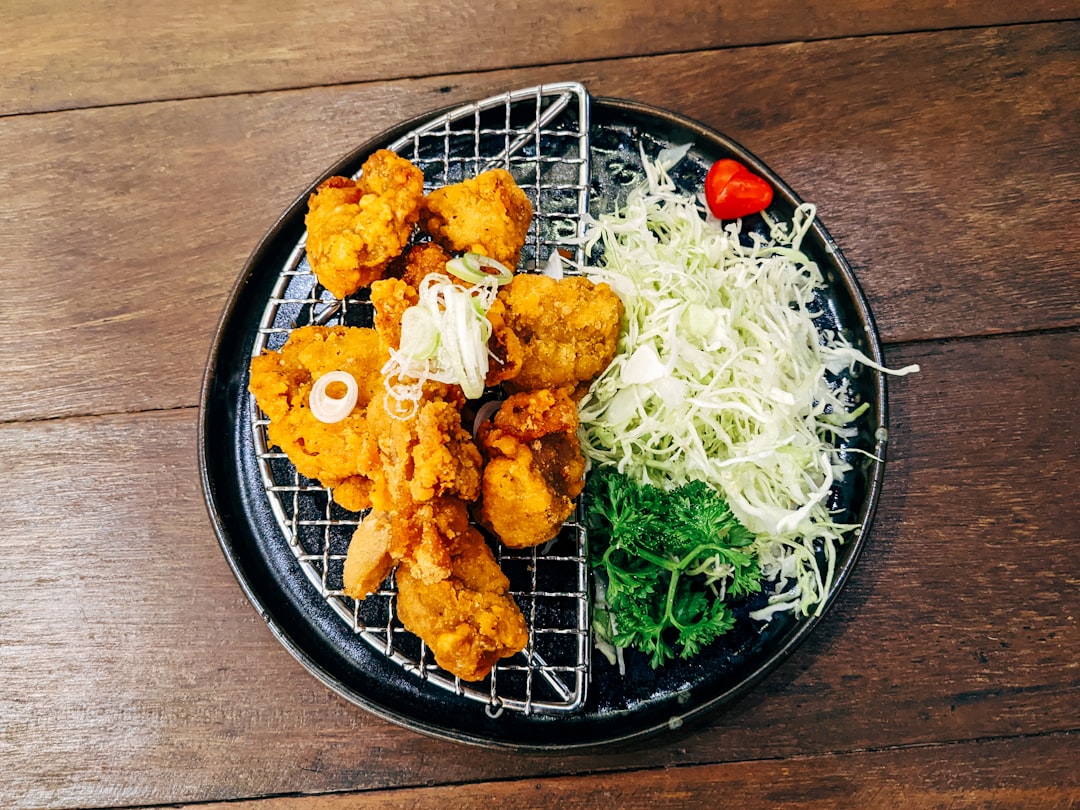
Why Korean Fried Chicken Has Taken Over the World
There’s a moment — right when you bite through that impossibly thin, shattering-crisp shell and hit the juicy, tender meat inside — when you understand why Korean fried chicken has become a global obsession. It’s not just fried chicken. It’s an engineering marvel perfected over decades in the bustling streets of Seoul, Busan, and Daegu.
Unlike its American Southern cousin, Korean fried chicken (known as chikin, 치킨, in Korea) relies on a revolutionary technique: the double fry method. This isn’t a shortcut or a gimmick. It’s the reason the coating stays crispy for 30+ minutes — even when drenched in sticky-sweet yangnyeom sauce or dusted with honey-garlic powder.
The Korean fried chicken industry is worth over $4.7 billion annually in South Korea alone, with more than 87,000 chicken restaurants operating nationwide — that’s more fried chicken shops per capita than any other country on Earth. Chains like Kyochon, BBQ Chicken, and Pelicana have expanded across Asia, the Americas, and Europe. And now, with the right korean fried chicken recipe crispy double fry technique, you can recreate this magic at home.
In this ultimate guide, I’ll walk you through every detail: the science behind the crunch, a foolproof recipe, sauce variations, pro tips, and everything you need to know to make restaurant-quality Korean fried chicken in your own kitchen.
Korean Convenience Store Food Haul: Must-Try Street Food FindsThe History and Culture Behind Korean Fried Chicken

From Post-War Comfort Food to Global Phenomenon
Korean fried chicken traces its roots to the late 1960s and early 1970s, when American-style fried chicken first appeared near U.S. military bases in South Korea. The original versions were simple — flour-coated and deep-fried, similar to what you’d find in the American South.
But Korean cooks didn’t just copy the recipe. They innovated relentlessly. By the 1980s, dedicated chicken restaurants began popping up across Seoul. Cooks discovered that using a thinner batter with potato starch or cornstarch — and frying the chicken twice — produced a lighter, crunchier result that stayed crisp far longer than traditional recipes.
The real explosion came in the late 1990s and 2000s with the rise of “chimaek” culture — chicken and beer (치맥, chi-maek). Watching sports, especially baseball and soccer, while eating fried chicken and drinking cold beer became a national pastime. The 2002 FIFA World Cup, co-hosted by South Korea, cemented chimaek as an iconic Korean experience.
Chimaek Culture: More Than Just a Meal
In Korea, ordering fried chicken is a social event. Delivery is king — most chicken is ordered via apps like Baedal Minjok (배달의민족) and delivered to homes, parks, and even riverbanks along the Han River in Seoul. Groups of friends spread out picnic blankets, crack open cans of Cass or Hite beer, and share enormous platters of crispy chicken.
The culture even gained international fame through K-Dramas. In the 2014 mega-hit “My Love from the Star” (별에서 온 그대), the lead character’s obsession with chimaek caused a spike in Korean fried chicken sales across Asia — particularly in China, where demand skyrocketed overnight.
Today, Korean fried chicken isn’t just food — it’s a cultural export on par with K-Pop and K-Beauty. K-Pop Idols Who Act: 15 Best K-Drama Roles in 2025 And with over 30 major franchise chains competing in South Korea, the innovation never stops: new flavors, new coatings, new dipping sauces appear seasonally.
Learn more about Korean food cultureWhat Makes Korean Fried Chicken Different: The Science of the Double Fry
The Double Fry Technique Explained
The secret behind every great korean fried chicken recipe crispy double fry is understanding why two frying stages produce a fundamentally different result than one.
First fry (lower temperature, ~300°F / 150°C, 8-10 minutes): This initial fry cooks the chicken through gently and begins rendering fat from the skin. The moisture inside the chicken starts converting to steam, which escapes through the coating. The starch in the batter begins to set but doesn’t fully crisp.
Rest period (5-10 minutes): Residual moisture redistributes through the meat. The partially set coating dries slightly on the surface, creating a tighter, more uniform layer.
Second fry (higher temperature, ~375°F / 190°C, 5-7 minutes): This blast of high heat rapidly dehydrates the outer coating, creating thousands of tiny air pockets in the starch matrix. The result? A shell that’s glass-like in its crunch yet paper-thin — dramatically different from the thick, bready coating of Western fried chicken.
Korean vs. American Fried Chicken: Key Differences
| Feature | Korean Fried Chicken | American Southern Fried Chicken |
|---|---|---|
| Coating | Ultra-thin, starch-based (potato/corn starch) | Thick, flour-based (often buttermilk-soaked) |
| Frying Method | Double-fried at two temperatures | Single fry, typically in cast iron |
| Crispiness Duration | 30-60 minutes (even sauced) | 10-15 minutes before softening |
| Seasoning | Sauce applied after frying (yangnyeom, soy garlic, snow cheese) | Spices mixed into flour before frying |
| Serving Style | Shared platter with pickled radish, beer | Individual plate with sides (coleslaw, biscuits) |
| Cut | Whole wings, drumettes, boneless bites | Breast, thigh, leg, wing — full pieces |
The starch-based coating is the real game-changer. While wheat flour absorbs oil and gets soggy quickly, potato starch and cornstarch create a rigid, crystalline structure that repels moisture — which is exactly why your chicken stays crunchy even after being tossed in sauce.
The Ultimate Korean Fried Chicken Recipe: Crispy Double Fry Method

Ingredients You’ll Need
This korean fried chicken recipe crispy double fry serves 4 people generously. All ingredients are available at H-Mart, 99 Ranch Market, or the international aisle of Whole Foods and Trader Joe’s.
For the Chicken:
- 3 lbs (1.4 kg) chicken wings, drumettes and flats separated (or boneless thighs cut into 2-inch pieces)
- 1 tablespoon kosher salt
- 1 teaspoon black pepper
- 1 tablespoon soju or rice wine (mirin works too)
- 1 tablespoon minced garlic
- 1 teaspoon grated fresh ginger
For the Crispy Coating:
- ¾ cup (90g) potato starch or cornstarch
- ¼ cup (30g) all-purpose flour
- ½ teaspoon baking powder
- ½ cup (120ml) ice-cold water (or cold soda water for extra crunch)
- 1 egg
For Frying:
- Neutral oil with high smoke point — canola, vegetable, or peanut oil (about 2 quarts / 2 liters)
- Deep-fry thermometer (essential for temperature control)
Pro tip: Korean cooks often use soda water instead of still water in the batter. The carbonation creates additional tiny bubbles in the coating, resulting in an even lighter, crispier texture. If you can find it, Beksul frying mix (백설 튀김가루) — available at H-Mart for about $3.99 — is a popular shortcut that many Korean home cooks swear by.
Step-by-Step Instructions
Step 1: Marinate the Chicken (30 minutes to overnight)
- Pat chicken pieces completely dry with paper towels. This is the most important step — surface moisture is the enemy of crispiness.
- Combine salt, pepper, soju/rice wine, garlic, and ginger in a large bowl.
- Toss chicken in the marinade until evenly coated.
- Cover and refrigerate for at least 30 minutes, or up to 12 hours for maximum flavor penetration.
Step 2: Prepare the Batter
- In a medium bowl, whisk together potato starch, flour, and baking powder.
- Add ice-cold water (or soda water) and egg. Mix until just combined — small lumps are fine. Overmixing develops gluten, which makes the coating tough instead of crispy.
- The batter should be thin, like heavy cream — not thick like pancake batter.
Step 3: First Fry (300°F / 150°C — 8-10 minutes)
- Heat oil in a heavy-bottomed pot or Dutch oven to 300°F (150°C). Use a clip-on thermometer.
- Dip each chicken piece in batter, let excess drip off, and carefully lower into the oil.
- Fry in batches of 6-8 pieces — don’t crowd the pot, or the oil temperature drops and the chicken steams instead of fries.
- Cook for 8-10 minutes, turning occasionally, until the coating is set and pale golden.
- Transfer to a wire rack set over a baking sheet. Do not use paper towels — they trap steam and soften the bottom.
Step 4: Rest (5-10 minutes)
Let the chicken rest at room temperature. This allows internal moisture to redistribute and the coating to dry further. Meanwhile, bring the oil temperature back up for the second fry.
Step 5: Second Fry (375°F / 190°C — 5-7 minutes)
- Increase oil temperature to 375°F (190°C).
- Return chicken to the oil in batches.
- Fry for 5-7 minutes until deep golden brown and audibly crackling.
- Transfer to a clean wire rack. The coating should sound like tapping on glass when you flick it.
Your base crispy chicken is now ready. Serve it plain (“huraideu” style) or toss in one of the sauces below.
Internal Temperature Check
Always verify with an instant-read thermometer. Chicken should reach 165°F (74°C) internally. With the double-fry method, wings typically hit 175-180°F, which is actually ideal — the extra temperature renders more fat from the skin, contributing to crispiness.
Essential Korean Fried Chicken Sauces and Flavors
The sauce is where Korean fried chicken truly separates itself. Here are the five most popular flavors found in Korean chicken shops — and how to make each one at home.
1. Yangnyeom (Sweet & Spicy Sauce)
The most iconic Korean fried chicken sauce. Yangnyeom (양념) is a glossy, sticky-sweet sauce with a chili kick.
- 3 tablespoons gochujang (Korean red pepper paste)
- 2 tablespoons ketchup
- 3 tablespoons honey or corn syrup
- 1 tablespoon soy sauce
- 1 tablespoon rice vinegar
- 2 cloves garlic, minced
- 1 tablespoon toasted sesame oil
Cook all ingredients in a saucepan over medium heat for 3-4 minutes until thickened. Toss with freshly fried chicken immediately before serving. Garnish with sesame seeds.
Tteokbokki: Korea’s Favorite Spicy Street Food Rice Cake2. Soy Garlic (Ganjang)
Ganjang chikin (간장치킨) is the second pillar of Korean fried chicken. It’s savory, slightly sweet, and umami-rich.
- 3 tablespoons soy sauce
- 2 tablespoons honey
- 1 tablespoon brown sugar
- 4 cloves garlic, minced
- 1 tablespoon butter
- Black pepper to taste
Melt butter, sauté garlic until fragrant (30 seconds), add remaining ingredients, and simmer for 2 minutes. This sauce pairs beautifully with a cold Korean lager.
3. Snow Cheese (Cheese Powder)
A modern favorite popularized by chains like BBQ Chicken. After double-frying, the chicken is dusted generously with a mixture of:
- ¼ cup white cheddar cheese powder (available at H-Mart or Amazon, ~$6.99)
- 1 tablespoon powdered sugar
- Pinch of garlic powder
Toss the hot chicken with the powder in a large bowl. The heat slightly melts the cheese, creating an addictive sweet-savory-cheesy coating.
4. Honey Butter
Korea’s honey butter craze of 2014-2015 (remember the sold-out Honey Butter Chips?) naturally migrated to fried chicken. Melt 3 tablespoons butter with 2 tablespoons honey, a pinch of salt, and a squeeze of lemon juice. Drizzle over crispy chicken and finish with crushed honey butter chips if you’re feeling extra.
5. Bburinkle (Seasoning Powder)
Invented by BHC Chicken, bburinkle is a proprietary seasoning blend (onion, cheese, garlic, herbs) that became so popular it’s now sold as a standalone product. You can buy BHC bburinkle powder at H-Mart for about $5.49 per packet. Shake it over hot chicken like you’re seasoning fries.
Pro Tips for Restaurant-Quality Results at Home

Temperature Control Is Everything
Invest in a clip-on deep-fry thermometer (about $8-12 at Target or Amazon). Without precise temperature control, you’re guessing — and guessing means either undercooked, greasy chicken (oil too cool) or a burned exterior with raw interior (oil too hot).
If you fry often, a countertop deep fryer like the T-Fal Ultimate EZ Clean (~$89 at Walmart) maintains temperature automatically and makes cleanup much easier.
The Vodka Trick
Some Korean cooking experts, including Maangchi, recommend adding a splash of vodka (or soju) to the batter. Alcohol evaporates faster than water during frying, which means less residual moisture in the coating = extra crispiness. Use 1-2 tablespoons in place of an equal amount of water in the batter.
Maangchi’s Korean fried chicken recipe and techniquesOil Choice Matters
Korean restaurants typically use soybean oil or canola oil because of their neutral flavor and high smoke points. Avoid olive oil (too low a smoke point), coconut oil (adds flavor), or lard (traditional in Southern fried chicken but too heavy for Korean style).
Can you reuse the oil? Yes — strain it through a fine-mesh sieve or cheesecloth after it cools completely. Stored in an airtight container, frying oil can be reused 3-4 times before it degrades. Discard it when it darkens significantly, smells off, or foams excessively when heated.
Air Fryer Adaptation
While purists insist on deep frying, you can achieve 80% of the crispiness with an air fryer:
- Coat chicken in batter as usual, but make it slightly thicker.
- Spray generously with cooking oil.
- First cook: 325°F for 15 minutes.
- Remove, rest 5 minutes.
- Second cook: 400°F for 8-10 minutes until deep golden.
The texture won’t be identical — you lose the full immersion that creates uniform crunch — but it’s a solid weeknight alternative with significantly less oil and cleanup.
Side Dishes and Drinks: The Complete Chimaek Experience
Essential Side Dishes
No Korean fried chicken spread is complete without these accompaniments:
- Pickled radish (치킨무, chikin-mu): Sweet, tangy cubes of daikon radish. Every Korean chicken delivery includes these. They cut through the richness of the fried coating. Buy pre-made tubs at H-Mart (~$3.99) or make your own: cube daikon, soak in a mixture of rice vinegar, sugar, water, and salt for at least 2 hours.
- Coleslaw: Korean-style coleslaw uses a sweeter, mayo-based dressing — thinner and less tangy than American versions.
- French fries or tteok-fries: Many Korean chicken shops now serve deep-fried rice cake sticks (tteok) alongside traditional fries. They’re chewy, crispy, and dangerously addictive.
- Fresh cabbage and pickled jalapeños: Served with a light mustard-mayo dipping sauce.
Beer Pairings for Chimaek
The “maek” in chimaek is maekju (맥주) — beer. Traditional pairings include:
- Cass Fresh — Korea’s best-selling lager. Clean, crisp, and light ($8.99/6-pack at H-Mart).
- Hite Extra Cold — Slightly smoother than Cass.
- Terra — A newer brand that’s become hugely popular in Korea. Clean barley flavor.
- Kloud — Lotte’s premium all-malt beer. Fuller body, closest to a German-style lager.
If you prefer craft beer, a crisp American pilsner or wheat beer works beautifully. The carbonation and light bitterness complement the crispy, salty chicken without competing with bold sauces like yangnyeom.
Non-drinker? Try Milkis (a Korean milk-soda, ~$1.50 at H-Mart) or cold barley tea (boricha) — both are classic Korean accompaniments.
Where to Find Korean Fried Chicken Near You

Major Korean Fried Chicken Chains in the U.S.
If you want to taste the real thing before attempting it at home, these chains have expanded significantly across the United States:
- Bonchon — Over 100 U.S. locations. Known for their soy garlic and spicy glazes. Average meal: $14-18.
- bb.q Chicken — 200+ locations worldwide, strong U.S. presence. The Golden Original is their signature.
- Pelicana — One of Korea’s oldest chains (founded 1982). Smaller U.S. presence but worth seeking out.
- Kyochon — Premium positioning with consistently excellent quality. Their honey flavor is legendary. ~$16-20 per meal.
- Choongman Chicken — Growing fast on the West Coast, popular for extremely crunchy coating.
Use apps like Yelp or Google Maps and search “Korean fried chicken” — you’ll likely find several options within delivery range, especially in metro areas with Korean communities (Los Angeles, New York, Dallas, Atlanta, Chicago).
Buying Ingredients: Where to Shop
For the best results, source your ingredients from a Korean or Asian grocery store:
- H-Mart — The largest Korean-American supermarket chain. Carries everything you need: gochujang, potato starch, soju, pickled radish, bburinkle seasoning, and more.
- 99 Ranch Market — Excellent Asian grocery with competitive prices on staples.
- Whole Foods / Trader Joe’s — Carry gochujang, rice vinegar, and sesame oil, but selection is limited for specialty items.
- Amazon — Search for “Korean fried chicken kit” — you’ll find bundled seasoning packs from brands like CJ, Ottogi, and Beksul for $5-8.
Common Mistakes and How to Avoid Them
Mistake #1: Skipping the Double Fry
This is the #1 reason home cooks fail at Korean fried chicken. A single fry simply cannot produce the same texture. The first fry cooks the meat; the second fry transforms the coating. If you’re pressed for time, you can shorten the rest period to 3 minutes — but never skip the second fry entirely.
Mistake #2: Wet Chicken Going Into the Batter
Moisture on the chicken’s surface prevents the batter from adhering properly and causes dangerous oil splatter. Always pat dry thoroughly with paper towels before marinating, and again before battering if the marinade is very wet.
Mistake #3: Crowding the Pot
Adding too many pieces at once drops the oil temperature by 50-75°F. The chicken stews in cooling oil instead of frying, resulting in a greasy, soggy coating. Fry in batches of 6-8 pieces maximum, maintaining at least 2 inches of space between pieces.
Mistake #4: Using Paper Towels to Drain
Paper towels trap steam against the bottom of the chicken, immediately softening the coating you worked so hard to crisp. Always use a wire rack set over a baking sheet. Air circulation on all sides keeps every surface crunchy.
Mistake #5: Saucing Too Early
Sauce the chicken right before serving — not 10 minutes before, not while it cools. The coating can handle sauce for about 20-30 minutes before softening. If you’re making chicken for a party, keep the sauce in a separate bowl and let guests toss their own portions.
Frequently Asked Questions About Korean Fried Chicken
What makes Korean fried chicken so crispy compared to regular fried chicken?
The crispiness comes from three factors working together: a starch-based coating (potato starch or cornstarch instead of flour), the double-fry technique at two different temperatures, and a thinner batter that creates a glass-like shell rather than a thick, bready crust. The starch creates a rigid crystalline structure during frying that resists moisture far better than wheat flour alone. This is why a good korean fried chicken recipe crispy double fry method is essential — it’s not just about flavor, it’s structural engineering.
Can I make Korean fried chicken without deep frying?
Yes — an air fryer is the best alternative. Preheat to 325°F, cook for 15 minutes, rest 5 minutes, then cook again at 400°F for 8-10 minutes. Spray generously with oil before each cook. The texture won’t be identical to deep-frying, but it’s significantly healthier (up to 70% less fat) and still delivers satisfying crunch. Oven-baking at 425°F on a wire rack is another option, though results are less consistent.
How do I keep Korean fried chicken crispy for delivery or parties?
Korean chicken shops have mastered this: they place fried chicken on perforated trays inside ventilated boxes, never sealed containers. At home, keep chicken on a wire rack in a 200°F (95°C) oven with the door cracked slightly open. Never cover with foil or a lid — trapped steam is the enemy. Sauce on the side, let guests toss their own portions. Properly double-fried chicken stays crispy for 30-45 minutes even at room temperature.
What oil is best for Korean fried chicken?
Canola oil, vegetable oil, or peanut oil are the top choices. All have neutral flavors and high smoke points (400°F+). Korean restaurants typically use soybean oil. Avoid olive oil (smokes at too low a temperature), sesame oil (too strong a flavor and low smoke point), and coconut oil (adds coconut flavor). You’ll need approximately 2 quarts (about $4-6 worth) for a batch, and the oil can be strained and reused 3-4 times.
Is Korean fried chicken gluten-free?
It can be! Replace the ¼ cup of all-purpose flour in the batter with additional potato starch or cornstarch, and your coating becomes 100% gluten-free. Make sure your soy sauce is tamari (gluten-free) if using soy garlic sauce. Gochujang typically contains wheat, so check labels — Sempio brand makes a gluten-free gochujang available at H-Mart for about $6.99.
How many calories are in Korean fried chicken?
A serving of 6 Korean fried chicken wings (plain, no sauce) contains approximately 450-550 calories. Adding yangnyeom sauce adds about 80-100 calories per serving. For comparison, the same quantity of traditional American fried chicken (thick flour coating) runs about 600-700 calories. The thinner Korean coating absorbs less oil, making it marginally lighter — though “health food” it is not.
Related Posts You’ll Love
If you enjoyed this guide, check out these related articles:
- Tteokbokki: Korea’s Favorite Spicy Street Food Rice Cake
- Korean Convenience Store Food Haul: Must-Try Street Food Finds
- Korean Convenience Store Culture: A Complete Guide
Topics we should cover next:
- Korean BBQ at Home: Complete Beginner’s Guide to Grilling Samgyeopsal
- Kimchi Jjigae Recipe: The Ultimate Korean Comfort Food Stew
- Korean Street Food Guide: 20 Must-Try Dishes from Seoul’s Markets
Your Turn: Let’s Talk Chicken!
Now that you have the complete playbook for making restaurant-quality Korean fried chicken at home — the crispy double-fry technique, five incredible sauces, pro tips, and all the insider knowledge — it’s time to fire up that oil and get cooking.
I want to hear from you:
- What’s your favorite Korean fried chicken flavor — yangnyeom, soy garlic, or something else?
- Have you tried the double-fry method before? How did it turn out?
- Which Korean chicken chain is your go-to?
Drop a comment below and share your experience! If you found this guide helpful, please share it with your friends who love fried chicken — trust me, they’ll thank you.
And if you want more Korean food guides, K-Beauty tips, and K-Culture deep dives delivered straight to your inbox, subscribe to our newsletter — we publish new guides every week.
Happy cooking, and remember: always double fry. Always. 🍗