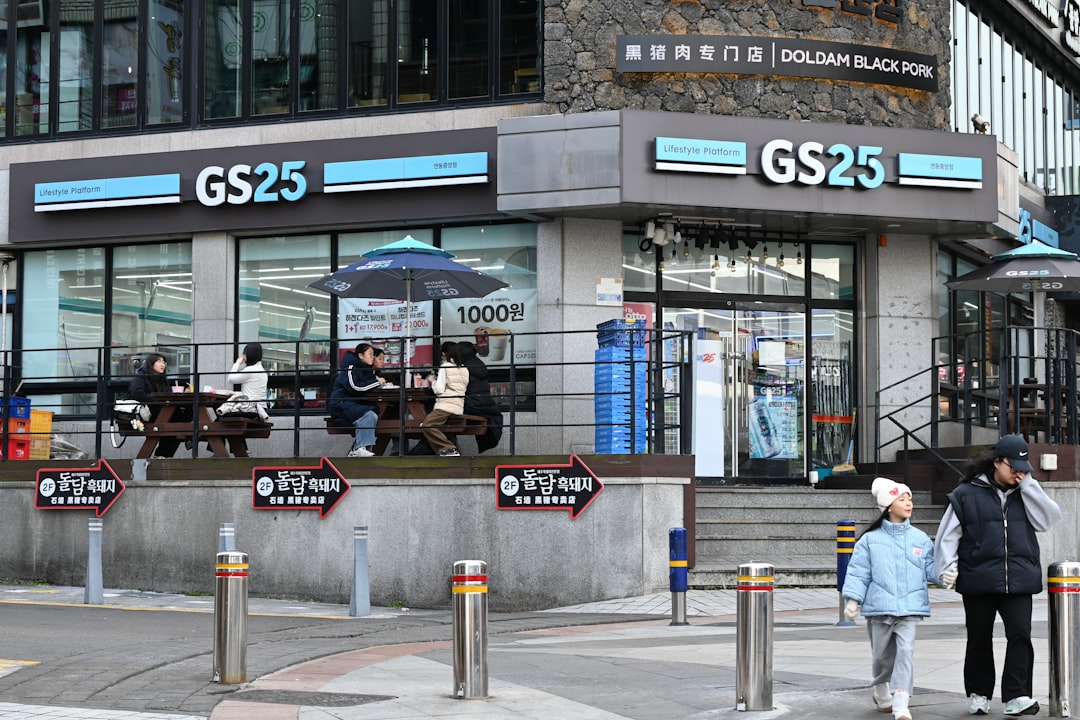
Imagine walking into a store at 3 AM where you can grab a freshly made lunch box, pay your electricity bill, pick up concert tickets, and sit down at a window counter with a view of the city — all while sipping on a banana milk that costs less than a dollar. That’s not a fever dream. That’s a Korean convenience store, known locally as a pyeonuijeom (편의점), and it’s nothing like the 7-Eleven you’re used to back home. South Korea has over 54,000 convenience stores — that’s roughly one for every 950 people — making it one of the most convenience-store-dense countries on the planet. For context, the entire United States, with six times the population, has about 150,000. These compact retail spaces have evolved into cultural institutions, third spaces for socializing, and treasure troves of exclusive snacks that food bloggers fly across the Pacific to review. If you’ve ever searched for korean convenience store must buy snacks, you already know the rabbit hole goes deep. This guide goes deeper.
Why Korean Convenience Stores Are Nothing Like Western Ones
Walk into a Wawa, Circle K, or 7-Eleven in the US, and you’ll find a predictable lineup: energy drinks, dusty taquitos rotating on a hot roller, maybe a sad pre-made sandwich wrapped in plastic. Korean convenience stores — the Big Three being CU, GS25, and 7-Eleven Korea — operate in an entirely different universe.
A Cultural Third Space, Not Just a Shop
In Korea, the pyeonuijeom functions as a social hub. Most locations have indoor or outdoor seating areas with USB charging ports, free Wi-Fi, and microwave stations. University students study there. Office workers eat entire meals at the counter. Couples on a budget share ramyeon at 1 AM after a night out in Hongdae. The Korean convenience store is closer to a European café than an American gas station shop.
A 2025 survey by the Korea Convenience Store Industry Association found that 68% of Koreans aged 20-39 visit a convenience store at least once daily. Compare that with the US, where convenience store visits average 2-3 times per week for regular customers. The frequency tells you everything about integration into daily life.
Fresh Food That’s Actually Fresh
The single biggest difference? Food quality. Korean convenience stores rotate their fresh food inventory multiple times per day. The dosirak (도시락, lunchbox) section alone could be a full restaurant menu — bibimbap bowls, katsu rice sets, kimchi fried rice, spicy chicken wraps, and seasonal limited-edition meals created in collaboration with celebrity chefs.
GS25 reportedly develops over 300 new food products per year, with product lifespans sometimes as short as two weeks. If something doesn’t sell, it’s gone. If it goes viral on Korean social media, they’ll scale production within days. This relentless product cycle is why lists of korean convenience store must buy snacks change every single season.
Services Beyond Shopping
Korean convenience stores also function as mini post offices, ATMs, printing stations, and parcel pickup points. You can:
- Pay utility bills and government fines
- Buy KTX (bullet train) tickets
- Print documents from your phone via cloud printing
- Pick up packages from Coupang or other delivery services
- Top up your T-money transit card
- Buy K-pop photocard binders and album pre-orders (yes, really)
If you’re planning a trip, check out our First Time Visiting Seoul Itinerary: 7-Day Guide 2026 — and yes, scheduling a dedicated convenience store crawl is a legitimate itinerary item.
Korean Convenience Store Must Buy Snacks: The Ultimate Tier List

This is the section you came for. Whether you’re physically in Seoul or hunting at your nearest H Mart or Zion Market in the US, these are the korean convenience store must buy snacks that consistently top recommendation lists — and for good reason.
S-Tier: The Non-Negotiables
1. Honey Butter Chips (허니버터칩) — The snack that literally caused a nationwide shortage when it launched in 2014. A perfect sweet-salty crunch that American chips never quite achieve. Haitai’s original version remains the gold standard, though CU and GS25 now carry their own store-brand variations. Available at most US H Mart locations for around $4.99 a bag.
2. Buldak Bokkeum Myun (불닭볶음면) — Samyang’s infamous fire noodles need no introduction to anyone who’s been on YouTube since 2016. The original is excellent, but the Carbonara Buldak and Jjajang Buldak flavors are the ones Korean locals actually prefer. Pro tip: add a slice of processed cheese on top. Trust the process.
3. Banana Milk (바나나맛 우유) — Binggrae’s iconic squat bottle has been a Korean staple since 1974. It’s sweet, creamy, and oddly nostalgic even if you’ve never had it before. The strawberry version is also excellent. Now widely available at Walmart, Target, and Asian grocery stores across the US for $2-3.
4. Samgak Kimbap (삼각김밥) — The Korean onigiri, but better. A triangle of seasoned rice wrapped in crispy seaweed with fillings like tuna mayo, bulgogi, or kimchi. These cost roughly 1,000-1,500 KRW ($0.70-$1.10) in Korea. They don’t exist in US convenience stores, which is genuinely tragic.
5. Pepero (빼빼로) — Lotte’s chocolate-coated biscuit sticks. Yes, similar to Pocky, but Koreans celebrate an entire holiday around them (Pepero Day, November 11). The Almond and Nude Cream-filled variants are the top picks.
A-Tier: Still Essential
6. Choco Pie (초코파이) — Orion’s marshmallow-filled chocolate cake has been exported worldwide, but the Korean version is noticeably softer and fresher. The Banana and Matcha seasonal editions are worth hunting for.
7. Corn Chip (꿀꽈배기) — These twisted honey-glazed corn snacks are addictive in a way that’s hard to explain. Crunchy, sweet, slightly salty. A bag disappears in minutes.
8. Melona Ice Bar (메로나) — A melon-flavored ice cream bar that’s been a Korean summer staple for decades. Now widely stocked in US Asian groceries. The mango and coconut flavors are newer but equally popular.
9. Maxim Coffee Mix (맥심 커피믹스) — Three-in-one instant coffee sticks (coffee, creamer, sugar) that are the backbone of Korean office culture. An acquired taste for Westerners used to drip coffee, but once it clicks, it clicks. A box of 100 sticks costs about $12 on Amazon.
10. Yukgaejang Ramen (육개장 사발면) — Nongshim’s spicy beef cup noodle is the go-to convenience store meal for millions of Koreans. Pour hot water from the store’s free dispenser, wait 3 minutes, and you have a legitimately satisfying meal for under $1.50.
Quick Reference: Snack Comparison Table
| Korean Snack | Closest US Equivalent | Price in Korea | US Availability |
|---|---|---|---|
| Honey Butter Chips | Kettle Brand Sweet & Salty | ₩1,800 (~$1.30) | H Mart, Amazon |
| Buldak Ramen | Flamin’ Hot Cheetos (heat level) | ₩1,500 (~$1.10) | Walmart, Target, Amazon |
| Banana Milk | Nesquik Banana (discontinued) | ₩1,500 (~$1.10) | H Mart, Walmart |
| Samgak Kimbap | 7-Eleven Onigiri (Japan only) | ₩1,200 (~$0.85) | Not available |
| Pepero | Pocky | ₩1,500 (~$1.10) | Widely available |
| Choco Pie | Moon Pie | ₩500 (~$0.35) | H Mart, Amazon |
| Melona Bar | No real equivalent | ₩1,200 (~$0.85) | H Mart, 99 Ranch |
The Korean Convenience Store Dining Experience: Cooking Ramyeon In-Store
One of the most iconic Korean convenience store rituals is cooking instant ramyeon right at the counter. Nearly every Korean convenience store has a hot water dispenser — some even have an actual induction stove or microwave dedicated to customer use. The experience goes like this:
- Browse the ramyeon wall (most stores carry 20-40 varieties)
- Grab your add-ons: a slice of cheese, a single egg (sold individually), rice balls, or kimchi from the fridge
- Pay at the counter
- Use the hot water dispenser or cooking station
- Sit at the window counter and eat while watching the city go by
This isn’t a budget compromise — it’s a cultural ritual. Korean dramas regularly feature convenience store ramyeon scenes as a bonding moment between characters. The K-drama Crash Landing on You and Goblin both have iconic pyeonuijeom scenes that sent international fans rushing to recreate the experience.
The Art of the Convenience Store Meal Hack
Korean internet culture has turned convenience store meal-hacking into a legitimate content genre. Some legendary combinations that have gone viral:
- Buldak + Cheese + Triangle Kimbap crumbled in — The ultimate late-night creation
- Cup ramyeon + convenience store fried egg + green onion — Elevated basics
- Vanilla soft-serve ice cream dipped in Maxim coffee mix powder — Called “affogato style”
- Plain dosirak + purchased side dishes (kimchi, japchae) — Build-your-own combo meal for under $5
These hacks spread through Korean YouTube channels and TikTok, then get picked up by international food bloggers. The cycle keeps korean convenience store must buy snacks trending year after year as new combinations emerge.
Korean vs. American Convenience Stores: A Head-to-Head Comparison

To truly appreciate what makes Korean convenience stores special, let’s do a direct comparison with the typical American experience.
| Category | Korean Convenience Store | American Convenience Store |
|---|---|---|
| Store Count | ~54,000 (1 per 950 people) | ~150,000 (1 per 2,200 people) |
| Fresh Food Options | 50-80+ items, rotated daily | 5-15 items, sometimes days old |
| Seating Area | Standard (indoor/outdoor) | Rare |
| Average Meal Price | $2.50-$5.00 | $5.00-$10.00 |
| Hot Water/Cooking Station | Universal | Non-existent |
| New Products Per Year | 300+ per chain | 50-100 per chain |
| Celebrity Collaborations | Constant (K-pop idols, chefs) | Occasional (limited to drinks) |
| Operating Hours | 24/7 (nearly all) | Varies widely |
| Safety Perception | Very high, well-lit, CCTV | Varies by location |
| Alcohol Selection | Soju, makgeolli, beer, wine | Beer, wine (state-dependent) |
The Product Innovation Gap
Perhaps the most striking difference is the pace of product innovation. Korean convenience store chains compete fiercely by releasing limited-edition items tied to seasons, holidays, K-pop comebacks, and viral trends. When a particular flavor or product goes viral on Korean social media, chains can have a new product on shelves within 2-3 weeks.
In 2025 alone, GS25 released a Rosé Tteokbokki Dosirak that sold over 1 million units in its first month. CU countered with a Truffle Cream Pasta Lunchbox developed with a Michelin-starred chef. This level of competition simply doesn’t exist in the US convenience store market, where innovation typically means a new Slurpee flavor.
The K-Pop Connection
Korean convenience stores regularly collaborate with K-pop groups for exclusive products and promotions. BTS, BLACKPINK, NewJeans, and Stray Kids have all had branded snacks, drinks, or photocard giveaways tied to convenience store purchases. For international K-pop fans visiting Seoul, the convenience store photocard hunt is a serious activity. If you’re a fan tracking K-pop’s global influence, check out K-Pop Groups on Billboard Hot 100 in 2026: Complete List.
Korean Convenience Store Drinks You Can’t Miss
While snacks get most of the attention, the beverage section of a Korean convenience store deserves its own spotlight. The drink fridge alone typically stocks 100-150 different options — far more variety than you’ll find at any American counterpart.
Non-Alcoholic Must-Tries
Milkis (밀키스) — A carbonated milk drink that sounds weird and tastes incredible. Think Calpico meets Sprite. The original is best, but the peach and melon variants have strong followings. Available at most H Marts in the US.
Vita 500 — Korea’s answer to energy drinks, but healthier. A small vitamin C shot that Koreans grab daily like Americans grab their morning coffee. Sweet, citrusy, and genuinely refreshing.
Yuja Tea (유자차) — Bottled citron tea, served hot or cold. The citrus flavor is unlike anything in Western markets — it’s somewhere between lemon, grapefruit, and mandarin. Many Korean convenience stores have a hot beverage machine where you can get this warm.
Sungnyung (숭늉) Scorched Rice Tea — A uniquely Korean drink made from roasted rice. Nutty, warming, zero caffeine. The bottled versions from CU and GS25 are surprisingly good.
Soju and Korean Alcohol at the Convenience Store
Korea’s drinking culture is deeply intertwined with convenience stores. A bottle of soju costs around ₩1,800-2,500 ($1.30-$1.80) at a convenience store — roughly the same price as a bottle of water. Popular choices include:
- Chamisul Fresh (참이슬) — The classic, best-selling soju in Korea
- Fruit Soju varieties — Peach, grape, grapefruit, and green grape flavors (12-13% ABV, great for beginners)
- Makgeolli (막걸리) — Traditional rice wine, milky and slightly sweet
- Cass or Hite beer — Korea’s mainstream lagers, light and crisp
- Somaek (소맥) sets — Some stores sell pre-mixed soju+beer combos
The outdoor seating area of a Korean convenience store on a warm evening, with friends sharing soju and fried chicken from the hot food section, is one of those quintessentially Korean experiences that no tourist guide adequately prepares you for.
Korean Beauty and Lifestyle Products at Convenience Stores

Here’s something that surprises most Western visitors: Korean convenience stores carry a surprisingly robust K-beauty selection. We’re not talking about generic ChapStick and Advil — these stores stock sheet masks, sunscreen, BB cream, lip tints, and skincare essentials from legitimate Korean beauty brands.
Common K-Beauty Finds at Pyeonuijeom
- Mediheal sheet masks — Often cheaper here than at Olive Young
- Innisfree or Nature Republic travel-size skincare
- Biore/Nivea Sun SPF 50+ sunscreen — Koreans never skip SPF
- Etude House lip tints — Perfect impulse buy
- Cleansing wipes and micellar water — For post-night-out emergencies
- Hair ties, bobby pins, and mini styling products
This makes Korean convenience stores a legitimate beauty emergency stop that has no Western equivalent. Need sunscreen at midnight? A sheet mask before a date? A lip tint for an unexpected selfie opportunity? The pyeonuijeom has you covered. For a deeper dive into Korean beauty approaches, read our guides on Korean Makeup vs Western Makeup: 7 Key Differences (2026) and How to Get Glass Skin at Home: 7-Step Routine (2026).
Practical Items That Save Travelers
Beyond beauty, Korean convenience stores stock an impressive range of practical items that make them essential for travelers:
- Phone chargers and cables (Lightning, USB-C, micro-USB)
- Umbrellas — Compact folding umbrellas for about ₩5,000 ($3.50)
- Hangover cure drinks — Condition, Dawn 808, and others (a massive market in Korea)
- Socks and basic undergarments — Emergency replacements
- Korean SIM cards and Wi-Fi egg rentals — At airport convenience stores
- Stationery — Pens, notebooks, and those cute Korean character goods
How to Experience Korean Convenience Store Culture in the US
You don’t need a plane ticket to start exploring korean convenience store must buy snacks. The Korean food wave has made many products accessible right here in the United States. Here’s your game plan.
Physical Stores
H Mart is your best bet — with over 90 locations across the US, it’s the closest thing to a Korean convenience store snack run on American soil. Their snack aisles carry Honey Butter Chips, Pepero, Choco Pie, multiple ramyeon varieties, banana milk, soju, and seasonal Korean drinks. Locations in LA’s Koreatown, NYC’s Manhattan, and Northern Virginia’s Annandale have especially large selections.
Zion Market (California), Lotte Plaza (East Coast), and 99 Ranch Market also carry Korean convenience store staples, though with smaller selections. Even mainstream stores like Walmart and Target now stock Buldak ramen, Pepero, and banana milk in their international foods aisle.
Online Options
For harder-to-find items, especially limited-edition or seasonal products:
- Amazon — Wide selection but watch for inflated prices on imported items
- Weee! — Asian grocery delivery app with competitive Korean snack pricing
- Yamibuy — Specializes in Asian snacks and drinks with frequent sales
- SnackFever — Subscription boxes curated specifically around Korean convenience store snacks
- Seoul Box — Monthly K-culture subscription that includes snacks, beauty, and K-pop goods
If you’re serious about learning the language behind the labels, our article 7 Best Free Apps to Learn Korean for Beginners (2026) can help you decode packaging and menus.
Planning a Korean Convenience Store Crawl in Seoul

If you’re actually heading to Korea, a dedicated convenience store crawl is genuinely one of the best budget food experiences you can have. Here’s how to plan it like a local.
Best Neighborhoods for Store-Hopping
Hongdae (홍대) — The university district has the highest density of convenience stores in Seoul. Within a 500-meter radius of Hongdae Station Exit 9, you’ll find CU, GS25, 7-Eleven, Emart24, and Ministop all competing for student won. Late-night store crawls here are a rite of passage.
Myeongdong (명동) — The tourist district stores tend to stock more foreigner-friendly items and K-beauty products. Prices are identical nationwide (convenience store prices are standardized), so don’t worry about tourist markups.
Gangnam (강남) — The upscale stores here occasionally carry premium dosirak and exclusive collaboration items. The GS25 flagship near Gangnam Station is worth a visit.
For a complete trip planning guide, see First Time Visiting Seoul Itinerary: 7-Day Guide 2026 and consider adding a DMZ Tour from Seoul: What to Expect in 2026 for the full experience. You can also find neighborhood guides and travel tips at Visit Korea Official Tourism Guide.
Budget Breakdown: Eating Only at Convenience Stores
It’s entirely possible — and surprisingly satisfying — to eat every meal at Korean convenience stores. Here’s what a typical day costs:
| Meal | Items | Cost (KRW) | Cost (USD) |
|---|---|---|---|
| Breakfast | Samgak kimbap (2) + banana milk | ₩4,000 | $2.90 |
| Lunch | Dosirak lunchbox + iced tea | ₩5,500 | $4.00 |
| Afternoon Snack | Honey Butter Chips + Vita 500 | ₩2,800 | $2.00 |
| Dinner | Cup ramyeon + egg + rice ball | ₩4,000 | $2.90 |
| Late-Night | Melona bar + Milkis | ₩2,500 | $1.80 |
| Daily Total | ₩18,800 | $13.60 |
That’s three full meals, two snack breaks, and a late-night treat for under $14. Try doing that at any convenience store in Manhattan.
Frequently Asked Questions About Korean Convenience Stores
What are the best korean convenience store must buy snacks for first-timers?
Start with the universally loved classics: Honey Butter Chips, Banana Milk, Choco Pie, a samgak kimbap (tuna mayo flavor), and Pepero Almond. These five items give you a well-rounded introduction to Korean snack culture — sweet, savory, creamy, and crunchy. Total cost in Korea: under $5. If you can handle spice, add a Buldak Carbonara ramen to the haul.
Are Korean convenience stores open 24/7?
The vast majority are, yes. CU, GS25, and 7-Eleven Korea locations in urban areas operate 24 hours a day, 365 days a year. Some rural or residential-area stores may close between midnight and 6 AM, but this is increasingly rare. The 24/7 model is so ingrained in Korean culture that a convenience store closing early would make the local news.
Can I use a credit card at Korean convenience stores?
Absolutely. Korea is one of the most cashless societies in the world — over 95% of transactions are non-cash. All Korean convenience stores accept credit cards (Visa, Mastercard, and local Korean cards), T-money transit cards, Samsung Pay, Kakao Pay, and Naver Pay. International cards work at all major chains. Cash is always accepted but rarely necessary.
Where can I buy Korean convenience store snacks in the US?
H Mart (90+ US locations) is the most reliable source. Walmart and Target now carry basics like Buldak ramen, Pepero, and banana milk. For specialty or seasonal items, online platforms like Weee!, Yamibuy, and SnackFever offer broader selections with direct shipping. Amazon also stocks most major Korean snack brands, though prices are sometimes marked up 30-50% compared to Korean retail.
What makes Korean convenience store food better than American convenience store food?
Three factors: freshness, competition, and cultural expectations. Korean chains rotate fresh food multiple times daily and develop hundreds of new products annually because consumers demand it. The density of stores (one every few hundred meters in cities) creates brutal competition. And Korean food culture simply sets a higher baseline expectation — even a $3 lunchbox should taste like a proper meal, not a compromise. The result is convenience store food that rivals fast-casual restaurant quality in many cases.
Is it cheaper to eat at convenience stores or restaurants in Korea?
Convenience stores are generally 30-50% cheaper than budget restaurants. A convenience store lunch costs ₩3,500-5,500 ($2.50-$4.00), while a basic restaurant meal (kimchi jjigae, bibimbap) runs ₩8,000-12,000 ($5.80-$8.70). For budget travelers, mixing convenience store meals with occasional restaurant dining is the optimal strategy. Many locals eat 1-2 convenience store meals per day and save restaurant visits for dinner or social occasions.
Related Posts
- First Time Visiting Seoul Itinerary: 7-Day Guide 2026
- Korean Makeup vs Western Makeup: 7 Key Differences (2026)
- 7 Best Free Apps to Learn Korean for Beginners (2026)
Suggested new articles:
- Best Korean Street Food to Try in Seoul: 2026 Guide
- Korean Drinking Culture Explained: Soju Etiquette for Foreigners
- Top 10 Korean Instant Ramen Ranked by Spice Level (2026)
Your Turn: What’s Your Favorite Korean Convenience Store Find?
Whether you’ve raided a GS25 in Gangnam at 2 AM or discovered Honey Butter Chips at your local H Mart, korean convenience store must buy snacks are a gateway into one of the most vibrant food cultures on the planet. The beauty of Korean convenience store culture is that it’s accessible to everyone — no reservations, no dress code, no pretension. Just good food, clever products, and a window seat.
Drop your favorite Korean convenience store snack in the comments below — we want to know what’s in your haul. Have you tried any of the meal hacks we mentioned? Discovered a hidden gem we missed? Share this article with a friend who’s planning a Korea trip or who needs to know that Honey Butter Chips exist. And if you want more Korean culture and travel guides delivered straight to your inbox, subscribe to our newsletter so you never miss the next deep dive.
Happy snacking — and remember, the samgak kimbap is always better at 3 AM.