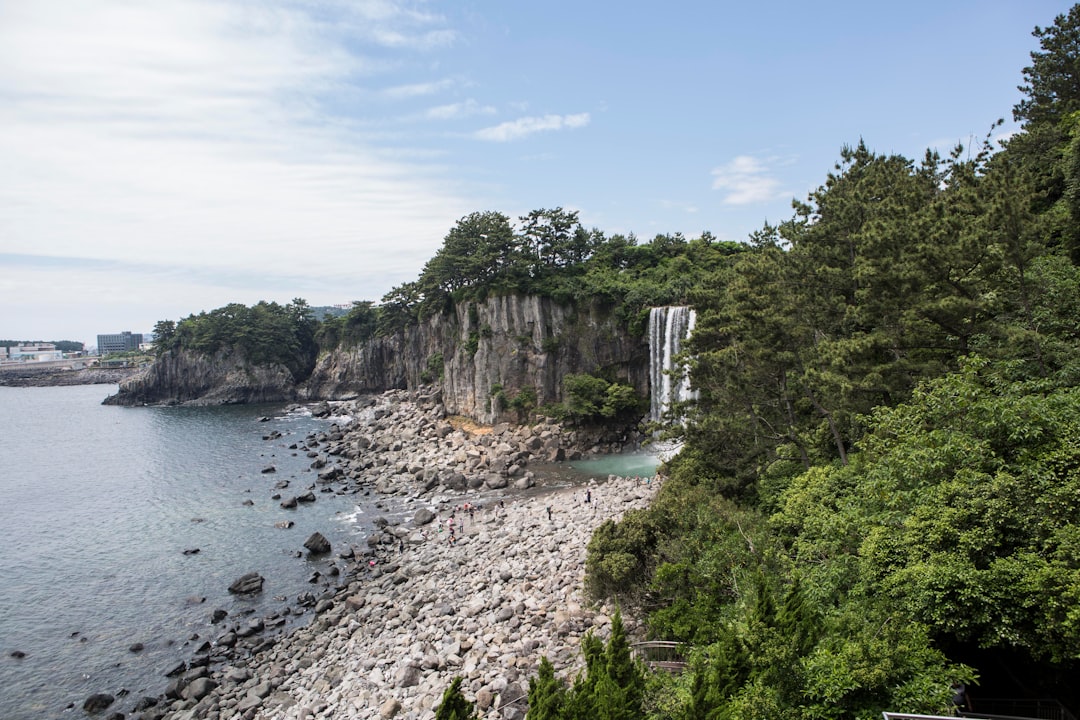
Why Jeju Island Should Be Your Next Travel Obsession
I still remember the moment I stepped off the plane at Jeju International Airport and felt that warm, salty breeze hit my face — a mix of volcanic earth, tangerine blossoms, and ocean mist that you simply cannot find anywhere else on the planet. Most international visitors to South Korea beeline for Seoul’s neon-lit streets or Busan’s coastal vibes, but Jeju Island? That’s where the real magic hides. Think of it as Korea’s Hawaii meets Iceland — a UNESCO-recognized volcanic island with lava tubes, high-altitude hiking, turquoise waters, and a food scene that’ll wreck your diet in the best possible way.
After spending weeks exploring every corner of this island across multiple seasons, I’ve compiled the Jeju Island hidden gems 2026 guide I wish I’d had on my first trip. We’re going way beyond the tourist-bus stops. We’re talking about secret coastal trails where you’ll be the only foreigner, tiny grandma-run restaurants serving the freshest seafood you’ve ever tasted, and volcanic craters so stunning they look AI-generated (they’re not). Whether you’re planning a 3-day getaway or a full two-week deep dive, this guide covers every practical detail — costs in USD, transport hacks, seasonal tips, and cultural etiquette — so you can explore Jeju like a local, not a tourist.
Getting to Jeju Island: Flights, Ferries, and Logistics

International Flights From the US
There are no direct flights from the US to Jeju. You’ll fly into Incheon International Airport (ICN) near Seoul first, then catch a short domestic hop. From LAX, JFK, or SFO, expect 12–14 hours nonstop to Incheon on carriers like Korean Air, Asiana, Delta, or United. Round-trip fares typically run $800–$1,400 USD depending on season and how far ahead you book.
US citizens enjoy visa-free entry to South Korea for up to 90 days, but you do need a K-ETA (Korea Electronic Travel Authorization). Apply online at least 72 hours before departure — it costs about $10 USD and is valid for two years. Don’t skip this step; airlines will check before boarding.
Seoul to Jeju: The Domestic Hop
The Gimpo (GMP) to Jeju (CJU) route is one of the world’s busiest air corridors — flights depart every 10–15 minutes during peak hours. Budget airlines like Jeju Air, T’way, and Jin Air offer one-way fares as low as $30–$60 USD if booked 2–3 weeks out. Flight time is just 65 minutes.
Pro tip: Fly from Gimpo Airport, not Incheon, for domestic flights. Getting from Incheon to Gimpo takes about 40 minutes via the Airport Railroad Express (AREX) for roughly $4 USD. If your international flight lands at Incheon late at night, crash at a nearby hotel and catch an early Gimpo flight — first departures start around 6:10 AM.
There’s also a ferry option from the southern port city of Mokpo — about 4.5 hours and around $40–$70 USD one-way. It’s scenic but slow. I’d only recommend it if you’re combining with a Gyeongju Day Trip From Seoul Itinerary 2026 and working your way down the Korean peninsula.
Getting Around Jeju Island
Renting a car is the single best decision you’ll make on Jeju. The island is roughly 45 miles across, and many of the best Jeju Island hidden gems 2026 are scattered along coastal roads with no bus access. International driving permits (IDP) are accepted. Rental rates start at $25–$45 USD/day through local companies like Lotte Rent-a-Car or Jeju Rent-a-Car. Book through Naver Map or directly at airport counters.
If you don’t drive, Jeju’s bus system has improved dramatically. The Blue (express) and Red (tourist loop) bus lines connect major attractions. A single ride costs about $1.00–$2.50 USD using your T-money card — the same rechargeable transit card you use in Seoul. Pick one up at any convenience store for about $3 and load it with cash.
Download Naver Map (way more accurate than Google Maps in Korea) and KakaoTalk (Korea’s essential messaging app) before you land. For language help, Papago (Naver’s translator) handles Korean far better than Google Translate for nuanced restaurant menus and local signs.
Jeju Island Hidden Gems 2026: Secret Spots Most Tourists Miss
Soesokkak Estuary — Jeju’s Hidden Emerald River
While everyone flocks to Cheonjiyeon Waterfall, the real stunner is Soesokkak Estuary on Jeju’s southern coast. Imagine a narrow river gorge where freshwater meets the ocean, flanked by volcanic rock walls draped in subtropical greenery. The water shifts between deep emerald and crystalline turquoise depending on the tide. Rent a transparent kayak ($15–$20 USD for 30 minutes) and paddle through the gorge — it feels like floating through a Studio Ghibli film.
Getting there: Drive 15 minutes east of Seogwipo city center. Free parking available. Open year-round, sunrise to sunset. Best visited early morning before 9 AM when tour buses haven’t arrived yet.
Geommeolle Beach — The Tiny Desert Beach
This is one of the most underrated Jeju Island hidden gems 2026 that even many Korean visitors don’t know about. Located in the traditional village of Hallim on the island’s west coast, Geommeolle Beach is a pocket-sized stretch of white sand backed by actual sand dunes — surreal given Jeju’s volcanic landscape. The beach is only about 200 meters long, sheltered by stone walls, and feels like a private Mediterranean cove.
Details: Free entry, no facilities (bring your own water and snacks). Parking nearby on village streets. Walk through the narrow stone-walled village path to reach it — the journey itself is half the charm. Best in May through October.
Bijarim Forest — Ancient Trees, Zero Crowds
Everyone queues up for Hallasan National Park (more on that below), but Bijarim Forest offers a magical woodland experience without the altitude challenge. This is the world’s largest single-species nutmeg forest — over 2,800 trees, some over 800 years old. A flat, wheelchair-accessible boardwalk loops through the grove in about 45 minutes.
Admission: $1.50 USD. Hours: 9 AM – 6 PM. The forest is especially photogenic after rain when mist threads through the ancient trunks. It’s on Jeju’s quieter eastern side, easily combined with a visit to Manjanggul Lava Tube (15 minutes away).
Gimnyeong Maze Park and Manjanggul Lava Tube
Manjanggul Lava Tube is a UNESCO World Heritage site and one of the longest lava tubes on Earth — stretching over 7.4 km, though only 1 km is open to visitors. The temperature inside stays around 52–57°F (11–14°C) year-round, making it a perfect escape from summer heat. The highlight is a massive lava column at the end of the walkway that looks like something from a fantasy novel.
Admission: $2 USD. Hours: 9 AM – 5:30 PM (last entry). Wear sturdy shoes with grip — the path is uneven volcanic rock and can be slippery. Right next door, Gimnyeong Maze Park ($3 USD) is a surprisingly fun hedge maze that takes 15–30 minutes to solve.
Iconic Jeju Experiences You Can’t Skip

Hiking Hallasan — Korea’s Highest Peak
Hallasan (한라산) at 6,388 feet (1,947m) is the tallest mountain in South Korea. The summit crater lake, Baengnokdam, is one of the most iconic sights in all of Korea. There are multiple trails, but the two that reach the summit are Seongpanak (9.6 km, ~4.5 hours up) and Gwaneumsa (8.7 km, ~5 hours up, steeper).
Critical logistics:
- Reservation required — Book online at the Hallasan National Park website at least 1–2 weeks ahead during peak season (spring/fall). Free entry but controlled access.
- Cutoff times are strict — you must reach a midpoint checkpoint by a set time (usually noon) or rangers will turn you back. Start at dawn.
- Bring layers — temperatures can be 20°F colder at the summit, and weather changes fast.
- Best seasons: Late April/early May for azalea blooms, late October for autumn foliage, winter for snow-capped summit photos.
If the summit trail is too intense, the Eorimok Trail (6.8 km round-trip) is a gorgeous, moderate hike through mossy forests that doesn’t require reservations. Hallasan National Park Information
Seongsan Ilchulbong (Sunrise Peak)
This UNESCO-listed volcanic tuff cone rises dramatically from the ocean on Jeju’s eastern tip. The hike to the top takes just 25–30 minutes up a well-maintained staircase, and the crater view at sunrise is unforgettable — think a massive grassy bowl ringed by jagged volcanic walls with the Pacific stretching to the horizon.
Admission: $1.50 USD. Hours: Varies by season (gates open before sunrise, typically 5:00–5:30 AM in summer). Arrive at least 30 minutes before sunrise to secure a good viewing spot. The Haenyeo (women divers) perform live diving demonstrations at the base around 1:30 PM daily — watching these legendary grandmother-divers harvest seafood from the ocean is a once-in-a-lifetime cultural experience.
Jeju Olle Trail — The Camino of Korea
The Jeju Olle Trail is a network of 26 interconnected coastal walking routes totaling over 425 km that circle the entire island. Think of it as Korea’s answer to Spain’s Camino de Santiago. Each route is 11–23 km long and takes 5–7 hours. You don’t need to do them all — cherry-pick the best ones.
My top picks:
- Route 7 (Seogwipo) — Dramatic coastal cliffs, Jungmun Beach, waterfalls. The most scenic single-day walk on Jeju.
- Route 10 (Songaksan) — Ends at Songaksan, a low volcanic cone with views to the tiny island of Marado, Korea’s southernmost point.
- Route 1 (Siheung to Gwangchigi) — Starts near Seongsan Ilchulbong and follows rugged eastern coastline past hidden fishing villages.
Look for the blue and orange arrow markers along the path. No reservation needed. Free. Carry water and sun protection.
Jeju Food Guide: What to Eat and Where
Must-Try Jeju Dishes
Jeju’s food culture is distinct from mainland Korea, shaped by the island’s volcanic soil, ocean access, and agricultural heritage. Here’s what you absolutely must eat:
- Black pork (흑돼지, heukdwaeji) — Jeju’s famous heritage breed, grilled at your table. Fattier, more flavorful than regular samgyeopsal. Expect to pay $15–$25 USD per person at Heukdonga Street in Jeju City.
- Haemul-ttukbaegi (seafood stew) — A bubbling stone pot of fresh abalone, sea urchin, and local shellfish. Around $12–$18 USD.
- Abalone porridge (전복죽, jeonbok-juk) — Creamy rice porridge loaded with fresh abalone. A Jeju breakfast tradition. $10–$14 USD at spots near Seongsan.
- Hallabong tangerines — Jeju’s signature citrus fruit, available fresh from roadside stands for about $5–$8 per bag. Sweeter and more fragrant than any tangerine you’ve had in the US.
- Gogi-guksu (meat noodle soup) — Simple pork broth noodles. A humble local favorite for about $6–$8 USD.
Best Restaurant Picks
Myeongjin Jeonbok (명진전복) near Seongsan serves the island’s best abalone porridge — arrive before 11 AM to avoid the line. Dombe Gogi restaurants in Jeju City’s old town serve traditional Jeju pork platter-style. For seafood soup with a view, try any of the small restaurants lining the harbor in Hallim — just point at what the locals are eating.
Cultural tip: In Korea, the oldest person at the table eats first. Wait for elders to pick up their chopsticks before you start. Also, never stick your chopsticks upright in rice — it resembles funeral incense and is considered very disrespectful. And tipping is not customary in Korea; it can even cause confusion.
If you’re watching what you eat while traveling, check out our 7 Korean Diet Foods for Weight Loss Beginners (2026 Guide) for healthy Korean options you can find everywhere on Jeju.
Seasonal Guide: When to Visit Jeju Island

| Season | Months | Weather | Highlights | Crowds |
|---|---|---|---|---|
| Spring | Mar–May | 55–68°F | Cherry blossoms, canola flower fields, azaleas on Hallasan | Moderate–High |
| Summer | Jun–Aug | 75–88°F | Beaches, diving, waterfall swimming, monsoon risk in July | Very High |
| Fall | Sep–Nov | 55–75°F | Autumn foliage, silver grass on Saebyeol Oreum, tangerine harvest | Moderate |
| Winter | Dec–Feb | 35–50°F | Snow-capped Hallasan, fewer crowds, lower prices, camellia flowers | Low |
My pick for 2026: Visit in late March to mid-April for the famous cherry blossom and canola flower season. Jeju’s cherry blossoms typically bloom 1–2 weeks earlier than Seoul. The bright yellow canola fields against pink blossoms create the most Instagrammable landscapes in all of Korea. The Jeju Cherry Blossom Festival (usually late March) along Jeonnong-ro in Jeju City is absolutely worth timing your trip around.
Fall (October) is equally magical — the silver grass (억새, eoksae) fields on volcanic cones like Saebyeol Oreum and Yeongsil Trail glow golden at sunset. Combine with Hallasan autumn foliage for an unforgettable hiking trip.
Budget Breakdown: How Much Does Jeju Cost?
Jeju is remarkably affordable compared to travel in the US, Japan, or Western Europe. Here’s a realistic daily budget for 2026:
| Category | Budget ($) | Mid-Range ($) | Luxury ($) |
|---|---|---|---|
| Accommodation | $20–$40 | $60–$120 | $200–$400+ |
| Meals (3/day) | $15–$25 | $30–$50 | $70–$150 |
| Transport | $5–$10 (bus) | $30–$45 (rental car) | $80+ (private driver) |
| Activities | $5–$10 | $20–$40 | $50–$100+ |
| Daily Total | $45–$85 | $140–$255 | $400–$650+ |
Budget accommodation on Jeju ranges from well-rated guesthouses and hostels ($20–$40/night) to charming pension-style stays — Korea’s version of B&Bs, often with ocean views, for $60–$90. For a truly unique experience, book a traditional stone house stay in one of Jeju’s heritage villages. If you’re also exploring Seoul before or after Jeju, our How to Book a Hanok Stay in Seoul: 2026 Complete Guide has everything you need.
Money-saving tips:
- Convenience store meals (GS25, CU, 7-Eleven) are excellent in Korea — fresh kimbap rolls for $2, rice meals for $3–$4.
- Most major Jeju attractions cost under $3 entry or are completely free.
- Get a Jeju Welcome Coupon Book at the airport tourist info desk — legitimate discounts on activities and restaurants.
- Use T-money card for bus transfers — you get a discount when transferring within 30 minutes.
Cultural Etiquette and Practical Tips for Jeju

Essential Korean Etiquette
Jeju is more laid-back than Seoul, but basic Korean etiquette still applies and will earn you genuine warmth from locals:
- Bow slightly when greeting — a small nod of the head works for casual interactions. No need for deep bows unless meeting someone elderly or very formal.
- Use two hands when receiving or giving anything — business cards, change, drinks. It signals respect.
- Remove shoes when entering traditional restaurants (ondol floor seating), guesthouses, and temples. Look for the shoe rack at the entrance.
- Don’t blow your nose loudly at the table — step away to the restroom. This is considered very rude in Korean dining culture.
- Recycle seriously — Korea has strict waste separation. Follow the labeled bins at accommodations and public spaces.
Connectivity and Apps
Pick up a prepaid SIM or eSIM at Incheon Airport before heading to Jeju. Plans with unlimited data run about $25–$40 USD for 10 days from providers like KT, SKT, or LG U+. Having data is essential for Naver Map navigation (seriously, don’t rely on Google Maps — it lacks driving directions in Korea).
Must-have apps:
- Naver Map — navigation, restaurant reviews, bus routes
- KakaoTalk — messaging (everyone in Korea uses it; many businesses only accept KakaoTalk reservations)
- Papago — real-time translation, camera mode for menus and signs
- KORAIL — if you’re traveling mainland Korea by KTX bullet train before or after Jeju
- Coupang — Korea’s Amazon equivalent for quick delivery of anything you forgot to pack
Jeju-Specific Tips
Respect the Haenyeo. Jeju’s female free-divers (해녀) are a UNESCO Intangible Cultural Heritage. If you see them working at the shore, don’t interfere, touch their catch, or block their access to the water. You can watch respectfully from a distance and purchase fresh seafood directly from them at designated spots — it’s the freshest sashimi you’ll ever eat, cut right there on the rocks.
Dol hareubang (stone grandfather statues) are Jeju’s cultural symbol — you’ll see them everywhere. Touching the nose is said to bring fertility, so you’ll often see honeymooners posing with them. They make great souvenirs in miniature form.
Insider Tips: Secrets From a Jeju Regular
After multiple extended visits to Jeju, here are the tips I share with friends that you won’t find in typical guidebooks:
- Skip Jungmun Beach on weekends. It’s Jeju’s most famous beach and gets absolutely packed July–August. Instead, head to Gwakji Beach (west coast) or Hamdeok Beach (north coast) — equally stunning, half the crowds.
- Visit oreums (volcanic cones) at sunrise or sunset. Jeju has over 360 parasitic volcanic cones (called oreum). Most are free, uncrowded, and offer panoramic views. Yongnuni Oreum and Darangshi Oreum are local favorites that tourists rarely visit.
- Eat at “local food” restaurants, not tourist ones. Look for places with Korean-only menus and lots of ajumma (older women) inside. Use Papago’s camera mode to translate the menu. The food is always cheaper and better.
- Drive the coastal road at night. Jeju’s yeondeung (wind) festival lights and the bioluminescent plankton visible at certain beaches (especially on the south coast in summer) create magical nighttime moments.
- Buy tangerines from roadside stalls, not shops. Farmers sell directly from boxes outside their orchards for half the store price. The misshapen ones taste the best — trust me.
- Wednesday is Haenyeo market day in Seogwipo. The Maeil Olle Market in Seogwipo has a special Haenyeo section where divers sell their morning catch. Go before noon for the best selection.
- Use the Jeju Olle stamp passport. Pick one up at any Olle Trail starting point — collecting stamps at each route’s start and finish is a surprisingly addictive motivator and a great free souvenir.
Looking great on your Jeju trip? Korean fashion is trending worldwide — check our Korean Minimalist Fashion Essentials 2026: Style Guide for packing inspiration that’ll work for both city exploration and coastal walks.
Frequently Asked Questions About Jeju Island
How many days do you need in Jeju Island?
A minimum of 3–4 days lets you cover the major highlights — Hallasan, Seongsan Ilchulbong, a couple of hidden gems, and the food scene. For a thorough exploration including Jeju Island hidden gems 2026, Olle Trail routes, and relaxation time, plan for 5–7 days. I’ve spent two weeks here and still had trails to hike and restaurants to try.
Is Jeju Island safe for solo travelers?
Extremely safe. South Korea consistently ranks among the safest countries in the world, and Jeju is even more relaxed than the mainland. Solo female travelers will feel very comfortable. Crime rates are very low. That said, use normal travel precautions — keep valuables secure and be careful on cliff edges and near ocean waves.
Do I need to speak Korean to visit Jeju?
You can get by without Korean, especially at hotels, major attractions, and tourist restaurants. However, Jeju is less English-friendly than Seoul. The Papago translation app is your best friend — its camera mode instantly translates menus, signs, and bus schedules. Learning basic phrases like “감사합니다” (gamsahamnida — thank you) and “주세요” (juseyo — please give me) goes a very long way in earning local goodwill.
What’s the best time of year to find Jeju Island hidden gems without crowds?
Late October through November is the sweet spot. Summer crowds have disappeared, the autumn foliage is stunning, tangerines are in season, and temperatures are comfortable for hiking (55–65°F). Alternatively, early March catches the first cherry blossoms before the big tourist rush. Avoid Korean national holidays like Chuseok and Lunar New Year when domestic tourism surges.
Can I use credit cards on Jeju Island?
Yes, almost everywhere. Korea is one of the most cashless societies on Earth. Visa and Mastercard are widely accepted at restaurants, convenience stores, cafes, and transportation. The main exceptions are small market stalls, older village restaurants, and some Haenyeo seafood vendors — carry about $30–$50 USD equivalent in Korean won for these situations. ATMs accepting international cards are available at all convenience stores (look for the “Global ATM” sign).
Is renting a car on Jeju difficult for foreigners?
Not at all. You need a valid US driver’s license plus an International Driving Permit (IDP) — get the IDP at any AAA office for about $20 before your trip. Roads on Jeju are well-maintained, well-signed (most signs have English), and traffic is manageable outside Jeju City rush hours. Driving is on the right side, same as the US. The only challenge is the roundabouts — Jeju has many, and Koreans enter them aggressively.
Related Posts You’ll Love
Planning a bigger Korea trip around your Jeju visit? These guides will help:
- Gyeongju Day Trip From Seoul Itinerary 2026 — The ancient Silla kingdom capital, perfect for a mainland stop before or after Jeju.
- K-Beauty Glass Skin Routine for Beginners 2026 — Stock up on K-Beauty products in Jeju’s duty-free shops and Seogwipo’s Innisfree flagship (they use Jeju volcanic ingredients!).
- How Does Jeonse Deposit System Work? 2026 Guide — Thinking about staying in Korea longer? Understand the unique housing system.
Topics we should write about next:
- Best Jeju Island Cafes With Ocean Views 2026
- 3-Day Jeju Itinerary for First-Timers on a Budget
- Seoul to Busan KTX Guide: Everything You Need to Know 2026
Start Planning Your Jeju Adventure Today
Jeju Island is that rare destination where jaw-dropping natural beauty meets incredible food, rich culture, and surprising affordability. Whether you’re kayaking through the emerald waters of Soesokkak, watching the sunrise from a volcanic crater, or biting into the most perfectly grilled black pork of your life, this island delivers moments that’ll stay with you forever.
The Jeju Island hidden gems 2026 listed in this guide are just the beginning. Every visit reveals something new — a trail you missed, a grandmother’s restaurant you stumbled into, a sunset from an oreum that made you forget to take a photo because you were too busy being present.
Ready to book? Start by checking flights from your nearest US hub to Incheon, grab your K-ETA, and download Naver Map. For the most comprehensive planning resources, visit Korea Tourism Organization Official Site and Visit Korea Travel Guide.
Have you been to Jeju? What hidden gems did YOU discover? Drop your tips, questions, and favorite spots in the comments below — I read and respond to every single one. And if this guide helped you plan your trip, share it with a friend who needs their next travel obsession. Trust me, they’ll thank you later.
Safe travels, and see you on the island! 🏝️