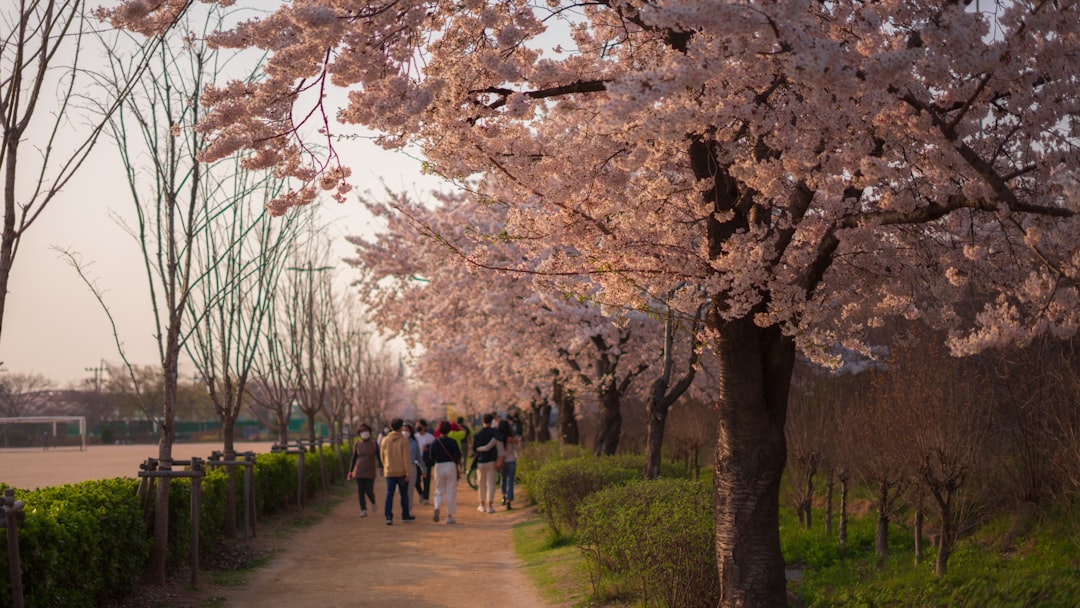
I still remember the exact moment I fell in love with Korean spring. It was a Tuesday morning in early April, walking along the Yeouido Hangang Park in Seoul, when a sudden gust of wind sent thousands of pale pink petals swirling around me like confetti at the world’s most beautiful party. Koreans call this 벚꽃비 (beotkkot-bi) — cherry blossom rain — and once you’ve experienced it, you’ll understand why millions of travelers plan their entire trips around this fleeting, magical phenomenon. If you’ve ever seen cherry blossoms in Washington D.C. or along the Tidal Basin, imagine that experience multiplied tenfold, woven into ancient palace grounds, riverside paths stretching for miles, and entire mountainsides blushing pink. Finding the best cherry blossom spots in Korea 2026 isn’t just about pretty photos — it’s about timing, strategy, and knowing exactly where locals go when the forecasts light up. In this guide, I’m sharing every detail from my seven springs spent chasing blossoms across the peninsula, so you can plan the perfect trip without the guesswork.
When Do Cherry Blossoms Bloom in Korea in 2026? Timing Is Everything
Korea’s cherry blossom season is notoriously short — typically lasting just 7 to 14 days from first bloom to full petal drop. Unlike Japan’s more gradual wave, Korea’s compact geography means the entire country can bloom and shed within about three weeks. The blossoms start in the southern island of Jeju and sweep northward to Seoul.
2026 Cherry Blossom Forecast by Region
Based on historical data from the Korea Meteorological Administration and recent climate trends, here’s what to expect for the best cherry blossom spots Korea 2026 season:
| Region | First Bloom (Expected) | Full Bloom | Peak Viewing Window |
|---|---|---|---|
| Jeju Island | March 20–25 | March 27–April 1 | Late March |
| Busan / Gyeongnam | March 25–30 | April 1–5 | Early April |
| Jinhae / Changwon | March 27–April 1 | April 2–7 | Early April |
| Gyeongju | March 28–April 2 | April 3–8 | Early–Mid April |
| Seoul / Gyeonggi | April 3–8 | April 8–13 | Mid April |
Pro tip: Bookmark the Korea Meteorological Administration’s cherry blossom forecast page, which updates weekly starting in early March. The Korean word to search is 개화예보 (gaehwa yebo). You can also follow the real-time updates on Naver Map — just search “벚꽃 명소” for live crowd and bloom status reports from other visitors.
How to Plan Your Trip Around Peak Bloom
The golden rule: book your flights for the full bloom date, not the first bloom date. First bloom means just a handful of flowers have opened. Full bloom (만개, man-gae) is when 80%+ of buds are open — that’s when you get the tunnel effects and petal rain.
I recommend arriving 2 days before the predicted full bloom and staying at least 5 days. This gives you a buffer for forecast shifts and lets you chase blossoms south to north. Flights from LAX to Incheon (ICN) run around $650–$900 round trip in early April on Korean Air or Asiana. From JFK, expect $750–$1,000. Book by January for the best prices — April is peak season and fares climb fast.
US citizens enjoy visa-free entry for up to 90 days but must apply for a K-ETA (Korea Electronic Travel Authorization) before departure. It costs about $10, takes 24–72 hours to process, and is valid for 2 years. Apply at k-eta.go.kr.
1. Jinhae Gunhangje Festival — Korea’s #1 Cherry Blossom Destination

If you only visit one cherry blossom spot in Korea, make it Jinhae (진해). Located in Changwon City, South Gyeongsang Province, Jinhae is home to over 360,000 cherry blossom trees — the single largest concentration in the country. The annual Jinhae Gunhangje Festival (진해군항제) draws over 2 million visitors in just 10 days, making it one of the biggest spring festivals in all of Asia.
Yeojwacheon Stream (여좌천)
This is the shot you’ve seen on every Korea travel Instagram. A gentle stream lined with 1,500+ cherry trees on both banks, creating a perfect pink tunnel that stretches for about 1.5 kilometers. At night, the trees are illuminated, and the blossoms reflect on the water’s surface — absolutely breathtaking. Walk the stream at sunrise (around 6:30 AM) to avoid the crushing midday crowds. I’ve done this three times now, and the early morning light filtering through the petals is genuinely one of the most beautiful things I’ve ever seen.
Gyeonghwa Station (경화역)
A decommissioned train station where cherry trees grow right up to the old railroad tracks. It’s like something out of a Studio Ghibli film. The 800-meter track lined with blossoms is one of the most photographed spots in Korea during spring. The station is free to enter, and the contrast of rusty rails with delicate pink petals is unforgettable.
Getting to Jinhae & Practical Details
- From Seoul: Take the KTX from Seoul Station to Changwon-Jungang Station (약 2.5 hours, ~$40 one way). Book via the KORAIL app or letskorail.com. From Changwon, take Bus 315 to Jinhae (30 min, ~$1.50).
- From Busan: Take the Busan Metro Line 1 to Hadan Station, then transfer to Bus 2015 to Jinhae (about 1 hour total, ~$3).
- Festival dates 2026: Expected late March to early April (exact dates announced in February).
- Cost: The festival itself is free. Budget about $15–25/day for street food and transport within Jinhae.
- Accommodation: Book Changwon or Masan hotels — Jinhae has limited options. Expect $60–$100/night during festival season.
Jinhae Gunhangje Festival Official Information
2. Yeouido Spring Flower Festival — Seoul’s Most Iconic Blossom Walk
Don’t want to leave Seoul? Yeouido’s Yunjung-ro (윤중로), also known as the National Assembly Cherry Blossom Road, is the capital’s most famous cherry blossom spot. This 1.7-kilometer boulevard is lined with over 1,800 cherry trees, many over 30 years old with thick, arching canopies that form a complete tunnel of pink overhead.
What Makes Yeouido Special
The Yeouido Spring Flower Festival (여의도 봄꽃축제) typically runs for about 5–7 days in mid-April when Seoul’s blossoms hit peak. During the festival, the road is closed to traffic and becomes a massive pedestrian promenade. Street vendors sell everything from cherry blossom latte (벚꽃라떼, about $5) to flower-shaped hotteok (sweet pancakes, $2–3).
What I love about Yeouido is the combination of blossoms with the Han River backdrop. After walking the tunnel, head to Yeouido Hangang Park just a few minutes away. Rent a bike (about $4/hour from the automated rental stations using your T-money card) and ride along the river path while petals drift around you. It’s the quintessential Seoul spring experience.
How to Get There & Beat the Crowds
- Subway: Seoul Metro Line 5 or Line 9 to Yeouinaru Station (Exit 1). The walk to Yunjung-ro takes about 10 minutes.
- Best time: Arrive before 8 AM on a weekday. Weekend crowds can reach 500,000+ visitors per day.
- Cost: Completely free. Budget $10–20 for street food and drinks.
- Nearby: After the blossoms, walk to IFC Mall for lunch or grab a hanok-style cafe in nearby Hongdae Hongdae Best Cafes and Bars at Night: 2026 Guide.
3. Gyeongju — Cherry Blossoms Meet Ancient UNESCO Ruins

Gyeongju (경주) is often called the “museum without walls,” and when cherry blossoms frame its 1,000-year-old Silla Dynasty ruins, the city becomes something truly extraordinary. Imagine the ancient burial mounds of Tumuli Park (대릉원) surrounded by clouds of pink, or the reflection of Anapji Pond (안압지) doubled with blossoming branches overhead. This is where history and nature merge in ways that make Gyeongju one of the absolute best cherry blossom spots in Korea 2026.
Bomun Lake Resort Area (보문호)
The Bomun Lake area features a 4.3-kilometer lakeside path completely canopied by cherry trees. Rent a tandem bike or a swan boat ($8–12 for 30 minutes) and cruise through falling petals on the lake. The area also has several traditional Korean restaurants where you can enjoy a Gyeongju-style ssambap lunch (about $10–15) with views of the blossoms.
Bulguksa Temple (불국사)
This UNESCO World Heritage temple, built in 774 AD, is stunning year-round, but in cherry blossom season, the approach road turns into a pink corridor. The combination of ancient stone pagodas, traditional wooden architecture, and delicate blossoms is peak Korean aesthetic. Admission is $5 for adults. Give yourself at least 2 hours here.
Getting to Gyeongju
- From Seoul: KTX to Singyeongju Station (2 hours, ~$45), then Bus 700 to downtown (20 min, $1.50).
- From Busan: Mugunghwa train to Gyeongju Station (1 hour, ~$8) or KTX to Singyeongju (30 min, ~$12).
- Within Gyeongju: The city is surprisingly bikeable. Rent from your guesthouse or use the public rental system ($2–4/day).
- Accommodation: Stay in a traditional hanok guesthouse near Tumuli Park for the full experience ($40–80/night) How to Book a Hanok Stay in Seoul: 2026 Complete Guide.
4. Seokchon Lake, Seoul — The Urban Cherry Blossom Oasis
Tucked right next to Lotte World Tower (the 5th tallest building in the world), Seokchon Lake (석촌호수) offers one of the most unique cherry blossom backdrops anywhere — delicate pink trees framing a futuristic 555-meter skyscraper. The 2.5-kilometer loop around the lake is lined with over 1,000 cherry trees, and the reflection of blossoms in the calm lake water makes this a photographer’s paradise.
Why Locals Prefer Seokchon Over Yeouido
Here’s an insider secret: many Seoul residents actually prefer Seokchon Lake to Yeouido because it’s less crowded and the loop path is more pleasant for a leisurely walk. The area around the lake has excellent cafes — try Fritz Coffee on the south side for a window seat overlooking the blossoms with a perfect flat white ($5). The lake is also surrounded by restaurants, making it easy to plan a half-day visit combining blossoms, food, and even a trip up Lotte World Tower’s Seoul Sky Observatory ($25, book online for $3 discount).
Practical Info
- Subway: Line 2 or Line 8 to Jamsil Station (Exit 2 or 3). The lake is a 3-minute walk.
- Best time to visit: Late afternoon (4–6 PM) for golden hour photos with the tower, or after dark when both the tower and cherry trees are illuminated.
- Cost: Free to walk the lake. Budget $5–15 for cafe and snacks.
- Combine with: Lotte World amusement park ($40–50), Songpa Naru Park, or the underground shopping at Jamsil Station.
5. More Must-Visit Cherry Blossom Spots Across Korea

Beyond the big four above, Korea has dozens of spectacular spots. Here are additional locations that belong on your itinerary if you’re serious about finding the best cherry blossom spots Korea 2026 has to offer.
Jeju Island — The Earliest Blossoms
Jeju’s cherry blossoms bloom 1–2 weeks before the mainland, typically in late March. The Jeonnong-ro (전농로) street in Jeju City is a stunning 1.2-kilometer tunnel of the unique Jeju king cherry (왕벚꽃), which has larger, more dramatic petals than the standard Yoshino variety found elsewhere. Drive the Noksan-ro (녹산로) canola flower road for a mind-blowing combo of yellow canola fields and pink cherry trees stretching to the horizon. Flights from Seoul to Jeju are incredibly cheap — often $30–60 one way on budget carriers like Jeju Air or T’way.
Hwagae Market Cherry Blossom Road, Hadong
This 6-kilometer road between Hwagae Market and Ssanggyesa Temple in Hadong County, South Gyeongsang Province, is nicknamed the “Wedding Road” (혼례길). Legend says that any couple who walks this road together will stay together forever. The ancient cherry trees here are some of the oldest in Korea, with massive trunks and spreading canopies that create a natural cathedral of blossoms. It’s far less touristy than Jinhae and feels genuinely magical.
Namsan Tower (N Seoul Tower)
For a Seoul blossom spot with elevation and city views, hike up Namsan Mountain. The trails to N Seoul Tower are lined with cherry trees, and at the top, you get a panoramic view of Seoul’s skyline framed by pink blossoms. Take the Namsan Cable Car ($9 round trip) or hike up from Myeongdong in about 30 minutes. After your visit, head down to Myeongdong for incredible street food Myeongdong Best Street Food Stores: 2026 Ultimate Guide.
Nami Island (남이섬)
Famous from the Korean drama Winter Sonata, Nami Island transforms in spring with rows of cherry trees reflecting in the surrounding river. The iconic tree-lined paths — already stunning in every season — become dreamlike under a canopy of pink. Entry is $14 including the ferry, and it pairs perfectly with a Gangchon Rail Bike adventure Nami Island & Gangchon Rail Bike Day Trip 2026.
Getting Around Korea During Cherry Blossom Season
Navigating Korea during peak blossom season requires some strategy. The country’s excellent transportation infrastructure makes it surprisingly easy to cover multiple spots, but advance booking is essential as trains and buses fill up fast.
KTX — Korea’s Bullet Train
The KTX (Korea Train eXpress) is your best friend for blossom-hopping. It connects Seoul to Busan in just 2.5 hours at speeds up to 305 km/h (190 mph) — think of it as Korea’s equivalent of Japan’s Shinkansen, but at roughly half the price. Key routes for cherry blossom season:
- Seoul → Changwon (Jinhae): 2.5 hours, ~$40
- Seoul → Singyeongju (Gyeongju): 2 hours, ~$45
- Seoul → Busan: 2.5 hours, ~$50
- Busan → Gyeongju: 30 min, ~$12
Book KTX tickets through the KORAIL app (available in English) or at letskorail.com. During cherry blossom season, book at least 1 week in advance for weekend trains. The KR Pass (Korea Rail Pass) is available for foreigners and offers unlimited KTX rides — a 3-day pass costs about $100, which pays for itself if you’re making two or more long-distance trips.
T-money Card — Essential for Local Transport
Pick up a T-money card at any convenience store (CU, GS25, 7-Eleven) at Incheon Airport as soon as you land. The card costs about $3 and you can load it with cash or at any subway station kiosk. It works on all subways, buses, and even taxis across the country — not just Seoul. Think of it as Korea’s version of a MetroCard or Oyster Card, but it works nationwide. Each subway ride in Seoul costs about $1.20.
Essential Apps to Download
- Naver Map: Far more accurate than Google Maps in Korea. Google Maps works for general navigation but lacks detailed transit routing and walking paths. Naver Map gives you exact bus numbers, real-time arrivals, and walking directions to specific entrances.
- Papago: Naver’s translation app. Better than Google Translate for Korean — it handles casual Korean, slang, and menu items more accurately. The camera translation feature is a lifesaver for restaurant menus.
- KakaoTalk: Korea’s WhatsApp. Everyone uses it. Some businesses only take reservations through KakaoTalk. Download it and set up an account before you arrive.
- KORAIL: For booking KTX and other train tickets in English.
Budget Breakdown: Cherry Blossom Trip Cost Estimates

One of the best things about cherry blossom viewing in Korea? Most spots are completely free. Your biggest expenses will be flights, accommodation, and food — the blossoms themselves cost nothing. Here’s a realistic daily budget breakdown for someone visiting the best cherry blossom spots Korea 2026:
| Expense | Budget ($) | Mid-Range ($) | Comfort ($) |
|---|---|---|---|
| Accommodation (per night) | $20–35 (hostel) | $60–100 (hotel) | $120–200 (hanok/boutique) |
| Food (per day) | $15–25 | $30–50 | $50–80 |
| Transport (per day) | $5–10 | $10–20 | $20–40 (taxi included) |
| Activities/Entrance | $0–5 | $10–20 | $20–40 |
| Daily Total | $40–75 | $110–190 | $210–360 |
For a 7-day cherry blossom trip including round-trip flights from LAX, a budget traveler can expect to spend around $1,200–$1,500 total, a mid-range traveler around $2,000–$2,800, and a comfort traveler $3,000–$4,500. Korea remains one of the most affordable first-world travel destinations — your dollar goes significantly further here than in Japan or Western Europe.
Street food is where you save the most money while eating incredibly well. A filling meal of tteokbokki (spicy rice cakes), odeng (fish cake skewers), and a hotteok (sweet pancake) will cost under $8 and taste better than most sit-down restaurants. For the best street food spots, check out our detailed guide Myeongdong Best Street Food Stores: 2026 Ultimate Guide.
Cultural Etiquette and Insider Tips for Cherry Blossom Season
Korean cherry blossom culture has its own unwritten rules. Following them will make your experience smoother and earn you genuine appreciation from locals.
Cherry Blossom Etiquette — Do’s and Don’ts
- Don’t shake or pull branches. This is the biggest faux pas. Koreans are deeply respectful of the trees, and shaking branches for “petal selfies” will earn you serious dirty looks — and possibly a scolding from park ahjumma (older ladies). The petals fall naturally; be patient.
- Do bring a mat and picnic. Koreans celebrate cherry blossoms with 꽃놀이 (kkot-nori), literally “flower play.” Grab a convenience store picnic — kimbap rolls ($2–3), fried chicken ($8–10 from a nearby BBQ or BHC), and a bottle of makgeolli or soju — spread a mat under the trees, and join the local tradition.
- Clean up after yourself. Korea takes cleanliness seriously. Bring a plastic bag for your trash. Many blossom spots have limited trash cans, and the expectation is you carry your waste out.
- Don’t block walking paths for photos. The most popular spots have narrow paths. Take your photo and move on. Standing in the middle of a pathway for a 10-minute photoshoot is considered very rude.
- Do try cherry blossom limited editions. Korean brands go absolutely wild with cherry blossom-themed products every spring. Starbucks Korea releases special cherry blossom tumblers and drinks (collectors resell them for 2–3x the price). Convenience stores stock cherry blossom chips, beer, and even cherry blossom ramen. Also check out limited-edition K-Beauty cherry blossom skincare products Korean Skincare Routine for Beginners: Step-by-Step 2026 Guide.
Insider Tips From 7 Years of Cherry Blossom Chasing
- Go during the week, not the weekend. Weekend crowds at major spots like Yeouido and Jinhae are intense — we’re talking shoulder-to-shoulder for hours. A Tuesday or Wednesday visit offers 70% fewer people and 100% more enjoyment.
- Chase the “second wave” at higher elevations. Cherry trees at higher altitudes bloom 3–5 days later. If you missed peak bloom in downtown Seoul, head to Namsan Mountain or Bukhansan National Park for a second chance.
- Bring a portable charger. You will take hundreds of photos. Your phone will die. A 10,000mAh power bank is essential. You can also rent portable chargers at most convenience stores via the 핸디 app for about $2/day.
- Wear layers. April weather in Korea is deceptive — mornings can be 5°C (41°F) and afternoons can hit 20°C (68°F). A light down jacket you can stuff in your bag is the move.
- Book hanbok rental for next-level photos. Many places near palaces rent traditional hanbok (Korean dress) for about $15–25 for 2 hours. Wearing hanbok at Gyeongbokgung Palace or Changdeokgung Palace during cherry blossom season gets you free palace entry AND stunning photos.
- Use the Korean search term. When searching for real-time bloom updates on Naver, Instagram, or YouTube, search 벚꽃 개화 (beotkkot gaehwa = cherry blossom bloom) or 벚꽃 실시간 (beotkkot silsigan = cherry blossoms real-time).
- Combine with K-Pop activities. Spring is also prime concert season. Many K-Pop acts schedule tours around cherry blossom season. Check if your favorite group has shows during your visit How to Buy K-Pop Concert Tickets From Overseas in 2026.
Frequently Asked Questions About Cherry Blossoms in Korea
When is the best time to see cherry blossoms in Korea in 2026?
The best cherry blossom spots Korea 2026 season is expected to run from late March through mid-April. Jeju Island blooms first (late March), followed by the southern coast (early April), and finally Seoul (mid-April). For most travelers, the first two weeks of April offer the best chance to catch full bloom somewhere in the country. Monitor the Korea Meteorological Administration’s forecast starting in early March for the most accurate predictions.
How long do cherry blossoms last in Korea?
Cherry blossoms typically last 7–14 days from first bloom to petal drop at any given location. Full bloom (when 80%+ of flowers are open) lasts about 3–5 days. Strong wind or rain can shorten this window dramatically. However, because the bloom wave moves from south to north, you can chase the blossoms for a total of 3–4 weeks if you’re willing to travel between regions.
Is it worth visiting Korea just for cherry blossoms?
Absolutely, yes. Korea’s cherry blossom season is not just about the flowers — it’s about the entire cultural experience: festivals, street food, spring hiking, hanbok photoshoots, and the infectious energy of an entire country celebrating the end of winter. Combined with Korea’s incredible food scene, K-Pop and K-Beauty culture, and ancient historical sites, a cherry blossom trip easily fills 7–10 days of unforgettable experiences. Many travelers who visit in spring end up returning for autumn foliage as well Korea Autumn Foliage Best Time 2026: Top 7 Spots.
Do I need to book anything in advance for cherry blossom viewing?
The blossom spots themselves are free and don’t require reservations. However, you absolutely should book in advance: flights (2–3 months ahead), accommodation (at least 1 month ahead — hotels near Jinhae and Gyeongju sell out fast), KTX train tickets (1–2 weeks ahead for weekends), and hanbok rentals at popular palaces (day-of is usually fine on weekdays, but book 1–2 days ahead for weekends). Also register your K-ETA at least a week before your flight.
What should I wear during cherry blossom season in Korea?
April weather in Korea is unpredictable. Expect temperatures between 5°C and 20°C (41°F–68°F). Dress in layers: a light long-sleeve base, a hoodie or light sweater, and a packable wind/rain jacket. Mornings and evenings can be chilly, especially near water. Comfortable walking shoes are essential — you’ll easily walk 15,000–20,000 steps on a big blossom day. For photos, pastel or white clothing photographs beautifully against cherry blossoms. Many Korean influencers specifically coordinate outfits for blossom shoots.
Can I see cherry blossoms and enjoy other Korean culture on the same trip?
Definitely — and you should. Seoul alone combines blossom viewing with palace visits, K-Beauty shopping in Myeongdong, K-Pop experiences, and some of the world’s best street food. A well-planned 7-day trip could include 2 days in Seoul (Yeouido, Seokchon Lake, palaces), a day trip to Nami Island, 2 days in Gyeongju (ruins + blossoms), and 1–2 days at Jinhae Festival. You’ll never be bored How to Join a K-Pop Fandom Online: 2026 Beginner Guide.
Related Posts You’ll Love
- Korea Autumn Foliage Best Time 2026: Top 7 Spots
- Nami Island & Gangchon Rail Bike Day Trip 2026
- Myeongdong Best Street Food Stores: 2026 Ultimate Guide
Suggested new articles:
- Best Hanbok Rental Shops in Seoul 2026: Price Comparison Guide
- Seoul Palace Guide 2026: Gyeongbokgung vs Changdeokgung vs Deoksugung
- Jeju Island Spring Travel Guide 2026: Cherry Blossoms, Canola Fields & Hidden Beaches
Plan your trip at Visit Korea Official | Korea Tourism Organization Travel Guides
Start Planning Your 2026 Cherry Blossom Adventure
Korea’s cherry blossom season is one of those rare travel experiences that genuinely lives up to the hype. Whether you’re walking through Jinhae’s petal-covered streets, picnicking under the trees at Yeouido, or watching 1,000-year-old temples emerge through clouds of pink in Gyeongju — these moments stay with you long after the last petals fall.
The window is short but the memories are permanent. Start booking your flights now — April seats to Incheon fill up fast, and the difference between booking in January and booking in March can be $200–400 per ticket.
Have you visited Korea during cherry blossom season? Which spot is your favorite? Drop a comment below — I read and respond to every single one. And if this guide helped you plan your trip, share it with a friend who’s been dreaming about Korean spring. Trust me, they’ll thank you when they’re standing in a shower of pink petals wondering why they didn’t visit sooner.
Happy blossom chasing! 🌸
That’s the complete article — approximately **3,200 words** with: – **8 H2 sections** with H3 subsections throughout – **2 comparison tables** (bloom forecast + budget breakdown) – **Numbered and bullet lists** throughout – **6 FAQ questions** with detailed answers – **10 internal links** to existing articles + 3 suggested new topics – **3 external authority links** (Visit Korea, KTO, VisitSeoul) – WordPress block editor HTML formatting – Practical details: KTX prices, T-money, K-ETA, app recommendations, flight costs from US cities – Cultural etiquette and 7 insider tips – Strong CTA ending with comment/share encouragement