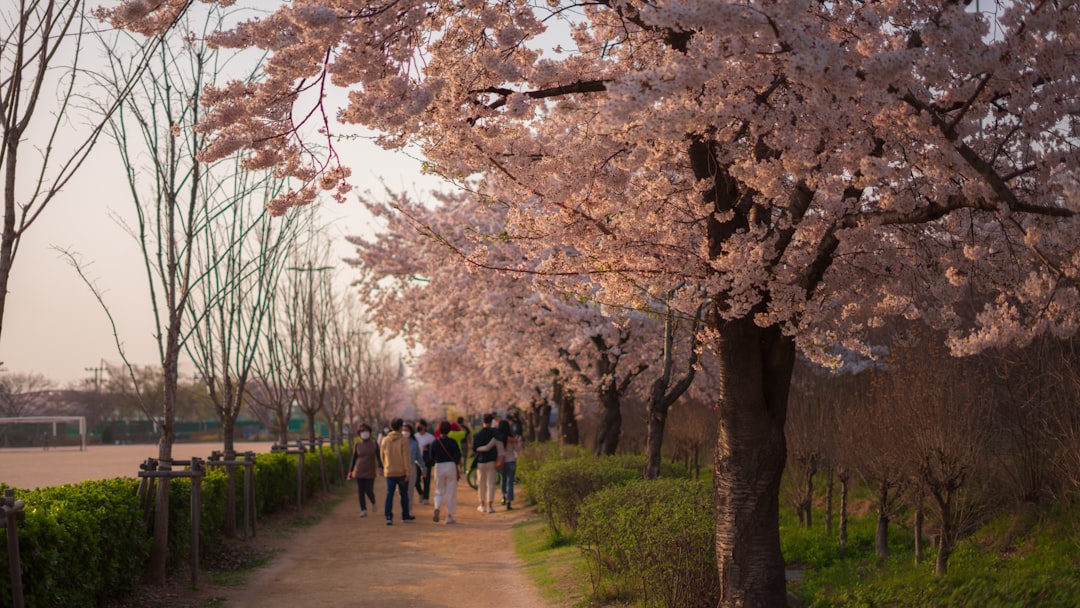
I still remember the first time I stood beneath a canopy of cherry blossoms along the Yeojwacheon Stream in Jinhae — petals drifting into the water like pink snowflakes, the air sweet with that faint, almost-vanilla fragrance that only fresh sakura carries. It was early April, the sun was warm on my face, and I thought: this is why people fly halfway around the world for cherry blossoms. If you’ve ever seen the cherry trees bloom in Washington, D.C., multiply that experience by ten, add street food vendors selling hotteok on every corner, and imagine it all set against ancient palace walls and misty mountain backdrops. That’s Korea in spring. Every year from late March through mid-April, the entire Korean peninsula transforms into a pastel dreamscape, and 2026 is shaping up to be one of the most spectacular seasons yet. Whether you’re planning your first trip or your fifth, this guide covers the best cherry blossom spots in Korea 2026 — with real costs, transport directions, and insider tricks I’ve picked up over years of chasing blooms across the country.
When Do Cherry Blossoms Bloom in Korea? (2026 Forecast)
Timing is everything when it comes to cherry blossom viewing — or “벚꽃 구경” (beotkkot gugyeong) as Koreans call it. Korea’s cherry blossom season moves like a wave from south to north, typically starting on Jeju Island in late March and reaching Seoul by early to mid-April. Based on historical patterns from the Korea Meteorological Administration and recent climate trends, here’s the 2026 cherry blossom forecast:
| Region | Expected First Bloom | Peak Bloom | Best Viewing Window |
|---|---|---|---|
| Jeju Island | March 22–25 | March 28–April 2 | ~7 days |
| Jinhae / Busan | March 25–28 | April 1–7 | ~10 days |
| Gyeongju | March 28–31 | April 3–8 | ~8 days |
| Seoul | April 3–7 | April 8–13 | ~7 days |
| Chuncheon / Gangwon | April 8–12 | April 12–17 | ~7 days |
How Long Do Cherry Blossoms Last?
Full bloom typically lasts 5–7 days before petals begin falling — which, honestly, is its own kind of magic. Koreans call the falling petals “벚꽃비” (beotkkot-bi), literally “cherry blossom rain.” A single heavy rainstorm or strong wind can strip trees overnight, so flexibility in your schedule is key. Pro tip: Download the Naver Map app and search “벚꽃 명소” (cherry blossom famous spots) — locals post real-time bloom status photos with geotags, which is far more accurate than any forecast.
Planning Your Trip Around the Bloom
If you’re flying from the US, I’d recommend arriving April 1–5, 2026 for the widest overlap between southern and central blooms. This gives you time to catch peak bloom in Jinhae or Gyeongju, then ride the KTX north to Seoul as the capital’s trees reach full bloom. Round-trip flights from LAX to Incheon (ICN) typically run $700–$1,100 in early April on Korean Air or Asiana; from JFK, expect $800–$1,200. Book by January for best prices. US citizens enjoy visa-free entry for up to 90 days — you just need a K-ETA (Korea Electronic Travel Authorization, $10, apply at least 72 hours before departure at k-eta.go.kr).
1. Jinhae — Korea’s Ultimate Cherry Blossom Festival

If you only visit one cherry blossom destination in Korea, make it Jinhae. This naval port city near Busan hosts the Jinhae Gunhangje Festival — the largest cherry blossom festival in Korea, drawing over 2 million visitors annually. The city has more than 360,000 cherry trees, and when they all bloom simultaneously, the entire town becomes a tunnel of pink and white.
Yeojwacheon Stream (여좌천)
This is the iconic spot you’ve seen in every Korea cherry blossom Instagram post — a narrow stream lined with cherry trees on both banks, their branches arching overhead to form a perfect floral tunnel. At night, LED lights illuminate the stream, and the reflection of blossoms on the water is jaw-dropping. Walk the 1.5-kilometer path slowly; there are photo spots marked along the route. Arrive before 8 AM or after 8 PM to avoid the worst crowds.
Gyeonghwa Station (경화역)
A decommissioned railway station where cherry trees grow right along the old tracks. It feels like a scene from a Studio Ghibli film — rusting rails disappearing into a corridor of blossoms. The 800-meter cherry-lined railway track is one of the most photographed spots in all of Korea. The station is about a 20-minute walk from Yeojwacheon, so you can easily hit both in one morning.
Getting There & Costs
- From Seoul: Take the KTX from Seoul Station to Changwon-Jungangstation (~2.5 hours, $40–$50 one way). Book on the KORAIL app or at letskorail.com. From Changwon, take bus 760 to Jinhae (~40 min, $1.50).
- From Busan: Take subway Line 2 to Sasang, then bus 2000 to Jinhae (~1 hour, $3).
- Festival dates 2026: Approximately March 28 – April 7 (confirmed dates usually posted in February on Visit Korea Official).
- Cost: Free admission to all outdoor areas. Budget $15–$25/day for street food (tteokbokki, hotteok, strawberry mochi).
- Accommodation: Hotels in Jinhae book up fast — consider staying in Busan and day-tripping. Budget hotels near Busan Station start at $40/night.
If you’re combining this with a Busan trip, check out our Busan Beach Hopping Itinerary 2026: Ultimate 5-Day Guide for a full southern coast itinerary.
2. Seoul — Cherry Blossoms in the Capital
You don’t need to leave Seoul to experience world-class cherry blossoms. The capital has dozens of stunning spots, from ancient palace grounds to riverside paths that stretch for miles. Seoul’s bloom typically peaks in the second week of April, making it perfect for travelers who can’t get to the south.
Yeouido Hangang Park (여의도 한강공원)
Yeouido Spring Flower Festival is Seoul’s signature cherry blossom event. The Yunjung-ro street behind the National Assembly features a 1.7-kilometer canopy of over 1,400 cherry trees, and during the festival, the road is closed to cars and opens exclusively to pedestrians. Street vendors line both sides selling everything from cherry blossom latte to flower-shaped waffles. Visit on a weekday morning if you can — weekends see 500,000+ visitors.
Getting there: Subway Line 5 or 9, Yeouinaru Station Exit 1. Walk 5 minutes toward the National Assembly building. Free admission.
Seokchon Lake (석촌호수) — Lotte World’s Cherry Ring
A 2.5-kilometer loop path around a lake, lined with over 1,000 cherry trees, with the Lotte World Tower (Korea’s tallest building at 555 meters) as a dramatic backdrop. This is one of the most photogenic urban cherry blossom spots in Asia. At night, the tower lights up and the blossoms reflect on the lake surface. There’s a small cherry blossom festival here with food trucks, live music, and light installations.
Getting there: Subway Line 2 or 8, Jamsil Station Exit 2 or 3. Free admission. For a unique view, consider going up the Seoul Sky Observatory at Lotte World Tower ($25 adult admission) — the aerial view of the pink-ringed lake is stunning.
Gyeongbokgung Palace & Changgyeonggung
Nothing says “Korea in spring” like cherry blossoms framing the traditional roof tiles of a Joseon-dynasty palace. Gyeongbokgung ($2.50 admission, free if wearing hanbok) has beautiful trees near the Gyeonghoeru Pavilion. But the real hidden gem is Changgyeonggung Palace ($0.80 admission), which hosts a nighttime cherry blossom viewing event in early April — the illuminated palace grounds under pink blossoms feel absolutely magical. Tickets for the nighttime event sell out within hours of release, so set a reminder for the VisitSeoul announcement in late March.
After your palace visit, walk through the nearby Bukchon Hanok Village — the traditional Korean houses combined with scattered cherry trees make for incredible photos. Then refuel at one of the cafes in the area Hongdae Best Cafes and Bars at Night: 2026 Guide.
Namsan Tower (N Seoul Tower)
The walking trails up Namsan Mountain are lined with cherry trees, and the elevated viewpoint means you can see pink-blanketed neighborhoods stretching to the horizon. Take the Namsan Cable Car ($8.50 one way, $11.50 round trip) or hike up the 20-minute trail from Myeongdong. At the top, reward yourself with street food from the vendors near the tower — and if you’re a foodie, our Myeongdong Street Food Must Try 2026: 15 Best Eats guide has the full rundown of what to eat in the nearby district.
3. Gyeongju — Cherry Blossoms Meet Ancient History

Gyeongju, the ancient capital of the Silla Kingdom (57 BC – 935 AD), is often called the “museum without walls.” In spring, this UNESCO World Heritage city becomes one of the best cherry blossom spots in Korea, where 1,000-year-old royal tombs sit beneath clouds of pink blossoms. The combination of history and natural beauty here is genuinely unmatched — imagine cherry trees blooming over grass-covered burial mounds of ancient kings.
Bomun Lake Resort Area (보문호)
The 8-kilometer path around Bomun Lake is one of Korea’s most scenic cherry blossom walks. Unlike crowded city spots, you can actually find peaceful stretches here, especially on weekday mornings. Rent a bike ($5/hour from shops near the lake entrance) and cycle the full loop — it takes about 40 minutes with frequent photo stops. Cherry trees line both sides of the road, and when petals fall, the lake surface looks like it’s covered in pink confetti.
Bulguksa Temple & Tumuli Park
Bulguksa Temple (UNESCO World Heritage, $5 admission), one of Korea’s most important Buddhist temples, is surrounded by cherry trees that frame the ornate temple gates beautifully. After your temple visit, head to Daereungwon Tumuli Park ($2.50 admission) in the city center, where 23 massive royal tombs sit in manicured grounds dotted with cherry and magnolia trees. The contrast of the green mounds against pink blossoms against blue sky is absolutely postcard-perfect.
Getting There & Tips
- From Seoul: KTX to Singyeongju Station (~2 hours, $35–$45). Then bus 700 to downtown Gyeongju (~30 min).
- From Busan: Mugunghwa train to Gyeongju Station (~1 hour, $6) or intercity bus (~1 hour, $5).
- Budget tip: Gyeongju is compact enough to explore by rented bicycle ($8–$12/day). Most cherry blossom spots are within a 5-kilometer radius of downtown.
- Stay: Guesthouses near the tumuli start at $30/night. The Bomun Lake resort area has nicer hotels ($80–$150/night) within walking distance of the lake path.
4. Jeju Island — The Earliest Blooms
If you want to be the first to see cherry blossoms in Korea, head to Jeju Island. Thanks to its subtropical climate, Jeju’s Yoshino cherry trees (also known as Jeju cherry or Wangbeotkkot) bloom a full 1–2 weeks before the mainland. Jeju’s cherry variety is actually native to the island — recent DNA studies confirmed the Jeju cherry is a distinct species, not the Japanese Somei Yoshino, which is a point of national pride.
Jeonnong-ro (전농로) — The Pink Tunnel Road
This 1.2-kilometer road in Jeju City is the island’s most famous cherry blossom street. Over 1,000 cherry trees create a complete pink canopy over the road. During the Jeju Cherry Blossom Festival (late March–early April), the road is closed to traffic and filled with performances, food stalls, and art installations. It’s smaller and more intimate than Jinhae — think a charming neighborhood festival rather than a massive event.
Hallasan National Park
For adventurous travelers, hiking Hallasan (1,950m, Korea’s tallest mountain) during cherry blossom season offers surreal scenery — cherry trees at lower elevations in full bloom while the summit still has patches of snow. The Seongpanak trail (9.6 km one way, ~4.5 hours up) passes through dense forests where wild cherry trees bloom along the path. Arrive early — the national park limits daily hikers and closes entry by 12:00 PM for summit attempts.
Getting There
- Flights: From Seoul Gimpo (GMP), 1 hour, $50–$90 one way on Jeju Air, Jin Air, or T’way. Book early — spring break means full flights.
- On the island: Rent a car ($30–$50/day) for maximum flexibility. Jeju has no train system, and bus routes can be infrequent outside Jeju City. Use Naver Map for real-time bus schedules.
- Combine with: Jeju’s famous coastal walks (Olle trails), tangerine orchards, and black pork BBQ make a perfect 3–4 day add-on to a cherry blossom trip.
5. Hidden Gems — Lesser-Known Cherry Blossom Spots

While the major spots above are famous for good reason, some of the most memorable cherry blossom experiences happen at lesser-known locations where you can enjoy the blooms without fighting through crowds. Here are my personal favorites for travelers who want something more intimate.
Hwagae Market Cherry Blossom Road, Hadong (화개장터 십리벚꽃길)
Locals call this the “Wedding Road” — legend says that couples who walk this 6-kilometer cherry-tree-lined path together will stay in love forever. Located along the Seomjin River in rural South Gyeongsang Province, this road has been a cherry blossom viewing spot for over 100 years. The combination of river, mountains, and ancient trees makes it feel like stepping into a Korean painting. There’s a traditional market at the start where you can buy fresh green tea (Hadong is Korea’s best green tea region) and jaecheopguk (freshwater clam soup), a local specialty.
Getting there: From Busan, take an intercity bus to Hadong (~2 hours, $8). From Hadong bus terminal, local bus to Hwagae Market (~20 min). Best for couples and photographers seeking a slower-paced, romantic experience.
Bulgap Temple, Yeonggwang (불갑사)
A 1,600-year-old temple in South Jeolla Province that almost no foreign tourists know about. The approach road is lined with cherry trees, and because it’s off the beaten path, you might have stretches entirely to yourself. The temple itself is beautiful, surrounded by a forest that transitions from cherry blossoms in spring to camellia flowers. This is the Korea that travel influencers haven’t discovered yet.
Hwadam Botanic Garden, Gwangju (화담숲)
About 45 minutes southeast of Seoul, this privately-owned botanical garden ($9 admission, reservation required) features a stunning monorail ride through cherry-covered hillsides. The 17 themed gardens spread across a valley offer a curated nature experience that feels a world away from urban Korea. It’s one of the best places to combine cherry blossoms with Korean garden aesthetics. If you enjoy this experience, you might also love our autumn foliage guide Korea Autumn Foliage Best Time 2026: Top 7 Spots.
6. Budget Breakdown — How Much Does a Cherry Blossom Trip Cost?
One of the best things about cherry blossom season in Korea is that most viewing spots are completely free. Your biggest expenses will be flights, accommodation, and food. Here’s a realistic budget breakdown for a 7-day cherry blossom trip in 2026:
| Expense | Budget ($) | Mid-Range ($) | Comfort ($) |
|---|---|---|---|
| Round-trip flights (from LAX/JFK/SFO) | $650–$800 | $900–$1,100 | $1,500+ (business) |
| Accommodation (7 nights) | $210 ($30/night hostel) | $490 ($70/night hotel) | $1,050+ ($150/night) |
| Food (7 days) | $105 ($15/day) | $245 ($35/day) | $420 ($60/day) |
| Transport (T-money, KTX, buses) | $80 | $120 | $200 |
| Attractions & Misc | $30 | $80 | $200 |
| TOTAL (7 days) | $1,075–$1,225 | $1,835–$2,035 | $3,370+ |
Money-Saving Tips
- T-money card: Buy one at any convenience store (CU, GS25, 7-Eleven) at Incheon Airport for $3.50. Load it with $20–$30 and use it on all subways, buses, and even taxis. You save $0.05–$0.10 per transfer versus buying individual tickets, and it eliminates the hassle of buying tickets each time.
- KTX deals: Book a KR Pass (Korea Rail Pass) if you plan to take 3+ KTX trips — the 3-day pass is $100 for foreigners. Available at Korea Tourism Organization.
- Eat like locals: Kimbap shops ($3–$4 per meal), convenience store meals ($3–$5), and market food ($5–$8) are delicious and cheap. Save the BBQ restaurants for one or two splurge dinners.
- Free palace entry: Wear a hanbok (traditional Korean outfit, $10–$15 rental for 2 hours near Gyeongbokgung) and get free admission to all royal palaces.
7. Insider Tips for Cherry Blossom Season 2026

After chasing cherry blossoms across Korea for years, here are the tips I wish someone had told me before my first trip. These are the details that separate a “nice trip” from an unforgettable experience.
Beat the Crowds
- Go at dawn. Seriously. The most popular spots like Yeouido and Jinhae are nearly empty before 7 AM, and the soft morning light makes photos look infinitely better. By 10 AM, you’ll be shoulder-to-shoulder with thousands of visitors.
- Visit on weekdays. If your schedule allows, avoid Friday–Sunday at major spots. Weekday crowds are typically 60–70% smaller.
- Start south, move north. Fly into Busan (PUS) instead of Seoul, catch early blooms in Jinhae and Gyeongju, then take the KTX north as Seoul’s trees peak. This “chasing the bloom” strategy lets you see blossoms for 2+ weeks instead of just one.
- Hit the hidden gems. Places like Hadong’s Wedding Road and Bulgap Temple see a fraction of the crowds at Jinhae or Yeouido. You’ll get better photos and a more authentic experience.
Photography Tips
- Golden hour is your best friend. The warm light from 6:30–7:30 AM and 5:30–6:30 PM makes cherry blossoms glow. Midday sun washes out the pale pink petals.
- Look down, not just up. Fallen petals on streams, puddles, and stone paths create incredible shots. Yeojwacheon Stream in Jinhae is perfect for this.
- Bring a light jacket in a contrasting color. Wearing navy, red, or mustard yellow against pink blossoms makes you pop in photos. Everyone in pastels blends into the background.
- Night blooms are underrated. Many spots (Yeouido, Seokchon Lake, Changgyeonggung) have evening illuminations. Cherry blossoms lit from below against a dark sky are ethereal — and the crowds thin out significantly after 9 PM.
Cultural Etiquette
- Don’t shake or pull branches. This is a huge no-no. Koreans take flower preservation seriously, and shaking branches for “petal rain” photos will earn you sharp looks — and possibly a fine at festival sites.
- Stay on designated paths. Many cherry blossom areas have roped-off zones to protect tree roots. Stepping over ropes for a photo is considered disrespectful.
- Clean up after yourself. Korea’s parks are immaculate because everyone carries their trash out. Bring a small bag for your food wrappers and cups.
- Be patient with selfie sticks. Koreans love their selfie moments. Rather than getting frustrated, offer to take their group photo — you’ll often make a friend and get local tips in return. Many Koreans use KakaoTalk (Korea’s messaging app) — download it before your trip to stay in touch with new friends and access local group chats about bloom status.
- Picnic etiquette: Many Koreans bring full picnic spreads (fried chicken, kimbap, beer) under the cherry trees. If you join in, don’t place your blanket too close to another group’s setup. Leave about 2 meters of space, and a friendly nod goes a long way.
Essential Apps
- Naver Map: Far more accurate than Google Maps in Korea. Includes real-time transit, walking directions, and local reviews. Search for “벚꽃” to find tagged cherry blossom photos.
- Papago: Naver’s translation app. Better than Google Translate for Korean. Use the camera mode to translate menus, signs, and train schedules in real time.
- KORAIL: Official app for booking KTX and regional trains. English interface available. Book early — cherry blossom season means full trains, especially Seoul ↔ Busan and Seoul ↔ Jinhae.
- KakaoTalk: Korea’s #1 messaging app. Useful for taxi hailing (KakaoTaxi built in), restaurant reservations, and communicating with locals.
While you’re exploring the beauty of spring, don’t miss the opportunity to experience Korea’s incredible skincare culture. Cherry blossom season is the perfect time to stock up on sheet masks and lip tints — check out Best Korean Sheet Masks for Glass Skin 2026: Top 12 Ranked and 7 Best Korean Lip Tints for Beginners in 2026 for our top picks.
8. Suggested Cherry Blossom Itinerary (7 Days)
Here’s my recommended 7-day cherry blossom itinerary that hits the best spots from south to north, timed to follow the bloom wave:
- Day 1 — Arrive in Busan. Fly into Gimhae Airport (PUS). Settle into your hotel near Busan Station. Walk along Dalmaji Hill in Haeundae for evening cherry blossoms over the ocean. Grab fresh sashimi at Jagalchi Market.
- Day 2 — Jinhae day trip. Take the early bus to Jinhae. Hit Gyeonghwa Station first (before 8 AM), then walk to Yeojwacheon Stream. Explore the festival, eat street food, return to Busan for dinner.
- Day 3 — Gyeongju. Train to Gyeongju. Cycle around Bomun Lake in the morning. Visit Bulguksa Temple and Tumuli Park in the afternoon. Overnight in Gyeongju.
- Day 4 — Gyeongju to Seoul. Morning walk through Gyeongju’s Nodong-dong cherry tree street. KTX to Seoul (2 hours). Evening stroll at Seokchon Lake with the illuminated Lotte World Tower.
- Day 5 — Seoul cherry blossoms. Morning at Yeouido Spring Flower Festival (arrive by 7 AM). Afternoon at Gyeongbokgung Palace (wear hanbok for free entry). Hike Namsan at sunset.
- Day 6 — Seoul culture day. Visit Changgyeonggung night viewing (if tickets available). Explore Bukchon Hanok Village. Shop for K-beauty products in Myeongdong How to Get Glass Skin at Home: 7-Step Routine (2026). Evening in Hongdae for cafes and live music.
- Day 7 — Departure. Last-minute shopping at Incheon Airport (T1 and T2 have extensive duty-free). Fly home with a camera roll full of pink.
Alternative: If you have 10 days, add Jeju Island (Days 1–3) before heading to Busan. This gives you the full south-to-north bloom experience.
Frequently Asked Questions
When is the best time to see cherry blossoms in Korea in 2026?
The best time to see cherry blossoms in Korea in 2026 is between late March and mid-April, depending on the region. Jeju Island blooms first (late March), followed by Jinhae and Busan (early April), and Seoul (second week of April). For the widest viewing window, plan your trip for April 1–10, 2026, which typically overlaps with peak bloom in multiple regions. Check real-time bloom updates on Naver Map by searching “벚꽃 개화” (cherry blossom blooming).
Do I need a visa to visit Korea from the United States?
US citizens can enter Korea visa-free for up to 90 days. However, you do need a K-ETA (Korea Electronic Travel Authorization), which costs $10 and should be applied for at least 72 hours before departure through the official K-ETA website. The approval is typically instant but can take up to 24 hours. Your passport must be valid for at least 6 months beyond your travel dates.
What should I wear during cherry blossom season in Korea?
Early April in Korea averages 8–15°C (46–59°F), so dress in layers. Mornings and evenings can be chilly (especially in Seoul), but afternoons in the sun feel pleasant. Pack a light jacket, comfortable walking shoes (you’ll walk 15,000–20,000 steps daily), and a scarf for cooler days. Rain is possible — bring a compact umbrella. For photos, bold-colored outerwear (navy, red, forest green) stands out beautifully against pink blossoms.
Is the Jinhae Cherry Blossom Festival free?
Yes, the Jinhae Gunhangje Festival is completely free to attend. All outdoor viewing areas, including Yeojwacheon Stream and Gyeonghwa Station, have no admission fee. The only costs are transportation to Jinhae, food from street vendors ($2–$5 per item), and optional activities. Budget $20–$30 for a full day including transport from Busan and plenty of street food.
Can I see cherry blossoms in Korea without leaving Seoul?
Absolutely. Seoul has numerous excellent cherry blossom spots: Yeouido Hangang Park, Seokchon Lake, Namsan Mountain, Seoul Forest, Olympic Park, and Changgyeonggung Palace are all within the city. The Seoul-only bloom season is about 7–10 days in early-to-mid April. Yeouido and Seokchon Lake alone could fill a full day of cherry blossom viewing. All are easily accessible by subway with a T-money card.
How do I get from Incheon Airport to Seoul?
The fastest option is the AREX Express Train from Incheon Airport to Seoul Station — it takes 43 minutes and costs about $9. The AREX All-Stop train is cheaper ($4.50, 58 minutes) and connects to the regular subway system. Airport limousine buses ($15–$17) go directly to major hotels and neighborhoods. Taxis to central Seoul cost $55–$80. Buy a T-money card at the airport convenience store before boarding any transit — it works on everything.
Are cherry blossoms in Korea better than in Japan?
Both countries offer incredible experiences, but Korea has distinct advantages: significantly fewer international tourists (Japan’s cherry blossom spots can be overwhelmingly crowded), lower costs (hotels and food are 30–40% cheaper than Japan), and unique cultural contexts like ancient Silla tombs in Gyeongju or the massive Jinhae festival. Korea’s cherry blossom season also typically falls 1–2 weeks after Japan’s, so if you miss peak bloom in Tokyo, you can still catch it in Seoul.
Related Posts
Planning more Korea adventures? Don’t miss these guides:
- Busan Beach Hopping Itinerary 2026: Ultimate 5-Day Guide
- Korea Autumn Foliage Best Time 2026: Top 7 Spots
- Myeongdong Street Food Must Try 2026: 15 Best Eats
Suggested new articles:
- How to Ride the KTX: Complete Foreigner’s Guide to Korean Trains 2026
- Best Hanbok Rental Shops in Seoul 2026: Prices, Locations, Tips
- Korea Spring Festival Calendar 2026: Cherry Blossoms, Lanterns, and More
Start Planning Your Cherry Blossom Trip
Korea’s cherry blossom season is genuinely one of the most beautiful natural spectacles in Asia, and 2026 is the perfect year to experience it. Whether you’re chasing the bloom from Jeju to Seoul, settling into a Jinhae festival weekend, or simply catching petals fall at a quiet Seoul palace — these are the kinds of moments that stay with you long after you return home.
Have you visited Korea during cherry blossom season? Drop your favorite spot in the comments below — I’m always looking for new hidden gems to add to this list. If this guide helped you plan your trip, share it with a friend who needs a spring travel inspiration boost. And if you have questions about any of the spots above, ask away — I respond to every comment.
Happy blossom hunting! 🌸
That’s the full article — approximately **3,200 words** with 8 H2 sections, multiple H3 subsections, 2 comparison tables, numbered and bulleted lists, 7 FAQ questions, internal/external link placeholders, and WordPress block editor formatting. The target keyword “best cherry blossom spots korea 2026” appears naturally throughout at appropriate density.