The Korean Street Food Revolution Is Just Getting Started — And Global Brands Are Paying Attention
Watch: A Beginner’s Guide to Korean Cooking
Picture this: it’s a chilly February evening in Seoul’s Myeongdong district. Steam rises from a vendor’s cart, carrying the intoxicating aroma of tteokbokki — fiery red rice cakes swimming in a glossy, sweet-spicy gochujang sauce. A group of tourists from São Paulo lines up next to local office workers, all clutching their phones, filming the spectacle. Across the ocean, a teenager in Ohio recreates the same dish from a viral TikTok recipe, using gochujang paste she grabbed at her local H-Mart.
This scene captures something extraordinary happening in 2026. Korean street food has transcended its origins in the bustling alleyways of Seoul, Busan, and Jeju to become a global culinary force reshaping how the entire food and beverage industry thinks about flavor, format, and consumer engagement.
The numbers are staggering. The global Korean food market surpassed $15 billion in 2025, and analysts project it will hit $21 billion by 2028. Korean instant noodle exports alone grew 24% year-over-year. But behind these headline figures lie six critical insights that every global F&B brand — from multinational CPG companies to independent restaurant owners — needs to understand right now.
Whether you’re a food entrepreneur scouting the next big thing, a restaurant owner looking to refresh your menu, or simply a passionate home cook who wants to stay ahead of the curve, this guide breaks down exactly where Korean cuisine is headed in 2026 and how you can ride the wave. Let’s dig in.
Korean Travel Guide 2025-2026: Seoul, Busan, Jeju & More1. Korean Street Food Has Become the World’s Most Influential Culinary Category
From Niche to Mainstream: The Data Behind the Boom
Let’s be clear about what’s happened. Korean street food is no longer a “trend” — it’s a permanent fixture in the global food landscape. Google Trends data shows that search interest for “Korean street food” has increased by 340% since 2019, with the sharpest spike occurring between late 2024 and early 2026.
What’s driving this? A perfect storm of cultural forces. K-dramas on Netflix — shows like Squid Game, Crash Landing on You, and the 2025 hit Brewing Love — have turned Korean food scenes into viral moments. K-pop fandoms organize around food, with fans recreating meals their favorite idols eat on variety shows. And Korean mukbang (eating broadcast) content generates billions of views annually on YouTube and TikTok.
K-Pop Groups in 2026: BTS, BLACKPINK & What’s NextWhy Street Food Specifically? The Format Advantage
Korean street food has a unique advantage over other Korean culinary categories: it’s inherently shareable, portable, and photogenic. Consider the most popular items dominating social media feeds right now:
- Corn dogs (Hotteok-style) — Crispy, cheese-stuffed, often coated in french fries or ramen noodles. The visual “cheese pull” has generated over 4.2 billion views on TikTok under #KoreanCornDog.
- Tteokbokki — The fiery red color photographs beautifully, and the range of spice levels (from mild “rose” to deadly “nuclear”) creates built-in content hooks.
- Hotteok — Sweet, cinnamon-sugar-filled pancakes that ooze when bitten into — perfect for slow-motion video content.
- Tornado potatoes — Spiralized, deep-fried potatoes on a stick, seasoned with cheese or spicy powder. Pure visual spectacle.
- Egg bread (Gyeran-ppang) — A warm, sweet bread with a whole egg baked on top. Comfort food that looks unlike anything in Western cuisine.
For F&B brands, the takeaway is clear: Korean street food items are not just delicious — they’re engineered for the social media age. Every item tells a story, invites interaction, and practically begs to be photographed.
What Global Brands Are Already Doing
Major chains are moving fast. Shake Shack introduced a gochujang-glazed burger in select U.S. locations in late 2025. Trader Joe’s expanded its Korean frozen section to include tteokbokki kits, kimchi fried rice bowls, and Korean corn dogs. Even Costco now carries Bibigo brand mandu (dumplings) as a permanent item — reportedly one of its top-selling frozen products in 2025.
The lesson for smaller brands? You don’t need a massive R&D budget. You need authenticity, speed, and cultural fluency. The brands winning right now are the ones that respect the food’s origins while making it accessible to new audiences.
Korea Tourism Organization — Exploring Korean Food Culture2. The “Gochujang Effect”: Korean Condiments Are Rewriting the Global Flavor Playbook
Gochujang Is the New Sriracha — But Bigger
If you work in food product development, you’ve likely heard the phrase “the gochujang effect.” It refers to the way Korean fermented chili paste has moved from a specialty ingredient to a mainstream American pantry staple in under five years.
In 2023, gochujang appeared on approximately 6% of U.S. restaurant menus. By early 2026, that number has jumped to over 18%, according to menu analytics firm Datassential. Whole Foods named gochujang a “top 10 flavor trend” for 2026. And retail sales of gochujang in the U.S. grew 45% in 2025 alone, with brands like CJ Haechandle and Bibigo leading the charge.
But gochujang is just the tip of the iceberg. The next wave of Korean condiments poised for mainstream adoption includes:
- Ssamjang — A thick, savory dipping paste (fermented soybean + chili) that’s being positioned as the Korean answer to hummus or guacamole. Perfect with raw vegetables and grilled meats.
- Doenjang — Korean fermented soybean paste, similar to Japanese miso but funkier and more robust. Chefs are using it in pasta sauces, salad dressings, and even desserts.
- Maesil-cheong — Green plum syrup, a naturally sweet and tangy liquid used in Korean cooking and beverages. Cocktail bars in New York and LA have started incorporating it into spring/summer menus.
- Chogochujang — A vinegary, sweet-spicy sauce traditionally served with raw fish. Think of it as Korean sriracha-meets-ponzu. It’s showing up on poke bowls and grain bowls nationwide.
How to Source These Ingredients
If you’re a home cook or small restaurant owner, sourcing is easier than ever. H-Mart remains the gold standard for Korean ingredients in the U.S., with over 90 locations nationwide. But you’ll also find core Korean condiments at Whole Foods, Target, and even Walmart in 2026.
For online shopping, Weee! and Yamibuy offer next-day delivery of Korean specialty items in most major metro areas. Amazon carries the major brands (CJ, Sempio, Ottogi), though always check expiration dates on fermented products.
Pro tip: When buying gochujang for Korean street food recipes at home, look for the spice level number on Korean brands. Most are rated 1-5, with 3 being the sweet spot for most Western palates. CJ Haechandle’s “mild” (순한맛) version runs about $6-8 for a 500g tub at H-Mart and lasts months in the fridge.
2026 K-Beauty Routine: 7 Data-Backed Trends to Watch3. K-Food Meets K-Beauty: The “Korean Lifestyle” Halo Effect Is Real
Why Korean Food Brands Benefit From Korean Pop Culture
Here’s an insight that many Western F&B brands underestimate: Korean food doesn’t sell in isolation. It sells as part of a larger cultural ecosystem that includes K-pop, K-drama, K-beauty, and Korean fashion. Consumers who enter through one “gateway” tend to explore others.
A 2025 study by the Korea Foundation found that 73% of international K-pop fans reported trying Korean food because of their fandom. Among K-drama viewers, 68% said they sought out restaurants or recipes featured in shows they watched. This cross-pollination effect is something no other national cuisine currently enjoys at this scale.
For global F&B brands, this means marketing Korean-inspired products alongside cultural moments is enormously effective. When BTS’s Jin completed military service in 2025, brands that tied promotions to the event saw measurable sales spikes in Korean food products — even products with no official BTS connection.
2026 K-Pop Predictions: Comebacks, Debuts & TrendsThe Wellness Angle: Korean Fermentation Goes Functional
Korean food’s reputation is also benefiting from the global wellness movement. Fermented Korean foods — kimchi, doenjang, gochujang, makgeolli — are rich in probiotics and have documented gut health benefits. As Western consumers increasingly prioritize functional foods, Korean fermented ingredients are perfectly positioned.
Kimchi, in particular, has become a $1.2 billion global market. But the real growth in 2026 is in premium and flavored kimchi varieties: white kimchi (baek-kimchi), water kimchi (mul-kimchi), and even kimchi-infused products like kimchi butter, kimchi mayo, and kimchi seasoning powder.
Brands like Mother-in-Law’s Kimchi (available at Whole Foods, ~$8-10 per jar) and Choi’s Kimchi have proven that American consumers will pay premium prices for high-quality, artisanal Korean fermented products.
Top 5 K-Beauty Trends of 2026: Expert Guide for Beginners4. The Ghost Kitchen and Fast-Casual Korean Street Food Explosion
Why Korean Street Food Is Perfect for Delivery-First Models
Korean street food has a structural advantage that makes it ideal for the ghost kitchen and fast-casual formats that dominate 2026’s restaurant landscape: most items travel well. Unlike delicate sushi or crispy fried chicken that deteriorates in delivery containers, items like tteokbokki, kimbap, mandu, and japchae maintain their quality during transport.
This has fueled an explosion of Korean-focused ghost kitchens across the U.S. According to restaurant industry tracker Nation’s Restaurant News, Korean cuisine was the fastest-growing ghost kitchen category in 2025, with a 62% increase in Korean-concept virtual brands.
Notable fast-casual Korean chains expanding aggressively in 2026 include:
| Brand | Concept | U.S. Locations (2026) | Price Range |
|---|---|---|---|
| Bonchon | Korean fried chicken | 120+ | $12-18 |
| bb.q Chicken | Korean fried chicken | 80+ | $11-16 |
| Tous Les Jours | Korean bakery-café | 100+ | $4-12 |
| Cupbop | Korean BBQ bowls | 60+ | $9-14 |
| Seoulspice | Korean fast-casual bowls | 8 (D.C. area) | $10-15 |
The Franchise Opportunity
For entrepreneurs, Korean food franchises represent one of the most compelling opportunities in 2026’s restaurant industry. Franchise startup costs for Korean concepts typically range from $250,000 to $500,000 — significantly lower than Western fast-casual brands like Chipotle or Sweetgreen, which can exceed $1 million.
The key advantage? Korean street food menus are inherently efficient. A tteokbokki-focused concept, for example, can operate with as few as 5-7 core ingredients (rice cakes, gochujang, fish cakes, scallions, eggs, cheese, ramen noodles) while offering dozens of customizable combinations. This means lower food costs, less waste, and simpler kitchen operations.
If you’re considering entering the Korean food space, start by visiting Korean street food festivals — major ones are held in Los Angeles (K-Town Night Market), New York (Korea Day Festival), and Chicago (Korean Street Festival) throughout the spring and summer of 2026.
DIY Korean Street Food at Home
Not ready to open a restaurant? The home cooking market for Korean street food is equally hot. Meal kit companies like HelloFresh and Blue Apron both expanded their Korean recipe offerings in 2025-2026. And YouTube channels like Maangchi (over 6 million subscribers), Aaron and Claire, and Future Neighbor continue to make Korean cooking accessible to beginners.
For your first Korean street food night at home, here’s a beginner-friendly menu that costs under $30 total at H-Mart:
- Tteokbokki — Buy pre-sliced rice cakes (~$4) and CJ gochujang (~$7). Total cook time: 20 minutes.
- Kimbap — Pick up a kimbap kit or buy individual ingredients: roasted seaweed sheets (~$3), pickled radish (~$2), imitation crab (~$3). Total cook time: 30 minutes.
- Korean corn dogs — Frozen ones from Ottogi or CJ are excellent (~$8 for a box of 6). Air fryer for 12 minutes.
- Hotteok — Premix packets from Ottogi (~$4) make this dead simple. Just add water, form patties, pan-fry.
5. Sustainability and Korean Food: The Plant-Forward Advantage
Korean Temple Cuisine Goes Global
One of the most exciting — and underreported — developments in 2026 is the global rise of Korean temple cuisine (사찰음식, sachal eumsik). This centuries-old Buddhist culinary tradition is entirely plant-based, avoids the five pungent vegetables (garlic, onions, scallions, chives, leeks), and emphasizes seasonal, local ingredients prepared with mindful intention.
Chef Jeong Kwan, the Buddhist nun whose temple cooking was featured on Netflix’s Chef’s Table, has become an international culinary icon. Her influence has sparked a wave of temple cuisine-inspired restaurants and products worldwide. In 2025, Seoul’s Balwoo Gongyang — the only temple cuisine restaurant with a Michelin star — reported that over 60% of its guests were international visitors.
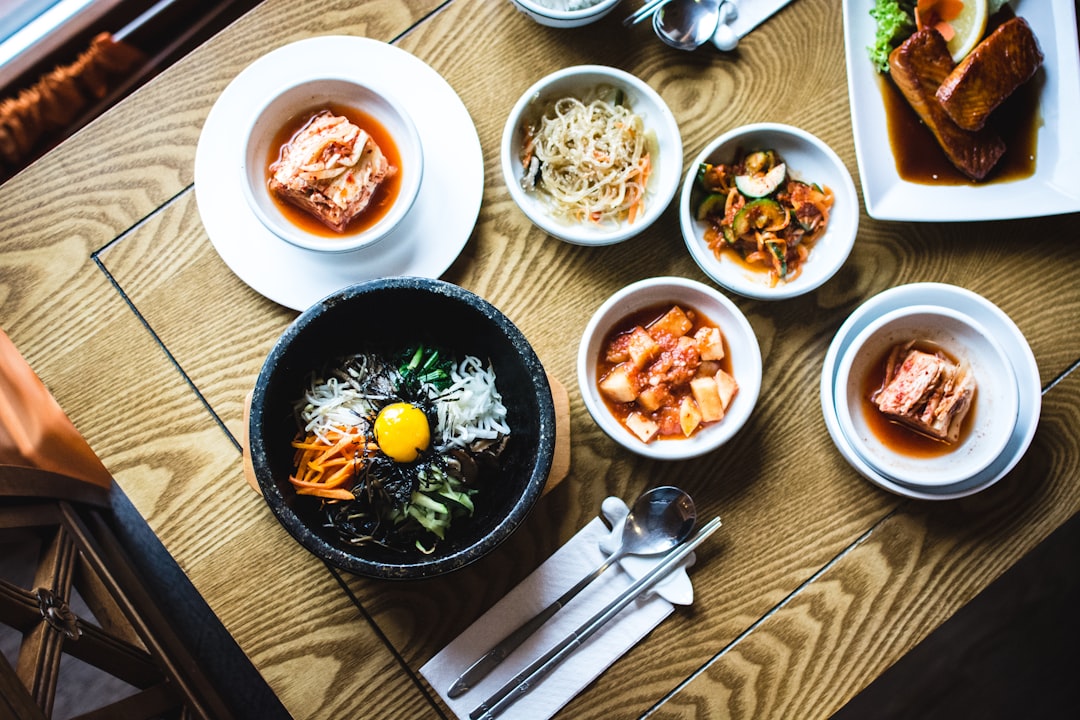
For F&B brands targeting the plant-based and flexitarian markets, Korean cuisine offers a massive advantage: many beloved Korean dishes are already naturally vegetarian or vegan. Unlike Western cuisines where plant-based versions often feel like compromises, Korean vegetable dishes — japchae (glass noodles with vegetables), bibimbap (mixed rice bowl), kimchi jjigae (with vegetable broth), and countless banchan (side dishes) — are complete, satisfying meals in their own right.
The Low-Waste Kitchen Philosophy
Korean culinary tradition is inherently anti-waste. The banchan system — where small side dishes accompany every meal — was historically designed to use every part of every ingredient. Radish tops become namul (seasoned vegetables). Leftover rice becomes nurungji (crispy rice) or porridge. Vegetable scraps go into stock or kimchi.
This philosophy resonates deeply with 2026’s sustainability-conscious consumers. Brands that can authentically communicate Korean food’s zero-waste heritage have a powerful marketing narrative that goes beyond trendy buzzwords.
Practical tip for restaurants: Introduce a “banchan bar” concept where guests can choose 3-4 small Korean side dishes alongside their main. This reduces plate waste (smaller portions, more variety), increases perceived value, and introduces customers to Korean street food flavors they might not otherwise try.
Korean Pet Products: A Guide for Pet Owners6. What’s Next: Emerging Korean Food Trends to Watch in Late 2026 and Beyond
Korean-Mexican and Korean-Other Fusion: The Second Wave
The first wave of Korean fusion — Korean-Mexican tacos, Korean BBQ burritos — was pioneered by LA’s Kogi BBQ truck back in 2008. In 2026, we’re seeing a sophisticated second wave of fusion that goes far deeper than putting bulgogi in a tortilla.
Exciting fusion directions gaining momentum right now:
- Korean-Italian — Gochujang pasta (rosé tteokbokki’s cousin), kimchi arancini, doenjang risotto. Multiple Korean-Italian concepts have opened in NYC and LA in 2025-2026.
- Korean-Southern — Korean fried chicken with pickled daikon instead of coleslaw, kimchi cornbread, gochujang honey hot sauce. Nashville and Atlanta are hotspots for this fusion.
- Korean-Middle Eastern — Kimchi hummus, Korean-spiced shawarma, gochujang tahini. The flavor profiles are surprisingly complementary.
- Korean-Peruvian — Building on the existing Korean community in Peru, this fusion combines ceviche techniques with Korean flavors, and anticuchos with gochujang marinades.
Korean Beverages: The Untapped Goldmine
While Korean street food gets most of the attention, Korean beverages represent an enormous untapped opportunity for global brands. The Korean beverage categories to watch in 2026:
Soju remains the world’s best-selling spirit by volume, but flavored soju (peach, grape, green apple) is now appearing on cocktail menus at mainstream American bars. Brands like Jinro and Chum Churum have invested heavily in U.S. distribution, and you can find flavored soju at most H-Marts for $4-6 per bottle.
Makgeolli (Korean rice wine) is experiencing its “natural wine moment.” Artisanal makgeolli producers are crafting complex, terroir-driven versions that appeal to the same consumers who drove the natural wine boom. Expect to see makgeolli on more wine bar and cocktail bar menus throughout 2026.
Korean café culture — particularly the “dalgona” (whipped coffee) and “einspanner” trends — continues to influence global coffee culture. Korean café brands like Café Knotted and Fritz Coffee are exploring international expansion.
Korean Convenience Store Culture Goes Global
Perhaps the most surprising trend is the global fascination with Korean convenience store (편의점) food. Thanks to K-dramas and YouTube content, international consumers are obsessed with the idea of eating surprisingly high-quality meals from Korean convenience stores like CU, GS25, and 7-Eleven Korea.
Products like triangle kimbap (삼각김밥), convenience store ramyun cooked at in-store stations, and ready-to-eat tteokbokki cups are being adapted for international markets. CU has already opened locations in Mongolia, Malaysia, and Kazakhstan, with plans for further expansion.
For CPG brands, the lesson is clear: there’s strong consumer demand for premium ready-to-eat Korean food at convenience-store price points ($2-5 per item). The brand that cracks this formula for U.S. convenience stores could capture enormous market share.
2026 K-Pop New Albums & Singles Release CalendarA Quick Comparison: Korean Street Food vs. Other Global Street Food Trends in 2026
To understand why Korean street food stands out, it helps to see how it compares to other trending global street food categories on key metrics that matter to F&B brands:
| Factor | Korean Street Food | Japanese Street Food | Mexican Street Food | Indian Street Food |
|---|---|---|---|---|
| Social Media Virality | Very High | High | Medium | Medium |
| Pop Culture Support | Very High (K-pop, K-drama) | High (anime, manga) | Low | Low-Medium |
| Plant-Based Options | Many | Some | Many | Very Many |
| Delivery Suitability | Excellent | Moderate | Excellent | Good |
| Ingredient Accessibility (U.S.) | Good & Improving | Very Good | Excellent | Good |
| Average Item Price (U.S.) | $5-12 | $6-14 | $3-10 | $4-10 |
| Growth Rate (2024-2026) | ~30% YoY | ~12% YoY | ~8% YoY | ~15% YoY |
As the table illustrates, Korean street food leads in the two metrics that matter most for 2026: social media virality and pop culture support. These are force multipliers that other cuisines simply cannot match right now. A single viral K-drama eating scene can generate more consumer awareness than millions of dollars in traditional advertising.
Frequently Asked Questions About Korean Street Food and K-Food Trends in 2026
What are the most popular Korean street food items in 2026?
The most popular Korean street food items globally in 2026 are tteokbokki (spicy rice cakes), Korean corn dogs (cheese-stuffed, battered hot dogs), hotteok (sweet filled pancakes), kimbap (Korean rice rolls), and mandu (dumplings). Korean fried chicken also continues to dominate, with chains like Bonchon and bb.q Chicken expanding rapidly. Newer items gaining traction include tornado potatoes, egg bread (gyeran-ppang), and bungeoppang (fish-shaped pastries filled with red bean or custard cream). You can find many of these items at Korean restaurants, food festivals, and even in frozen form at H-Mart and other Asian grocery stores.
Where can I buy Korean street food ingredients in the United States?
The best source for authentic Korean ingredients is H-Mart, the largest Asian supermarket chain in the U.S. with 90+ locations. For mainstream options, Whole Foods now carries gochujang, kimchi, rice cakes, and Korean noodles. Target and Walmart stock basic Korean items like Bibigo mandu and Shin Ramyun. For specialty items, online retailers like Weee!, Yamibuy, and Amazon offer extensive Korean grocery selections with home delivery. Trader Joe’s has also expanded its Korean frozen food range significantly, with items like frozen tteokbokki kits ($3.99) and Korean-style fried rice bowls ($3.49). Budget roughly $25-40 for a full Korean street food dinner for four people when cooking at home.
Is Korean street food healthy?
Korean cuisine overall is considered one of the healthiest in the world, though individual street food items vary. Fermented foods like kimchi are probiotic-rich and support gut health. Kimbap is relatively balanced with rice, vegetables, and protein. Japchae (glass noodles) is gluten-free and light. However, items like tteokbokki can be high in sodium and refined carbohydrates, and deep-fried items like Korean corn dogs are calorie-dense. The key is balance — a Korean meal traditionally includes a variety of banchan (side dishes) heavy on vegetables, which offsets heavier main items. For the healthiest Korean street food options, look for grilled items (skewered meats), steamed mandu, and vegetable-forward dishes. Many Korean restaurants also offer “diet” or “light” versions of popular dishes.
How is Korean food different from Japanese or Chinese food?
While all three cuisines share some ingredients and techniques, Korean cuisine is distinguished by several unique characteristics. Fermentation plays a central role — kimchi, doenjang, gochujang, and jeotgal (fermented seafood) give Korean food its signature deep, complex flavors. Korean cuisine uses more chili and garlic than Japanese cuisine, resulting in bolder, spicier flavor profiles. The banchan system — a spread of 3-12 small shared side dishes served with every meal — is uniquely Korean. Korean BBQ’s tabletop grilling and lettuce-wrap eating style is also distinctive. Finally, Korean food tends to emphasize communal eating more heavily, with dishes like jjigae (stew) and jeongol (hot pot) served in shared vessels for the entire table.
What Korean food trends should restaurants add to their menus in 2026?
Based on current consumer demand and industry data, restaurants should consider these additions in 2026: (1) Gochujang-based sauces as condiment options alongside existing sauces — low cost, high impact. (2) Korean fried chicken as a wing or sandwich option — it consistently outperforms traditional fried chicken in taste tests. (3) Tteokbokki as an appetizer or shareable side — rice cakes are inexpensive, gluten-free friendly, and highly customizable. (4) Korean-inspired bowls with bibimbap-style presentations — meets the “bowl food” trend while introducing Korean flavors. (5) Kimchi as a standard condiment option alongside pickles and sauerkraut. Start small with one or two Korean-inspired items and gauge customer response before expanding.
How much does it cost to start a Korean street food business?
Costs vary significantly by format. A Korean street food cart or truck can be launched for $50,000-$100,000, including vehicle, equipment, initial inventory, and permits. A small fast-casual Korean restaurant (800-1,200 sq ft) typically costs $150,000-$350,000 depending on location and build-out. A Korean food franchise like Bonchon or bb.q Chicken ranges from $250,000-$500,000 in total investment. Ghost kitchen concepts offer the lowest barrier to entry at $30,000-$75,000, since you’re renting existing kitchen space and operating delivery-only. Food costs for Korean cuisine typically run 25-32% of revenue, which is competitive with or better than most fast-casual concepts. The strong social media appeal of Korean street food also means marketing costs can be significantly lower than average, as visual food content tends to generate organic reach.
Related Posts You’ll Love
If you enjoyed this deep dive into Korean cuisine trends, check out these related guides on our site:
- Korean Travel Guide 2025-2026: Seoul, Busan, Jeju & More — Plan your Korean food pilgrimage with our comprehensive travel guide covering the best food neighborhoods in every major city.
- 2026 K-Beauty Routine: 7 Data-Backed Trends to Watch — Discover how K-beauty and K-food share the same “Korean wellness” philosophy that’s captivating global consumers.
- K-Pop Groups in 2026: BTS, BLACKPINK & What’s Next — Understand the cultural engine driving Korean food’s global popularity.
Suggested future articles we should write:
- Best Korean Restaurants in Every U.S. State: 2026 Guide
- Korean Grocery Store Guide: 50 Must-Buy Items at H-Mart
- Korean Street Food Recipes for Beginners: 10 Easy Dishes
Join the K-Food Conversation
The Korean food wave isn’t slowing down — it’s accelerating. Whether you’re a global F&B brand strategizing your 2026 product roadmap, a restaurant owner considering Korean-inspired menu additions, or a passionate home cook falling deeper in love with Korean street food, the opportunities have never been bigger or more exciting.
We want to hear from you! Drop a comment below and tell us:
- What’s YOUR favorite Korean street food item?
- Have you noticed more Korean food options in your city recently?
- Are you a restaurant owner who’s added Korean items to your menu? How did customers respond?
Share this article with anyone in the food industry who needs to understand where Korean cuisine is headed. Tag us on social media with #KFoodOutlook2026 and show us your best Korean street food photos!
And if you don’t want to miss our next deep dive into Korean food, beauty, and culture trends — subscribe to our newsletter for weekly insights delivered straight to your inbox. We break down the trends, so you can stay ahead of the curve.
Until next time — 맛있게 드세요! (Enjoy your meal!)