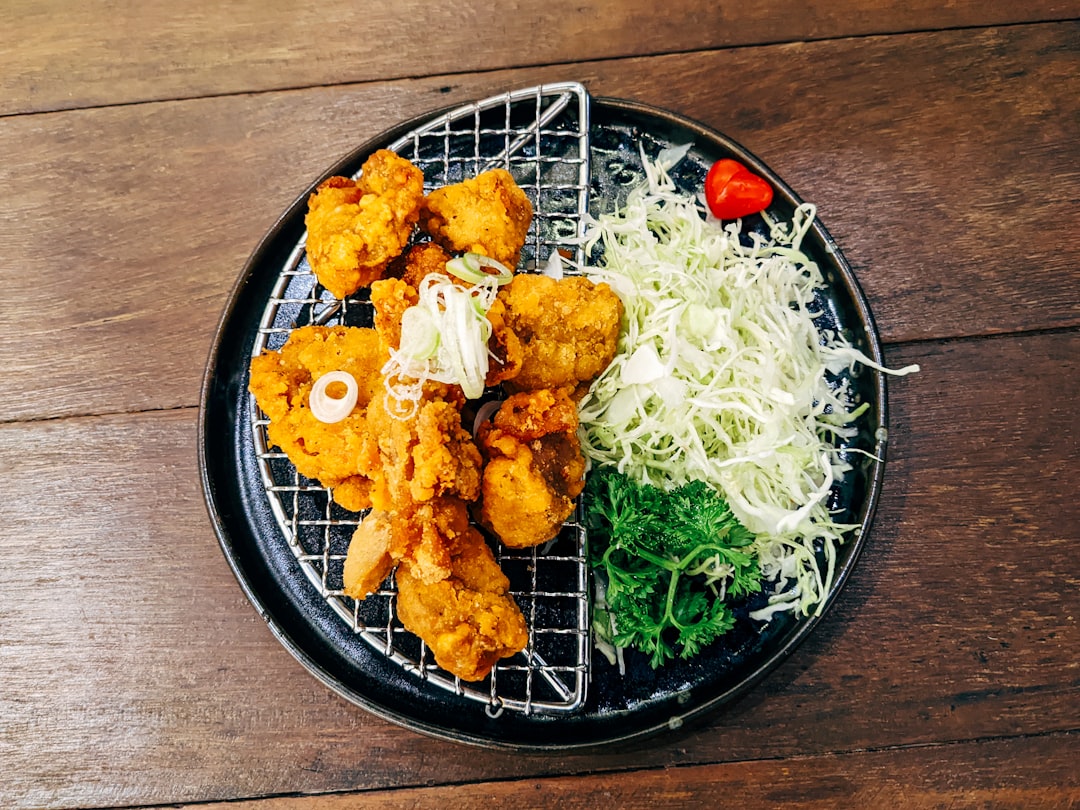
Why Korean Fried Chicken Is the Crispiest Fried Chicken You’ll Ever Taste
Picture this: you’re walking through the neon-lit streets of Seoul’s Hongdae neighborhood at 11 PM. The air is cold, but the scent drifting from a tiny shopfront stops you dead in your tracks — a wave of garlic, ginger, and something impossibly crispy sizzling in oil. You step inside, order a plate of golden-brown fried chicken glistening under fluorescent lights, and take your first bite. The crunch is so loud it echoes. The coating shatters like glass, giving way to impossibly juicy meat beneath. A sticky-sweet and fiery gochujang glaze clings to your fingers. This is Korean fried chicken — and once you’ve had the real thing, regular fried chicken will never be enough.
What makes Korean fried chicken different from its American Southern counterpart? The answer lies in one revolutionary technique: the double fry. This method, perfected in South Korea over decades, produces a shatteringly crisp exterior that stays crunchy for hours — even under a heavy coat of sauce. It’s not magic. It’s science, tradition, and obsession rolled into one.
In this ultimate guide, we’re breaking down everything you need to master a Korean fried chicken recipe with crispy double fry technique at home. From the history behind chimaek culture to a step-by-step recipe, sauce variations, and pro tips that’ll make your version rival any Seoul chicken shop — consider this your comprehensive playbook. Whether you’re a first-timer or a seasoned home cook looking to level up, you’re in the right place.
The History and Culture of Korean Fried Chicken (치킨)

From American Military Bases to a $5 Billion Industry
Korean fried chicken’s origins trace back to the 1950s and 1960s, when American military presence in South Korea introduced deep-fried chicken to local cooks. But Korean chefs didn’t just adopt the recipe — they completely reinvented it. By the 1970s and 1980s, dedicated chicken restaurants began popping up across Seoul, each refining their batter, oil temperature, and frying technique.
The real explosion came in 1977 when Lim Hyun-soo opened Mexicana Chicken, one of Korea’s first fried chicken franchises. By the late 1990s, chains like Kyochon (교촌), BBQ Chicken, and Pelicana had turned fried chicken into a national obsession. Today, South Korea has over 87,000 fried chicken restaurants — more chicken shops per capita than almost any country on Earth.
The industry is now valued at approximately $5 billion annually, and fried chicken is deeply woven into Korean social life. Korea Tourism Organization – Food Guide
Chimaek Culture: Chicken + Beer = National Pastime
Chimaek (치맥) — a portmanteau of “chicken” and “maekju” (beer) — is more than a food pairing in Korea. It’s a cultural institution. Friends gather at chicken joints after work, families order delivery on weekends, and entire parks fill with people eating fried chicken and drinking beer on summer evenings.
The 2014 K-drama My Love from the Star famously featured the lead character declaring her love of chimaek, sparking a global surge in Korean fried chicken demand — particularly in China, where KFC sales reportedly dipped as consumers flocked to Korean chicken restaurants instead.
Today, chimaek is an experience: you order half-and-half (반반) — one half original crispy, one half sauced — alongside pickled radish (치킨무), draft beer, and maybe some tteokbokki on the side. It’s communal, messy, and absolutely glorious. 7 Easy Korean Banchan Recipes for Beginners (2026)
The Science Behind the Double Fry: Why Korean Fried Chicken Stays So Crispy
What Happens During the First Fry
The secret to a perfect Korean fried chicken recipe with crispy double fry technique is understanding what each fry accomplishes. The first fry (at around 325°F / 160°C for 8-10 minutes) does the heavy lifting of cooking the chicken through. At this lower temperature, moisture inside the meat begins to evaporate slowly, the proteins set, and the exterior starts to form a light crust.
But here’s the crucial part: after the first fry, the chicken rests for 10-15 minutes. During this rest, residual moisture from inside the meat migrates outward toward the surface. This is exactly what you want — because that moisture is about to get blasted away in the second fry.
What Happens During the Second Fry
The second fry (at a higher 375°F / 190°C for 5-7 minutes) is where the magic happens. The higher oil temperature rapidly evaporates any surface moisture that migrated during the rest period. This creates thousands of tiny air pockets in the coating, resulting in that characteristic glass-like shatter when you bite through.
The double fry also triggers additional Maillard reaction browning, deepening the flavor and color. The result is a crust that’s thinner and crispier than American-style fried chicken, with almost no greasiness. The coating essentially becomes a rigid shell — which is why Korean fried chicken stays crunchy even when drenched in sauce.
The Role of Starch in Korean Batters
Another key difference: Korean fried chicken batter relies heavily on potato starch or cornstarch rather than all-purpose flour. Starch-based coatings contain less gluten, which means less chewiness and more crunch. Many Korean recipes use a ratio of roughly 2 parts starch to 1 part flour, sometimes with a small amount of baking powder for extra lift.
Some restaurants use rice flour for an even lighter, more delicate coating. The starch molecules crystallize during frying, forming a harder, more brittle shell than wheat flour alone can achieve. This is why you’ll notice Korean fried chicken has a distinctly different texture from KFC or Popeyes — it’s lighter, thinner, and exponentially crunchier.
Essential Ingredients and Equipment for Korean Fried Chicken at Home

Ingredients You’ll Need
The good news: most ingredients for Korean fried chicken are easy to find at H-Mart, Whole Foods, or any well-stocked Asian grocery store. Here’s your complete shopping list:
For the Chicken:
- 3 lbs chicken wings or drumettes — wings are traditional; bone-in thighs work great too
- 1 cup potato starch (or cornstarch) — about $3-4 at H-Mart
- ½ cup all-purpose flour
- 1 teaspoon baking powder
- ½ cup ice-cold water or soda water — carbonation adds extra crispiness
- 1 tablespoon soy sauce
- 1 tablespoon minced garlic
- 1 teaspoon minced ginger
- ½ teaspoon white pepper
- ½ teaspoon salt
- 1 egg
For the Yangnyeom (Sweet & Spicy) Sauce:
- 3 tablespoons gochujang (Korean red pepper paste) — CJ Haechandle brand is widely available, around $5-7
- 2 tablespoons gochugaru (Korean red pepper flakes)
- 3 tablespoons rice syrup or corn syrup
- 2 tablespoons ketchup
- 1 tablespoon soy sauce
- 1 tablespoon minced garlic
- 1 tablespoon rice vinegar
- 1 teaspoon sesame oil
For the Soy Garlic Sauce:
- 3 tablespoons soy sauce
- 2 tablespoons brown sugar or honey
- 1 tablespoon rice wine (mirin)
- 5 cloves garlic, minced
- 1 tablespoon butter
- 1 teaspoon sesame seeds
If you can’t find gochujang locally, Amazon carries it for approximately $6-9 per tub. Look for the brand Sempio or CJ Haechandle for the most authentic flavor. Maangchi’s Korean Ingredient Guide
Equipment You’ll Need
You don’t need a commercial deep fryer, but the right tools make a huge difference:
- Heavy-bottomed pot or Dutch oven (at least 5-quart) — Le Creuset, Lodge, or Staub all work perfectly
- Deep-fry thermometer — absolutely essential for maintaining oil temperature ($8-15 on Amazon)
- Spider strainer or slotted spoon — for safely lowering and removing chicken
- Wire cooling rack set over a baking sheet — crucial for the rest period between fries
- 3-4 quarts of neutral oil — peanut oil, canola, or vegetable oil (avoid olive oil)
Pro tip: Peanut oil is the gold standard for Korean fried chicken because it has a high smoke point (450°F) and adds a subtle nutty flavor. A 128 oz jug of Planters peanut oil runs about $12-15 at Walmart or Costco.
Step-by-Step Korean Fried Chicken Recipe: Crispy Double Fry Method
Step 1: Prep and Marinate the Chicken (30 Minutes – Overnight)
Start by patting your chicken pieces completely dry with paper towels. This step is non-negotiable — surface moisture is the enemy of crispiness. In a large bowl, combine the chicken with soy sauce, minced garlic, ginger, white pepper, and salt. Toss to coat evenly.
For the best results, cover and refrigerate for at least 30 minutes, or up to overnight. The longer marination allows the flavors to penetrate deeper into the meat and helps draw out additional surface moisture through osmosis. Some Korean home cooks add a splash of rice wine (soju or mirin) to the marinade, which tenderizes the meat and adds subtle sweetness.
Step 2: Prepare the Batter
In a medium bowl, whisk together the potato starch, all-purpose flour, baking powder, and a pinch of salt. Make a well in the center and add the egg and ice-cold soda water. Stir gently until just combined — small lumps are fine and actually desirable. Over-mixing develops gluten, which makes the coating tough rather than crispy.
The batter should be the consistency of thin pancake batter. If it’s too thick, add water one tablespoon at a time. If too thin, add a bit more starch. Some purists skip the wet batter entirely and simply dredge the marinated chicken in pure potato starch — this produces an ultra-thin, shatteringly crisp shell that’s closer to what you’ll find at high-end Korean chicken shops like Kyochon and Puradak.
Step 3: The First Fry (325°F / 160°C, 8-10 Minutes)
Fill your Dutch oven with oil to a depth of about 3 inches. Heat to 325°F (160°C) — use your thermometer and be precise. Temperature control is the difference between good and great fried chicken.
Working in batches of 5-6 pieces maximum (overcrowding drops oil temperature dramatically), gently lower the coated chicken into the oil. Fry for 8-10 minutes, turning occasionally, until the exterior is pale golden and the chicken is cooked through (internal temperature of 165°F / 74°C).
Transfer to the wire rack and rest for 10-15 minutes. This rest period is absolutely critical to the Korean fried chicken recipe crispy double fry technique — don’t skip it. While resting, bring the oil temperature back up for the second fry.
Step 4: The Second Fry (375°F / 190°C, 5-7 Minutes)
Increase oil temperature to 375°F (190°C). Return the rested chicken to the oil in the same small batches. Fry for 5-7 minutes until deep golden brown, almost mahogany in color. The chicken will look noticeably darker and you’ll hear the crackling intensify as remaining moisture evaporates.
Remove to a clean wire rack. The coating should be audibly crunchy when you tap it with tongs — it’ll almost sound hollow. At this point, you can serve it plain (called “huraideu” or 후라이드 in Korean) or toss it in sauce.
Step 5: Sauce and Serve
For yangnyeom chicken: heat your sweet-spicy sauce in a large wok or skillet until bubbling. Add the freshly fried chicken and toss rapidly for 30-45 seconds, just enough to coat evenly. The sauce should be glossy and clinging to every piece. Garnish with sesame seeds and sliced scallions.
For soy garlic (간장) chicken: melt butter in a pan, add minced garlic and cook for 30 seconds until fragrant. Add soy sauce, brown sugar, and mirin. Simmer until slightly thickened (about 2 minutes), then toss with the fried chicken. Finish with sesame seeds.
Serve immediately with pickled radish cubes (치킨무), cold beer, and plenty of napkins. This is chimaek at its finest. Busan Beach & Street Food Itinerary 2026: 5-Day Guide
5 Popular Korean Fried Chicken Sauce Variations

One of the best things about mastering the Korean fried chicken recipe with crispy double fry base is that you can take it in dozens of flavor directions. Here are the five most popular sauces you’ll find across Korean chicken chains:
1. Yangnyeom (양념) — Sweet & Spicy
The undisputed king of Korean chicken sauces. Yangnyeom combines gochujang’s fermented heat with rice syrup sweetness and a touch of vinegar tang. The sauce is thick, glossy, and clings to every crevice of the crispy coating. Heat level is moderate — around a 3-4 out of 10 for most Korean recipes, though you can dial it up with extra gochugaru.
2. Ganjang (간장) — Soy Garlic
A close second in popularity. Soy garlic sauce is umami-forward, slightly sweet, and intensely aromatic. The butter-garlic base caramelizes on contact with the hot chicken, creating an almost addictive savory-sweet glaze. This is the sauce that converted millions of non-Korean-food-eaters worldwide.
3. Honey Butter (허니버터)
Inspired by the honey butter chip craze that swept Korea in 2014, this sauce combines melted butter, honey, and a pinch of salt for a rich, indulgent coating. Some versions add a squeeze of lemon juice to balance the richness. It’s particularly popular with kids and those who prefer milder flavors.
4. Mala (마라) — Sichuan Numbing Spice
A newer trend reflecting Korean-Chinese fusion. Mala chicken uses Sichuan peppercorns and dried chilies for that signature tongue-numbing heat. It’s been surging in popularity since 2022, particularly among younger Koreans. You can find mala sauce packets at H-Mart for about $3-4.
5. Snow Onion (파닭) — Scallion-Topped
Padak (파닭) isn’t technically a sauce but a preparation style. Plain double-fried chicken is piled high with julienned scallions dressed in a sweet mustard-soy vinaigrette. The cool, sharp crunch of the raw scallions against the hot, crispy chicken creates one of the most satisfying textural contrasts in all of Korean cuisine.
| Sauce | Heat Level | Sweetness | Best Paired With |
|---|---|---|---|
| Yangnyeom | Medium (3-4/10) | High | Cold beer, pickled radish |
| Soy Garlic | None | Medium | Rice, beer |
| Honey Butter | None | High | Fries, coleslaw |
| Mala | High (7-8/10) | Low | Cold noodles, soju |
| Snow Onion | Low (1/10) | Medium | Beer, tteokbokki |
Korean Fried Chicken vs. American Fried Chicken: Key Differences
While both traditions produce incredible fried chicken, the techniques and results are remarkably different. Understanding these differences will help you appreciate what makes the Korean fried chicken recipe crispy double fry method so special.
| Feature | Korean Fried Chicken | American Southern Fried Chicken |
|---|---|---|
| Coating | Thin, starch-based (potato/corn starch) | Thick, flour-based (seasoned flour or buttermilk batter) |
| Frying Method | Double fried (low then high temp) | Single fry (325-350°F) |
| Texture | Glass-like shatter, ultra-crisp | Thick, craggy, slightly chewy crust |
| Crunch Longevity | Stays crispy 1-2 hours, even sauced | Softens within 20-30 minutes |
| Seasoning | Sauce applied after frying | Seasoning built into batter/marinade |
| Preferred Cuts | Wings, drumettes, boneless thighs | Breasts, thighs, legs, full bird |
| Serving Style | Shared plates with beer (chimaek) | Individual plates with sides (biscuits, slaw) |
Neither style is “better” — they’re simply different expressions of a universal love for crispy fried chicken. But if you value long-lasting crunch and sauce versatility, the Korean double-fry technique is hard to beat.
Pro Tips for the Crispiest Korean Fried Chicken at Home

Temperature Precision Is Everything
The single most common mistake home cooks make is not monitoring oil temperature closely enough. When you add cold chicken to hot oil, the temperature can drop by 30-50°F instantly. If the oil is too cool, the chicken absorbs grease and the coating turns soggy. If too hot, the exterior burns before the interior cooks through.
Invest in a clip-on deep-fry thermometer (ThermoWorks or Taylor brands are reliable, $10-20). Alternatively, if you have a kitchen thermometer gun, that works too. Check the temperature before each batch and adjust your burner accordingly.
The Vodka Hack: Extra Crispiness
Here’s a trick borrowed from tempura chefs: replace half the water in your batter with vodka. Alcohol evaporates faster than water during frying, which means the coating sets and crisps up quicker, resulting in less oil absorption. You won’t taste the vodka — it completely cooks off. Use the cheapest bottle you can find.
Don’t Overcrowd the Pot
Fry in small batches of 5-6 pieces. Overcrowding drops the oil temperature rapidly and creates steam instead of a proper fry. It also causes pieces to stick together, resulting in uneven coating. Yes, it takes longer — but the difference in quality is enormous.
Use Soda Water in Your Batter
Carbonated water creates tiny CO2 bubbles that expand during frying, making the batter puff up slightly and creating an airier, crunchier texture. Use ice-cold soda water and mix gently to preserve the bubbles.
Pat Dry, Then Pat Dry Again
We cannot overstate this: dry chicken = crispy chicken. After marinating, remove the chicken and pat each piece thoroughly with paper towels. Some cooks even let the marinated chicken air-dry uncovered in the refrigerator for an hour — similar to the technique used for crispy Peking duck skin.
Where to Find Korean Fried Chicken Near You (And the Best Chains)
Top Korean Fried Chicken Chains in the US
If you want to taste the authentic version before attempting it at home, here are the best Korean chicken chains currently operating across America:
- Bonchon — Over 100 US locations. Known for their soy garlic and spicy glazes. Prices range from $12-18 for a combo.
- bb.q Chicken — Korea’s largest chicken franchise (worldwide). Golden Original and Cheesling flavors are standouts. Around $14-20 per order.
- Pelicana Chicken — One of Korea’s oldest chains (est. 1982). Limited US locations but worth seeking out.
- Kyochon (교촌) — Available in select US cities. Their original soy sauce chicken is legendary.
- Choong Man Chicken — Growing rapidly in the Southeast US. Known for snow onion chicken.
Grocery Store Finds for the DIY Route
H-Mart is your one-stop shop for Korean fried chicken ingredients. Most H-Mart locations carry pre-made Korean fried chicken batter mixes (around $4-6) from brands like Ottogi and CJ. They also stock gochujang, gochugaru, rice syrup, and every other ingredient on our list.
If you don’t have an H-Mart nearby, Whole Foods now carries gochujang and gochugaru in their international aisle. Walmart has expanded their Asian food section significantly — you can find potato starch, rice vinegar, and soy sauce at any location. For harder-to-find items, Amazon and Weee! (Asian grocery delivery) are reliable options.
7 Easy Korean Banchan Recipes for Beginners (2026)
Frequently Asked Questions About Korean Fried Chicken
What makes Korean fried chicken different from regular fried chicken?
Korean fried chicken uses a thin starch-based coating (potato starch or cornstarch) instead of thick flour batter, and it’s fried twice — first at a lower temperature to cook through, then at a higher temperature to create an ultra-crispy shell. This double-fry technique produces a thinner, crunchier coating that stays crispy much longer than single-fried chicken, even when coated in sauce. The sauce is also applied after frying rather than being baked into the batter.
Can I make Korean fried chicken in an air fryer?
Yes, but with caveats. Air fryers can produce a decent approximation, but they won’t replicate the exact shatteringly crispy texture of deep-fried Korean chicken. For the best air fryer results: spray the coated chicken generously with cooking oil, cook at 370°F for 12 minutes, flip, then increase to 400°F for 8-10 minutes. The results will be good — maybe 70-80% as crispy as the real thing — with significantly less oil and mess.
How do I keep Korean fried chicken crispy after cooking?
Three key strategies: First, always rest the chicken on a wire rack, never on paper towels (which trap steam underneath). Second, if serving later, keep the chicken in a low oven (200°F/95°C) uncovered. Third, apply sauce at the very last minute — even though Korean fried chicken stays crispier than American-style under sauce, freshly sauced is always best. For delivery orders in Korea, restaurants often pack the sauce separately for this reason.
What oil is best for Korean fried chicken?
Peanut oil is the gold standard — high smoke point (450°F), neutral-to-nutty flavor, and excellent heat retention. Canola oil and vegetable oil are solid budget alternatives. Avoid olive oil (smoke point too low), coconut oil (flavor too strong), and sesame oil (burns easily and is too expensive for deep frying). Many Korean restaurants use soybean oil, which is affordable and performs well. Budget around $10-15 for a gallon of peanut oil.
Can I use boneless chicken for Korean fried chicken?
Absolutely. Boneless chicken thighs are the best choice for boneless Korean fried chicken — they’re juicier and more flavorful than breast meat. Cut them into bite-sized pieces (about 1.5 inches) for even cooking. Korean chicken shops call this style “sundsal” (순살), and it’s hugely popular for its convenience. Boneless pieces cook faster, so reduce your first fry to 6-7 minutes and second fry to 4-5 minutes.
Is Korean fried chicken gluten-free?
The traditional recipe uses a mix of starch and wheat flour, so it’s not gluten-free by default. However, you can easily make it gluten-free by using 100% potato starch or tapioca starch as your coating and substituting tamari for soy sauce in both the marinade and sauces. The result is nearly identical in taste and texture — many Korean fried chicken purists actually prefer the all-starch version for maximum crispiness.
Related Posts You Might Enjoy
If you loved this Korean fried chicken guide, check out these related articles on Korean food, culture, and travel:
- 7 Easy Korean Banchan Recipes for Beginners (2026) — Perfect side dishes to serve alongside your fried chicken
- Busan Beach & Street Food Itinerary 2026: 5-Day Guide — Explore Korea’s street food capital and taste chicken at its source
- 10-Step Korean Skincare Routine for Beginners (2026 Guide) — Another K-Beauty obsession to explore between chicken batches
Suggested new articles we should cover:
- Best Korean Instant Ramyeon Ranked: Top 15 for 2026
- Korean BBQ at Home: Complete Equipment and Recipe Guide
- Tteokbokki Recipe: Spicy Korean Rice Cakes Made Easy
Your Turn: Let’s Talk Chicken!
Now that you have the complete playbook for making Korean fried chicken with the crispy double fry technique at home, it’s time to fire up that Dutch oven and get frying. Whether you go classic yangnyeom, savory soy garlic, or keep it plain and golden — you’re about to experience fried chicken on a completely different level.
We want to hear from you! Drop a comment below and tell us:
- What’s your favorite Korean fried chicken sauce?
- Have you tried the double-fry method before? How did it turn out?
- What’s the best Korean chicken restaurant you’ve been to?
If this guide helped you, share it with a fellow chicken lover — they’ll thank you after their first bite. And if you want more Korean food guides, K-culture deep dives, and travel tips delivered straight to your inbox, subscribe to our newsletter so you never miss a post.
Happy frying, and remember: double fry or don’t even try. 🍗