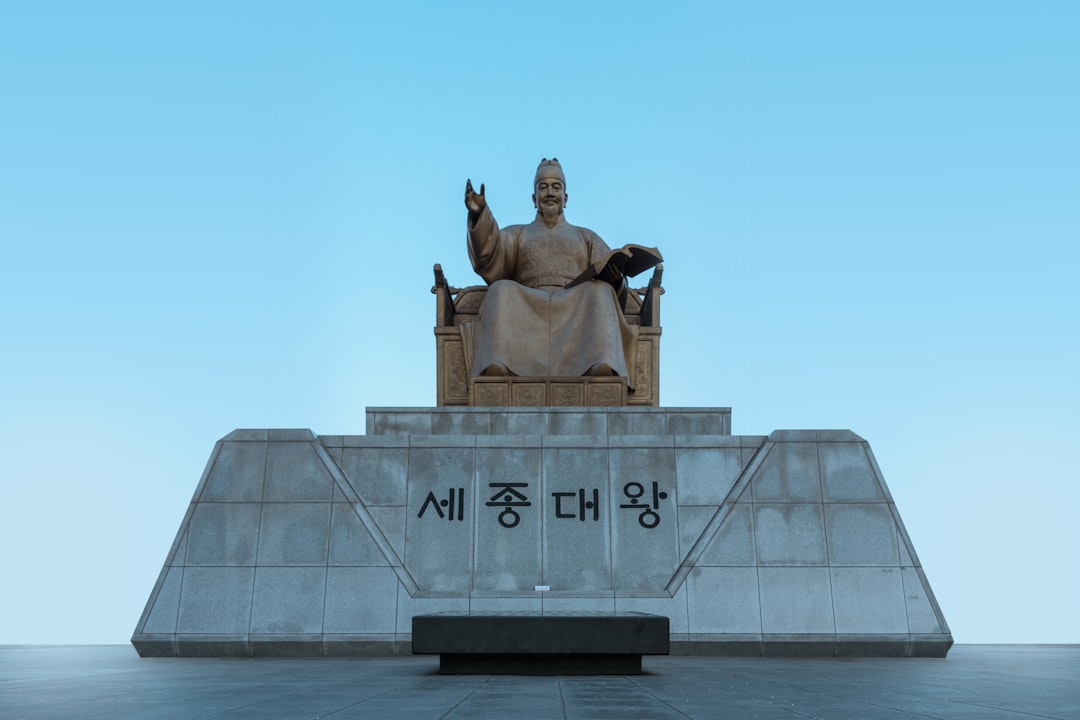
The Dream That Crosses Oceans: How International Fans Are Breaking Into K-Pop
Every year, over 700,000 young people audition for South Korea’s top entertainment agencies. That number alone is staggering — but here’s what’s even more remarkable: a growing percentage of those hopefuls aren’t even from Korea. From the streets of Los Angeles to the suburbs of Bangkok, from London dance studios to Manila vocal academies, teenagers around the world are asking the same burning question: how to become a kpop trainee from overseas?
And they’re not just dreaming. They’re doing it. Lisa from BLACKPINK traveled from Thailand. Mark Lee of NCT grew up in Vancouver, Canada. Nichkhun of 2PM was scouted in California. Felix and Bang Chan of Stray Kids came from Sydney, Australia. The K-Pop industry has evolved from an exclusively Korean pipeline into a truly global talent machine, and 2026 is shaping up to be the most accessible year yet for international trainees.
But let’s be honest — the path is anything but easy. The K-Pop training system is one of the most rigorous, demanding, and competitive talent development programs on the planet. It makes American Idol look like a casual karaoke night. Understanding how to become a kpop trainee from overseas requires more than just talent — it demands strategy, resilience, cultural awareness, and a realistic understanding of what you’re signing up for.
In this comprehensive guide, we’ll break down every aspect of the K-Pop training system, compare major agency programs, and give you a step-by-step roadmap for pursuing your K-Pop dreams from anywhere in the world. Whether you’re a dancer in Detroit, a singer in Singapore, or a multi-talented performer in Manila — this article is your blueprint.
What Is the K-Pop Training System? A Complete Overview

The Origins and Evolution of K-Pop Training
The modern K-Pop training system was pioneered by Lee Soo-man, founder of SM Entertainment, in the mid-1990s. Inspired by Japan’s Johnny & Associates talent agency model, Lee created a structured “cultural technology” approach that treated idol development like a systematic educational curriculum rather than a haphazard talent search.
In its earliest form, agencies recruited Korean teenagers and trained them for 2–3 years before debut. Today, that system has expanded dramatically. Training periods now average 3–7 years, curricula include everything from vocal production to foreign language fluency, and the talent pool is genuinely global.
According to the Korea Creative Content Agency (KOCCA), the K-Pop industry generated over $12.8 billion in revenue in 2025, with international markets accounting for approximately 68% of that figure. This economic reality is precisely why agencies are now actively seeking international trainees — they need artists who can authentically connect with fans worldwide. Latest K-Pop chart data
How the Training Pipeline Works
The K-Pop training pipeline follows a remarkably consistent structure across agencies, though the details vary:
- Audition — Online submission, global audition tour, or street casting
- Acceptance — Signing a trainee contract (not a debut contract)
- Training — Daily classes in vocal, dance, rap, acting, language, and media
- Monthly Evaluations — Performance reviews that determine whether you stay or go
- Pre-debut Activities — Content creation, survival shows, featuring appearances
- Debut — Official group or solo launch (if selected)
It’s critical to understand that signing a trainee contract does not guarantee debut. Most agencies train significantly more people than they debut. SM Entertainment reportedly maintains 50–100 active trainees at any given time, while debuting groups of 4–9 members every few years. The math is brutal, but understanding it is the first step for anyone researching how to become a kpop trainee from overseas.
Daily Life as a K-Pop Trainee
A typical trainee schedule runs from early morning to late night, six or seven days a week. Here’s what a representative daily routine looks like:
- 7:00 AM — Wake up (many trainees live in company dormitories)
- 8:00–10:00 AM — School or self-study (for minors, education is legally required)
- 10:30 AM–12:30 PM — Vocal lessons (technique, range expansion, recording practice)
- 1:30–4:00 PM — Dance training (choreography, freestyle, body conditioning)
- 4:30–6:00 PM — Specialized classes (rap, acting, instrument, songwriting)
- 6:30–7:30 PM — Language classes (Korean, English, Japanese, or Chinese)
- 8:00–11:00 PM — Self-practice (most trainees stay late to rehearse independently)
For international trainees, Korean language classes are mandatory and intensive. Agencies like JYP Entertainment and HYBE require functional Korean proficiency within the first year of training. This is non-negotiable — variety show appearances, fan interactions, and everyday life in Seoul all require Korean fluency.
Big 4 Agency Training Programs Compared: HYBE vs. SM vs. JYP vs. YG
Not all training programs are created equal. Each of Korea’s “Big 4” agencies has a distinct philosophy, culture, and approach to developing talent. If you’re figuring out how to become a kpop trainee from overseas, understanding these differences is essential for choosing where to audition.
Agency Comparison Table
| Factor | HYBE (Big Hit) | SM Entertainment | JYP Entertainment | YG Entertainment |
|---|---|---|---|---|
| Training Philosophy | Storytelling + artistry | Cultural technology + precision | Character + natural talent | Swag + individuality |
| Avg. Training Period | 3–5 years | 4–7 years | 3–5 years | 4–6 years |
| International Trainee % | ~35% | ~30% | ~40% | ~25% |
| Global Auditions | Yes (15+ countries) | Yes (10+ countries) | Yes (12+ countries) | Yes (8+ countries) |
| Online Auditions | Yes | Yes | Yes | Yes |
| Housing Provided | Yes (dormitory) | Yes (dormitory) | Yes (dormitory) | Yes (dormitory) |
| Training Costs | Covered (recouped later) | Covered (recouped later) | Covered (recouped later) | Covered (recouped later) |
| Strengths | Narrative concepts, fan community | Vocal excellence, polished performance | Well-rounded idols, positive culture | Hip-hop roots, performance impact |
| Notable Intl. Artists | Hanni (Vietnamese-Australian), Danielle (Korean-Australian) | Ten (Thai), Shotaro (Japanese) | Felix (Australian), Momo (Japanese) | Lisa (Thai), Minnie (Thai, (G)I-DLE via CUBE) |
HYBE: The New Powerhouse
HYBE, the company behind BTS, SEVENTEEN, NewJeans, and ENHYPEN, has rapidly become the most internationally-minded agency. Their multi-label structure (BIGHIT, PLEDIS, ADOR, BELIFT LAB, Source Music) means they run multiple trainee programs simultaneously, increasing your chances.
HYBE places heavy emphasis on narrative and concept alignment. They don’t just want great performers — they want artists who can embody complex storylines and connect emotionally with audiences. Their 2026 global auditions are visiting 17 cities across North America, Europe, Southeast Asia, and Oceania.
JYP Entertainment: The International Trainee Champion
JYP Entertainment has arguably the strongest track record with international trainees. Stray Kids alone features three Australian members (Bang Chan, Felix, and former member). TWICE includes members from Japan and Taiwan. NiziU is an entirely Japan-based group.
JYP’s founder, Park Jin-young, famously prioritizes “character over skill” — he believes personality, work ethic, and authenticity matter more than raw talent at the audition stage, because skills can be taught. This philosophy makes JYP auditions particularly welcoming for overseas applicants who may not have had access to K-Pop-style dance or vocal training.
K-Pop Rookie Groups Debuting 2026: 7 Must-Watch Acts
How to Become a K-Pop Trainee from Overseas: Step-by-Step Guide

This is the section you’ve been waiting for. Let’s break down the exact steps for pursuing K-Pop training from outside South Korea.
Step 1: Assess and Develop Your Skills (6–24 Months Before Auditioning)
Before you even think about submitting an audition, you need to honestly evaluate where you stand. K-Pop agencies are looking for raw potential, but “raw” still means a baseline level of competence in at least one area:
- Vocal — Can you sing in tune with decent breath control? Can you hit a range of at least 1.5 octaves confidently?
- Dance — Can you learn and perform choreography cleanly? Do you have a sense of rhythm, body isolation, and stage presence?
- Rap — Can you write and deliver lyrics with flow and personality?
- Visual — While controversial, visuals are a factor. Agencies look for photogenic features and a “trainable” image.
Practical tip: Enroll in local dance classes focusing on hip-hop, contemporary, and K-Pop cover dance. Take vocal lessons from a pop-focused vocal coach. Record yourself performing K-Pop covers and study what needs improvement. Many successful trainees spent 1–2 years preparing before they auditioned. 7 Hardest K-Pop Choreographies to Learn in 2026
Step 2: Submit Online Auditions Strategically
Every major agency accepts online audition submissions year-round. This is the most accessible entry point for anyone exploring how to become a kpop trainee from overseas. Here’s what you need:
- A high-quality audition video — 60–90 seconds, good lighting, clean audio. Show your best skill first.
- Full-body and close-up photos — No filters, no heavy makeup. Agencies want to see your natural appearance.
- Basic personal information — Height, weight, age, nationality, any special skills.
- A brief self-introduction — In Korean if possible, in English if not. Show personality.
Submit to multiple agencies simultaneously. There’s no exclusivity requirement at the audition stage. Apply to the Big 4, but don’t overlook mid-tier agencies like Starship, Cube, FNC, Pledis, IST, Woollim, WM Entertainment, and RBW. Many successful K-Pop acts have come from smaller agencies — MAMAMOO (RBW), BTOB (Cube), and ASTRO (Fantagio) being prime examples.
Step 3: Attend Global Audition Events
In-person auditions remain the highest-conversion pathway to becoming a trainee. Agencies send talent scouts and A&R teams to major cities around the world. In 2026, the global audition circuit includes stops in:
- North America: Los Angeles, New York, Toronto, Chicago, Houston
- Europe: London, Paris, Berlin, Amsterdam
- Southeast Asia: Bangkok, Manila, Jakarta, Ho Chi Minh City, Singapore
- Oceania: Sydney, Melbourne
- Japan: Tokyo, Osaka
Check official agency social media accounts and websites regularly. Audition announcements typically come 4–6 weeks before the event. Registration is usually free. K-Pop news and audition updates
Step 4: Navigate the Callback and Contract Process
If an agency is interested, you’ll receive a callback — typically within 2–4 weeks. The callback process usually involves:
- A second audition with more specific tasks (learn a new choreography on the spot, sight-read a melody)
- An interview to assess personality, motivation, and family support
- A medical checkup (some agencies require this before signing)
- Contract negotiation — This is where you NEED parental involvement and ideally a lawyer
Critical warning: Trainee contracts are complex legal documents, often written in Korean. They typically include clauses about training cost recoupment, exclusive management rights, image rights, and termination conditions. International families should hire an entertainment lawyer familiar with Korean contract law. The Korean Fair Trade Commission has standardized some contract terms since 2017, but protections vary by agency.
Step 5: Relocate and Begin Training
Once accepted, international trainees relocate to Seoul (or, in some cases, agency facilities in other Korean cities). Agencies typically provide:
- Dormitory housing — Shared rooms with other trainees
- Visa sponsorship — Usually a D-4 (training) or E-6 (arts/entertainment) visa
- Training costs — Covered by the agency (but recouped from future earnings after debut)
- Basic living stipend — Varies widely; some agencies are more generous than others
Be prepared for culture shock. You’ll be living in a new country, speaking a new language, following a grueling schedule, and being evaluated constantly. Homesickness is real, and it’s one of the top reasons international trainees drop out. DMZ Tour from Seoul Booking Tips: 2026 Complete Guide
Age Requirements, Visa Logistics, and Practical Realities
What Age Should You Audition?
The ideal audition window is 13–19 years old, with most trainees being accepted between ages 14–16. However, there are exceptions:
- HYBE’s Trainee A program has accepted trainees as young as 11
- SM Entertainment is known for longer training periods, so they sometimes accept trainees at 12–13
- Vocal-focused roles sometimes go to slightly older applicants (up to 21–22)
- Rap positions occasionally open for candidates in their early 20s
The uncomfortable truth is that if you’re over 22 and haven’t trained, the K-Pop trainee path becomes extremely difficult. Agencies invest years of training, and they need a reasonable runway before debut. That said, don’t let age be an absolute barrier — focus on what you can control and what you bring to the table.
Visa and Legal Considerations for International Trainees
Navigating Korean immigration as a minor from another country is complicated. Here are the key visa categories:
| Visa Type | Purpose | Duration | Work Permitted? |
|---|---|---|---|
| D-4-6 | Training (entertainment) | 6 months–2 years | Training only |
| E-6-2 | Arts/entertainment activities | Up to 2 years (renewable) | Yes (performance) |
| D-2 | Student visa | 2–4 years | Limited (20 hrs/week) |
Most legitimate agencies handle visa sponsorship as part of the trainee onboarding process. If an agency asks you to arrange and pay for your own visa, that’s a red flag. Reputable companies have dedicated staff for international trainee immigration logistics.
The Financial Reality: Costs, Debt, and What Agencies Actually Pay For

What Agencies Cover (And What They Don’t)
A common misconception is that K-Pop training is “free.” Technically, agencies pay for training upfront, but these costs are recorded as debt that must be repaid from the trainee’s future earnings after debut. This is called the “training debt” or “recoupment” system.
Estimated training costs per year can range from $30,000 to $100,000+ USD, covering:
- Professional vocal, dance, and acting coaching
- Language tutoring (Korean, plus Japanese/English/Chinese)
- Dormitory housing and utilities
- Practice studio time and equipment
- Production costs for evaluation recordings
- Basic meals and living expenses
After 3–5 years of training, a debuted idol might face $150,000–$500,000 in recoupment before they see personal income from group activities. This is one of the most controversial aspects of the K-Pop system and has been the subject of ongoing reform discussions.
What Your Family Needs to Budget
Even with agency support, international trainee families should budget for:
- International flights — At minimum twice yearly ($500–$2,000 per trip depending on origin)
- Personal expenses — Clothing, toiletries, phone plan ($200–$400/month)
- Emergency fund — Medical expenses, unexpected travel ($3,000–$5,000 reserve)
- Legal fees — Contract review by entertainment lawyer ($1,000–$5,000)
- Korean language prep — Pre-departure tutoring ($50–$100/hour)
K-Pop Training vs. Western Artist Development: Key Differences
Structure vs. Freedom
The biggest difference between K-Pop training and Western artist development is the level of structure and control. In the West, aspiring musicians typically develop independently — writing songs in their bedroom, building a social media following, playing local gigs, and hoping to get noticed by a label.
K-Pop takes the opposite approach. The agency shapes virtually every aspect of the artist’s development, from vocal technique to fashion sense to social media behavior. This structure produces incredibly polished performers but can feel restrictive to those used to creative independence.
Comparison: K-Pop vs. Western Development Timeline
| Aspect | K-Pop System | Western System |
|---|---|---|
| Training start age | 12–17 | Varies widely (no standard) |
| Formal training period | 3–7 years (average 4.5) | No standard (often self-taught) |
| Who pays for training | Agency (recouped later) | Artist/family pays upfront |
| Creative control at debut | Minimal (grows over time) | Varies (indie=full, label=shared) |
| Group vs. solo | Primarily group debuts | Primarily solo debuts |
| Skills taught | Vocal, dance, rap, acting, language, media | Usually 1–2 core skills |
| Living arrangement | Company dormitory (mandatory) | Own residence |
| Diet/appearance management | Agency-supervised | Personal choice |
Neither system is inherently better — they serve different cultural contexts and market expectations. But if you’re researching how to become a kpop trainee from overseas, understanding these differences helps you set realistic expectations. Korean vs Western Makeup: 7 Key Differences in 2026
Songs and Albums Every Aspiring K-Pop Trainee Should Study
Essential Listening for Understanding K-Pop Excellence
To truly understand the level of artistry agencies expect, immerse yourself in these landmark releases:
- BTS — “Map of the Soul: 7” (2020) — The album that proved K-Pop could dominate globally. Study the vocal layering and emotional storytelling. Stream on Spotify and Apple Music.
- BLACKPINK — “Born Pink” (2022) — A masterclass in stage presence and global pop crossover. Pay special attention to the dance-vocal synchronization.
- NewJeans — “Get Up” (2023) — Proof that the next generation of K-Pop favors unique sonic identity. Notice the understated coolness versus traditional high-energy performances.
- Stray Kids — “5-STAR” (2023) — A showcase of self-production and creative involvement. Essential for aspiring rapper-producers.
- aespa — “Armageddon” (2024) — SM Entertainment’s vocal training excellence on full display. Study the harmonies and ad-libs.
- ATEEZ — “Golden Hour: Part 1” (2022) — Performance energy that fills stadiums like Wembley and KSPO Dome. Study their stage presence if you’re a dance-focused trainee.
Watch live performances on YouTube alongside studio recordings. The gap between recorded and live performance quality tells you exactly how skilled these artists are — and what level you’ll need to reach. 7 K-Pop Rookie Groups Debuting 2026 You Need to Know
Audition Song Recommendations by Skill Type
Choosing the right audition song is crucial. Here are proven picks by category:
- Vocal power: “Love Dive” (IVE), “Mago” (GFRIEND), “Spring Day” (BTS), “Next Level” (aespa)
- Soft vocal: “Hype Boy” (NewJeans), “Love Lee” (AKMU), “Celebrity” (IU)
- Rap: “God’s Menu” (Stray Kids), “Ditto” (NewJeans), “LALISA” (Lisa)
- Dance audition tracks: “SUPER” (SEVENTEEN), “Killing Me” (iKON), “Mafia In the Morning” (ITZY)
Pro tip: Don’t pick the most popular song — pick one that showcases your unique strengths. Judges hear “Dynamite” 500 times per audition day. Stand out with a slightly unexpected choice that still demonstrates K-Pop-compatible skill.
Red Flags and Scams: Protecting Yourself as an International Applicant
Common K-Pop Training Scams Targeting Overseas Fans
Unfortunately, the popularity of K-Pop has spawned an industry of predatory scams targeting young international fans. Be extremely cautious of:
- “Guaranteed debut” agencies — No legitimate agency guarantees debut. Period. If someone promises you’ll debut, they’re lying.
- Upfront payment demands — Real agencies cover training costs. If they ask for thousands of dollars upfront for “audition fees” or “registration costs,” walk away.
- “K-Pop training camps” with debut promises — Short-term training experiences (1–4 weeks) in Seoul can be legitimate cultural experiences, but they are NOT audition pipelines. Don’t confuse tourism with talent recruitment.
- Social media DMs from “scouts” — Real agency scouts don’t DM random teenagers on Instagram asking for photos. This is a common identity theft or exploitation tactic.
- Agencies you can’t verify — If you can’t find the agency registered with Korea’s Ministry of Culture, Sports and Tourism, or if there’s zero Korean-language web presence, it’s likely fake.
How to Verify a Legitimate Agency
Before engaging with any agency, verify through these channels:
- Check the Korea Entertainment Management Association (KEMA) membership list
- Search for the agency on Naver (Korea’s primary search engine) — legitimate companies have extensive Korean-language results
- Look for debuted artists under the agency — if they have no active groups, be skeptical
- Check audition announcements against the agency’s official verified social media accounts
- Ask in established K-Pop fan communities for peer verification
Frequently Asked Questions About Becoming a K-Pop Trainee
Can I become a K-Pop trainee if I don’t speak Korean?
Yes, you can audition without Korean fluency. Many agencies specifically accommodate international auditions in English, Japanese, and other languages. However, learning basic Korean before auditioning gives you a significant advantage and shows dedication. Once accepted as a trainee, intensive Korean language classes are mandatory. Most agencies expect functional conversational Korean within 6–12 months of arrival.
Is there an age limit for K-Pop auditions?
Most agencies accept audition applications from ages 10–25, but the sweet spot is 13–18. Being younger gives you more time for the training period before debut. That said, some agencies have debuted members in their early 20s. If you’re over 20, exceptional skill in a specific area (powerful vocals, extraordinary dance, or songwriting/production ability) can compensate for the age factor.
How much does it cost to become a K-Pop trainee?
Direct training costs are covered by the agency — you don’t pay tuition. However, these costs are recorded and recouped from future earnings if you debut. Your family will need to cover personal expenses, international travel, and potentially pre-audition preparation costs (dance classes, vocal lessons, Korean tutoring). Budget approximately $5,000–$15,000 per year for family-side expenses during the training period.
What happens if I don’t debut after training?
If you’re released from your trainee contract without debuting, you typically do not owe the agency for training costs — those costs are only recouped from debuted artists. However, you will have invested years of your life, potentially missing traditional education milestones. Many former trainees transition into careers in dance instruction, vocal coaching, entertainment management, content creation, or acting. The skills you develop during training are genuinely valuable — just not exclusively within K-Pop.
Can I audition for multiple agencies at the same time?
Absolutely. There is no exclusivity requirement at the audition stage. In fact, applying to multiple agencies is the smartest strategy. Submit online auditions to every company whose style aligns with yours. The exclusivity clause only kicks in once you sign a trainee contract. Even then, some trainees negotiate their way from one agency to another — Lisa, for instance, was reportedly approached by several agencies before choosing YG Entertainment.
Related Posts You Might Enjoy
- 7 Hardest K-Pop Choreographies to Learn in 2026
- K-Pop Rookie Groups Debuting 2026: 7 Must-Watch Acts
- Korean Skincare Routine for Acne-Prone Skin (2026 Guide)
Suggested new articles we should cover:
- Top 10 K-Pop Dance Academies Accepting International Students in 2026
- K-Pop Trainee Diet and Fitness: What Agencies Actually Require
- How K-Pop Survival Shows Changed the Debut System Forever
Your K-Pop Journey Starts Now: Take the First Step Today
If you’ve read this far, you’re clearly serious about understanding how to become a kpop trainee from overseas — and that dedication alone puts you ahead of most people who simply dream without acting. The K-Pop training system is demanding, competitive, and sometimes brutal. But it’s also one of the few entertainment systems in the world that takes raw potential from ordinary teenagers and transforms them into globally recognized performing artists.
Here’s your immediate action plan:
- Start training today — Enroll in dance and vocal classes in your local area. Practice daily.
- Learn Korean — Download apps like Talk To Me In Korean, TTMIK, or Duolingo Korean. Even basic Korean shows initiative.
- Film your audition — One vocal piece, one dance cover. Good lighting, clean audio, full body visible.
- Submit to at least 5 agencies — Go wide. Don’t put all your eggs in one basket.
- Stay consistent — The trainees who make it aren’t always the most talented at the start. They’re the ones who never stopped improving.
Have you auditioned for a K-Pop agency? Are you currently preparing? We want to hear your story! Drop a comment below sharing your experience, your dream agency, and what step you’re on in your journey. Your comment could inspire someone else who’s just starting out.
Share this article with any friend who’s ever said they want to be a K-Pop idol — they need this information. And if you want more K-Pop industry guides, career breakdowns, and insider tips, bookmark this site and follow us on social media so you never miss a post.
The stage is waiting. The question is — are you ready to earn your place on it?