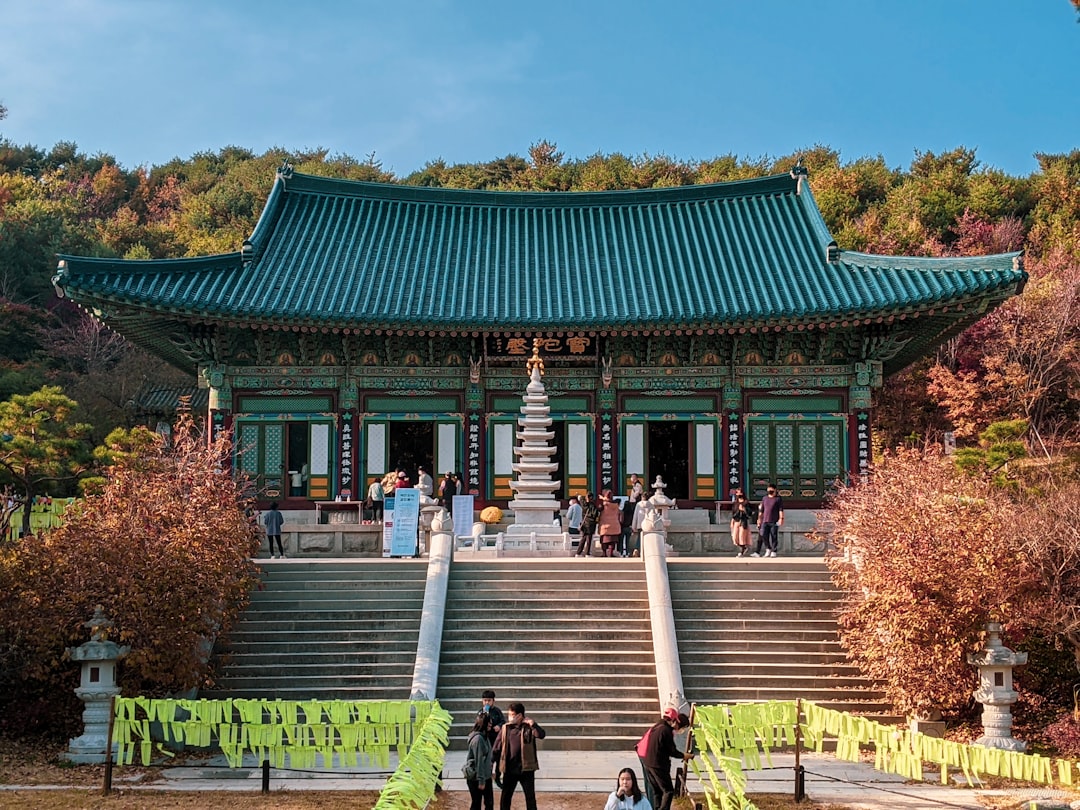
Why a Korean Temple Stay Might Be the Most Transformative Travel Experience You’ll Ever Have
I still remember the sound of the moktak — a hollow wooden drum — echoing through the misty mountains at 3:30 AM. I was standing barefoot on cold wooden floors at Haeinsa Temple in Hapcheon, South Korea, surrounded by Buddhist monks in gray robes, wondering what on earth I’d gotten myself into. Twenty-four hours earlier, I’d been eating fried chicken in a neon-lit alley in Seoul. Now I was bowing 108 times before sunrise, my knees aching, my mind emptying out in a way no meditation app had ever achieved.
That was my first Korean temple stay, and it completely changed the way I travel. If you’ve been wondering how to book a Korean temple stay as a foreigner, you’re in the right place. This guide covers everything — from choosing the right temple and making reservations in English, to what to pack, what to expect, and how to not accidentally offend a 700-year-old monastic tradition.
South Korea has over 900 traditional Buddhist temples, and more than 130 of them officially offer temple stay programs designed for international visitors. Whether you want a weekend digital detox in the mountains, a deep dive into Seon (Zen) meditation, or just a peaceful night away from Seoul’s chaos, there’s a program waiting for you. Let’s break it all down.
Korea Tourism Organization Official SiteWhat Exactly Is a Korean Temple Stay?

A Brief History of the Templestay Program
The Korean Templestay program was officially launched in 2002, right before the FIFA World Cup co-hosted by South Korea and Japan. The Jogye Order of Korean Buddhism — the largest Buddhist sect in the country — created it as a way to introduce international visitors to Korean Buddhist culture. What started as a temporary tourism initiative became one of Korea’s most beloved cultural experiences.
Today, the program is managed by the Cultural Corps of Korean Buddhism, which operates the official booking website at templestay.com. Over 5 million participants from more than 80 countries have completed a temple stay since the program began. It won the UNWTO Ulysses Prize for innovation in tourism, and it consistently ranks among the top cultural experiences in Asia.
Types of Temple Stay Programs
Not all temple stays are created equal. Here’s a breakdown of the main types you’ll encounter when figuring out how to book a Korean temple stay for foreigners:
- Experiential Stay (체험형) — The most popular option for first-timers. Usually 1 night/2 days. Includes temple tour, meditation, tea ceremony, 108 bows, Buddhist meal (barugongyang), and morning/evening chanting. Cost: $50–$70 USD.
- Relaxation Stay (휴식형) — A more free-form option where you stay at the temple but follow your own schedule. Great for writers, artists, or anyone who just needs silence. Often available for 1–7 nights. Cost: $30–$50 USD/night.
- Specialized Programs — Some temples offer themed stays: hiking temple stays, tea-making workshops, lotus lantern crafting, temple food cooking classes, and even K-meditation fusion programs combining traditional practice with modern mindfulness techniques. Cost: $60–$120 USD depending on the program.
- Templestay for Families — Select temples like Magoksa and Mihwangsa offer family-friendly programs with activities designed for children ages 6 and up.
The experiential stay is what I recommend for most first-time visitors. It gives you a structured schedule, guided instruction in English, and a genuine taste of monastic life without the commitment of a multi-day retreat.
How to Book a Korean Temple Stay as a Foreigner: Step-by-Step
The Official Booking Platform
The easiest way to book is through the official Templestay website: eng.templestay.com. The English-language site is well-maintained and lists every participating temple with photos, program descriptions, schedules, and pricing. Here’s the step-by-step process:
- Visit eng.templestay.com and create a free account (email registration takes 2 minutes).
- Browse temples by region, program type, or keyword. You can filter by “English-friendly” temples — I highly recommend this filter for your first stay.
- Select your program and preferred dates. Most experiential programs run on weekends (Saturday–Sunday), but some temples offer weekday options.
- Fill out the reservation form with your name, nationality, passport number, dietary restrictions, and any health concerns.
- Pay online via credit card (Visa/Mastercard accepted). You’ll receive a confirmation email within 24 hours.
- Show up at the temple at the designated check-in time (usually 2:00–3:00 PM).
Pro tip: Popular temples like Jogyesa (Seoul), Haeinsa (Hapcheon), Bulguksa (Gyeongju), and Woljeongsa (Pyeongchang) book up 2–4 weeks in advance, especially during cherry blossom season (late March–mid April) and autumn foliage season (mid October–mid November). Book early.
Alternative Booking Methods
If the website gives you trouble — and occasionally the payment system can be finicky with non-Korean credit cards — you have backup options:
- Call the Templestay Information Center: +82-2-2031-2000. English-speaking staff are available Monday–Friday, 9 AM–6 PM KST.
- Visit the Seoul Templestay Information Center in person at Jogyesa Temple (55 Ujeongguk-ro, Jongno-gu, Seoul). They can book any temple in the country on the spot.
- Contact the temple directly. Many temples have their own international coordinators. A quick email in English usually gets a response within 1–3 business days.
- Use a travel agent. Services like Klook and Trazy sometimes list temple stay packages that include transportation from Seoul.
One important note for Americans: you do not need a visa for stays under 90 days. Since 2024, you do need a K-ETA (Korea Electronic Travel Authorization), which costs about $10 USD and can be approved in as little as 30 minutes. Apply at k-eta.go.kr before your flight.
Visit Korea – Temple Stay ProgramsTop 7 Temples for Foreigners: Where to Go

With 130+ temples offering stays, choosing can feel overwhelming. Here are my top picks based on accessibility, English support, and overall experience quality:
| Temple | Location | Best For | Cost (1N/2D) | English Support |
|---|---|---|---|---|
| Jogyesa | Seoul (Jongno-gu) | First-timers, city access | $50 | Excellent |
| Bongeunsa | Seoul (Gangnam) | Urban temple, K-Pop fans | $55 | Excellent |
| Haeinsa | Hapcheon, Gyeongsang | UNESCO heritage, deep experience | $60 | Good |
| Bulguksa | Gyeongju | History lovers, UNESCO site | $55 | Good |
| Woljeongsa | Pyeongchang, Gangwon | Nature, mountain hiking | $50 | Moderate |
| Mihwangsa | Haenam, Jeollanam | Sunrise views, coastal | $50 | Good |
| Geumsunsa | Seoul (Bukhansan) | Mountain temple near Seoul | $50 | Good |
My #1 Recommendation: Haeinsa Temple
Haeinsa is home to the Tripitaka Koreana — over 80,000 wooden printing blocks from the 13th century, a UNESCO World Heritage treasure. It sits deep in Gayasan National Park, and the setting is absolutely breathtaking. The temple stay program here is immersive and traditional. You’ll eat in silence, wake before dawn, and walk forest trails with monks. It’s not the easiest to reach (about 4 hours from Seoul by bus), but it’s worth every minute of the journey.
Best for First-Timers: Jogyesa or Bongeunsa (Seoul)
If you only have a weekend and don’t want to leave Seoul, Jogyesa and Bongeunsa are excellent choices. Jogyesa is the headquarters of the Jogye Order and sits right in downtown Seoul — you can take Line 1 or 3 to Anguk Station and walk 5 minutes. Bongeunsa, near the COEX Mall in Gangnam, offers a fascinating contrast between the ancient temple and the ultra-modern skyline surrounding it. Both have dedicated English-speaking coordinators and well-organized foreigner programs.
VisitSeoul Official Tourism SiteWhat to Expect: A Typical Temple Stay Schedule
Day 1 (Afternoon–Evening)
- 2:00–3:00 PM — Check-in. You’ll be assigned a room (usually a traditional Korean ondol room with heated floors and a thin mattress), given temple clothing (a simple vest and pants set), and briefed on rules and etiquette.
- 3:00–4:30 PM — Temple tour. A monk or volunteer guide walks you through the main halls, explains the Buddhist artwork and architecture, and introduces you to the temple’s history.
- 4:30–5:30 PM — Meditation session. Seon (Zen) sitting meditation or walking meditation. Don’t worry if you’ve never meditated before — instructions are provided, and 20–30 minutes is typical for beginners.
- 5:30–6:30 PM — Evening meal (barugongyang). This is the formal Buddhist communal meal, and it’s an experience in itself. You eat in silence using four nested bowls, taking only what you can finish. No food waste is permitted. The food is entirely vegan — rice, soup, seasonal vegetables, kimchi, and pickled side dishes. It’s simple but deeply satisfying.
- 7:00–8:00 PM — Evening chanting ceremony (yebul). You’ll join monks in the Dharma Hall for chanting and prostrations. Even if you don’t understand the Korean/Sanskrit text, the rhythmic chanting in a candlelit hall is mesmerizing.
- 8:00–9:00 PM — 108 bows (baekpalbaechamboe) or tea ceremony. The 108 bows represent the 108 defilements in Buddhist teaching. Yes, it’s physically demanding. Yes, your thighs will burn. But the meditative rhythm that develops after about 40 bows is surprisingly powerful.
- 9:00 PM — Lights out. Temples go to sleep early. No phones, no TV, no noise.
Day 2 (Early Morning–Late Morning)
- 3:30–4:00 AM — Wake-up bell (dochamsong). Yes, 3:30 AM. This is non-negotiable. The monk on duty walks through the compound hitting the moktak drum.
- 4:00–5:00 AM — Morning chanting ceremony. This is when the magic happens. The predawn darkness, the incense smoke, the resonant chanting — it’s hauntingly beautiful.
- 5:00–6:00 AM — Sunmudo (temple martial arts) or walking meditation in the temple grounds. Some temples offer Sunmudo, a Korean Buddhist martial art that combines meditation with movement. Think of it as a slow, graceful cousin of tai chi.
- 6:00–7:00 AM — Breakfast (barugongyang style). Same silent, formal eating practice.
- 7:00–9:00 AM — Community service (ullyeok). This might be sweeping temple grounds, pulling weeds, or polishing brass fixtures. It’s considered a form of moving meditation.
- 9:00–10:00 AM — Tea time with a monk. This is often the highlight. You sit with a resident monk, drink green tea, and ask questions about Buddhism, Korean culture, or life in general. Many monks have surprisingly great senses of humor.
- 10:00–11:00 AM — Lotus lantern making or calligraphy workshop, followed by checkout.
If that schedule sounds intense — it is. But it’s also one of the most grounding 24 hours you’ll ever spend. Think of it as the opposite of a Las Vegas weekend. You’ll leave feeling rested in a way that sleep alone can’t achieve.
7 Traditional Korean Desserts to Try in 2026Getting There: Transport to Major Temples

Flying to South Korea
Most Americans will arrive at Incheon International Airport (ICN), consistently ranked among the world’s best airports. Direct flights are available from LAX (about 12 hours), JFK (about 14 hours), and SFO (about 12 hours) on carriers like Korean Air, Asiana, Delta, United, and American Airlines. Round-trip tickets typically range from $800–$1,400 USD depending on season.
From Incheon Airport, take the AREX (Airport Railroad Express) to Seoul Station in 43 minutes ($9 USD). Pick up a T-money card at any convenience store in the airport (deposit: $2.50 USD) — this rechargeable transit card works on all subways, buses, and even taxis across South Korea.
Getting to Temples Outside Seoul
For temples like Haeinsa, Bulguksa, and Woljeongsa, you’ll need intercity transport:
- KTX (Korea Train Express) — Korea’s bullet train. Seoul to Gyeongju (for Bulguksa): 2 hours, about $35–$45 USD. Book on the KORAIL app or letskorail.com.
- Express buses — Comfortable, affordable, and frequent. Seoul Express Bus Terminal to Hapcheon (for Haeinsa): about 3.5 hours, $20 USD. Book via the Kobus app.
- Local buses — From regional bus terminals to the temple itself. Usually $2–$5 USD. Use Naver Map (not Google Maps — it’s unreliable in Korea) to find routes and schedules.
Essential apps to download before your trip:
- Naver Map — The only reliable navigation app in Korea. Google Maps doesn’t show transit directions properly.
- Papago — Naver’s translation app. Superior to Google Translate for Korean. Has camera translation for menus and signs.
- KakaoTalk — Korea’s universal messaging app. Some temples and tour services communicate through KakaoTalk.
- KORAIL — For booking KTX bullet train tickets.
Budget Breakdown: How Much Does a Temple Stay Cost?
One of the best things about a Korean temple stay is the incredible value. Here’s a realistic budget for an American traveler doing a weekend temple stay:
| Expense | Cost (USD) | Notes |
|---|---|---|
| Temple stay program (1N/2D) | $50–$70 | Includes meals, lodging, activities |
| K-ETA | $10 | Valid for 2 years |
| T-money card + transit (Seoul) | $15–$25 | Subway + bus for 2–3 days |
| KTX or Express Bus (round trip) | $40–$90 | Depends on destination |
| Airport Express (AREX round trip) | $18 | Incheon ↔ Seoul Station |
| Meals outside temple (2–3) | $20–$40 | Korean food is affordable |
| Miscellaneous (souvenirs, snacks) | $20–$30 | Temple gift shops, convenience stores |
| Total (excluding flights) | $175–$285 | For a full weekend experience |
Compare that to a weekend meditation retreat in the US, which can easily run $300–$800+ without meals. A Korean temple stay gives you lodging, all meals, guided meditation, cultural activities, and access to stunning natural scenery — all for about the price of a nice dinner in New York City.
Ways to Save Even More
- Choose a Seoul temple to eliminate intercity transport costs.
- Book a relaxation stay instead of an experiential program — these are often $30–$40/night.
- Travel midweek. Some temples offer discounted rates Tuesday–Thursday.
- Use the Discover Seoul Pass for free subway rides and attraction entry during your non-temple days.
Cultural Etiquette: Essential Do’s and Don’ts

This is where many foreigners get anxious, but don’t stress. Monks understand that international visitors are learning. They’re patient and forgiving. That said, showing respect goes a long way. Here are the rules you must follow:
Do’s
- Remove your shoes before entering any building. This is universal in Korea, not just temples. Look for shoe racks at entrances.
- Bow when greeting monks. A simple half-bow with hands together (hapjang) is appropriate. You don’t need to do a full prostration unless you’re in a ceremony.
- Eat everything on your plate. The barugongyang meal practice is zero-waste. Take small portions and finish them completely. You’ll even rinse your bowls with water and drink the rinse water. It sounds odd, but it’s a profound practice in mindfulness and gratitude.
- Wear the temple clothing provided. It’s comfortable and removes social distinctions — everyone looks the same, which is the point.
- Follow the schedule. If morning wake-up is 3:30 AM, be up at 3:30 AM. Skipping activities is considered disrespectful.
- Maintain silence in meditation halls and during meals. Whispered conversation is okay in your room or outdoor areas.
Don’ts
- Don’t bring alcohol, cigarettes, or meat onto temple grounds. This is a strict rule at all Buddhist temples in Korea.
- Don’t point your feet toward a Buddha statue. When sitting on the floor, tuck your legs to the side or sit cross-legged.
- Don’t take photos during ceremonies unless explicitly permitted. Ask first. Many temples allow photography of buildings and grounds but not during active worship.
- Don’t wear revealing clothing. Shorts, tank tops, and low-cut tops are not appropriate. The temple clothing solves this issue, but dress modestly for arrival.
- Don’t use your phone. Most temples request that you turn off your phone or switch to airplane mode for the duration of your stay. This is actually one of the best parts — forced digital detox.
- Don’t step on the threshold of temple doors. Step over it. This is a traditional Korean architectural custom.
Think of it this way: if you’ve ever visited a cathedral in Europe and instinctively lowered your voice and removed your hat, the same basic respect applies here. Just with more floor-sitting and earlier mornings.
Authentic Kimchi Recipe From Scratch: Step-by-Step Guide 2026Best Seasons for a Korean Temple Stay
Spring (March–May): Cherry Blossoms and Lotus Lanterns
Spring is arguably the most magical time for a temple stay. Cherry blossoms blanket temple grounds from late March through mid-April, creating a pink-and-white canopy over stone pathways and meditation gardens. The annual Lotus Lantern Festival (celebrating Buddha’s birthday, usually in May) transforms temples with thousands of colorful paper lanterns — it’s one of Korea’s most photogenic events.
Temperatures are mild (50–70°F / 10–21°C), making it perfect for outdoor meditation and hiking. This is peak booking season, so reserve your temple stay at least 3–4 weeks in advance.
Autumn (September–November): Foliage and Clarity
Autumn foliage in Korea rivals New England, and mountain temples get the most spectacular displays. Woljeongsa in Pyeongchang has a famous fir tree-lined path that glows gold in October. Haeinsa sits within Gayasan National Park, which explodes with red maples and golden ginkgos. The crisp mountain air makes early morning meditation sessions electric rather than brutal.
Summer and Winter
Summer (June–August) is hot and humid with monsoon rains in July, but many temples offer special summer retreat programs. Winter (December–February) is cold, especially at mountain temples, but incredibly serene. Imagine meditating in a snow-covered temple with no other tourists around. Some temples near Pyeongchang and Gangwon Province can be combined with visits to ski resorts like Yongpyong or Alpensia — meditate in the morning, ski in the afternoon. It’s the ultimate Korean contrast.
suggested topic — Best Hiking Trails Near Korean TemplesInsider Tips From Someone Who’s Done 5 Temple Stays
After five temple stays across Korea over several years, I’ve learned a few things the hard way so you don’t have to:
- Bring warm socks and layers. Temple buildings are not well-heated in spring and autumn. Ondol floors in your sleeping room will be warm, but dharma halls can be chilly at 4 AM. Pack thermal layers and thick socks.
- Stretch before the 108 bows. I’m not kidding. Your quads, hamstrings, and lower back will thank you. If you have knee problems, let the monk know — they’ll offer a modified version.
- Learn five Korean phrases. “Gamsa hamnida” (thank you), “Annyeonghaseyo” (hello), “Ne” (yes), “Anieyo” (no), and “Sunim” (respectful term for a monk). Monks appreciate any effort, no matter how clumsy.
- Don’t eat a huge meal before arriving. Temple meals are light and plant-based. If your stomach is used to American portion sizes, transitioning will be easier if you start light.
- Bring a small flashlight. Walking between buildings at 3:30 AM in the dark can be tricky on uneven stone paths. Your phone flashlight works, but a small headlamp is better — you won’t have to hold it during bows.
- The tea time with monks is the real treasure. Don’t be shy. Ask questions. Ask about their daily life, their path to monkhood, their views on modern society. These conversations are often the most memorable part of the entire stay.
- Book your second temple stay before your first one ends. Seriously. Most people want to come back immediately. Having one mountain temple and one city temple stay in the same trip is an amazing combination.
- Download offline content on Naver Map before heading to rural temples. Cell service can be spotty in deep mountain areas.
Also, if you’re into Korean food culture beyond temple cuisine, check out our guide on traditional treats you can find in the temple gift shops and nearby towns.
7 Traditional Korean Desserts to Try in 2026 Korean Makeup vs Western Makeup: 7 Key Differences (2026)What to Pack for a Korean Temple Stay
Essential Packing List
- Comfortable, modest clothing for arrival and departure (long pants, covered shoulders)
- Warm layers — fleece, light down jacket, or thermal base layers (spring/autumn/winter)
- Thick socks (at least 2 pairs — you’ll be barefoot on wooden floors a lot)
- Small towel — some temples provide towels, many don’t
- Basic toiletries — toothbrush, toothpaste, minimal skincare. Skip heavy fragrances
- A notebook and pen — for journaling. You’ll want to write down reflections
- Earplugs — communal rooms can mean shared snoring
- Small flashlight or headlamp
- Water bottle — mountain temples have clean spring water taps
- Minimal electronics — just your phone for emergencies. Leave the laptop behind
What NOT to Bring
- Alcohol, cigarettes, or any meat-based snacks
- Strong perfumes or colognes
- Bluetooth speakers or noise-making devices
- Excessive luggage — you’ll be in one small room
Frequently Asked Questions
Do I need to be Buddhist to do a Korean temple stay?
Absolutely not. The Templestay program is explicitly designed for people of all faiths and no faith. The majority of international participants are not Buddhist. You’re participating in cultural activities, not converting to a religion. Monks are happy to explain Buddhist philosophy, but there’s zero pressure to adopt any beliefs. Think of it as a cultural immersion experience that happens to take place in a Buddhist setting.
Can I do a temple stay if I don’t speak Korean?
Yes. Over 40 temples in the program specifically offer English-language programs with English-speaking guides or monks. The official website lets you filter by “English-friendly” temples. Even at temples without dedicated English programs, the activities are largely physical and observational — you can follow along by watching others. Download the Papago translation app as a backup for any text or signs you need to read.
Is a temple stay suitable for children or families?
Some temples offer family-friendly programs for children ages 6 and up. Magoksa in Gongju and Mihwangsa in Haenam are known for welcoming families. However, the standard experiential program (with 3:30 AM wake-up and 108 bows) can be challenging for young kids. For families, I’d recommend a relaxation stay at a temple with outdoor hiking trails and craft activities, which allows for a more flexible schedule.
What if I have dietary restrictions or food allergies?
All temple food is vegan by default — no meat, fish, dairy, or eggs. Most temple cuisine also avoids the five pungent vegetables (garlic, onion, scallion, chives, leek) per Buddhist tradition. If you have gluten allergies, let the temple know in advance — some sauces contain soy or wheat. Nut allergies should also be communicated, as sesame seeds and perilla seeds are common ingredients. Note any allergies on the reservation form and email the temple directly for severe allergies.
Can I leave the temple grounds during my stay?
For experiential stays, you’re generally expected to stay on temple grounds and follow the full schedule. For relaxation stays, you typically have more freedom to explore surrounding hiking trails and nature areas. However, leaving and returning during scheduled activities is considered disrespectful. If you need to leave for any reason, inform the temple coordinator in advance.
Is Wi-Fi available at Korean temples?
Some temples offer basic Wi-Fi in common areas, but many intentionally do not. This is a feature, not a bug. The digital disconnection is part of the experience. If you absolutely need connectivity for emergency purposes, most temples are within cell service range (though mountain temples may have spotty coverage). Download offline maps on Naver Map before you arrive just in case.
How far in advance should I book my temple stay?
For popular temples (Jogyesa, Haeinsa, Bulguksa) during peak seasons (cherry blossom in April, foliage in October), book 3–4 weeks ahead. For lesser-known temples or midweek stays, 1–2 weeks is usually sufficient. Last-minute bookings (2–3 days) are sometimes possible at smaller temples, but I wouldn’t risk it during holidays or festival periods like Chuseok (Korean Thanksgiving) or Seollal (Lunar New Year).
Related Posts You’ll Love
- 7 Traditional Korean Desserts to Try in 2026
- 7 Best Apps to Learn Korean for Beginners in 2026
- Authentic Kimchi Recipe From Scratch: Step-by-Step Guide 2026
Suggested future articles:
- suggested topic — Korean Buddhist Temple Food Recipes You Can Make at Home
- suggested topic — 10 Most Beautiful Buddhist Temples in South Korea
Ready to Book Your Temple Stay? Start Here
A Korean temple stay isn’t just another item to check off your travel bucket list. It’s the kind of experience that recalibrates your entire nervous system. In a world of constant notifications, 24/7 content, and relentless hustle culture, spending even one night in a 1,000-year-old mountain temple — eating in silence, meditating before dawn, and drinking tea with a monk who’s been practicing for 30 years — is a radical act of self-care.
If you’re planning a trip to South Korea in 2026, I genuinely believe a temple stay should be at the top of your list. Whether you choose a bustling Seoul temple or a remote mountain monastery, you’ll come away with stories, stillness, and a sense of peace that no spa resort can match.
Here’s what to do right now:
- Visit eng.templestay.com and browse temples by region.
- Pick your dates — spring (cherry blossoms) or autumn (foliage) for maximum beauty.
- Book your K-ETA at k-eta.go.kr if you haven’t already.
- Download Naver Map, Papago, and the KORAIL app.
- Start stretching those quads for the 108 bows.
Have you done a Korean temple stay? I’d love to hear about your experience. Drop a comment below with which temple you visited, what surprised you most, and any tips for fellow travelers. If you’re still deciding, ask your questions in the comments — I respond to every one.
Found this guide helpful? Share it with a friend who needs a digital detox or has South Korea on their travel radar. And if you want more in-depth Korea travel guides, K-culture deep dives, and insider tips delivered to your inbox, subscribe to our newsletter — we publish new guides every week.
See you at the temple. 🙏