Why Han River Picnic Culture Is Korea’s Most Beloved Outdoor Tradition
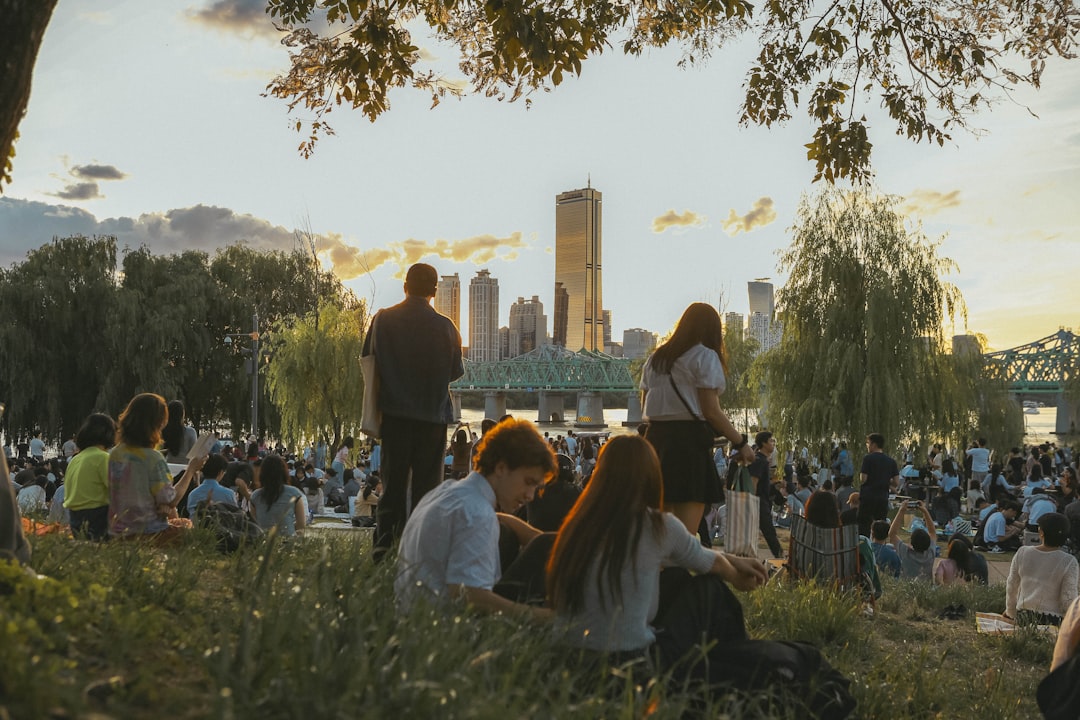
Imagine this: it’s a warm Saturday evening in Seoul, and over 13 million people have access to one of the most spectacular urban riverside parks in the world. Families spread out colorful mats along the grassy banks. Couples share fried chicken straight from delivery bags. Friend groups huddle around portable speakers playing the latest K-Pop hits. The skyline glitters behind them, and the scent of ramyeon drifts through the air from a convenience store just steps away.
This is Han River picnic culture — and it’s nothing like the picnics you know back home.
While Americans might associate picnics with checkered blankets, potato salad, and a cooler full of sodas at a state park, Korean picnic culture at the Han River (한강, Hangang) is an entirely different experience. It’s a social ritual, a food festival, a date night, and a community gathering all rolled into one. With 11 riverside parks stretching over 40 kilometers along both banks, the Han River parks welcome an estimated 76 million visitors annually, according to the Seoul Metropolitan Government.
Whether you’re planning a trip to Seoul or simply curious about why this tradition has taken over social media, this han river picnic spots food guide will walk you through everything — from the best locations and must-have foods to cultural etiquette and insider tips that even travel blogs miss.
Understanding Han River Parks: More Than Just a Riverside

The 11 Hangang Parks System
The Han River isn’t just one park — it’s a network of 11 interconnected riverside parks managed by the Seoul Metropolitan Government. Each park has its own personality, crowd type, and amenities. Think of it like New York City’s Central Park, but stretched along a massive river and multiplied by eleven.
Here’s a quick overview of all 11 parks from west to east:
- Nanji Hangang Park — Near World Cup Stadium, eco-friendly vibes
- Mangwon Hangang Park — Trendy, popular with young creatives
- Yeouido Hangang Park — The most famous, cherry blossom heaven
- Ichon Hangang Park — Quiet, family-friendly, near the National Museum
- Banpo Hangang Park — Home to the Moonlight Rainbow Fountain
- Ttukseom Hangang Park — Water sports and swimming pool
- Jamsil Hangang Park — Near Lotte World, great sunset views
- Gwangnaru Hangang Park — Largest park, nature lovers’ paradise
- Jamwon Hangang Park — Hidden gem, less crowded
- Yanghwa Hangang Park — Views of Seonyudo Bridge
- Mangwon Hangang Park — Adjacent to Mangwon Market for food runs
Each park offers free entry, public restrooms, convenience stores, bike rental stations, and designated picnic zones. Many also have basketball courts, soccer fields, inline skating paths, and seasonal swimming pools.
How Han River Parks Compare to American Parks
If you’re coming from the US, the closest comparison might be Chicago’s Lakefront Trail or the banks of the Potomac in DC. But Korean riverside parks differ in several key ways:
| Feature | Han River Parks (Seoul) | Typical US Urban Parks |
|---|---|---|
| Food Delivery | Delivery apps bring food directly to your mat | Usually bring your own or visit food trucks |
| Convenience Stores | CU/GS25 stores inside every park | Rare inside park grounds |
| Alcohol Policy | Drinking allowed (beer, soju, makgeolli) | Usually prohibited in public parks |
| Tent Rentals | Pop-up tents everywhere (regulated sizes) | Not commonly seen |
| Operating Hours | Open 24/7, busiest at night | Many close at dusk |
| Bike Infrastructure | Dedicated riverside cycling paths, 40+ km | Varies widely |
The biggest difference? Food delivery to your exact GPS location. Apps like Baemin (배달의민족) and Coupang Eats let you drop a pin on the riverbank, and a delivery rider will find you within 30 minutes. This alone has transformed Han River picnic culture into something uniquely Korean.
Top 5 Han River Picnic Spots: A Detailed Breakdown
Not all han river picnic spots are created equal. Your ideal spot depends on whether you want Instagram-worthy views, a quiet reading session, or a lively group hangout. Here’s the definitive ranking based on accessibility, amenities, crowd levels, and scenery.
1. Yeouido Hangang Park — The Icon
Best for: First-time visitors, cherry blossom season, large groups
Yeouido is the park you’ve seen in every K-Drama and YouTube vlog. It’s the most popular han river picnic spot by visitor count, attracting millions during the annual Yeouido Cherry Blossom Festival each April. The park stretches along the southern bank near the National Assembly, and the wide, flat lawns are perfect for spreading out.
Amenities include multiple CU and GS25 convenience stores, a water light stage for seasonal performances, bike rental stations, and the famous “Yeouido Hangang Ramyeon” — instant noodles cooked fresh at the convenience store and eaten riverside. It’s become such an iconic experience that even Korean celebrities post about it on Instagram.
Pro tip: Visit on weekday evenings to avoid the weekend crush. Arrive by 5 PM to secure a prime spot near the water. For cherry blossom season timing, check 7 Best Korea Cherry Blossom Spots 2026: Dates & Map for peak bloom predictions.
2. Banpo Hangang Park — The Night Owl’s Choice
Best for: Couples, nighttime picnics, photography
Banpo is home to the Banpo Bridge Moonlight Rainbow Fountain, which holds the Guinness World Record for the longest bridge fountain. Every evening from April through October, the fountain shoots 190 tons of water per minute in a choreographed light show set to music. It’s absolutely mesmerizing.
The Floating Islands (세빛둥둥섬, Sevit Islands) nearby add a futuristic backdrop to your picnic photos. The grassy areas along the southern bank of Banpo are less crowded than Yeouido, making it ideal for a romantic han river picnic date.
Pro tip: The fountain show runs at 12:00 PM, 7:30 PM, 8:00 PM, 8:30 PM, and 9:00 PM on weekdays (with additional weekend shows). Time your picnic around the 8:00 PM show for the best lighting conditions and cooler temperatures.
3. Mangwon Hangang Park — The Foodie Favorite
Best for: Foodies, trendy crowds, market runs
Mangwon sits adjacent to the legendary Mangwon Market (망원시장), one of Seoul’s best traditional markets. This means you can walk five minutes, grab fresh tteokbokki, kimbap, and hotteok, then stroll back to your riverside mat. The park attracts a younger, artsy crowd from the nearby Mangwon-dong and Hapjeong neighborhoods.
The views here face the northern bank with Namsan Tower visible in the distance on clear days. The grass is well-maintained, and there’s a pleasant ecological wetland area for a pre-picnic nature walk.
4. Ttukseom Hangang Park — The Active Adventurer
Best for: Families with kids, water sports, summer visits
Ttukseom (뚝섬) is the activity hub of the Han River parks. It has a seasonal outdoor swimming pool (open July–August, around ₩5,000 / $3.70 entry), water sports facilities for jet skiing and windsurfing, and the largest designated camping zone among all Han River parks.
The park connects directly to Seoul Forest via a short walk, giving you access to a deer enclosure, butterfly garden, and art installations. This makes it an excellent spot for a full-day outing that combines a morning at Seoul Forest with an afternoon picnic by the river.
5. Jamwon Hangang Park — The Hidden Gem
Best for: Locals, quiet picnics, avoiding tourists
Jamwon flies under the radar because it sits between the more famous Banpo and Jamsil parks. But this is exactly why locals love it. The crowds are 40-50% smaller than Yeouido on weekends, the grass is just as green, and the convenience stores are just as well-stocked.
Jamwon also connects to the Sinsa-dong and Garosu-gil neighborhoods, so you can combine your picnic with a café-hopping session in one of Seoul’s trendiest districts. For accommodation nearby, check How to Book a Hanok Stay in Seoul: 2026 Complete Guide — several traditional hanok guesthouses are within walking distance of this park.
The Ultimate Han River Picnic Food Guide

Let’s be honest — food is the heart of Han River picnic culture. Koreans don’t just bring sandwiches. They bring a feast. Understanding the food is essential to understanding why millions of people return to these riverbanks week after week.
The Big Three: Chicken, Ramyeon, and Kimbap
Every Korean will tell you the holy trinity of Han River food is:
- 치맥 (Chimaek) — Fried chicken + beer (maekju). This is the single most popular Han River food combination. Brands like BBQ Chicken, BHC, Kyochon, and Pelicana all deliver directly to the riverside. A whole fried chicken runs about ₩18,000-22,000 ($13-16). For the best recipe to make at home, see Korean Fried Chicken Recipe: Crispy & Crunchy Guide 2026.
- 한강 라면 (Hangang Ramyeon) — Instant noodles cooked in the distinctive steel pots at riverside convenience stores. It costs around ₩4,000-5,000 ($3-3.70) and tastes objectively better by the water. Koreans call this the “Han River ramyeon effect” — the same noodles somehow taste 10x better outdoors.
- 김밥 (Kimbap) — Korea’s answer to the California roll, but more portable and endlessly customizable. Pre-made rolls from convenience stores cost ₩1,500-3,500 ($1.10-2.60), while premium kimbap from specialty shops runs ₩4,000-6,000 ($3-4.50).
If you’re in the US and craving these flavors, many Korean fried chicken chains like BBQ Chicken and Bonchon have expanded to American cities. And Korean convenience store snacks are increasingly available at H Mart and online retailers — check Best Korean Convenience Store Snacks to Try in 2026 for recommendations.
Beyond the Basics: What Locals Actually Bring
While tourists stick to the Big Three, seasoned Han River picnickers bring a much wider spread:
- 떡볶이 (Tteokbokki) — Spicy rice cakes, often ordered from nearby restaurants
- 족발 (Jokbal) — Braised pig’s trotters, sliced thin and served cold — surprisingly refreshing
- 과일 (Gwail) — Pre-cut fruit platters, especially watermelon in summer and strawberries in spring
- 편의점 도시락 (Convenience Store Bento) — CU’s premium dosirak boxes are genuinely delicious, with options like bulgogi rice and kimchi jjigae
- 피자 (Pizza) — Korean pizza chains like Pizza Alvolo and Domino’s Korea deliver riverside too, with uniquely Korean toppings like sweet potato mousse and bulgogi
- 막걸리 (Makgeolli) — Traditional Korean rice wine, served in a kettle with cups, paired perfectly with pajeon (savory pancakes)
Drink Pairings: What to Sip Riverside
Unlike most American public parks, drinking alcohol is legal and culturally normal at Han River parks. Here’s what people drink:
- Cass or Hite beer — Korea’s mainstream lagers, light and refreshing (₩2,500-3,500 at convenience stores)
- Soju — Korea’s iconic spirit, now available in fruit flavors like peach, grape, and green apple (₩1,800-2,500 per bottle)
- Makgeolli — Milky rice wine with a slightly sweet, tangy taste (₩3,000-5,000 per bottle)
- Convenience store cocktails — Pre-mixed highballs and chuhai-style drinks have exploded in popularity since 2024
- Non-alcoholic options — Banana milk (바나나맛 우유), Milkis (밀키스), and Vita 500 are all classic Korean beverage choices
Cultural note: When drinking with older Koreans, always pour for others before yourself, hold the bottle with two hands, and turn slightly away when taking a sip. These are signs of respect deeply embedded in Korean drinking etiquette.
Essential Gear and What to Pack
The Korean Picnic Packing List
Korean picnic culture has evolved its own specific gear checklist that differs from Western picnic norms. Here’s what you need:
- 돗자리 (Dotjari / Picnic mat) — The waterproof picnic mat is non-negotiable. Daiso Korea sells affordable ones for ₩3,000-5,000. In the US, you can find similar Korean-style mats on Amazon or at H Mart.
- 소형 텐트 (Small pop-up tent) — About 60% of Korean picnickers bring a small shade tent. Important: Seoul regulations limit tent sizes to 1.5m x 1.5m, and fully enclosed tents are prohibited for safety reasons. Violators face fines up to ₩1 million ($740).
- 블루투스 스피커 (Bluetooth speaker) — Essential for the vibe, but keep volume reasonable. Korean park etiquette says music should not be audible beyond your immediate group.
- 쓰레기봉투 (Trash bags) — Koreans are extremely conscious about cleaning up. Bringing your own trash bags signals that you’re a responsible picnicker. Many parks provide communal trash stations, but packing out your own waste is strongly encouraged.
- 보조배터리 (Portable charger) — You’ll need your phone for food delivery apps, music, and photos
- 모기퇴치 스프레이 (Mosquito repellent) — Essential from June through September
What NOT to Bring
A few things to leave at home or at the hotel:
- Grills or open flames — Strictly prohibited in all Han River parks. This is a major difference from American park culture where BBQ grills are common.
- Glass bottles — While not officially banned everywhere, it’s strongly discouraged. Transfer drinks to plastic containers.
- Large tents or canopies — Oversized tents block views and pathways, and enforcement officers will ask you to take them down.
- Drones — Most Han River airspace falls within Seoul’s no-fly zones near military installations and the Blue House.
Cultural Etiquette: How to Picnic Like a Local

Unwritten Rules Every Visitor Should Know
Korean picnic culture comes with a set of unspoken social rules that can make or break your experience. Understanding these will help you blend in and earn nods of approval from neighboring groups.
Leave no trace. This is the golden rule. Koreans take cleanup seriously. After the park experienced litter problems in the early 2010s, community awareness campaigns and social media shaming turned the culture around dramatically. Today, leaving trash behind is considered deeply disrespectful. Most groups designate one person to do a final sweep of their area before leaving.
Respect personal space. Even when the park is packed, Koreans maintain a buffer zone between picnic groups. Don’t set up your mat directly next to another group if there’s space elsewhere. A gap of at least 1-2 meters is the norm.
Share food generously. If you’re picnicking with Korean friends or colleagues, expect communal eating. Food is placed in the center of the mat, and everyone shares. Bringing enough food only for yourself in a group setting can come across as stingy.
Noise levels matter. While the atmosphere is lively, outright shouting, extremely loud music, or rowdy behavior draws disapproving looks. The vibe is festive but not chaotic — think “chill backyard gathering” rather than “tailgate party.”
Photography and Social Media Etiquette
Han River picnics are inherently photogenic, and Korean culture embraces sharing these moments on social media. However, there are boundaries:
Always ask permission before photographing strangers or their setups. Koreans are generally happy to help take your photo, but don’t include other people’s faces in your posts without consent. This is taken more seriously in Korea than in many Western countries, partly due to strict portrait rights laws under Korean civil code.
If you want to capture the perfect Instagram-worthy picnic spread, consider the “golden hour” — about an hour before sunset — when the light along the Han River creates a warm, cinematic glow. Popular hashtags include #한강피크닉, #한강치맥, and #HanRiverPicnic.
Seasonal Guide: When to Visit for the Best Experience
Spring (March–May): Cherry Blossoms and Perfect Weather
Spring is peak picnic season. Cherry blossoms line the riverbanks at Yeouido and Jamsil from late March through mid-April, creating a pink canopy that draws millions. Temperatures hover between 15-22°C (59-72°F) — ideal picnic weather.
The Yeouido Cherry Blossom Festival typically runs for about 10 days in early April, featuring live performances, food stalls, and extended park hours. It’s magical but extremely crowded — arrive early or visit on weekdays. For other cherry blossom destinations, see 7 Best Korea Cherry Blossom Spots 2026: Dates & Map.
Summer (June–August): Late-Night Sessions and Water Fun
Summer brings intense heat (30-35°C / 86-95°F) and humidity, but Koreans adapt by shifting picnics to evening and nighttime. The parks come alive after 7 PM, with groups staying until midnight or later. The city lights reflecting off the river create a magical atmosphere.
Ttukseom and Yeouido open their outdoor swimming pools from late June through August, offering a refreshing break from the heat. Be aware that the monsoon season (장마, jangma) typically hits in late June through mid-July, bringing heavy rain that can cancel outdoor plans for days at a time.
Fall (September–November): The Locals’ Favorite Season
Many Seoul residents consider autumn the best season for Han River picnics. The air is crisp and dry, temperatures are comfortable (12-22°C / 54-72°F), and the riverside trees turn brilliant shades of orange, red, and gold. The summer crowds thin out, and the entire experience feels more relaxed.
Fall is also festival season at the Han River, with the Seoul Fireworks Festival (usually in October) being the highlight. Over a million people gather along the banks for a spectacular pyrotechnics display over the water.
Winter (December–February): Not Ideal, But Not Impossible
Winter picnics are rare but not unheard of. Temperatures drop to -5 to 5°C (23-41°F), and wind chill along the exposed riverbanks can be brutal. However, some hardy souls bundle up for “winter Han River ramyeon” — eating steaming hot instant noodles in the freezing cold is considered a quintessential Korean experience. If you’re visiting Seoul in winter, you might enjoy other cultural experiences instead — see How to Book a Hanok Stay in Seoul: 2026 Complete Guide for cozy alternatives.
Getting There and Practical Logistics

Transportation Options
Every Han River park is accessible by Seoul’s world-class public transit system. Here are the nearest subway stations for the top parks:
| Park | Nearest Subway Station | Line | Walking Distance |
|---|---|---|---|
| Yeouido | Yeouinaru (여의나루) | Line 5 | 3 minutes |
| Banpo | Express Bus Terminal (고속터미널) | Lines 3, 7, 9 | 10 minutes |
| Ttukseom | Ttukseom (뚝섬) | Line 7 | 5 minutes |
| Mangwon | Mangwon (망원) | Line 6 | 12 minutes |
| Jamsil | Jamsil (잠실) | Lines 2, 8 | 8 minutes |
Biking is another popular option. Seoul’s public bike-share system, 따릉이 (Ttareungi / Seoul Bike), has stations throughout the city and at every Han River park. A day pass costs just ₩2,000 ($1.50), and the riverside cycling path is flat, wide, and well-maintained.
For comprehensive visitor information including seasonal events and park facility updates, visit Visit Korea Official Tourism Site.
Budget Breakdown: How Much Does a Han River Picnic Cost?
One of the best things about Han River picnic culture is that it’s incredibly affordable. Here’s a realistic budget for two people:
| Item | Cost (KRW) | Cost (USD) |
|---|---|---|
| Picnic mat (Daiso) | ₩3,000 | $2.20 |
| Fried chicken (1 whole) | ₩20,000 | $14.80 |
| Beer (4 cans) | ₩10,000 | $7.40 |
| Kimbap (2 rolls) | ₩6,000 | $4.40 |
| Ramyeon (2 bowls) | ₩8,000 | $5.90 |
| Snacks and drinks | ₩5,000 | $3.70 |
| Total | ₩52,000 | $38.40 |
Under $40 for a full evening of food, drinks, and one of the best views in Asia? That’s hard to beat. Compare this to a typical dinner-for-two at a mid-range restaurant in Seoul (₩60,000-80,000) and you see why the Han River picnic is so popular among budget-conscious locals and travelers alike.
Han River Picnic Culture in K-Dramas and Pop Culture
Why You’ve Already Seen This Scene
If you watch K-Dramas, you’ve almost certainly seen a Han River picnic scene. It’s one of the most frequently used settings in Korean television, appearing in hits like “Goblin” (도깨비), “Crash Landing on You,” “Vincenzo,” and “My Love from the Star.” These scenes typically feature the lead characters sharing ramyeon by the river, often during a pivotal emotional moment.
The “Han River ramyeon scene” has become such a trope that it even spawned a famous Korean expression: “라면 먹고 갈래?” (Ramyeon meokgo gallae?) — “Want to come up for ramyeon?” While literally about noodles, this phrase carries romantic undertones in Korean culture and has been endlessly referenced, parodied, and memed.
K-Pop and the Han River Connection
K-Pop idols regularly film content at the Han River, from music videos to VLive broadcasts. BTS’s RM famously cycles along the Han River and has shared photos from Banpo and Yeouido parks. BLACKPINK’s Jennie has posted Han River sunset photos that went viral, driving tourism interest from international fans.
For K-Pop fans visiting Seoul, combining a Han River picnic with a pilgrimage to filming locations adds an extra layer of meaning to the experience. Learning some iconic K-Pop dances to perform riverside is another way fans celebrate — check 7 Easiest K-Pop Dances to Learn for Beginners in 2026 for inspiration.
Bringing Han River Vibes Home: Tips for US-Based Readers
Recreating the Experience Stateside
You don’t need to fly to Seoul to enjoy elements of Korean picnic culture. Here’s how to bring the han river picnic spots food guide experience to your local park:
- Find your local “Han River” — Look for riverside parks, lakefronts, or large urban green spaces. Cities like Chicago (Lakefront), Portland (Willamette River), Austin (Lady Bird Lake), and DC (Tidal Basin) offer similar vibes.
- Stock up at H Mart or a Korean grocery — Grab kimbap rolls, Korean fried chicken from the deli counter, canned Cass beer, banana milk, and your favorite Korean snacks.
- Get a proper picnic mat — Korean-style waterproof mats are available on Amazon. Search for “Korean picnic mat” or “dotjari.”
- Cook Korean fried chicken at home — It’s easier than you think and tastes amazing outdoors. Korean Fried Chicken Recipe: Crispy & Crunchy Guide 2026 has a step-by-step guide.
- Create the right playlist — Mix K-Pop, K-Indie, and Korean lo-fi beats for the authentic soundtrack.
Korean Products Available in the US
The good news is that most of the food and drinks mentioned in this guide are readily available in the United States:
- Shin Ramyeon, Jin Ramyeon, Buldak — Available at Walmart, Target, Costco, and Amazon
- Soju (Chamisul, Jinro) — Available at most liquor stores in major cities
- Banana Milk and Milkis — Available at H Mart, Asian grocery stores, and Amazon
- Korean skincare for outdoor protection — Korean sunscreens are considered among the world’s best. Check K-Beauty Glass Skin Routine for Beginners 2026 for SPF recommendations perfect for outdoor picnics.
- Korean lip tints — For a picnic-proof makeup look that lasts through eating and drinking, see 7 Best Korean Lip Tints for Dry Lips in 2026.
Frequently Asked Questions About Han River Picnics
Can you drink alcohol at Han River parks?
Yes. Unlike most American public parks, drinking alcohol is legal and culturally accepted at all Han River parks. Beer, soju, and makgeolli are the most popular choices. However, excessive drunkenness and disorderly behavior can result in fines under Korean public safety ordinances. Drink responsibly and always clean up your bottles and cans.
Is it safe to picnic at the Han River at night?
Absolutely. Seoul is one of the safest major cities in the world, and Han River parks are well-lit, heavily frequented, and patrolled by park security until late at night. Many Koreans prefer nighttime picnics during the hot summer months, staying out until midnight or even later. The parks are open 24/7 year-round.
Can you order food delivery to your spot at the Han River?
Yes, and this is one of the most unique aspects of Korean picnic culture. Apps like Baemin (배달의민족), Coupang Eats, and Yogiyo allow you to drop a GPS pin at your exact riverside location. Delivery riders are experienced with Han River drop-offs and will call you when they arrive. Most deliveries take 20-40 minutes. Pro tip: Order before 6 PM on weekends to avoid peak-hour delays of 60+ minutes.
Are there restrooms at Han River parks?
Yes. Every Han River park has multiple public restroom facilities that are clean and well-maintained. They’re typically located near the convenience stores and main entrance areas. Most restrooms are accessible for people with disabilities and include changing stations for families with young children.
Do I need to reserve a spot for a Han River picnic?
No reservations are needed — it’s first come, first served. However, during peak times (weekend evenings in spring and fall, cherry blossom season, fireworks festivals), arriving early is essential. Weekday evenings generally offer plenty of space. Some parks have designated camping or tent zones that may have usage time limits, typically 4-6 hours.
What’s the best Han River park for families with young children?
Ichon Hangang Park and Ttukseom Hangang Park are the most family-friendly options. Ichon offers a quieter atmosphere near the National Museum of Korea (which has a free children’s museum), while Ttukseom has playgrounds, a seasonal swimming pool, and connects to Seoul Forest’s nature programs. Both parks have flat, stroller-friendly paths and well-maintained facilities.
Related Posts You’ll Love
Planning a trip to Korea or want to dive deeper into Korean culture? Check out these guides:
- Best Korean Convenience Store Snacks to Try in 2026 — Stock up on the perfect riverside snacks
- Jeju Island Hidden Gems 2026: 15 Secret Spots Locals Love — Extend your Korea trip beyond Seoul
- How Does Jeonse Deposit System Work? 2026 Guide — Thinking of living in Seoul? Understand the rental system first
Suggested topics we should cover next:
- Seoul Night Markets Guide 2026: Best Street Food After Dark
- Korean Camping Culture Explained: Glamping to Backpacking Guide 2026
- Complete Guide to Seoul’s Ttareungi Bike Share System 2026
Your Turn: Share Your Han River Picnic Story
Have you experienced the magic of a Han River picnic? Whether you’ve spread a mat at Yeouido, eaten ramyeon at Banpo at midnight, or recreated the experience in your hometown — we want to hear about it.
Drop a comment below and tell us: What’s your ideal han river picnic spots food combination? Fried chicken and beer? Ramyeon and kimbap? Something totally unexpected? Your tip might help the next traveler plan their perfect riverside evening.
If this guide helped you plan your visit or inspired you to try Korean picnic culture at home, share it with a friend who needs to know about this. Tag us on Instagram with #HanRiverPicnic and we might feature your photo in a future post.
Subscribe to our newsletter for weekly guides on Korean culture, travel tips, and K-lifestyle trends delivered straight to your inbox. From the best street food spots to hidden cultural gems, we’ve got your Korea obsession covered.