Why Korean Convenience Store Culture Is Unlike Anything You’ve Experienced
Imagine walking into a store at 3 a.m., sitting down at a clean counter by the window, and enjoying a freshly made bowl of steaming ramyeon with a perfectly cooked egg — all for under $3. Outside, the neon signs of Seoul’s Gangnam district flicker against the rain. A couple next to you shares triangle kimbap and banana milk. A college student in the corner charges his phone while reviewing notes on his laptop. Welcome to Korean convenience store culture, a phenomenon that has transformed the humble corner shop into a full-blown social institution.
South Korea has over 54,000 convenience stores nationwide — that’s roughly one store for every 950 people. In dense urban areas like Seoul, you’ll often find three or four competing brands within a single city block. But these aren’t the grab-and-go gas station shops Americans are used to. In Korea, convenience stores (called “pyeonuijeom” 편의점) serve as affordable restaurants, late-night hangout spots, emergency supply centers, and even cultural landmarks thanks to K-dramas and variety shows.
Whether you’re planning a trip to Korea or just curious about why K-drama characters always seem to end up eating ramyeon at a convenience store, this guide will walk you through everything you need to know about Korean convenience store culture — from the food you must try to the unwritten social rules every visitor should understand.
The Big Three: Korea’s Major Convenience Store Chains

Korea’s convenience store landscape is dominated by three major players, each with its own personality, exclusive products, and loyal following. Understanding these chains is your first step to navigating Korean convenience store culture like a local.
CU (씨유) — The Market Leader
CU, operated by BGF Retail, holds the largest market share with over 17,000 locations. Originally branded as FamilyMart (the Japanese chain), CU rebranded in 2012 to establish a distinctly Korean identity. CU is known for its strong private-label food line called “HEYROO”, which includes everything from premium lunch boxes (dosirak) to artisan sandwiches.
CU has been particularly aggressive with collaboration products — limited-edition snacks and drinks made with popular brands, celebrities, and even webtoon characters. Their “Baekjongwon Dosirak” series, created with Korea’s most famous chef, regularly sells out within hours of restocking.
GS25 (지에스25) — The Trendsetter
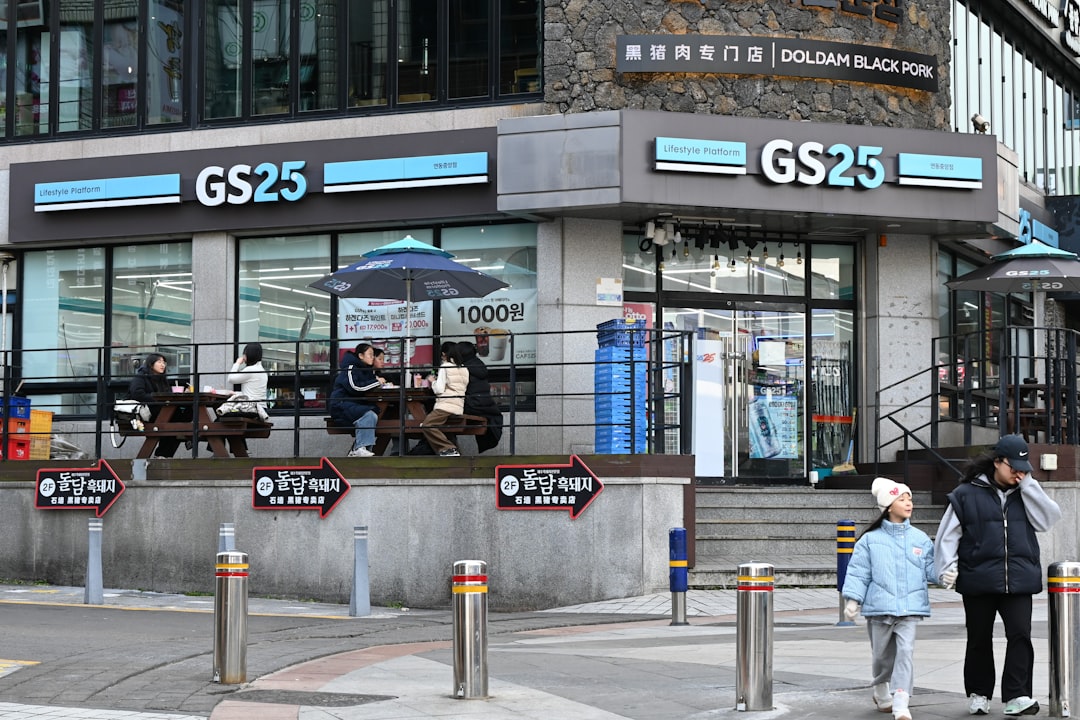
GS25, run by GS Retail, operates around 16,500 stores and is widely considered the most trend-forward chain. GS25 pioneered many of the in-store dining innovations that define modern Korean convenience store culture, including expanded hot food bars and café-quality coffee machines.
Their exclusive brand “YOU US” focuses on health-conscious and premium options. GS25 also leads in digital integration — their app offers personalized deals, a wine subscription service called “Wine25+” that lets you reserve bottles online and pick them up in-store, and even a delivery service for late-night cravings.
7-Eleven (세븐일레븐) — The Global Familiar Face
While 7-Eleven is a name Americans recognize, the Korean version is a completely different experience. Operated by Lotte Group, Korea’s 7-Eleven has about 13,000 stores. They’ve carved out a niche with exclusive snack collaborations and a strong presence near tourist areas.
7-Eleven Korea is famous for its “Samgak Kimbap” (triangle kimbap) lineup, which rotates seasonal flavors. They also operate specialty concept stores, including a massive flagship in Lotte World Tower and themed branches near K-pop entertainment districts.
| Feature | CU | GS25 | 7-Eleven |
|---|---|---|---|
| Store Count | ~17,000+ | ~16,500+ | ~13,000+ |
| Private Label | HEYROO | YOU US | 7-Select |
| Best Known For | Chef collabs, dosirak | Wine, trend snacks | Triangle kimbap, tourism |
| App Features | Points, delivery | Wine25+, personalized deals | Lotte integration, coupons |
| In-Store Dining | Most locations | Most locations | Select locations |
The Food: Why Koreans Eat Full Meals at Convenience Stores
If there’s one thing that truly sets Korean convenience store culture apart from its Western counterparts, it’s the food. We’re not talking about stale hot dogs spinning on rollers. Korean convenience stores offer an astonishing range of fresh, delicious, and affordable meals that rival many sit-down restaurants.
Must-Try Convenience Store Foods
Here are the absolute essentials every visitor — and curious foodie — should know about:
- Samgak Kimbap (삼각김밥) — Triangle-shaped seaweed rice wraps filled with tuna mayo, bulgogi, kimchi, or spicy pork. At around ₩1,200–₩1,500 ($0.90–$1.10), these are Korea’s ultimate grab-and-go snack.
- Cup Ramyeon (컵라면) — Korea’s instant noodle game is legendary. Stores provide free hot water dispensers so you can cook your ramyeon on-site. Shin Ramyun, Buldak (fire chicken), and Jin Ramen are top picks.
- Dosirak (도시락) — Pre-made lunch boxes featuring rice, multiple side dishes (banchan), and a protein. These range from basic ₩3,500 options to premium ₩7,000 chef-collaboration boxes with galbi or jjajang sauce.
- Corn Dogs (핫도그) — Korean-style corn dogs coated in batter and sometimes rolled in french fries, sugar, or mozzarella. The convenience store versions are surprisingly close to the street food originals.
- Tteokbokki (떡볶이) — Spicy rice cakes available in microwaveable cups. Many stores also have a dedicated hot food section where fresh tteokbokki is served. Tteokbokki: Korea’s Favorite Spicy Street Food Rice Cake
- Egg Sandwiches — Korean egg salad sandwiches are creamy, slightly sweet, and absolutely addictive. The CU and GS25 versions consistently rank among Korea’s best-selling convenience store items.
For a deeper dive into the best snacks and meals, check out our complete guide: Korean Convenience Store Food Haul: Must-Try Street Food Finds
The Ramyeon Ritual: An Experience, Not Just a Meal
Cooking ramyeon at a Korean convenience store is practically a rite of passage. Here’s how it works: you pick your cup noodles (or grab a pack of instant ramyeon and use the in-store pots at some locations), fill it with hot water from the free dispenser, wait three minutes, and sit at the window counter to eat.
Many Koreans elevate this by adding extras — a triangle kimbap on the side, a hardboiled egg from the hot food section, or a slice of processed cheese melted on top. This “convenience store ramyeon meal” has become so culturally significant that it’s a common scene in K-dramas and Korean films. The 2019 Oscar-winning film Parasite famously featured “ram-don” (ramyeon + udon), sparking global interest in Korean noodle culture.
The total cost of this iconic meal? Usually under ₩3,000 (about $2.25). Compare that to a typical American convenience store meal of a microwaved burrito and a fountain drink at $6–8, and you start to understand why Koreans view their pyeonuijeom as a genuine dining option, not a last resort.
Drinks and Desserts You Can’t Miss
Korean convenience stores are a paradise for beverage lovers:
- Banana Milk (바나나맛 우유) — Binggrae’s iconic squat bottle is Korea’s most beloved flavored milk. Also available in strawberry, melon, and coffee flavors.
- Soju and Beer — Korea’s famous soju brands (Chamisul, Chum Churum) are available for as little as ₩1,800 ($1.35). Many stores carry craft beer selections too.
- Café-Quality Coffee — GS25’s “café25” and CU’s coffee machines offer Americanos and lattes for ₩1,000–₩1,500 — a fraction of café prices.
- Yakult and Fermented Drinks — Probiotic drinks like Yakult (in Korea’s larger size) and various kombucha options are refrigerator staples.
- Melona and Ice Cream Bars — Korean ice cream is a world of its own. Melona (melon-flavored), Samanco (fish-shaped ice cream sandwich), and Ssang Ssang Bar are must-tries.
Beyond Food: Services That Make Korean Convenience Stores a One-Stop Shop

In America, a convenience store sells snacks, gas, and maybe lottery tickets. In Korea, a pyeonuijeom is practically a government services annex combined with a post office, bank, and pharmacy. The sheer range of services available is one of the most surprising aspects of Korean convenience store culture for first-time visitors.
Financial and Administrative Services
- ATMs — Nearly every convenience store has an ATM that accepts international cards. This is often the easiest way for tourists to withdraw Korean won.
- Bill Payments — Koreans pay utility bills, phone bills, and even government fines at the convenience store register.
- Package Pickup and Shipping — Many stores serve as pickup points for online shopping deliveries (similar to Amazon Locker, but more widespread). You can also ship packages through CU Post or GS Postbox.
- Printing and Copying — Multifunction printers let you print documents from your phone via apps. Students use this constantly. Korean Study Culture: Why Cafes Are the New Study Rooms
- Transportation Cards — Buy and recharge T-money cards (Korea’s universal transit card) at any convenience store.
Emergency Essentials and Everyday Items
Forgot your phone charger? Need an umbrella because Seoul’s weather changed in 10 minutes? Korean convenience stores have you covered with a surprisingly comprehensive selection:
- Phone chargers, cables, and portable batteries
- Umbrellas (₩5,000 — about $3.75)
- Basic cosmetics and skincare (sheet masks, sunscreen, lip balm) — Snail Mucin Benefits: Top K-Beauty Ingredients Explained
- Over-the-counter medications (pain relievers, digestive aids, hangover cures)
- Socks, stockings, and basic clothing items
- Stationery supplies for students
- K-beauty sheet masks from brands like Mediheal are available for ₩1,000–₩2,000 — a fraction of what you’d pay at a US retailer like Sephora
The Social Hub: How Convenience Stores Became Korea’s Living Rooms
One of the most fascinating aspects of Korean convenience store culture is its social dimension. In a country where apartment living dominates and space is at a premium, convenience stores have quietly evolved into communal gathering spaces.
The Window Counter Culture
Walk past any Korean convenience store at night and you’ll see people sitting at window-facing counters, eating, chatting, scrolling their phones, or simply watching the world go by. These counters — sometimes inside, sometimes outside under an awning — are free seating that anyone can use after making a purchase.
For young Koreans living in small studio apartments (called “one-rooms” or “gosiwon”), the convenience store is an extension of their living space. It’s where you eat dinner when your kitchen is too small to cook, where you meet friends when your apartment can’t host guests, and where you decompress at 2 a.m. when you can’t sleep.
This is fundamentally different from the American convenience store experience, where lingering is often discouraged. In Korea, staying for an hour after buying a cup of ramyeon is completely normal and socially accepted.
K-Drama and Pop Culture Influence
Korean convenience stores have become iconic settings in Korean pop culture. The 2020 K-drama Backstreet Rookie (convenience store-themed romance) brought global attention to pyeonuijeom life. Countless other dramas feature pivotal scenes — first dates, emotional conversations, late-night confessions — set against the fluorescent glow of a convenience store.
K-pop idols frequently mention convenience store foods in variety shows and vlogs. BTS members have famously shared their favorite convenience store snack combinations, driving massive sales spikes for specific products. K-Pop Idols Who Act: 15 Best K-Drama Roles in 2025
The cultural significance is so strong that some convenience store locations have become tourist destinations. The GS25 branch near Namsan Tower, the 7-Eleven inside Lotte World, and various stores near K-pop entertainment companies (like HYBE and JYP) regularly see international fans visiting specifically because of drama or idol connections.
Late-Night Culture and the “Pyeonuijeom Date”
In Korea, the “convenience store date” is a real and endearing concept. Young couples — especially students and those on a budget — will buy snacks, drinks, and ramyeon, then sit together at the counter. It’s considered charming rather than cheap, a sign of comfortable intimacy rather than a lack of effort.
This ties into Korea’s broader late-night culture. Unlike many American cities where streets empty after 10 p.m., Korean cities stay alive well past midnight. Convenience stores are the backbone of this nocturnal life, providing food, drinks, and a warm place to sit at any hour. They are literally open 24 hours, 365 days a year — including major holidays when most other businesses close. Korean Jeonse System Explained: Apartment Living Guide
Convenience Store Etiquette: The Unwritten Rules

Every culture has its unspoken rules, and Korean convenience store culture is no exception. Following these guidelines will help you blend in and avoid awkward moments.
Do’s
- Do ask for chopsticks and a spoon — They’re free at the counter. Just say “jeotgarak juseyo” (젓가락 주세요). Plastic cutlery is kept behind the register due to environmental regulations.
- Do use the hot water dispenser — It’s free for anyone who purchases cup ramyeon. No need to ask permission.
- Do clean up after yourself — Dispose of your trash in the designated bins (separated into recyclables, food waste, and general waste).
- Do tap your T-money card or use Samsung Pay — Korea is largely cashless. Most convenience stores accept all major payment methods including international credit cards.
- Do check age-restricted items — If buying alcohol or tobacco, you may need to verify your age. International visitors can show their passport.
Don’ts
- Don’t eat products before paying — Unlike some Western stores where “grazing” is tolerated, this is considered very rude in Korea.
- Don’t hog the seating — If the store is busy, be mindful of how long you occupy counter space, especially during meal rush hours (12–1 p.m. and 6–7 p.m.).
- Don’t be loud late at night — Many convenience stores are in residential neighborhoods. Keep your voice down after 10 p.m.
- Don’t forget the trash separation — Korea takes recycling seriously. Look for separate bins for plastic, cans, paper, and general waste.
Korean Convenience Stores vs. American Convenience Stores: A Comparison
If you’ve only experienced American convenience stores — 7-Eleven, Wawa, Sheetz, Circle K — stepping into a Korean pyeonuijeom will feel like entering a different dimension. Here’s how the two worlds compare:
| Category | Korean Convenience Store | American Convenience Store |
|---|---|---|
| Fresh Food Quality | Restaurant-quality lunch boxes, fresh kimbap, hot meals | Pre-packaged sandwiches, hot dogs, pizza slices |
| Average Meal Cost | ₩3,000–₩5,000 ($2.25–$3.75) | $5–$10 |
| Seating | Window counters, outdoor tables standard | Rarely available |
| Services | ATM, bill pay, printing, shipping, transit cards | ATM, lottery, limited services |
| Store Density | 1 per 950 people | 1 per 2,100 people (approx.) |
| Product Rotation | New items weekly, seasonal specials | Slow rotation, stable inventory |
| Cultural Status | Social hub, date spot, lifestyle staple | Quick errand stop |
| Operating Hours | 24/7/365 (virtually all locations) | Varies; many close overnight |
The gap is significant, and it’s driven by competition and consumer expectations. With three major chains battling for market share in an incredibly dense market, innovation is constant. New products launch weekly, and underperforming items disappear just as fast. American convenience stores, by contrast, operate in a less competitive landscape where gas sales often matter more than food quality.
Finding Korean Convenience Store Products in America
The good news is that many iconic Korean convenience store items are now available in the US. Korean grocery chains like H Mart, Lotte Plaza, and Zion Market carry triangle kimbap, banana milk, Korean cup ramyeon, and popular snacks. Major American retailers like Walmart and Target have expanded their Korean food sections significantly, driven by the K-culture wave.
Online retailers like Weee!, Yamibuy, and Amazon also stock popular items. You can even find Korean-style corn dogs at food trucks and restaurants in cities with large Korean-American populations — Los Angeles, New York, Dallas, and Atlanta lead the way. Korean Makeup vs Western Makeup: 7 Key Differences
How to Experience Korean Convenience Store Culture Like a Local

Planning a trip to Korea? Here’s your step-by-step guide to getting the full Korean convenience store culture experience. Plan your Korea trip at Visit Korea
Your First Visit: A Starter Itinerary
- Arrive and grab a T-money card — Available at any convenience store near the airport for ₩4,000. Load ₩20,000 for a few days of transit.
- Try the “1+1” deals — Korean convenience stores constantly run buy-one-get-one promotions (called “1+1” or “2+1”). Look for the bright yellow stickers on products. This is how locals stock up on drinks and snacks.
- Build the perfect ramyeon meal — Pick a Shin Ramyun cup (₩1,500), a tuna triangle kimbap (₩1,200), and a banana milk (₩1,500). Total: ₩4,200 ($3.15). Cook, sit, enjoy.
- Explore the dosirak section — Try a premium lunch box for dinner. The portions are generous and the variety is impressive.
- Go late at night — Visit between 11 p.m. and 2 a.m. for the most authentic pyeonuijeom atmosphere. This is when the social magic happens.
Pro Tips from Frequent Visitors
- Download store apps before your trip. CU, GS25, and 7-Eleven apps offer digital coupons and point accumulation even for tourists.
- Check microwave availability — Most stores have a customer-use microwave for heating dosirak and other items.
- Visit different chains — Each has exclusive products you won’t find elsewhere. Don’t be loyal to just one brand.
- Ask staff for recommendations — Many young convenience store workers speak basic English and are happy to suggest popular items.
- Look for seasonal items — Cherry blossom themed snacks in spring, ice treats in summer, warm sweet potato drinks in winter, and holiday-themed items year-round. Korea Winter Travel: Best Ski Resorts Guide 2025
The Future of Korean Convenience Store Culture
Korean convenience store culture continues to evolve at a remarkable pace. Several trends are shaping the next generation of pyeonuijeom experiences.
Unmanned Stores and AI Integration
Korea is leading the global push toward unstaffed convenience stores. These “smart stores” use facial recognition, QR code entry, and automated checkout. By late 2025, both CU and GS25 had hundreds of unmanned locations, particularly in office buildings and apartment complexes. The technology reduces labor costs and enables 24-hour service in locations where staffing overnight shifts was previously impractical.
Health-Conscious and Premium Options
As Korean consumers become more health-conscious, convenience stores are responding with protein-focused meals, low-calorie snacks, salad options, and plant-based alternatives. GS25’s “Healthier You” line and CU’s calorie-labeled dosirak series reflect this shift. Premium items — craft beer, artisan coffee, imported wines — are also expanding, positioning convenience stores as competitors to specialty retailers.
Global Expansion and Cultural Export
Korean convenience store culture is going global. CU has aggressively expanded into Mongolia, Malaysia, and other Asian markets, exporting the Korean convenience store model. The international popularity of K-dramas and K-pop has created demand for the “Korean convenience store experience” worldwide, leading to themed pop-up events and Korean convenience store sections in international retailers. K-Pop Training System Explained: How Idols Are Made
Frequently Asked Questions About Korean Convenience Store Culture
Are Korean convenience stores really open 24 hours?
Yes, the vast majority of Korean convenience stores operate 24 hours a day, 7 days a week, 365 days a year — including Chuseok (Korean Thanksgiving) and Lunar New Year, when most other businesses close. In very rare cases, stores in less trafficked areas may have reduced hours, but this is uncommon in urban areas. This round-the-clock availability is a cornerstone of Korean convenience store culture and one of the reasons they play such a central role in Korean daily life.
Can foreigners easily shop at Korean convenience stores?
Absolutely. Korean convenience stores are extremely foreigner-friendly. Product labels often include English text, and most stores accept international credit cards (Visa, Mastercard) as well as cash. Self-checkout machines typically have English language options. For alcohol purchases, having your passport handy is recommended for age verification. The only challenge might be reading Korean-only labels on some products, but translating apps like Papago or Google Translate work well with the camera function.
How much money should I budget for convenience store meals in Korea?
You can eat well at Korean convenience stores on a surprisingly small budget. A filling meal (ramyeon + kimbap + drink) costs ₩4,000–₩6,000 ($3–$4.50). A premium dosirak lunch box runs ₩4,500–₩7,000 ($3.40–$5.25). If you eat two convenience store meals per day, budget approximately ₩10,000–₩15,000 ($7.50–$11) daily. That’s significantly less than restaurant dining, which averages ₩8,000–₩15,000 per meal. Many budget travelers in Korea rely heavily on convenience stores to stretch their won.
What is the most popular convenience store food in Korea?
According to industry data, triangle kimbap (samgak kimbap) consistently ranks as the single best-selling convenience store food item in Korea, with hundreds of millions of units sold annually across all chains. Tuna mayo flavor is the perennial champion, followed by bulgogi and kimchi varieties. Cup ramyeon is the close second, and dosirak lunch boxes round out the top three. Seasonal limited editions and celebrity collaboration items can temporarily outsell these staples during promotional periods.
Can I find Korean convenience store products in the United States?
Yes, and availability is growing rapidly. H Mart (America’s largest Asian grocery chain with 90+ locations) carries many of the same products found in Korean convenience stores, including triangle kimbap, cup ramyeon, banana milk, and Korean snacks. Online platforms like Amazon, Weee!, and specialty K-food sites offer direct shipping. Even mainstream American stores like Walmart, Target, and Costco now stock popular Korean items like Shin Ramyun, Buldak noodles, and Korean-style seaweed snacks. The rise of How to Attend a K-Pop Concert in Korea: Fan Guide events in the US has also fueled pop-up Korean convenience store experiences at fan gatherings.
Related Posts You’ll Enjoy
- Korean Convenience Store Food Haul: Must-Try Street Food Finds
- Tteokbokki: Korea’s Favorite Spicy Street Food Rice Cake
- Korean Study Culture: Why Cafes Are the New Study Rooms
Suggested future topics:
- Korean Street Food Guide: Top 20 Must-Try Snacks for Tourists
- Korean Drinking Culture Explained: Soju Etiquette and Nightlife Guide
- Budget Travel Korea: How to Visit Seoul on $50 a Day
Share Your Korean Convenience Store Story!
Have you experienced Korean convenience store culture firsthand? Maybe you have a favorite late-night ramyeon combo or discovered an incredible dosirak that changed your life. We want to hear about it!
Drop a comment below with your favorite Korean convenience store memory, your go-to snack combination, or any questions about navigating pyeonuijeom life. If you’re planning a trip to Korea, let us know — our community is always happy to share tips and recommendations.
If this guide was helpful, share it with a friend who’s curious about Korean culture or planning their first trip to Seoul. And don’t forget to subscribe to our newsletter for weekly deep dives into Korean culture, travel tips, and the latest K-culture trends delivered straight to your inbox.
Until next time, we’ll be at the window counter with a bowl of Shin Ramyun and a banana milk. See you there. 🇰🇷