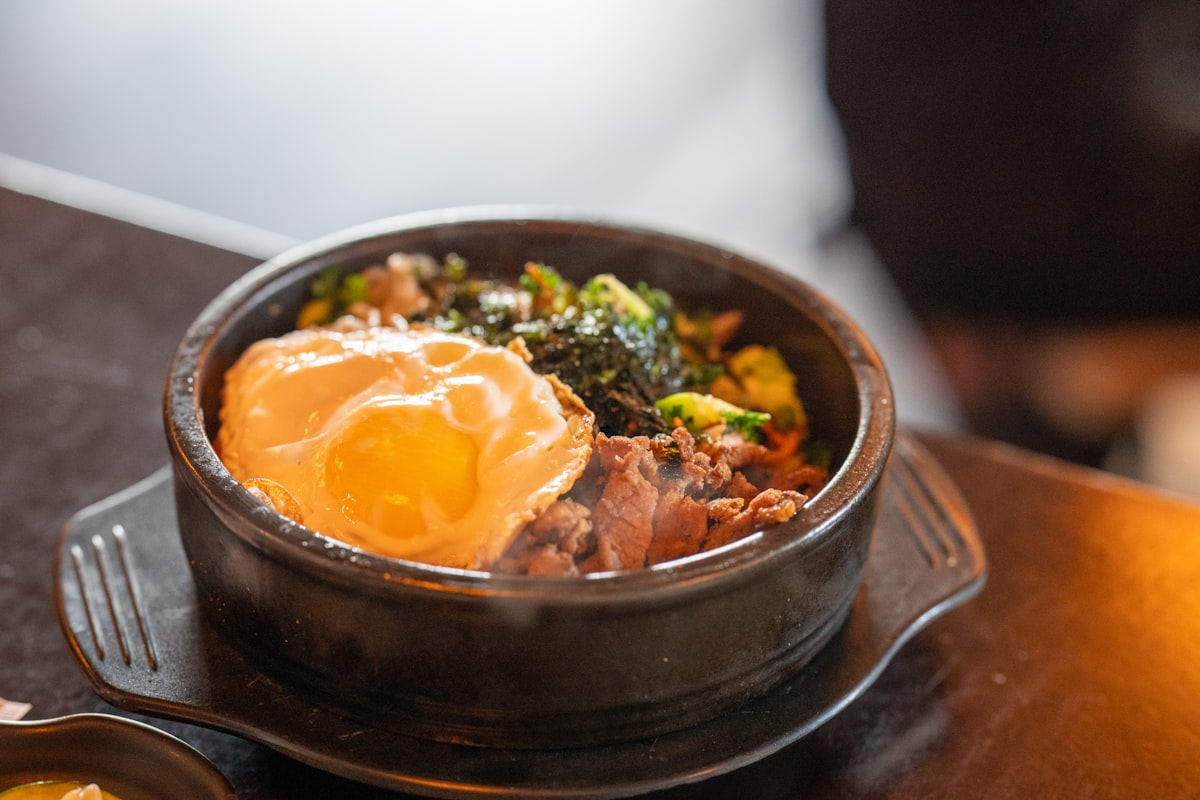
If there’s one dish that captures the essence of Korean cuisine in a single bowl, it’s bibimbap (비빔밥). Literally meaning “mixed rice,” this vibrant, nutrient-packed dish has evolved from humble origins into a global culinary sensation — and for good reason.
What Exactly Is Bibimbap?
At its core, bibimbap is a bowl of warm white rice topped with an array of seasoned vegetables (namul), a protein (usually beef or tofu), a fried egg, and the star of the show — gochujang (Korean red pepper paste). The magic happens when you mix everything together, creating a symphony of flavors, textures, and colors in every bite.
What makes bibimbap truly special is the Korean philosophy of obangsaek (오방색) — the five cardinal colors (white, black, red, blue/green, and yellow) that represent balance and harmony. Each topping is carefully chosen not just for taste, but to create a visually stunning and nutritionally balanced meal.
The Rich History Behind the Bowl
Bibimbap’s origins trace back to the Joseon Dynasty (1392–1897), though its exact beginnings are debated. One popular theory suggests it started as a New Year’s Eve tradition — families would mix together all their leftover side dishes with rice to start the new year with a clean slate.
Another theory connects it to ancestral rites (제사, jesa), where the offerings of rice and various dishes would be mixed and shared among family members after the ceremony. Regardless of its origins, bibimbap has become one of Korea’s most recognized dishes worldwide, even earning a spot on in-flight menus of Korean Air since the 1990s.
Regional Variations You Should Know
🔥 Jeonju Bibimbap (전주비빔밥) — The Gold Standard
Jeonju, a UNESCO Creative City of Gastronomy, is considered the birthplace of Korea’s finest bibimbap. What sets it apart? Bean sprout soup stock is used to cook the rice, and the dish features up to 30 different toppings including raw beef tartare (yukhoe), pine nuts, and ginkgo nuts. It’s served with a side of bean sprout soup and is an absolute must-try for any food pilgrim visiting Korea.
🪨 Dolsot Bibimbap (돌솥비빔밥) — The Sizzling Version
Served in a scorching hot stone pot (dolsot), this variation creates a crispy rice crust (nurungji) at the bottom — arguably the best part. The sizzling pot keeps your meal hot throughout, and the contrast between the crunchy bottom layer and the soft toppings is absolutely divine.
🌊 Tongyeong Bibimbap (통영비빔밥) — The Seafood Twist
From the coastal city of Tongyeong comes a seafood lover’s dream — bibimbap loaded with fresh oysters, sea squirt, and other ocean delicacies mixed with a special seasoning sauce.
How to Make Authentic Bibimbap at Home
The beauty of bibimbap is that it’s incredibly adaptable. Here’s a guide to making a restaurant-quality bowl in your own kitchen.
Essential Ingredients
- Rice: Short-grain Korean rice (or any sticky rice)
- Vegetables: Spinach, bean sprouts, carrots, zucchini, shiitake mushrooms, fernbrake (gosari)
- Protein: Bulgogi-marinated beef, or tofu for a vegetarian version
- Egg: Sunny-side up with a runny yolk
- Gochujang sauce: Mix gochujang with sesame oil, sugar, rice vinegar, and a splash of water
- Garnish: Toasted sesame seeds, sliced nori, sesame oil
Step-by-Step Method
- Prepare each topping separately — This is key. Each vegetable is blanched or sautéed with its own seasoning (sesame oil, garlic, salt, soy sauce).
- Cook the rice — Use freshly cooked, slightly warm rice as your base.
- Arrange beautifully — Place rice in a bowl, then arrange each topping in sections around the bowl. Think of it as edible art.
- Add the egg — A fried egg with a runny yolk goes right in the center.
- Drizzle gochujang sauce — Add as much or as little as your spice tolerance allows.
- MIX! — The most important step. Use your spoon to thoroughly mix everything together. Don’t be shy — the more you mix, the better it tastes.
Why Bibimbap Is the Perfect Healthy Meal
In an era of superfood obsession, bibimbap has been hiding in plain sight as one of the world’s most nutritionally complete meals:
- ✅ Low calorie — A typical bowl runs 400-550 calories
- ✅ High fiber — From the variety of vegetables and rice
- ✅ Balanced macros — Carbs from rice, protein from meat/egg/tofu, healthy fats from sesame oil
- ✅ Packed with vitamins — Each vegetable brings different micronutrients
- ✅ Gut-friendly — Fermented gochujang contains beneficial probiotics
- ✅ Easily customizable — Vegan, vegetarian, keto-friendly versions all work
It’s no wonder that bibimbap consistently ranks on lists of the world’s healthiest dishes. The Korean philosophy of balance isn’t just philosophical — it’s nutritional science in a bowl.
Where to Eat the Best Bibimbap in Korea
- Gogung (고궁), Jeonju — The most famous Jeonju-style bibimbap restaurant, operating since 1979
- Gajok Hoegwan (가족회관), Jeonju — Local favorite with massive portions
- Dooreyoo (두레유), Seoul — Modern twist on traditional bibimbap
- Gwanghwamun Jip (광화문집), Seoul — Classic dolsot bibimbap in the heart of the city
- Traditional markets — Gwangjang Market and Namdaemun Market both have excellent bibimbap stalls at a fraction of restaurant prices
Frequently Asked Questions
Is bibimbap gluten-free?
Traditional bibimbap can be made gluten-free by using tamari instead of regular soy sauce. The main components — rice, vegetables, egg, and gochujang — are naturally gluten-free, though some commercial gochujang brands may contain wheat. Always check the label.
Can I make bibimbap vegan?
Absolutely! Skip the egg and meat, add extra vegetables and tofu, and you have a delicious vegan bibimbap. Many Buddhist temple restaurants in Korea serve exquisite vegan versions.
How do you pronounce bibimbap?
It’s pronounced “bee-bim-bahp” (비빔밥). The emphasis is roughly equal on all three syllables. You might also see it spelled as “bibimbop” in some restaurants.
What’s the best gochujang brand for bibimbap?
For authentic flavor, look for Sunchang (순창) brand gochujang — it’s the gold standard in Korea. CJ Haechandle is widely available internationally and makes an excellent everyday option.
Bibimbap is more than just a meal — it’s a window into Korean culture, philosophy, and the art of finding harmony in diversity. Whether you try it at a street stall in Jeonju or make it in your own kitchen, one thing is certain: once you experience the joy of mixing that colorful bowl together, you’ll understand why Korea has been obsessed with it for centuries.
Have you tried making bibimbap at home? What’s your favorite topping combination? Let us know in the comments! 🍚
답글 남기기