Busan is South Korea’s second-largest city and its undisputed coastal capital. With stunning beaches, seafood markets, mountain temples, and a film festival that rivals Cannes, Busan offers a completely different vibe from Seoul. More relaxed, more colorful, and surrounded by ocean, Busan is where Koreans go to escape and recharge. This guide covers the essential experiences, hidden gems, and practical tips for visiting Korea’s favorite beach city in 2026.

Why Busan Deserves More Than a Day Trip
Watch: 아기 강아지 투명 울타리 설치하는 방법_도로시펫 Tip #초보견주
Many visitors treat Busan as a quick side trip from Seoul, but the city deserves at least 3-4 days. The combination of beach culture, traditional markets, cliff-side temples, and a thriving food scene makes Busan one of Asia’s most underrated destinations. The KTX high-speed train connects Seoul to Busan in just 2.5 hours, making it easily accessible.
Must-Visit Busan Attractions
Gamcheon Culture Village
Often called “Korea’s Santorini,” this colorful hillside village is a labyrinth of pastel houses, street art, galleries, and quirky cafes. Originally a settlement for refugees during the Korean War, it was transformed through art projects into one of Busan’s most photographed locations. Spend 2-3 hours wandering the narrow alleys and discovering hidden installations.
Haedong Yonggungsa Temple
Unlike most Korean temples which sit in mountains, Haedong Yonggungsa perches dramatically on a cliff overlooking the ocean. The temple dates to 1376 and is one of the most beautiful religious sites in Korea. Visit at sunrise for an unforgettable experience. Located on the northeastern coast, accessible by bus from Haeundae.
Jagalchi Fish Market
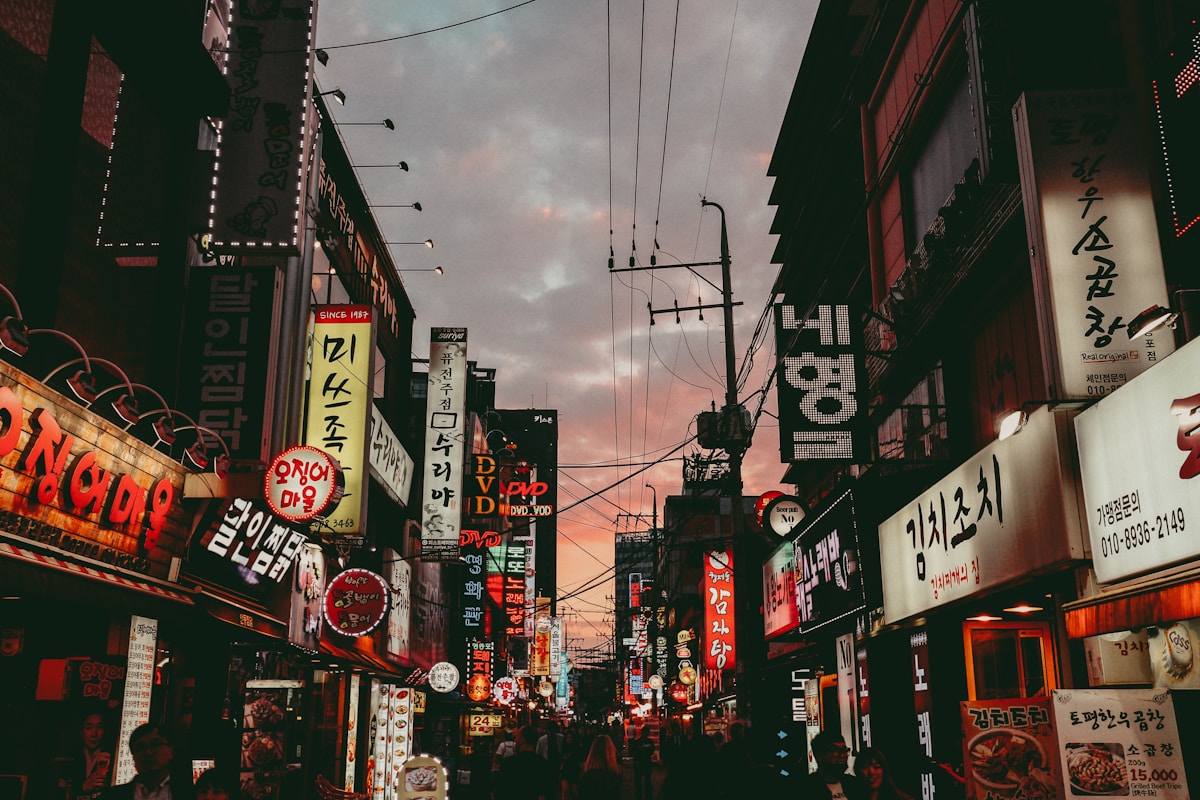
The largest seafood market in Korea. Rows of vendors sell everything from live octopus to king crab to sea squirt. Pick your seafood on the ground floor and have it prepared at the restaurants on the upper floors. The sashimi (hoe) here is the freshest you will find anywhere. A full seafood meal costs 20,000-40,000 KRW per person ($15-30 USD).
Haeundae Beach
Korea’s most famous beach stretches 1.5 km along the coast. In summer, it draws over 10 million visitors. The surrounding neighborhood has excellent restaurants, cafes, and the Haeundae Market for street food. In winter, the annual Light Festival transforms the beach area into a glowing wonderland.
Gwangalli Beach and Diamond Bridge
A slightly more relaxed alternative to Haeundae, Gwangalli Beach offers a stunning view of the Gwangan Bridge (Diamond Bridge). The bridge is illuminated with LED lights at night, creating a spectacular backdrop. The beachfront is lined with seafood restaurants and bars — perfect for an evening of fresh fish and ocean views.
Busan Food Guide
Signature Busan Dishes
- Dwaeji Gukbap (돼지국밥): Pork soup with rice. Busan’s signature comfort food, available 24 hours at countless restaurants. Rich, hearty, and costs only 7,000-9,000 KRW ($5-7 USD).
- Milmyeon (밀면): Cold wheat noodles in a tangy broth. Busan’s answer to Pyongyang naengmyeon. The perfect summer dish.
- Ssiat Hotteok (씨앗호떡): Busan-style hotteok filled with a mix of seeds, nuts, and brown sugar. BIFF Square in Nampo-dong is the most famous spot.
- Eomuk (어묵): Busan is the birthplace of Korean fish cakes. The Samjin Fish Cake Museum in Yeongdo offers tours and tastings.
- Raw Fish (회, hoe): Jagalchi Market offers the freshest raw fish in Korea at prices significantly lower than Seoul.
Practical Tips
Getting to Busan
- KTX from Seoul: 2.5 hours, departing every 15-30 minutes. Book on the Korail app. Prices from 59,800 KRW ($45 USD) one way.
- Flight: 1 hour from Seoul Gimpo. Budget airlines offer fares from 40,000 KRW ($30 USD).
- International flights: Gimhae Airport has direct connections to Tokyo, Osaka, Taipei, Bangkok, and other Asian cities.
Getting Around Busan
Busan’s subway system has 6 lines covering most tourist areas. A single ride costs 1,400 KRW. For the coastal areas not served by subway, city buses are reliable and frequent. The Busan City Tour Bus is excellent for first-time visitors — it loops through all major attractions for 15,000 KRW per day.
Suggested 3-Day Itinerary
- Day 1: Jagalchi Market → Nampo-dong/BIFF Square → Gamcheon Culture Village → Gwangalli Beach (sunset)
- Day 2: Haedong Yonggungsa Temple (sunrise) → Haeundae Beach → Dongbaek Island coastal walk → Centum City Shopping
- Day 3: Beomeosa Temple (mountain hike) → Seomyeon food street → Hwamyeong Eco Park → Departure
Hidden Gems in Busan
- Huinnyeoul Culture Village: A quieter, more authentic version of Gamcheon with stunning ocean cliff views.
- Taejongdae: A natural park on the southern tip of Yeongdo island with dramatic cliffs and lighthouse views.
- Jeonpo Cafe Street: Busan’s hippest cafe district in Seomyeon. Specialty coffee roasters and Instagram-worthy interiors.
- Songdo Skywalk: A glass-bottomed walkway extending over the ocean. Thrilling views and great photo opportunities.
Busan offers a side of Korea that many visitors miss when they focus only on Seoul. The ocean air, the incredible seafood, the colorful villages, and the laid-back atmosphere create an experience that perfectly complements the capital’s urban energy. Make Busan part of your Korea itinerary — you will not regret it.